You're not stuck, you're just alone at the top. Most entrepreneurs hit a ceiling, not because the opportunity isn't there, but because you're solving $10M problems with $1M strategies.
How She Went From 30 Years in Corporate to Owning a Senior Move Management Business
April 21, 2026
10 min read
START HERE
“After buying a business, my husband keeps telling me, ‘You’re saying weird words like, I want to go to work.’”
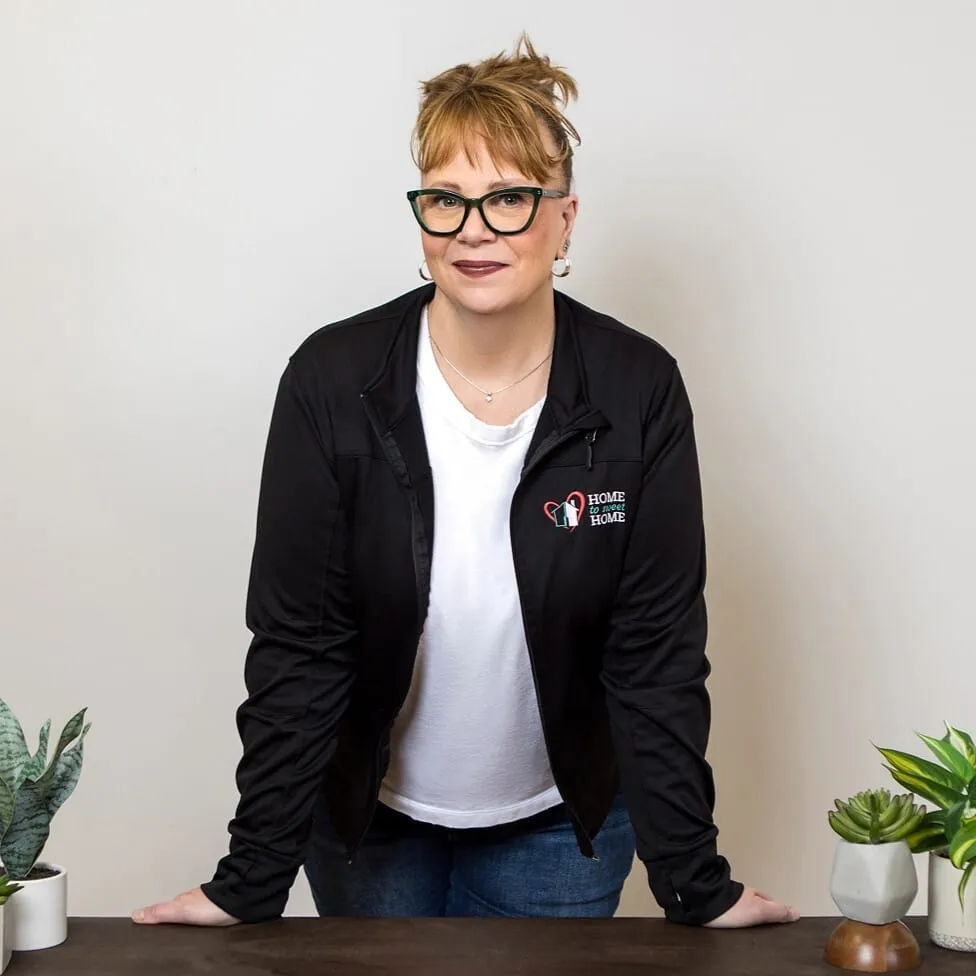
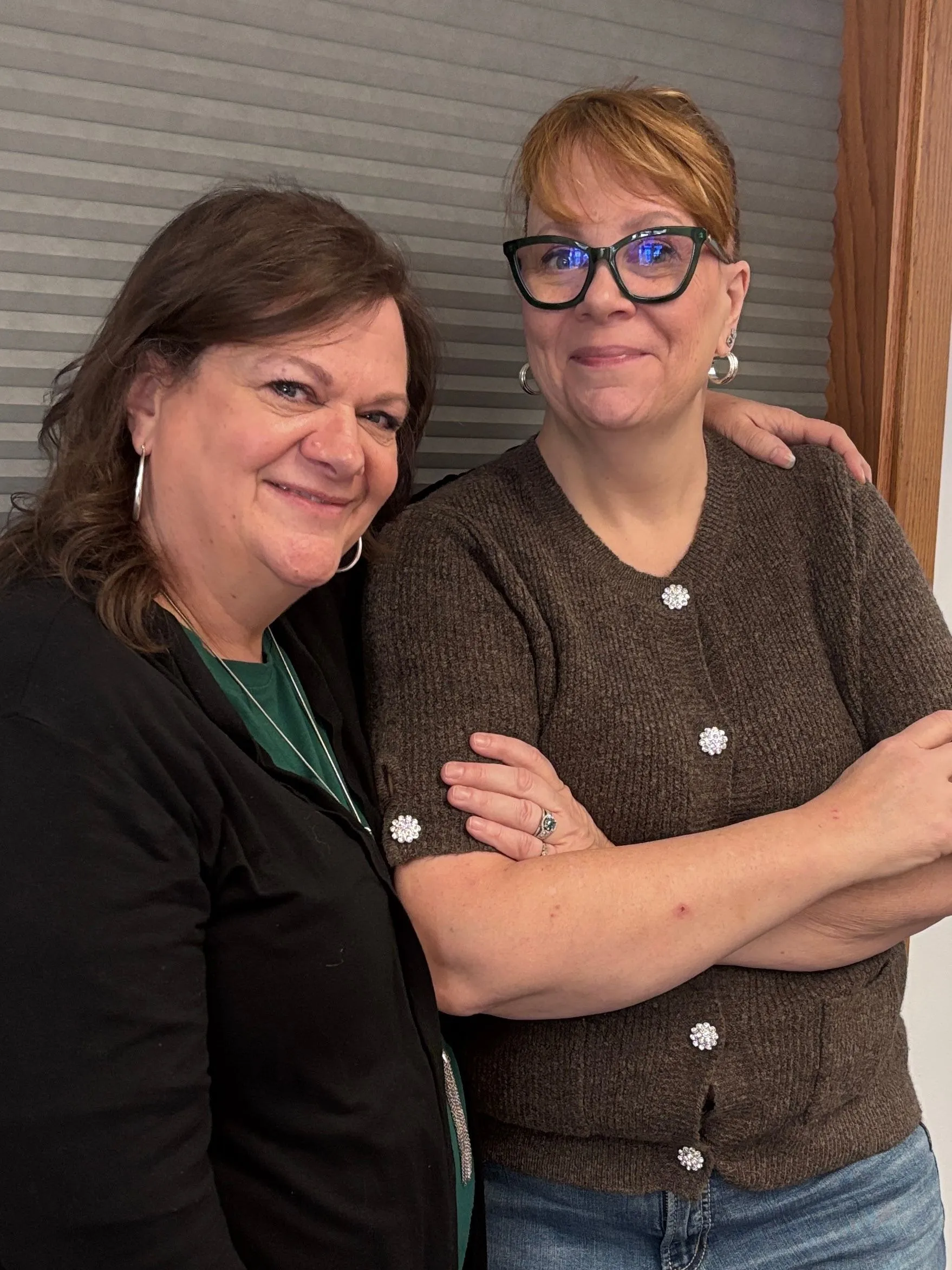
Meet Rachel.
Rachel spent roughly 30 years in banking on the technology side, eventually leading tech support for her Minnesota region. Most of those years were great. Then, in February 2025, came the “good ol’ chopping block notice,” as she puts it.
Surprisingly, Rachel’s reaction wasn’t panic. It was a celebratory cocktail. After three decades of service, her severance package included 16 months of full pay and benefits. Suddenly she had runway, and a decision to make.
“I’m 56. I’m not going to get hired back at a fintech making what I made here. Just a fact of life.”
Around that time, a mutual friend nudged her husband, Tony, toward Contrarian Thinking’s Main Street Millionaire Live event, where we show you exactly how to become a business owner by finding, negotiating, financing, and completing an acquisition.
He signed up and dragged Rachel along.
At first, she was skeptical. But she sat down with her laptop, and by the end of the weekend, something had clicked.
“I realized there’s a whole hell of a lot of people out there that are just like me,” she said. “And also a whole hell of a lot of businesses out there looking for owners.”
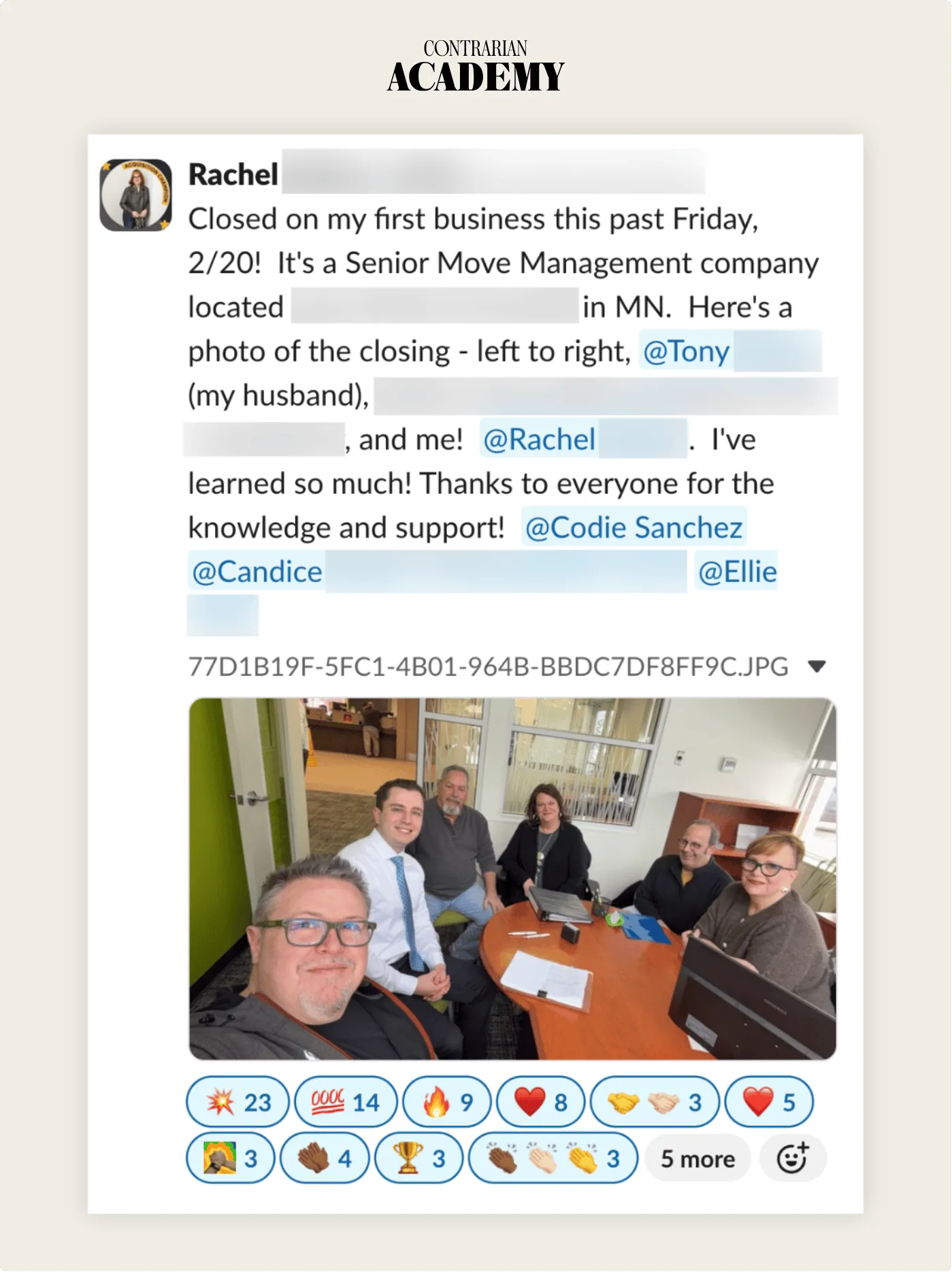
About 1 year later, she’d end up closing on a senior move management company roughly 7 miles from her house.
“Today, I’m happy. I love what I do. I’m passionate about what I do. I care about what I do. I want to do it.”
Here’s how she got there…
In June, we’ll teach you the same things we taught her.
Main Street Millionaire Live is our virtual bootcamp entirely focused on giving you the practical steps and tools to buy the businesses AI isn’t replacing anytime soon.
Understandably, most people need to treat a layoff as a crisis.
Luckily, Rachel was able to treat hers as a resource. Sixteen months of full pay and benefits meant she could afford to be thoughtful about her time, picky with her decisions, and didn’t have to find income ASAP.
Her severance ended a couple of weeks before we spoke for this story. By then, she’d closed a deal, worked inside the business for months, hired four new people, and was already focused on expanding her budding empire.
“Talk about an ideal situation,” as she put it.
The lesson: Severance, savings, a job, a W-2 spouse… Whatever your version of a “runway” looks like, be grateful for it, and make sure you put it to good use.
2. Why this unexpected biz turned out to be “the one”
When Rachel started searching, she looked toward what a lot of first-time buyers do. Laundromats. Car washes. Storage. A pet shop. A coffee shop.
“We were just looking at all this lame, cliche, small business owner crap,” she told us, joking. “Nothing clicked!”
One hard filter she set early: geography. Many of the deals were across the river from her, a 50-minute commute each way. She ruled them out.
Then a broker email landed with something she’d never heard of: a senior move management company (seven miles from her house). She signed the NDA, read the description, and walked upstairs to tell Tony she’d found her business.
Rachel loves organizing and has a soft spot for seniors. “The end of your life should be the best part of your life,” she said.
The financials put it in the lower end of what she and Tony were prepared to spend (their deal box could handle an SBA loan in the $1M to $1.5M range). But the fit was the point.
3. Things… often… take longer… than you think…
Rachel and Tony finally closed on their deal months later than originally planned.
Part of that was lender trouble. Rachel started with a local preferred lender to “give the little guy a chance.” It didn’t work out, and she switched mid-process.
The next lender had its own issues (Rachel later had a two-hour feedback call with a VP and had her fees refunded), but the deal got done.
“From the time you do an LOI until the time you have the keys, plan on months of your life being used on this,” she says.
The simplest lesson she offers: Build one folder that holds every piece of paperwork you’ll need. Tax returns, personal financial statement, bank statements, login credentials. “You’ll need to provide that 4,867 times throughout your buying journey,” she joked. “This way, you’re not the bottleneck.”
4. How she went “Undercover Boss…” before being the boss
The delayed closing had one silver lining. Rachel worked with the seller to spend about 2.5 months operating in the business as a “new trainee,” without the staff knowing she was the incoming owner.
She packed boxes. She rode along on moves. She learned the rhythm of the work, which turns out to be surprisingly choreographed.
A full-service move runs a paid one-hour consultation, one to three “right-sizing” sessions, a full pack day, and a full unpack day.
By the time the senior arrives at their new home, the beds are made, the kitchen is loaded, the bookcases are arranged exactly like the old house.
The team calls it “the big reveal,” and Rachel loves it.
The lesson: A pre-close working role, even an informal one, can build trust with the team, surface operational details, and shorten the post-close learning curve. Not every seller will be open to it, but it may be worth asking.
5. What she’s working on today (now that she’s the owner)
Aside from tightening daily ops, she’s focused on hiring and growth.
Here’s the counterintuitive thing about senior move management businesses: the seniors aren’t really the customers.
“Who’s actually looking for the senior move manager?” Rachel said. “It’s their Gen X kids. And their Gen X kids are on Facebook and LinkedIn.”
That’s why she hired an outreach coordinator focused on those channels. She’s also active in local Chambers of Commerce and is personally visiting with the senior community move coordinators the seller had built relationships with for years.
Senior living communities are being built at what she calls a “ridiculous pace,” which keeps pulling potential clients into the area.
“They loved the previous owner,” Rachel said. “But they’re still so happy to work with me, because they see I love what I’m doing, and that I’m doing the business justice.”
The information contained here is educational, may not be typical, and does not guarantee returns. Background, education, effort, and application will affect your experience and the profitability of any business. Individual results may vary.











.webp)


.svg)


