More customers isn’t always better. Learn the 3-step Define, Decode, Deploy framework for finding the customers who actually make your business money. Here's a weird way to go broke in business: get more customers. Sounds ridiculous, right? More customers means more revenue, and more revenue SHOULD mean you're winning. That's the story we tell ourselves while payroll grows, the calendar fills up, and the bank account starts to dip. I've seen owners who could sell the hell out of their service, but couldn't figure out how to turn a real profit. The problem isn't always what you're selling... It's WHO you're selling to. Not all customers are good customers, and the busiest business in town isn't necessarily the best business in town. In fact, a study published by the Marketing Science Institute found that 32% of customers at one large distributor were actually unprofitable. That means nearly a third of the company's customers were costing it more money than they made it. Imagine working your ass off to bring in new business, only to discover that every new customer could be another hole in your sinking ship. Revenue is vanity, profit is sanity, and the right customer is everything. And even if you don't own a business yet, I want you to keep reading. Because as you're looking at a potential acquisition you need to know who you're going to target. Often an existing mom-and-pop is catering to the wrong clients, and if you can identify that, it becomes your secret weapon when you take over. The landscaper who had too many customers Let's look at a Contrarian Boardroom member named Jack. He already had a business and a calendar full of jobs. But what he didn't have was much breathing room — or the profit to show for all that motion. His team was burning hours driving from one residential lawn to the next, spending all their time doing small jobs that didn't have great margins. He was going faster and faster, but getting
More customers isn’t always better. Learn the 3-step Define, Decode, Deploy framework for finding the customers who actually make your business money.

A former teacher’s laundromat and a Hawaii tour operator’s new trolley business show what the real work of ownership looks like after closing day. "I've definitely had moments when I've wondered what I got myself into!" Closing day gets all the attention. And it makes sense, it’s exciting! The signed APA, the photo with the seller in front of the sign, we all go crazy in slack, and you finally OWN THE THING! Then Monday shows up and a dryer eats someone's quarters. Or you find out your bookkeeper's idea of a system turns out to be a shoebox filled with last-year’s hand-written receipts. And that's the part that decides whether you bought a business or a job. The owners who succeed keep learning once the deal is done, because acquisition is really just the first step of the journey. Here’s how 2 of our members are making huge strides as owners, post-acquisition. This is our version of Where Are They Now , minus the child-star drama. The money's usually in the boring fixes You might remember Erin Blake. She taught elementary school for 15 years, beat cancer, and decided to become an owner. After almost a year of searching, she finally closed on a laundromat in April of this year. She just posted an update in the Academy, and we nearly fell out of our chairs. TLDR: her revenue is up 42% in the 6 months since she took over. (Quick legal disclaimer: earnings are self-reported, and results are not typical*) Here's how she described her first months as an owner: "I've been fixing washers and dryers, troubleshooting payment systems, raising prices, growing my wash-dry-fold business, introducing pickup and delivery, figuring out bookkeeping, and getting to know the homeless population on a first name basis!" As you can see, there’s no secret playbook or flashy marketing campaign behind her success. Just hard work applying the business basics. She got the broken machines running again Charged what the market supports Grew
A former teacher’s laundromat and a Hawaii tour operator’s new trolley business show what the real work of ownership looks like after closing day.

A paycheck feels safe until it isn’t. Here’s why the Single-Income Trap catches high earners, plus the 5-question test that shows if you own a job or an asset. We're getting close to Thanksgiving, so I want you to picture a turkey. Every morning, a friendly human shows up and feeds it. Day 1. Day 50. Day 500. Every meal makes the turkey a little more sure of how the world works. Humans feed turkeys, and turkeys just keep on gobblin’. That's the deal. By day 1,000, the turkey has never felt safer. Then comes the Wednesday before Thanksgiving. Nassim Taleb tells this story in The Black Swan, and Jack Raines turned it into a chart in his book Young Money: So what happens when the turkey is you? The turkey has an Ivy League degree A guy I follow on X, ex-Wall Street, now running a manufacturing business he bought, posted something this week I can't stop thinking about. He says the most anxious people in his network all share the same résumé. Ivy education Finance job MBA from a top school A high-paying run in their chosen field They’ve always been high performers, but get let go in their early 40s due to “restructuring.” By now though, they’ve got 2 or 3 kids in private school, a summer house somewhere warm, and a burn rate that’ll light their account on fire if they let up. He says some of these people have been looking for a new job for 3+ years, and they’d happily take a big pay cut just to cover the bills and stop siphoning their retirement. And Sean Frank, CEO of Ridge, made this point: (Like, really tight.) Just don't make it your only option. The Single-Income Trap Everybody loves to dunk on the W-2 employee who wants a business on the side. But these people aren’t delusional “hustlers,” they’re people who see ownership for what it really is - diversification. We tell people to diversify their money all the time. “Don't put it all in 1 stock, never put all your eggs in 1 basket.” But if you put 100% of your income in the
A paycheck feels safe until it isn’t. Here’s why the Single-Income Trap catches high earners, plus the 5-question test that shows if you own a job or an asset.

Busy buyer? Learn how a PA, a tech marketer, and a dad of 4 made time for their business search, plus 2 questions to size a search to your real week. "I realistically didn't spend enough time searching as I realized I needed to." Every year around this time, somebody in the break room makes the announcement. "This year I'm eating clean through the holidays." And they mean it. They buy the glass meal-prep containers and a cookbook with a very confident kale salad on the cover. They even toss the leftover Halloween candy (after eating the Reese's, obviously). Then reality hits ’em with a croissant. The office potluck Your sister-in-law's cookie exchange Thanksgiving Christmas parties By mid-December, the meal-prep containers are full of leftover stuffing and the diet-friendly cookbook is propping up a wobbly laptop. The plan wasn't bad, per se... But it was set up before temptation hit and your grandma asked why you weren’t eating her apple pie. When you plan something based on a “normal” week without factoring in all the chaos of life, it’s doomed to fail. We see the same thing with business buyers ALL the time. Maybe you've been there yourself. You decide this is the year you’re gonna finally own something, so you go all in. You read Main Street Millionaire twice, set up deal alerts on 3 listing sites, and learn SDE so well that all your friends leave the room when it comes up. Then there's a big launch at work. Or the water heater picks this exact month to die. Whatever it is, your business search gets pushed to "the weekend." Then next weekend. Then "after the holidays." A broker leaves a voicemail and you call him back Friday, but the laundromat you'd been eyeing goes under LOI before you even open the CIM because you got burnt out. Here's what’s happening: you built your search as if you didn’t have a full-time job and a life. The good news? Plenty of people in the Contrarian Academy have hit this exact wall.
Busy buyer? Learn how a PA, a tech marketer, and a dad of 4 made time for their business search, plus 2 questions to size a search to your real week.

You can’t scale charisma. You can only scale process. 7 lessons from hiring, firing, and leading hundreds of people, plus the brief I use on every hire. The other day I stood in a room with about 50 owners at one of my Growth Accelerator Workshops and asked them one of my favorite questions... “How many of you have ever regretted firing someone?” Almost no hands went up. Shocker. I’ve hired hundreds of people, built a $1B+ investment business, and bought and built dozens of companies doing over $100M in combined revenue. Some of my hires have made me millions, while others have cost me almost as much. I’ve hired people who looked incredible on paper and turned into disasters in practice. I’ve kept people too long, trusted the wrong leaders, and paid a lot of money for lessons I could’ve learned for free. And the data says the gap between getting this right and getting it wrong can be enormous. McKinsey found that high performers are roughly 400% more productive than average performers, and in highly complex roles, the productivity gap can reach 800%. Translation? The right person in the right seat isn’t a little better. They can change the trajectory of the entire business. Here are the 7 keys to making sure you don’t regret your next hire. 1. Never hire a unicorn for a job a donkey should be able to do. I once hired a sales leader who was a a bit of a cowboy. Charismatic, confident, and freaking terrible at building a repeatable sales process. He didn’t want scripts, SOPs, or any type of written record of how he did what he did. No. He just wanted to sell HIS way. I call this the Golf Course Sales Guy. In a business with massive customer lifetime value, where a handful of relationships carry the whole year, he can be incredible. But put him in a high-volume sales business and he’ll tank your revenue. That hire cost us hundreds of thousands in comp and probably millions in lost sales. Here’s what I learned: You can’t
You can’t scale charisma. You can only scale process. 7 lessons from hiring, firing, and leading hundreds of people, plus the brief I use on every hire.

Meet the 4 service business owners who won Bizee Builder Grants at Codie’s book launch, and what their fresh starts can teach you. Meet the winners. On September 18, Codie went live in front of about 200,000 people to launch her new book, Own or Be Owned . During the event, in partnership with Bizee, she gave away 4 Bizee Builder Grants of $25,000 each. And while giving away business grants usually attracts people who like to use the word “disruptive” in their dating profile bios, you know we don’t march to Big Tech’s drum... The 4 winners were hard-working service business owners who embody the Contrarian ethos to a T. A junk hauler in Shasta County, an electrician pouring epoxy floors in Fresno, a beignet guy in New York, and 2 brothers washing towels in Austin. While we wish everyone who showed up could’ve won a grant, we’re excited to see how these 4 use their capital to grow. And hopefully, you can learn something from their stories. And if you’re not sure where to start, Bizee built something for you. It’s called Your Next 30 Days as a Business Owner , a FREE guide built on Codie’s exact playbook. Whether you want to buy your first business, start something new, or grow your current business, this guide gives you your next steps. Just fill in your worksheets, map your month: one action a week, with consistent check-ins to keep you on track. Every owner you’ll read about today started somewhere less than ideal. A speed bag on a skateboard, a broken-down excavator, or towels in their mom’s carport. You don’t have to have it all together. Just start where you are. 👉 Get your FREE 30-day guide HERE 1. Show up when it’s raining Dave’s first pandemic business idea? A boxing speed bag mounted on a skateboard. “Probably the worst fitness product invented in the 21st century,” he said. Before his poorly planned wellness venture, Dave worked fine dining at The Standard Grill and spent about 5 years in
Meet the 4 service business owners who won Bizee Builder Grants at Codie’s book launch, and what their fresh starts can teach you.

Your team nodded in the meeting, then dropped the ball. Here’s why, and the 4 levels every leader has to move people through before they execute. Why People Don’t Do What You Ask Here’s a scene almost every founder has experienced. You walk into the Monday meeting. You explain the priority, why it matters, who owns it and when it’s due. Everyone smiles and nods along. Beautiful. Then Friday arrives, and... crickets. Or worse, you get something, but it’s nowhere close to what you asked for. You wanted a simple dashboard with the 5 numbers that run the business. They built a 47-tab spreadsheet that takes a black belt in finance to understand. You stare at it and think: did anyone listen to me? So you repeat yourself, louder this time. MORE! More Slack messages, more meetings, more check-ins, and a Google Doc titled FINAL_FINAL_V7_USE_THIS_ONE. Here’s the hard truth, and I’m gonna hold your hand while I say this: Your people probably aren’t the problem. Your leadership is. Telling someone to do something isn’t leadership. Let’s get your big beautiful brain clear on the difference. The Leadership Translation Gap Someone has to move through 4 levels before they consistently do what you ask: They heard it. They get it. They believe it. They win from it. Most leaders stop at level 1. They said the words, so they assume the team understands the mission, agrees with the strategy, and wants to execute it. But you know what they say about assuming, right? That’s like only texting someone an address and expecting they’ll show up on time wearing the right outfit. To what? Why? What if they don’t want to? Talking at someone is not the same as communicating. Communication is whatever the other person can repeat, prioritize and execute when you’re not around. Here’s where you lose people. Level 1: They Heard It You told them. Congrats! You’ve achieved awareness. Calm down though. It’s the lowest level there is. Sitting in your
Your team nodded in the meeting, then dropped the ball. Here’s why, and the 4 levels every leader has to move people through before they execute.

4 owners found their biggest growth move hiding in plain sight. Here’s the lesson each one took, from bank statements to customer lists. “Whoa, this actually really fits what we already know how to do.” Most people go looking far and wide for their next big opportunity. They’ll spend hours researching a hotter industry or listening to whatever strategy the newest marketing guru swears by on a podcast. But the owners who make real moves usually find it closer to home. I can’t tell you how many times we’ve been able to help an owner scale by taking a second look at their bank statements, customer lists, or businesses they’ve already written off. In fact, there’s usually a pattern connecting some of the biggest breakthroughs we’ve seen in the Academy and Boardroom. Let’s see if you can find it for yourself... 1. Build your deal box around YOU, not an industry Tihana and her husband both work remotely for a fitness company, but they knew they wanted to own something for themselves. That’s when they found us. When they started searching, their deal box (the criteria every deal has to clear) began with an industry: pet businesses. Grooming, boarding, anything in that world. The trouble was, those deals barely showed up. And when they did, they moved fast and often went to PE at prices they couldn’t swing. Then a mobile swim school in Los Angeles came across their screen. It failed the box on sight. Wrong industry, slightly below the revenue target. A few weeks later, they did something most people don’t. They took another look. And this time they ran it against a different question: what are we already good at? She and her husband spend their workdays managing independent contractors remotely, and the swim school ran on independent contractors, managed remotely. “Whoa, this actually really fits what we already know how to do.” The schedule fit too. The business does the most revenue in the warm months and
4 owners found their biggest growth move hiding in plain sight. Here’s the lesson each one took, from bank statements to customer lists.
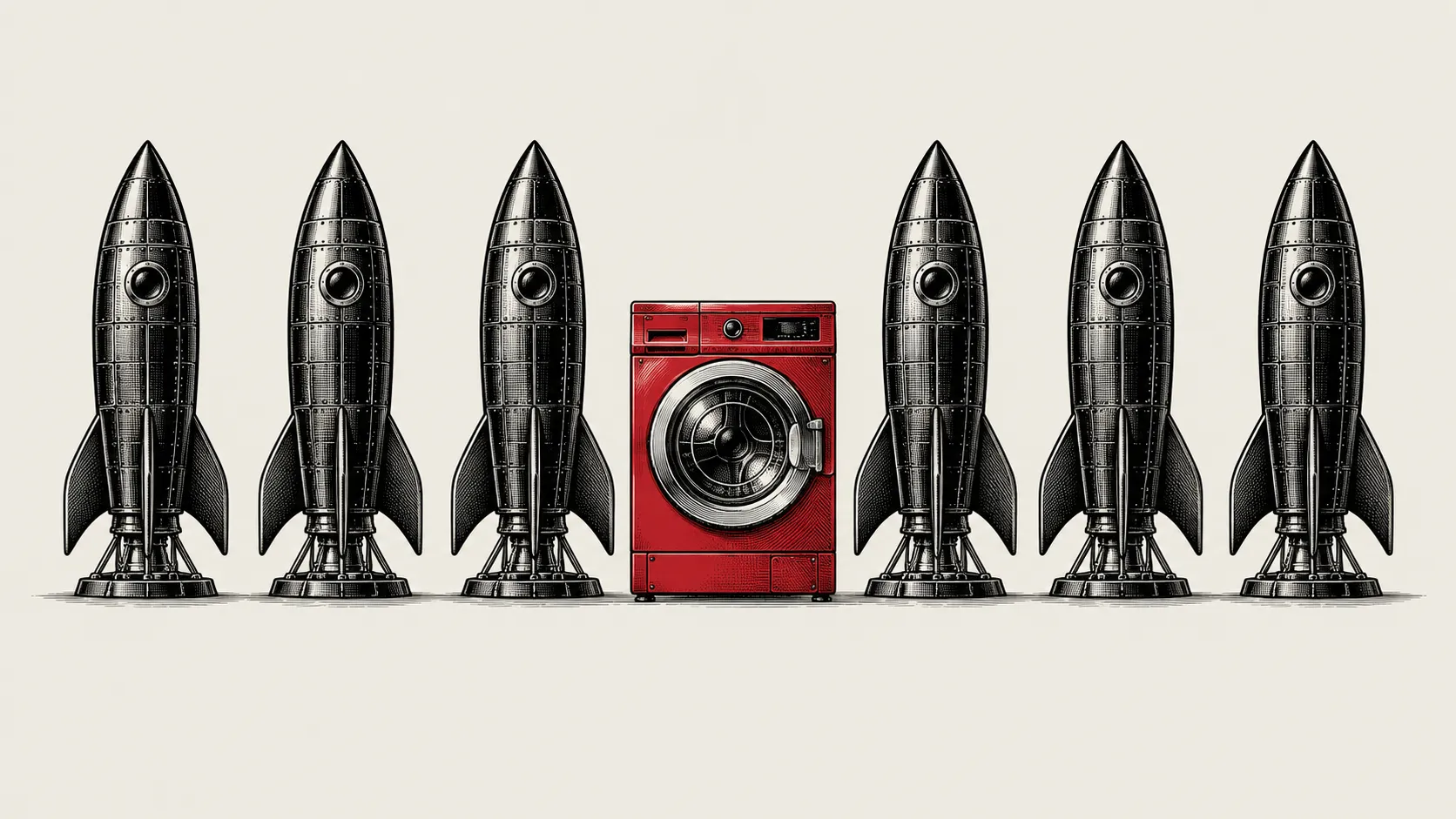
7 hard-earned lessons from building businesses: why boring beats shiny, why WHO mistakes cost more than HOW mistakes, and why a bigger job is still a job. Most people only see the highlight reel: They see I helped build an investment business at First Trust that grew past $1 billion in assets under management, and that I’ve bought and built dozens of businesses doing over $100 million in combined revenue. They know I also grew Contrarian Thinking from a single newsletter into one of the largest business advisory and media companies out there. And that along the way, we built Contrarian Academy into the largest acquisitions platform and BizScout into the second-largest marketplace for buying and selling businesses. But what people don’t see is that I’ve also lost millions on bad deals, hired the wrong people, and made more mistakes than I’d like to admit... So I put together the 7 biggest lessons I learned from building businesses from $0 to 9 figures. Steal my homework, learn from my mistakes, and level up your business. 1. THE BEST OPPORTUNITIES ARE THE ONES NOBODY WANTS Early in my career, First Trust handed me an assignment to build an investment business in Latin America. I know it sounds great on paper, but one of the only reasons I got the job was because no one else would take it. I didn’t live there and I didn’t have a network there, so honestly, I was terrified of failing. But I cowboyed up, went to South America, and was able to 10X the business through joint ventures and acquisitions until we passed $1 billion in assets under management. While it was scary, that experience taught me something I’ve never forgotten: Chaos creates compensation. When everybody wants something, competition eats the opportunity. On the flip side, when nobody wants it, the math starts getting interesting. Which is why years later, while everyone was hunting for the next Uber, I was looking at washing machines. So before you chase
7 hard-earned lessons from building businesses: why boring beats shiny, why WHO mistakes cost more than HOW mistakes, and why a bigger job is still a job.
How a Tech Veteran Who Waited 20 Years for His Shot Bought 2 Laundromats “I definitely don’t want to build something from scratch. I’ve been there, done that.” Meet Vishal Parihar. Vishal landed in the US in 2003 with a master’s program ahead of him and one goal: own a business. But years of paperwork stood between him and that dream. So he built for other people first. In 2008, Y Combinator rejected his startup. He spent close to 2 years building someone else’s tech company instead. The product worked, but the customers didn’t “get” it. So growth stalled out. In 2018, he joined another startup after its Series A and climbed to director of platform. Right around then, the board shut the whole company down. Then came 6 years at SAP, managing data engineering teams. In 2023, his citizenship came through, and he knew it was time to do something with it. “I’ve been waiting for this moment for a while,” he says. “How do I use this?” He found Codie’s shorts, read Main Street Millionaire, and joined Contrarian Academy on June 1, 2025. The book made him hungry for his own piece of Main Street. The numbers scared him, though. After all, in a world without guarantees, how do you know a business is worth the price? So he did the work. Deal reviews, questions in the community, and attending calls. It paid off. On July 23, 2026, he closed on 2 Southern California laundromats with 160 machines between them. Here’s how he got there. 1. Read the broker’s silence Vishal narrowed his search to laundromats and self storage. After years of building teams, he wanted a business that could run without him standing in it all day. By November 2025, he had an LOI accepted on a Southern California laundromat. Then the broker cut him off. Too many questions for a laundromat, he said. “This is my first business,” Vishal says. “I can’t just not ask questions.” We’re
How a Tech Veteran Who Waited 20 Years for His Shot Bought 2 Laundromats

Price objections are story problems. See how Mark Cuban reframed Mavericks tickets, plus a 3-part audit to uncover why your customers really buy. Your customer isn't buying your product. At least, they're not just buying your product. They're buying the story they tell themselves about the money they're about to spend. If you miss that story, you become the cheapest option in a race to zero. But when you find it, price becomes almost irrelevant. Think about the last thing you overpaid for and felt great about. The anniversary dinner, the stroller with better suspension than your truck, the vacation to Italy you'd been planning for a year. Do you remember the price tag or how it made you feel? That's a Money Story . Every customer has one, but most businesses never try to find it. How to Sell a Losing Team I've been reading my friend Vanessa Van Edwards' new book, Conversation: How to Connect with Anyone and Make Every Interaction Count . She’s a behavioral researcher who teaches science backed-people skills in a way that makes it easy to implement in life and business. And one story from her book keeps rattling around my head. In January 2000, Mark Cuban bought a stake in the Dallas Mavericks. Great deal, except for one teeny-tiny detail... The team lost games. All. The. Time. So he'd effectively given himself one of the hardest sales jobs out there: getting fans to buy tickets to watch a team lose. And while he could've hired it out, the Mavericks' new owner walked into the sales bullpen and worked the phones himself. He started with facts, then dug deeper. Tickets to a game cost less than the movies or feeding the family at McDonald's, and they gave you something more than entertainment. Here's what he said, straight from Vanessa's book: He sold them a memory, and suddenly the ticket became a symbol of family bonding. Seemingly overnight, the arena started selling out, and pretty soon tickets were going for
Price objections are story problems. See how Mark Cuban reframed Mavericks tickets, plus a 3-part audit to uncover why your customers really buy.
How a software engineer with a W-2 job and 4 kids bought an IT business he'd never heard of. Here's what 6 LOIs, 1 partner, and a 52-day close taught him. Meet Christian Christian Riboldi builds software for a living. He’s got a W-2 job, a loving wife, and 4 beautiful kids. The 4th arrived mid-search, which we'll get to. About a year and a half ago, he decided he wanted ownership. So he did something about it and signed up for Main Street Millionaire Live even though he'd never heard of Codie. Christian was just hungry for knowledge and saw an event about buying businesses. He joined the Academy at the end of it, tore through the course in a couple of weeks, and fired off his first LOI almost immediately. After becoming an Academy ambassador and getting his reps in, he closed on a managed IT services business back in July. Here's everything that happened in between, and what you can use in your own search. 1. LOIs are like reps Christian's first LOI? A $5M deal with roughly $1M in SDE. "I was like, this would be so sweet, and we'll figure out how to fund it later." The sellers wanted a multiple well above the 3 to 4x range we teach, so while this deal died, Christian kept the education. "Every single time I put in an LOI, I learned a whole lot about myself [and] what I even consider to be a good deal." He submitted 5 LOIs over the course of the next year and change, and finally, the 6th one went all the way. The lesson: Your first LOI teaches you more than your first 10 hours of research. Put in the reps early , because while it feels scary, each one gets you closer to where you want to be. 2. Tell people what you're hunting A fellow Academy member had just closed on their own business when they sent Christian a listing with a note: you should buy one of these. It was managed IT support for small businesses. Funny enough, Christian writes software for a living and had never heard of the industry. Turns out it was a great Frontpoint IT IT Services Closed a $1.2M managed IT business in 52 days while keeping his W-2 job
How a software engineer with a W-2 job and 4 kids bought an IT business he'd never heard of. Here's what 6 LOIs, 1 partner, and a 52-day close taught him.

Learn why consuming endless business content can feel productive without creating real progress, and how turning knowledge into action can actually grow your business. It's 6:40 a.m. You're 2 episodes deep on a podcast about hiring A-players, 1.5x speed, coffee in the cupholder. And you're driving to a business where you still make all the sales calls. Somewhere in your notes app sits a list of 40 ideas from shows like mine, but you've only tried executing 1 and a half... Look, no judgment. You've got plenty of company. 58% of Americans now listen to podcasts monthly and 45% listen weekly, both record highs according to Edison Research's Infinite Dial 2026. That weekly number works out to 130 million people. When you tack on the YouTube breakdowns, the audiobooks at 2x, the threads you saved "for later," and yes, this newsletter: you've never had more access to information. And yet most businesses look exactly the same as they did last year, yours (probably) included. Quick warning before we go further. If you're here for a pep talk, you're reading the wrong newsletter. There's a mirror waiting at the end of this email, and it doesn't do flattering angles. The Age of Mental Masturbation Here's the uncomfortable truth. Consuming business content feels like working on your business. Your brain gets the hit, and you screenshot another inspirational quote for later. Then Monday shows up and you run the same plays you ran last Monday. So let's call it what it is (sorry, Mom): mental masturbation. The feeling of progress, without the actual progress. Feels great. Does nothing. In fact, Stanford professors Jeffrey Pfeffer and Robert Sutton wrote a whole book on this in 2000 called The Knowing-Doing Gap. Their finding: companies rarely stall because they don't know what to do. They stall because they never turn what they know into action. 26 years later, most of the knowledge is free. You can have the best operators on earth in your ears on
Learn why consuming endless business content can feel productive without creating real progress, and how turning knowledge into action can actually grow your business.

Laid off from tech, Krista bought a flower shop inside an old airplane factory. Here are 5 lessons from her search you can use to find your own business. “Wait for the glass slipper. It will come.” Meet Krista. Krista Sohmer owns Poppy and Pine, a flower and retail shop outside Denver. The shop sits inside a marketplace built in an old airplane manufacturing warehouse. Big space, lots of foot traffic, and flowers where the fuselages used to be. Krista has spent over 12 years in tech marketing, and for most of that time, it felt stable. Then she watched friends get laid off one after the other over the last 5 years. It eventually hit her too. “And I went through a layoff at my last company and that really shook me. And so being an owner, it feels like I am more stable in a sense of like, well, it's not replacing my salary. It's at least a little bit of something that I can control more I can fall back on.” A few friends started talking about buying businesses, and she got curious. So on her birthday weekend, she gave herself a gift: a ticket to one of Codie's virtual events. Something clicked. She joined the community, took the group calls, built a deal box, and started showing up to meetings. Then she gave herself a year to find the right business. Some months, she made peace with missing that deadline. She evaluated “everything under the sun,” and sent 4 or 5 LOIs. She went down the franchise rabbit hole and climbed back out, finally closing on Poppy and Pine, her flower shop, on July 1st of this year. Here's what she learned along the way. FREE EVENT Krista built her deal box, wrote her LOIs, and worked through diligence with the Contrarian Academy community in her corner. And it all started with a free event... Here's what you'll walk away with when you join in: How to buy the right business for you. Your 1st deal or your 10th, the right business fits your schedule and your goals. We'll show you how to spot the fit Poppy and Pine Retail Floristry Bought an absentee-run flower shop after a corporate layoff, then rebuilt its marketing from scratch
Laid off from tech, Krista bought a flower shop inside an old airplane factory. Here are 5 lessons from her search you can use to find your own business.

Most of the top 1%'s income gains since 1985 came from Main Street businesses, not tech. Take the 5-question test to see if you're your own bottleneck. The Millionaire Next Door You’ve probably shaken hands with a multimillionaire without knowing it. America mints about 1,200 new millionaires every day, and some wild new statistics in Owen Zidar and Eric Zwick’s new book, The Everywhere Millionaire, show they aren’t tech moguls or private equity suits. Far from it. There are about 3 million “stealthy wealthy” whose average net worth lands around $25 million. Meaning, for every 1 name on the Forbes list, there are 4,000+ private owners worth $10 million or more. And they don’t own fancy AI apps. They own law firms, car dealerships, medical practices, commercial contracting companies, and regional restaurant chains. All that ownership adds up to 13X more wealth than the Forbes 400 combined. After spending more than a decade inside anonymized Treasury and IRS records, Zidar and Zwick found that more than half the rise in the top 1% income share since 1985 ran through pass-through businesses. 5.8 of 10.5 percentage points. Zidar says economists spent 40 years studying "a few redwoods in Silicon Valley" and never saw "the vast forest of American entrepreneurs." These aren't giant empires either. Owners in the top 1% run businesses averaging $3.7 million in sales with 28 employees. That’s a 12-truck HVAC company or 3 dental offices and a good office manager. The exact kind of businesses that show up on a site like BizScout every week. You’re standing in the forest right now, and you don’t even see it! If you’re reading this, you know I talk about this all the time. You don’t have to be the next big startup founder to build real wealth, because there’s plenty of money on Main Street. And Zidar and Zwick’s findings prove it. They also found something else I think you should know. But I’ll get to that in a sec. Hot Dog
Most of the top 1%'s income gains since 1985 came from Main Street businesses, not tech. Take the 5-question test to see if you're your own bottleneck.

A former Cirque du Soleil coach spent 2 years fighting zoning to build a micro resort. Then he bought one instead. 5 lessons from his glamping deal. "It wasn't my intention to buy a micro resort. But it just sort of happened." Meet Beau. Beau spent 10 years coaching for Cirque du Soleil. Quidam. Totem. He even helped build Drawn to Life, the Disney collaboration down in Orlando. Then in December 2023 he moved to Austin and did something completely different. He opened a school. NextGen Academy is an Alpha sister school built from the ground up by a guy with zero background in children’s education. "I come from a coaching background," he told us. "(So I...) built the plane as I flew it." He still runs that school full time, so everything you're about to read happens after he clocks out. For his 5-9, Beau and his partners own and manage short term rentals across 3 markets. They started during the pandemic and self-funded every single deal. 10 acres in Tennessee, 22 in New York. The plan was always to build micro resorts on it, but the permitting and zoning process had other ideas. So in June 2025 he joined the Contrarian Academy, looking for a business to support the rental operation. On July 31, he closed on something else entirely. 5 tiny cabins in a national forest in Texas, about 90 minutes from a major city, purchased for just shy of $2M. Here's how he got there. TOGETHER WITH ASK DOLLY You do everything right. You take the raise, you max the 401k, and you skip upgrading your SUV. But you don’t feel like you’re making any real progress... Part of the reason is that no one ever taught you how to pay attention to your money. That’s what Ask Dolly is for. Ask Dolly is the difference between staring at your accounts and actually knowing what to do next. It's not just showing you numbers, it's helping you decide. Our friend Vivian Tu built Your Rich BFF into a 10-million-follower operation by making money make sense Stay in Babia Glamping Bought a $2M glamping resort in 8 months after joining the Contrarian Academy
A former Cirque du Soleil coach spent 2 years fighting zoning to build a micro resort. Then he bought one instead. 5 lessons from his glamping deal.

Michael Jordan won 6 titles by giving up the ball, then ran his team into the ground. Take the free Owner Score and find out what's capping your business. For years I flew to Santiago, Chile, every single week. 11 hours in an aluminum tube, rocking through night and cloud. I made that trip more than 100 times. I liked Chile fine. What kept me going back was a belief that I had to be there, that deals would die without the magic trick of me shaking hands in the room. One of those flights landed on my birthday. Delayed 4 hours. The terminal hummed with that fluorescent fatigue, everyone around me scrolling and sleeping and living, and I drank too much cheap airport wine and started crying. Not the big kind. The quiet kind, where your face is already wet before you notice it's happening. A stewardess asked if I was okay. She was kind about it, which somehow made it worse. How do you explain to a stranger that you're weeping because of the life you built with your own hands? Somewhere over the Andes, between night and landing, it finally hit me. I hadn't built a business. I'd built a pedestal I couldn't jump off of. Here's the part that still stings. That company has run for the last 8 years without me, and my #2 handles it. Every flight I took, every birthday I missed, every time I told myself they need me there, the business was proving me wrong. I just refused to listen. Why I wrote a second book Main Street Millionaire was about getting into the game. Own or Be Owned is about winning it. And I didn't write it from a mountaintop with a cigar, slowly plugging away at a typewriter. No. I wrote this because I needed it. I was running 3 jobs inside a company I'd built to set me free, and it was destroying me. If that sounds uncomfortably familiar, good, because the book is intended to fix exactly that. This particular trap has nothing to do with laziness. Unfortunately though, everything that got you where you are stops
Michael Jordan won 6 titles by giving up the ball, then ran his team into the ground. Take the free Owner Score and find out what's capping your business.

Why your ROAS is lying to you, how the Ad Trap starts by rewarding you, and the 3 numbers that tell you whether you own your demand or only rent it. So I posted this about a week ago: And the internet exploded. (God forbid a woman have a hot take. 🤣) Look, sometimes I like to be a little hyperbolic to get a conversation started. Fair point by the trolls. And sometimes that conversation turns into a shouting match in the comments. Marketing agencies came after me like I'd kidnapped their families. Ad buyers called it naive, along with some other choice words. Someone informed me I'd clearly never scaled anything real. LOL. Here's what's funny about that: marketers make money when you run paid ads. Their business model relies on you spending as much as possible, because most agencies get paid a cut. Most marketers obsess over ROAS instead of profit. Most salespeople care about top line, not profit. I've even heard media buyers brag about budgets the same way other people brag about horsepower. Pretty much everyone arguing with me had a financial reason to. And I get it. Advertising is their job. From their perspective, as long as the ROAS works, everybody's happy. Which is why I devoted a whole chapter to advertising in my new book. In Own or Be Owned, this idea has a name: Promote. It's 1 of the 12 Profit Levers, and done right it builds an asset that accelerates your growth. Get it wrong and you'll be paying Meta more rent every year for less return. Which brings me to the $10 million business we told to turn off every ad. A Method to the Madness Imagine throwing $200,000 a month into Facebook and Google. That's more than most people make in a year. For the company we were looking at, that was just the cost of doing business. Their ads drove phone calls. Calls turned into appointments. Appointments turned into revenue. Nothing wrong with that. At $10 million a year in revenue and 70% margins, there were no red
Why your ROAS is lying to you, how the Ad Trap starts by rewarding you, and the 3 numbers that tell you whether you own your demand or only rent it.

Brian Barnett was a hospital PA with zero business experience. Here's how he found a senior home care company, won over the broker, and closed the deal. Meet Brian Brian Barnett is a physician assistant, who just acquired a senior care business in Florida. His story is one of following the process, being flexible, and working his butt off. Exactly the kind of person we love working with at Contrarian Thinking. And based on our interview, we’ve got no doubt he’s going to scale his business and keep growing. The only question is how big does he want to go? While he recently moved down to sunny Stuart, Florida to keep an eye on his new business, he doesn’t plan on living there forever. His family is up in New York, and he wants to return to his day job there once everything is running smoothly. And that’s something people miss: you don’t have to hate your job to want to become an owner and scale a business. You also don’t have to sacrifice your life to run and scale a business. (In fact, building a business so good it runs without you is kinda our thing...) What pulled him toward business buying was a question about his savings, not his career. “Initially it was really more of a financial goal,” he told us. “What do I do with my other money? How do I invest this? The stock market?” Then he started getting our newsletter. Other people’s stories kept landing in his inbox, and one day he decided this whole “buying a business thing” was 100% possible for him too. Ownership started looking less like a pipe dream, and more like an asset class he could control. So he joined the Academy with no idea what he wanted to buy and no business background at all. Then, on August 10, he closed on a senior home care company in Stuart, Florida. Here’s how he got there. 1. The first 8 months didn’t count Brian finished the course and then did what almost everybody does. Not much. “I realistically didn’t spend enough time searching as I Acorn Elder Care Senior Home Care Closed his first acquisition with zero business experience after joining the Contrarian Academy.
Brian Barnett was a hospital PA with zero business experience. Here's how he found a senior home care company, won over the broker, and closed the deal.
The 5-category Hiring Matrix Contrarian Thinking runs on every candidate, and the scorecard behind our scariest hire. I pulled her into a room because I'd run out of other options. For weeks she'd been touring the company like a lounge act. Different audience, same whiny set. We work too hard, this place is crazy, everyone else is the problem. "You've told me you have a problem with your manager, with ops, with the content team," I said. "Have you actually talked to any of them about it?" She looked at me. "Well, no. They wouldn't listen anyway." There it was. All she'd ever wanted was an audience. So I decided to give her a new one. Firing her took 20 minutes. Undoing what she'd already done to the team took months. Here's what you might not know about a bad hire: underperforming is the least of it. The real damage is how they poison everyone around them. Every person you bring in either compounds your standard or corrodes it. Most owners run the wrong version by accident. They talk to 3 or 4 people, pick the least terrible one, and act shocked 5 months later. Turns out, hiring is hard. It's why we built a process the whole company follows for every single hire. We’ve had to. Contrarian Thinking has outgrown 3 offices since we started in 2019, and over the last 9 months we've added about 50 people to the payroll. We've gotten it down to a science, so go ahead and steal it for your next search. The Hard Part You want better hires? Fix the core problem: too few candidates, and a standard so flexible it could be an Olympic gymnast. Here's the math. For every 50 profiles you scroll, 10 to 20 turn into real conversations, and 1 turns into an offer. Top performers are already winning somewhere else, which means you have to go get them. Block an hour a day for hunting. Open LinkedIn, type "Austin, Texas, Chief Marketing Officer," and start DMing strangers. One of our best content hires came
The 5-category Hiring Matrix Contrarian Thinking runs on every candidate, and the scorecard behind our scariest hire.

Ian, Randol and Karen run wildly different businesses. All 3 hit a wall, and all 3 got moving again by fixing 1 thing. Here's how to find yours. “I always thought luxury was the icing. But it was actually the cake all along.” In our community, we see all sorts of businesses with a million different problems. Take these three: Ian inspects houses, Randol runs a plastic surgery practice with his wife, and Karen rents space to hairstylists. And while their businesses are wildly different, each owner shared a similar problem. All 3 hit a wall they couldn’t seem to climb, and all 3 got moving again by addressing a few simple things. And in case you’ve been living under a rock, Codie's new book, Own or Be Owned , takes everything she’s learned over the last two decades building a portfolio of successful businesses worth over 9 figures, and distills it into 12 Profit Levers owners can pull to create a company that runs without them. Most owners are really good at pulling one, but completely ignore the others. Own or Be Owned helps point you to the biggest 2 problems stopping your growth, and gives you the tools to fix them. Here's what it looks like when a stuck owner finds their bottleneck and pulls the right lever. 1. Ian sold to everyone → Persona Ian Mayer started a home inspection company so nobody could lay him off again, and it worked... right up until it didn’t. He hit the same revenue ceiling 4 years running, but by the only scoreboard he had, he was doing everything right. More inspections, more agents, more work. Then he sorted his customer list by revenue instead of job count. “And I went, oh.” A small group jumped to the top. Luxury agents with bigger homes, where pools, guest houses, and sewer scopes stack on top of an already higher base price. “They may not give us as many inspections, but they give us way more average revenue per customer.” Ian didn't change how he worked. He changed who he worked
Ian, Randol and Karen run wildly different businesses. All 3 hit a wall, and all 3 got moving again by fixing 1 thing. Here's how to find yours.

Time is the only asset you can't make more of. Here's how Codie protects hers, and the meetings she flat-out refuses to take. Don’t waste my time My phone buzzes and it’s my podcast producer: "Hey, when you get a minute, give me a call." So then I get on the call and they just want to move a meeting... While I'm glad no one’s in the hospital, now I’m picking out a headstone . Typing out, "Can we talk about the Henderson invoice today?" costs you negative seconds, and by making me take a call that definitely could’ve been a text, you’ve done something egregious. You’ve wasted my time. Time is, by far, the most valuable asset we have. And all this made me think about a few of my billionaire friends and how one of the biggest levers they all pull is related to their time. Getting the most out of theirs, not wasting anyone else’s, and focusing it where it matters. Here’s a few ways to maximize the time you have. 1. Never uni-task As an owner, you won’t have a ton of free time anyway. So anything you can do to double-dip will pay dividends on your calendar’s whitespace. A few ideas: Get a portable red-light to use while you answer emails. There’s plenty out there, but make sure you’re getting one with the right light spectrum or your mitochondria won’t feel it. It’s got tons of benefits, and it’s an easy add-on for deep-work blocks. Use a standing desk and walking pad during meetings. I know it’s not always possible to take meetings walking outside (this Texas heat is no joke), but this is the next best thing. This helps you get your steps in during long days, and keeps you sane. Outsource your low-level tasks . I’m talking anything under a certain dollar amount/ hour. If it’s not worth your time, it gets pawned off. One of my biggest unlocks was just getting a cleaner a few times a week. That one change will win back hours of time spent tidying up and allows you to actually relax at home. The
Time is the only asset you can't make more of. Here's how Codie protects hers, and the meetings she flat-out refuses to take.
How one buyer built his buy box around his life, sent LOIs before he felt ready, and hired past his own skill level. 6 lessons from an acquisition story. "I would rather learn from my own mistakes fast than wait for the perfect moment." Meet Shaker. Shaker Albrahim started his entrepreneurial journey in a school hallway. Candy, bought cheap, resold at a premium to his classmates. The margins covered pocket change, and the game hooked him for life. But instead of going for an MBA, he studied physics at the University of Arizona. Always an A-student, his goal was to provide for his family. While he could’ve pursued academia, Shaker knew there was a bigger opportunity elsewhere. In his last year of college he found e-commerce, built an Amazon store from zero, and sold it. Rather than take his pocket change and try something else, he doubled down and kept building. Over the next several years he would run 15 different e-commerce businesses. Then he walked away from all of it. "I just told them, hey, I don't want anything from that. I'm done from this path." Back to zero. He'd built enough from scratch, and found the ceiling. This time he wanted to buy. "I had the cash. I wanted a fast track." He'd followed Codie for years, and ultimately joined the Contrarian Academy so he wouldn't get his first acquisition wrong. Just 2 months of searching later, he had a business under LOI. 4 more followed over the next year, and he's grown every one of them since. Here's how he did it. 1. His deal box started with what he knew Shaker knew going in that Codie isn't an e-commerce evangelist. So he spent a while looking at other sectors. Then he saw something familiar listed at a favorable multiple, and stuck with what he knew. E-commerce. And while we specialize in helping people acquire service-based businesses, Shaker had 2 (good) reasons to stick with selling products online. First, he was moving back to Saudi Arabia. His product sells
How one buyer built his buy box around his life, sent LOIs before he felt ready, and hired past his own skill level. 6 lessons from an acquisition story.

Growth costs cash before it pays you back. Here are 5 ways to fund your next move without draining your own accounts. Growth Can Kill David Packard (the Packard in Hewlett-Packard) liked to say more companies die of indigestion than starvation. Robert Herjavec, a recent Big Deal guest, said, "...urgency creates opportunity, but patience builds wealth." Translation: growth without strategy kills more businesses than slow months do. Growth is necessary, but every new hire and every new location costs you cash before it pays you back. We call it the Growth Tax, and it's why owners doing everything right can still feel broke. So here's 5 ways to pay it without emptying your accounts. TOGETHER WITH SOFI Contrarian Thinking is a compensated partner of SoFi. 1. Capital That Moves as Fast as You Do Growth opportunities come with expiration dates. The equipment auction ended Friday, before you heard back from your bank. And somebody signed the lease next door because your loan didn't get funded in time. SoFi's Small Business Loans can help business owners move when the moment is right, with access to up to $250K* and funding as soon as 24 hours after approval^. The application is simple, and SoFi's loan has clear, upfront pricing and terms of 6, 12, 18, or 24 months. Weekly and monthly repayment options are available, and if your investment pays off sooner than expected, no problem. You can repay the loan early with no prepayment penalty. Whether you're a solopreneur, leading a small team, or growing an established business, a SoFi Small Business Loan could help fund your next move. In other words: built for Main Street. Click HERE to see what options could help you make your next move. Terms apply. See the bottom of this newsletter for more information and disclosures about
Growth costs cash before it pays you back. Here are 5 ways to fund your next move without draining your own accounts.

Peter bought his first business after a layoff. Inside the due diligence, the seller renegotiations, and the 6 lessons from closing an SBA deal. From BiggerPockets rabbit hole to business owner Peter Skrzypinski spent over a decade as a real estate investor while holding down a W2. A couple of rental properties, the BiggerPockets forums, the whole deal... Then the pandemic gave him some extra time, so he surfed his way to the end of the real estate internet. It seemed like every podcast was just a Russian doll situation of podcast hosts interviewing each other ad infinitum, ’til there was nothing new left to learn. That is, until he discovered Codie and picked up Main Street Millionaire. He loved the content and got really curious about buying a business. But his honest feeling at the time? “I’m [probably] never going to do that.” Then he got laid off. About a year into unemployment, he found a flooring company on the internet one town over. That deal died fast (more on that below), but Peter got bit by the business bug. Hard. So when he got his next deal under LOI, he joined the Contrarian community to pressure-test his due diligence. Not long after, he closed on a 27-year-old exterior property maintenance business in New Jersey. Deck restoration, house washing, asphalt maintenance... and Christmas lights. Here’s what he learned on the way. 1. The listing is the dating profile. The tax return is the background check. Peter’s first foray into biz buying was a... learning experience. He randomly found a flooring company on the internet with a deal that looked incredible, which is probably when the alarm bells should’ve started. The ad claimed $500,000 in seller’s discretionary earnings on a $950,000 asking price. Then Peter pulled the tax returns. Turns out, the
Peter bought his first business after a layoff. Inside the due diligence, the seller renegotiations, and the 6 lessons from closing an SBA deal.

Chick-fil-A does more than double McDonald's per store, and the greeting isn't why. Here are the 3 decisions behind it, and how to run the same play. Everybody credits the greeting. You pull up to the window, the brace-faced teenager hands you a bag, you say thanks, and hear "my pleasure," as you roll up your window. It's warm. It's memorable. It's almost always cited as one of the reasons Chick-fil-A stands out. And it helps... But it's really just part of the packaging. What would happen if you handed every McDonald's crew member in America a script Monday morning and made them say "my pleasure" for a year? My guess is McDonald's would still be doing well under half the sales per store that a standalone Chick-fil-A does. Those stores averaged roughly $9.2M in 2025 per the company's own FDD, while McDonald's runs near $4M. The greeting is a differentiator, sure. But there's 3 decisions underneath the shiny exterior about what to sell, what to charge, and when to be open that makes Chick-fil-A one of the nation's biggest chicken shacks. Decision 1: Sell fewer things Chick-fil-A sells chicken. Period. No pivoting to fish sandwiches if the quarter looks soft. Poultry or death. Now look at Raising Cane's, which took the same logic and went one step further. Cane's sells chicken fingers, fries, toast, slaw, 1 sauce, and done. No chicken burgers, no wraps, no breakfast, and no seasonal pumpkin anything. They’re not worried about pleasing everybody all the time, because that’s a recipe for pleasing nobody. Cane’s only does a few, simple things, and they do them well. After 29 years of simplicity, Cane's runs about $6.6 million per store, more than double competitors like Zaxby's and Bojangles, and second in per-unit sales only to Chick-fil-A. Here's a little detail I love.
Chick-fil-A does more than double McDonald's per store, and the greeting isn't why. Here are the 3 decisions behind it, and how to run the same play.

Learn how to survive your business’s slow season with smarter cash flow planning, off-season offers, and strategies to keep revenue coming in. How This Tree Company Stopped Dreading Winter We highlighted some wins inside the community at our morning meeting today, and one of them was just too good not to share. The main lesson applies to almost every Main Street business we see: what do you do when the phones stop ringing during slow season? Here’s the story. The Turnaround We aren’t naming any names (we’ll save that for the full feature) but one of our members has a tree company. Their fiscal year runs October through September, and when they joined Boardroom back in March of this year, it looked like they’d only make about half of what they did in 2025. Fast forward 4 months and they’re reporting big enough numbers they’re tracking to beat last year’s revenue by nearly 20%. Here’s what we helped them turn that around: Promote. They started sending a newsletter to their customer database, and told us about 60% of their new customers come from their sends. People. They hired more crews and more sales staff. Profit. They brought labor down as a percentage of revenue, which freed up cash to reinvest. Great story. But here’s why we really wanted to share it with you TODAY. It’s the end of summer and some of your businesses are about to slow down... Tree work in New Hampshire is seasonal. When the ground freezes, the phones cool off and the crews hired in July still want paychecks in January. And like a squirrel who sees the first leaf turning brown, seasonal businesses have to survive the winter by stuffing cash in their fuzzy cheeks and getting creative. So let’s gather up some nuts and get ready for slow season. Lesson 1: Your January problem gets built in August Cash
Learn how to survive your business’s slow season with smarter cash flow planning, off-season offers, and strategies to keep revenue coming in.

Every bad customer is a loan you took out against your best one. That's Customer Debt. The 6 client types to fire, ranked from annoying to fire on sight. When you serve everyone, you serve no one. Jon walked into a Contrarian workshop with stress hives up his neck from 80-hour weeks, running a home inspection business that was eroding his relationship. "I'm watching my marriage fall apart in real time," he told me. So I asked him one question: "What kind of homes do you inspect?" "All of them," he said. And there it was. Jon's problem was never work ethic. It was his customer list. He was hauling bricks for anyone with a pulse and a house key, competing with 10,000 other inspectors at the same price. But we didn't change how Jon worked. We just changed who he worked for. He stopped chasing everyone, and started hunting one very specific customer. Jon found his best customer by getting honest about his worst ones. And once he cut those bad clients loose to focus on his core customers, his business boomed. (If you want to find out exactly how much Jon’s business grew and hear his entire story, you gotta read the book. So come to my FREE book launch event to find out more!) Charlie Munger built a whole career on that move. Most people ask "what should I do?" Munger asked what he should definitely NOT do. Avoid the disasters, and whatever survives is the strategy. And you can apply the same logic to your customer list. Don’t just ask who you should serve. Ask who you definitely SHOULDN’T serve. Pull your worst 10 accounts from the last year and look for the pattern. I promise it’ll show up fast. The people you need to look out for all have the same issue: too much trouble for too little return. Customer Debt Every bad customer is a loan you took out against your best one
Every bad customer is a loan you took out against your best one. That's Customer Debt. The 6 client types to fire, ranked from annoying to fire on sight.

Every service business has a ceiling. Karen Kaminski hit hers 4 times, then built past it. 5 lessons on scaling from 1 salon suite to 3 businesses. How Karen Kaminski Turned 1 Salon Suite Into 3 Businesses Meet Karen Kaminski. Karen Kaminski graduated high school in 1987 and told her dad she wanted to go to beauty school. He said absolutely not. “Go to college, get a degree.” So she did. Karen went to college and had her kids, then she went ahead and got her nail tech license anyway. But it wasn’t about pasting on acrylics. She had a vision. Which is exactly what she told her dad. “I told him I don’t want to work in the salon. I want to own the salon.” Driven and already successful, Karen didn’t wait long before she bought one... AND HATED IT! She pivoted, moved on to manage the nail department at a bigger salon, and hated that even more, because the ceiling was the same either way. There were only so many hours in a day, only so many days in a week, and only one Karen. She was overworked and underpaid. Then a water heater went out. “All of a sudden I’m paying the 2 girls that were with me, I’m paying rent, I’m paying the power bills. There was nothing left for me at the end of the day.” As a single mom, she needed more income, so she took a 100% commission sales job with CosmoProf (a wholesale beauty supplier) and spent the next stretch of her career with a front-row seat to how salon owners were succeeding or failing. And it’s how she saw the next wave coming before the rest of the market. Salon suites. Individual rented rooms instead of chairs in one big shop. Pennsylvania didn’t have booth renting yet, so when the first national brand opened 2 locations in Pittsburgh, Karen Allure Salon Group Beauty Business Grew from 1 salon suite to 5 locations and 3 businesses
Every service business has a ceiling. Karen Kaminski hit hers 4 times, then built past it. 5 lessons on scaling from 1 salon suite to 3 businesses.
The 24-Hour Rule Waiting can be expensive... We've watched a lot of owners lose deals. Almost none of them lost because they made the wrong call. They lost because they made the right call too late. The invoice you can't cover, the equipment that would double your output, or the ad you desperately need to run. You knew what to do, but you couldn't move. And each day you sat on it, the decision got heavier. Because waiting can feel like the cautious choice when it's actually holding you back. Don't take our word for it Ask the Fed. In a recent Small Business Survey , managing cash flow and credit access sit right behind rising costs as the thing keeping owners up at night. Here's something else that should grind your gears: that same survey found large-bank applicants wait the longest for a credit decision of any lender type. Not funding, just the decision to move forward or not. Meanwhile, community banks typically take 2 to 4 weeks for funding. And SBA loans? 30 to 90 days. Now, name one good opportunity that waited 90 days to get a yes... Yeah. That's what we thought. TOGETHER WITH SOFI This is why we tell owners to line up their capital access before they need it. Not when. Before. SoFi's Small Business Loan moves at the speed of your business, and you can get your funds within 24 hours after approval^ With loans up to $250K, and terms of 6, 12, 18, or 24 months: you get crystal clear pricing on the amount you need upfront. And if you pay it off early, there's no penalty. SoFi's Small Business Loans were built with small business owners in mind — like those with teams under 10 and annual revenue under $5M. (The exact people that banks often make wait the longest.) Because when your business moves fast, your money should too. Click HERE to apply for a SoFi Small
Most owners don't lose deals by making the wrong call; they lose by deciding too late. The 24-Hour Rule for making faster, better decisions.

Would You Buy This $40K Dessert Catering Business? She Walked Away From This Deal. Three Years Later, She Bought It for 90% Less. Meet Keely Keely McEnery didn't set out to make nitrogen ice cream at weddings and big events. She set out to study business. In 2021, she moved from Chicago to Houston for college. That’s where she first heard the phrase "entrepreneurship through acquisition," the idea that you could buy a business instead of building one from scratch. Like most of the other students though, she filed it away and kept going to class. While she was in school, she worked for a small experiential dessert catering company called Freezing Point Co. that used liquid nitrogen to make desserts and mocktails the star of the show. Working with the owner, she learned the business from the inside, and eventually started thinking bigger than just a part-time job. By 2022, she was ready to make an offer. She ran the numbers with a professor and came in at $90K , but the owner turned her down. Pre-COVID, she'd had offers around $400K, and she wasn't about to accept a fraction of that. So Keely walked. " We're not going to come to an agreement ," she remembers thinking. " This is kind of the end of the road. " She didn't slam the door on her way out, though. And the decision to stay in touch with her old boss is what made her an owner today. Don’t burn your bridges Keely didn't chase the deal after it fell apart. And she didn’t get mad and burn the bridge either. She just stayed in touch without an agenda, keeping the relationship warm for three years. That patience paid off when the owner eventually emailed Keely to say she was shutting the business down after COVID had gutted the events industry. Keely didn't let the email sit. She reached out, grabbed lunch, and asked
Keely walked away from this dessert catering deal, then bought it 3 years later for 90% less. Would you buy this $40K business? The full breakdown.

The 7-step hiring process you can steal to attract top talent The real problem isn’t hiring... I've hired well over 700 people, and honestly I've messed up a good chunk of those. After enough time though, most hires blur together... But it only takes a few disasters to change everything . In fact, my first hire was a HUGE mistake. It was back when I was still in Finance, and this guy must’ve been the worst hire in history. He was: Always late Rude to everyone Lazy as hell Openly disrespectful Talk about a bad fit! I got bamboozled, because he interviewed well enough and I was in a hurry to find someone. Ultimately, I had to sack up and fire him. It was a good lesson, but one that wasted time and could’ve easily been avoided. After one or two big blunders like that, you stop trusting your gut and start building a process. So here's the exact hiring playbook I run every time we bring on new talent, to make sure we’re getting the best of the best. Most founders skip this to hire on “vibes,” or stay out of the process entirely. Both are a mistake. Because if you have high turnover or poor performance, here’s the truth: You don't have a hiring problem. You have a filtering problem. You post a job, get 200 applicants, and by week 3 you're so sick of screening resumes you panic-hire the least terrible one. Then you act shocked when it doesn't work out... The fix isn't a punchier job title, or AI resume readers: it's filtering earlier , before you've even written a description. If you follow my 7-step process, you’ll be able to bring on (and keep) A-players, without wasting a ton of time blind-dating applicants. (Whatever you do though, DON’T skip step 6...) Step 1: Diagnose the problem. "We're overwhelmed" isn't a problem, it's a symptom. Find the actual bottleneck, and put a
The 7-step hiring process you can steal to attract top talent.

Own or Be Owned: Build a business so good, it doesn't need you. Maybe I’m the problem... " Please don't tell anyone at the company about this. " I couldn’t believe I’d said that... It didn’t sound like me... But the words definitely came from my mouth... Thirty seconds earlier, my #2 told me he was resigning, making him the THIRD key-person in 30 days I’d lost. I hung up and put my head on the desk. Revenue was sliding, our team was a pile of mismatched parts, and the whole thing was running on duct tape and my own stubbornness. I was terrified that if anyone else saw how bad it was, they'd all walk too. I told myself the others who'd left weren't A-players, that we were better off without them. But this one was good. Really good. That's when it got ugly. Nobody talks to you like that little voice in your head at midnight, while you’re staring at a blinking courser and numbers that haven’t moved anywhere but down in the last 90 days... Maybe it's not the market. Maybe it's not the model. Maybe it's me. An old line kept looping in my brain: the fish rots from the head. That night, it finally landed. I wasn't the indispensable founder holding it all together, I was the bottleneck holding it all back. Worse, I was the bottleneck with a cape , playing hero and trying to do everything myself. Instead of building systems to empower my employees, I built walls preventing them from doing their jobs. We were failing, and it was my fault. So I took a big breath, and did something a little odd. I sat alone in the dark and imagined every single thing that could go wrong : employees gone, customers trashing the product publicly, broke, and me filling out job applications like it was 2009 again. That last one hurt the most. After all, I'd built my whole identity around being
Losing 3 key people in 30 days taught me this: I need to build a business so good it doesn't need me. The Own or Be Owned playbook for real freedom.

The Delusion Premium The Delusion Premium Why being “realistic" is holding you back. The kid sitting across from me couldn't even spell diligence. No joke, I'd seen him misspell it in three separate emails that week. Then the director walked into the Goldman conference room, clapped him on the shoulder, told him he'd earned a promotion, and asked me to be patient. I'd been doing most of his work for six months... That night I went to an expensive restaurant by myself, ordered a bottle of wine I couldn't really afford, and made the decision that ended up building most of my net worth. I was going to start acting delusional. Specifically, I was going to assume I deserved more than what the world was offering me, and I was going to behave that way until reality caught up. Three months later I asked for a raise so absurd my boss laughed in my face. I got half of it, which is to say I got way more than I would've gotten by staying quiet. Ten months after that I was buying into laundromats, car washes, and the kinds of unsexy cash-flowing businesses bankers love to make fun of at dinner parties. Today I own pieces of dozens of them. Those bankers still work for someone else. The delusion had to come first for any of the other skills to matter, and it cost me years to figure that out. And here's the line that really pisses people off: Spare me the manifestation TikToks. I'm describing the kind of belief that lets you walk into a room, ask for the unreasonable thing, and act like the answer was always going to be yes. Most people roll their eyes at that sentence, but that eye roll is part of why their bank account looks the way it does. A guy on the internet said it better than most therapists This was bouncing around X a while back. And I think it's the subconscious line that
Being realistic might be the most expensive habit you have. The Delusion Premium: why irrational self-belief pays, and how to earn yours.
How a Career SBA Underwriter Built a Lending Desk That Makes Banks Compete Meet Jordan: He Can Save You Thousands On Your Loan Jordan has spent his entire career inside the SBA machine. Credit union Loan packager Legacy underwriting team at a bank A CDC doing 504 loans 7(a), 504, express, and even micro loans. If the SBA funds it, Jordan has underwritten it. Then he saw what most SBA veterans never see: a community full of buyers who were serious, educated, and hungry to close. So he joined Contrarian Thinking to build our lending desk from scratch. Most communities point you to a broker and wish you luck. We hired one. He's on a mission to help our Academy and Boardroom members learn how to buy a business with the best terms possible , so you can build your dream without sacrificing your whole paycheck every month. You don't get this anywhere else. If you’re part of the Academy or Boardroom, you automatically get access to a guy who could save you $75K over the life of your loan (more on that later) without you having to do any of the work. Our community loves this guy: 45 days in, he's got 402 applicants in his pipeline, and he's about to start funding deals. Here's what he's learned about helping people secure SBA loans, and what he wants you to know before you ever sign a loan doc. FREE EVENT Wednesday, July 15th at 11am CST , Codie is hosting a FREE webinar to teach you how to scale your business without adding employees or hours. She's walking you through the 5 levers you can pull to accelerate growth without adding more stress. In only 90 minutes, you’ll: 1. Diagnose What's Actually Holding You Back Most owners guess at their bottleneck and fix the wrong thing. We'll show you how to find the real constraint before you waste another quarter on it. 2. Find Your
A career SBA underwriter built a lending desk that makes banks compete for your loan. How Jordan saves business buyers thousands on SBA financing.

Deal Reps & Muscle Memory Ask any experienced buyer in our Academy how many deals they looked at before finding the one . The answer is almost always the same. "Probably a couple hundred." Not 10. Not 50. Over a hundred. The first time you hear that, it sounds like a warning... Like maybe this whole "business buying thing" is harder than you thought it would be. But here's the truth: that big, scary number is just your admission ticket. See, a lot of people think the entire goal is to find a business in their price-range. (It’s not.) So they only look at the sell price, ignoring all the dirty details behind the actual business. Weeks go by, and they finally see something they can afford. But when they get into the nitty-gritty, everything falls apart. Because you can't wish your way into dealmaking fluency. You have to do the reps first. And it's not just deals. Expertise in any complex skill comes from shots on goal. If you never actually shoot, what are the chances your first try is going to be a slam dunk? You have to start by doing the thing badly, then less badly, then better, then well. Until the pattern recognition becomes automatic. Don’t believe me? We’ve got the research to prove it. Build Your Deal Muscles (With Science!) In 1993, psychologist K. Anders Ericsson published what would eventually become one of the most influential studies in performance science. He wanted to know what separated elite performers from everyone else. Was it talent? Natural ability? Some innate gift? What he found was far less romantic, but 100% more useful. Expert performance, his research showed, was predominantly the result of prolonged, deliberate effort. You know how Steph Curry basically never misses a shot? That's not an innate gift. He worked his frickin' butt off to be
Experienced buyers review hundreds of deals before finding the one. Why deal reps build the muscle memory that makes buying a business easier.

How This Music Teacher Bought a Locksmithing School After His First Deal Fell Apart “I started picking locks at home, and just fell in love with the business of locksmithing.” Meet Austin Kebely Austin spent 8 years teaching music. Bachelor’s degree, credentials, and 2 years of subbing just to land a permanent classroom right as Covid turned it into a Zoom window. He loved teaching, but the system around it? Not so much. No amount of effort inside the classroom could fix what was broken outside. Then his wife found Codie on YouTube. For a year, they watched ordinary people buy the small, unglamorous businesses that run Main Street. So Austin stopped watching and joined Contrarian Academy . “Because I’m a teacher, I love to learn. That whole process was fun for me. It ignited the light.” The search took over a year, included a dead deal, and a bank that moved like molasses. Finally, on April 7, he closed on a locksmithing school. Let’s dive in... Buy the skill, not the trade Austin searched his lane first: daycares, tutoring centers, music stores, and dog training. But then a locksmithing school crossed his desk. “I don’t know locksmithing. But I’m an educator. I know how I learn. I know how I like to teach.” So before he bought the school, he enrolled in it . He took the courses as a student, studied how the lessons got built, and started picking locks at home for fun. And he saw what the listing couldn’t tell him: this isn’t a locksmithing business. It’s an education business that happens to teach locksmithing. Here’s the lesson : your transferable skill matters more than industry experience. Ask what the business actually does all day, not just what it sells. The bank buys the books, not the business Austin’s first deal looked great on paper. It was a dog training
Austin taught music for 8 years. After his first deal collapsed, he bought a locksmithing school. Why not every deal is the right one to jump on.
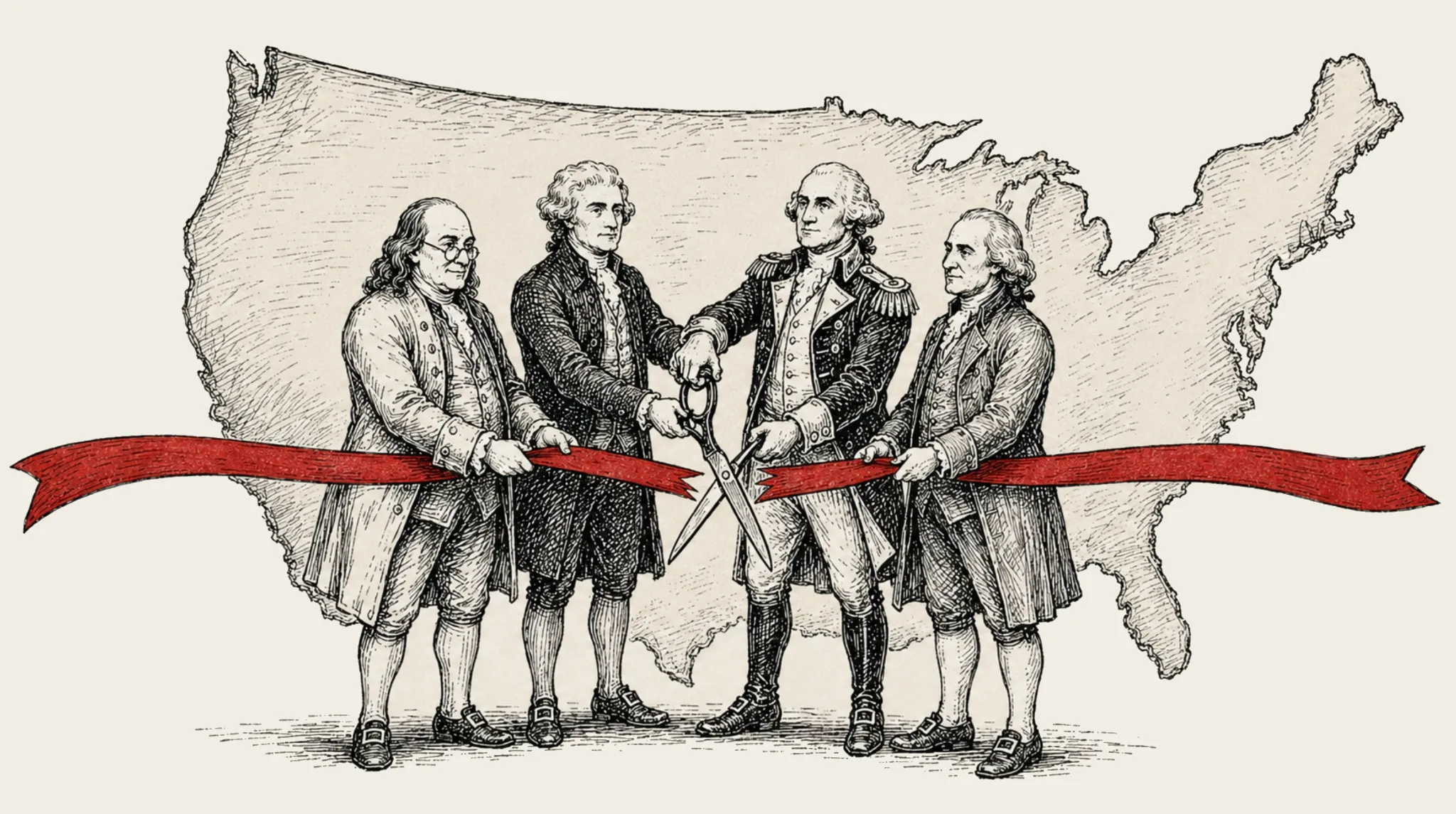
The Founding Owners The declaration of independent businesses July 4, 1776. A sweaty room full of rebels sign their names to one of the most important documents in history, committing treason against the most powerful empire on earth. We refer to these brave men as the Founding Fathers. But they were also owners. John Hancock inherited one of the largest shipping and import operations in the colonies. He owned a fleet of ships, a chain of retail stores, and hundreds of employees. As someone dependent on imports, he knew what it meant to operate in an unfair system stacked against the little guy. Especially when it came to that famous refrain, " No taxation without representation. " So when it came time to sign the Declaration, he didn't flinch. He wrote his name so big the King could read it without glasses. Owners aren't afraid to be seen. Benjamin Franklin ran a printing business that disseminated news across the colonies, and sold 10,000 copies of Poor Richard's Almanack a year, every year, for 25 years straight. He also owned 89 rental properties in Philadelphia, and franchised his print shops to other colonies for half the profits. We're not sure what came first, electricity or dividends... But by his early 40s, Franklin was pulling in an income reportedly equivalent to roughly $300,000 a year in today's dollars. As a man who built his fortune brick by brick, he exemplifies what's possible in America's economic system with a little know-how and elbow grease. George Washington ran his 8,000-acre estate at Mount Vernon like a vertically integrated business. Farming, milling, and distilling in one place made his whiskey distillery the largest in the country by 1799. Five copper stills, producing 11,000 gallons a year, were reportedly valued at roughly $120,000 in
The Founding Fathers were also founders: owners, operators, and dealmakers. What July 4, 1776 teaches about the link between ownership and freedom.

How a Weekend Side Hustle Became a 10-Person Firm She Never Meant to Build The accountant who built her firm by accident Meet Heather. "Believe it or not, not all of us went into business to be millionaires." Heather runs an accounting firm in Moore County, North Carolina. 12 years into the profession, she had a comfortable corporate job and zero plans to leave it. Then, about 4 years ago, she started freelancing on weekends. One client wanted Power BI dashboards, and a food truck needed its books done. Nothing she couldn't knock out on a Sunday afternoon. Then one person told two people. Who told two more. Who told two more . Pretty soon the side job outgrew her weekends. So she hired her first employee, Trisha, a semi-retired pro who wanted a part-time remote gig. Trisha did the work, Heather took a small cut, and everybody was happy. The day job stayed put. Then 2 solo accountants in her county passed away right at the start of tax season. Hundreds of local clients suddenly had nowhere to go, in a place already short on accountants. So Heather made a call: take a 3-month leave, do the returns, hire one more person, then head back to corporate. That's not what happened. Those clients told 10 more people, who told 10 more. By the time the dust settled she had "a whole dang firm," and the math on going back stopped making sense. Late last year she joined our Contrarian Boardroom to get help scaling operations. Here's what happened next. Growth rarely asks permission Heather sat down with her Boardroom coach, Carter, and laid out a goal she thought was ambitious: add about $100K in revenue this year, same as last year. Manageable. Reasonable. Carter told her she was thinking way too small, by a factor of 5. " I believe my exact words were , that sounds exhausting, " she
Heather's weekend freelancing accidentally became a 10-person accounting firm. How saying yes to the right clients built a business she never planned.

I Almost Didn't Tell You I Was Pregnant You don't see the part where I'm on the floor with a syringe. You don't see the part where I miss the window. You don't see the part where I have to ask a Navy SEAL to please just hold me because I cannot do it by myself. You only see the part where I post a video about how to build a business. So this is for all the mothers who had to go through difficulty, all those still trying, and all those who it never worked out for. I see you. So here’s the story. I’m 14 weeks pregnant. My husband and I are having a baby, and we’re thrilled. I want to say that out loud because I’ve spent years unable to. If you’ve spent years not being able to say something, anything , you know what comes next in the body before it happens. The tightening of the chest. The reach for the phone you shouldn’t be reaching for. The moment you almost tell the cashier at the grocery store, of all people, because she doesn’t know you, and you don’t have to perform for her. It’s not just about me though. It’s about us. My husband is a former Navy SEAL and the most capable man I know. He follows through on what he says, he doesn’t forget anything, and he fixes the things that break in our house and most of the things that break in our company. He fixes things for a living. He fixes things on principle. For years, I’ve had to tell him, over and over, that there was nothing he could fix. The thing was inside my body, and the doctors didn’t know yet whether it would work. There was no door he could break down, no plane he could call, no plan he could write that would solve a hormonal cycle that didn’t care about who he was. He had to sit on the edge of the bed and watch. It was damn hard on him too. One night, I had to look at him and say, “ Chris, I am not handling
Codie Sanchez on the part of the story you don't see: IVF, fear, and building businesses while trying to become a mother. A letter to the mothers.

How She Built a Multi-Million Dollar Wellness Practice After Going Bankrupt From Bankrupt to Multiple Millions Meet Dr. Mollie James She’s a former trauma surgeon and ICU doctor, and having spent the worst months of the pandemic in a Brooklyn ICU, she's the real deal. She’s also a kick-butt owner who’s grown James Clinic into a multimillion-dollar integrative and concierge wellness practice , doubled revenue every year since 2021, and grew a team from two people to 54. All of that AFTER she went bankrupt in 2018. Stud. She joined The Contrarian Boardroom last August, and the year since has been a masterclass in what separates a business babysitter from an elite operator. Let’s dive in... Being good at your job doesn’t make you an owner Dr. James opened her first two practices on a belief a lot of skilled operators share. “I'm excellent at what I do, so people will find me. We'll figure the rest out.” So she opened her doors without any marketing, sales, or SOPs... And went bankrupt. Most business owners would’ve thrown in the towel right there. Not her. Undeterred and passionate about helping people, she rebuilt. James Clinic opened in September 2021 with her as the care provider, one nurse, a laptop, a website, and a cell phone. When Delta hit the clinic scaled fast: 25 staff, 100 new patient consults a day, and roughly 4,000 patients treated in four months as a brand-new business. Then Omicron swept in, and revenue dropped 90% overnight. She had to cut the team down and rebuild again , this time centered around concierge and integrative care. That version has doubled every year since. Here’s the lesson: your skill is the product, but it’s not the business. The business is the vehicle that gets the product to the right people, prices it correctly, and keeps the lights on
Dr. Mollie James went from bankruptcy to a multimillion-dollar wellness practice, doubling revenue every year since 2021. Here's her comeback playbook.

The ONE Regret That Haunts You Forever Bill Perkins always knows exactly what to say to get you thinking. We were at a Main Street Over Wall Street event, surrounded by people who had already built businesses, bet on themselves, and done “hard” things. And Perkins, hedge fund manager and author of Die With Zero , stood up and said something that’s still clanging around in my head: "All of my regrets basically come down to one thing: whenever I didn't do my best . Whatever period of life you're in, if you've chosen a dream, do your fucking best to pursue it. " -Bill Perkins In a world where it feels like everyone’s looking at you and you’re one wrong move away from being memed, it’s easy to phone it in and play it safe. But you shouldn’t. Because that’s how you die with regrets. The Avoidance Trap Most people spend their lives afraid of the wrong kind of regret. They're terrified of failing, of looking stupid, or of putting real effort into something and having it not work out. So they hedge. They keep 1 foot in and 1 foot out, "think about it" for another year, and then try a half-assed version of the thing they actually want to do. And here's the painful irony: that avoidance is exactly what creates the regret they were trying to avoid. You won't regret trying and failing, but you WILL regret trying halfway. How To Minimize Regret Jeff Bezos figured this out in 1994. (You’ve heard of him, right?) As the story goes, he had a secure, well-paid job at a Wall Street hedge fund, when he had this crazy idea for an online bookstore. His boss warned him to think carefully before throwing it all away, so Bezos gave himself 48 hours and built what he called the Regret Minimization Framework . Here’s how it works: project yourself forward to age 80, look back, and ask 1
The ONE Regret That Haunts You Forever
How She Beat Out An Industry Vet and Bought Her Dream Business for $65K "I'm a clean freak. I love laundry. I just didn't know that was a business plan." Meet Erin, Owner of Crossway Laundromat: Erin is a mom of three who taught elementary school for 15 years in Naples, Florida making about $70,000 a year. After beating cancer, the way she thought about time shifted dramatically, and she wanted to figure out a way to spend more of her life with family. So Erin spent a year searching, considered almost every business category imaginable, and even lost about $15,000 on a bad deal. Juuuust when it looked like it might not happen, she closed on a Tallahassee laundromat for $65,000. One month in: Tracking $250K in revenue Saved $8,000 a year on insurance, renegotiated immediately Projected $8,000+ from the vending machine (it was empty at closing) Found evidence of ~$30K in skimmed revenue she didn't know was missing Here's how she got there, and what it can teach anyone who thinks they have to go big to get going. The Year of False Starts. "Every other month I'd say, okay, now I'm looking at this one. My family thought I was the girl who cried wolf." Here's what Erin did before she bought anything: spun her wheels for a full year. (She also lost about $15,000 along the way.) On one deal, Erin put a deposit down, paid the attorney to review the lease, and then watched it all fall apart. Her husband was practically ready to stage an intervention. Which is why we tell every single member on day one: figure out what you want before you go shopping. I’ve talked about it before, but you absolutely MUST fill out your Deal Box. If you don't, you're gonna end up with a cart full of shiny bullshit that can't sustain you. And I know it can be tough to go through the process
Erin, a teacher and cancer survivor, beat an industry vet to buy her dream laundromat for $65K. How she won the deal and her advice for first-timers.

How to Rewire Your Brain for Business Success Proof Changes People About a week ago I posted a story of me jogging, talking about Snoop Dog. And it got a TON of engagement. Maybe because running in this sweltering Texas heat makes for a funny video, or maybe because we all love Snoop... But maybe, just maybe, it’s because something about running reminds us how capable we are of incredible things. Take the 4-minute mile: Physiologists called it impossible, there was a rumor that just attempting it could kill you, and most runners were too afraid to even try. So the world record had been stuck at 4:01.3 since 1945. Elite runners trained their entire careers but kept coming back defeated, each one of them just a few agonizing milliseconds short. The experts had reached a consensus: the human body just couldn’t do it. Then on May 6, 1954, a 25-year-old medical student named Roger Bannister crossed the finish line at Oxford's Iffley Road track in 3 minutes, 59.4 seconds. But that’s not the coolest part... Only 46 days later, an Australian named John Landy ran a 3:57.9. And within 3 years, 15 more runners had broken through the barrier. The question you SHOULD be asking: If that many people could do it, why did it take so long to break through the 4-minute barrier? The runners training in 1953 trained just as hard as the runners in 1955. Human bodies didn’t suddenly evolve to be a few seconds faster. So what changed? The only thing that mattered. Belief. I’ll say again for the people in the back: BELIEF! Once people had seen Roger Bannister do it, they began to believe they could do it too. And that was enough. Suddenly all their doubts and limiting beliefs didn’t matter. Because seeing someone else do the “ impossible ” rewires your brain. It’s one of the most
The 4-minute mile was impossible until someone proved otherwise. How to rewire your brain for business success with proof, reps, and identity shifts.

How 1 Karaoke Night Became a $700K Entertainment Business "I absolutely destroyed my first wedding. Not in a good way." Meet Stephen “Stir Fry”Rice, founder of Rocket Entertainment His dad owned a trailer park in Alabama, and young Stephen would often ride along on rent collection runs. While that sounds a lot like the logline for a new Taylor Sheridan TV show, learning how to get money from surly tenants during contentious midnight confrontations were Stephen’s business school. Fast-forward through a media sales career (TV, radio), a marketing agency he launched a little too early, a cashed-out 401k, a sold house, and a divorce in 2016... And Stephen needed something new. He wan’t looking for his next business though. Instead, he just wanted a reason to get off the couch after dark. So he started hosting karaoke. The first gig was a Sunday night at a bar he describes as " a dive bar, then amplify that times two. " He didn't own any gear either. He just showed up to work the mic. But he was good at it. Really good. And within a few months he’d bought more equipment , added a second and third night to his schedule, and then the breakthrough: his first wedding gig. " I absolutely destroyed my first wedding. Not in a good way. " Most people would’ve tucked tail and run back to the dive bar. But not Stephen. Undeterred, he locked in and figured it out on the second try. 18 months later, he was running karaoke and DJing 5 or 6 venues a week across town. And his branding was fantastic. Everyone knew him not as Stephen, but as his college nickname Stir Fry . " If you were in Walmart right now and you yelled 'Steven' versus 'Stir Fry,' I would probably pick up on Stir Fry first. " Our boy Stephen had accidentally built himself a little name recognition, and it was time to
Stephen Rice turned one karaoke night into Rocket Entertainment, a $700K events business. His playbook for turning side gigs into real companies.

Here's what that means for the future of business education: The Diploma Was Just a Permission Slip One of the most expensive degrees in America just went on sale. In May, the Wall Street Journal reported that certain business schools are slashing tuition to fill seats. Purdue's MBA is about 40% off, roughly $36k now instead of $60k, and other schools cutting up to half with Johns Hopkins handing 50% scholarships to in-state grads. What you see here is playing out across multiple industries. As interest wanes and attention goes elsewhere, prices are getting slashed. Meanwhile, legacy institutions can lean on “exclusivity” to continue inflating costs. But I want you to focus on the MBA flash sale, because when a product gets marked down that hard, that fast, the market is trying to tell you something. So listen up: Education used to run on a simple trade. You give it 4 years and a pile of money in exchange for a stable career with a decent salary. But the degree was never really about what you learned. It was just a permission slip, a foot in the door, a note that let an employer skip some of the hard, expensive work of judging you for themselves. The diploma said: Safe to interview. That's the actual product. Not knowledge — permission. And right now, the market is repricing that permission slip in real time. But why? Because the market doesn’t care about your doctor’s note anymore. Just watch how the schools are responding. They're not rebuilding the product, they’re cutting prices and pasting the letters "AI" onto the syllabus. If the one of the most prestigious, most expensive credential in the country gets moved to a 40%-off rack... What exactly is the advice you're about to give your 17-year-old? There was a time, not that long ago, when you could skip the line
Here's what that means for the future of business education:
How She Bought a Locksmith Business Doing $1.3M in Total Revenue "I didn't really know how to analyze a business myself. I didn't know what to look for." That was a year ago. Now she owns her own locksmith business. Meet Mary. She read Rich Dad Poor Dad in college, and it flipped a switch. Financial independence Investing Ownership She went all way down the rabbit hole. By 23, she owned her first rental property in San Diego, a mix of long-term and medium-term tenants. She held it about a year, sold it, and made her money back plus a little extra. A fine result. But one thing nagged at her. The returns on a long-term rental weren't much better than just parking the cash in the stock market. She'd taken on a second job as a landlord for basically the same number. Around that time, she found Codie on social media, read her book, and watched a webinar. And the idea of owning a real business (one with cash flow and customers) got its hooks in. She joined Contrarian Academy in June of last year. Then, and this is key, she actually used it. After a 4-month search and a deal that nearly died twice, Mary closed on an established San Diego locksmith business this March. Since closing, Mary has: Built a 3-person dispatch team from scratch and trained them to run tickets from 7 a.m. to 11 p.m., 7 days a week Brought on a Google Ads specialist to level up her leads Recorded every call with the seller to build a rock-solid operations manual "I loved that there were deal coaches and other people who'd bought similar businesses who could give me their insight. That's why I joined." Here’s how she did it. How She Found a Business That Came With Customers Attached Mary didn't just casually browse businesses. She hunted. For the first stretch after joining, she spent 1 to 2 hours going
Mary read Rich Dad Poor Dad, bought a rental at 23, then a locksmith business doing $1.3M in revenue. How she learned to analyze and close her first deal.

You're asking the WRONG question... I have (no joke) had thousands of people ask me what business they should buy. And every single time, I tell them they're asking the wrong question. There isn't one right business... But there is one right business for you. Most people skip that last part, and it can cost them years. You know what happens when you buy a new pair of shoes without thinking about how they fit? You get blisters. (Ouch!) The same thing happens when you buy the wrong business. Except instead of painful lesions on your heels, you get to sink tens of thousands of dollars into a sinking ship. No bueno. You might spend 18 months staring at SBA listings, copy-pasting BizBuySell links in your group chat, and convincing yourself the next car wash is the one. And when it isn’t, you walk away, start over, and (eventually) quit. Here’s the thing though, I don’t think you’re a quitter. I just think you’ve been asking the wrong questions... (I’ll get to the right question in a minute.) See, I used to examine every small business that came across my desk like it might contain the answers to the universe. Which is exactly how I wasted hundreds of hours spinning my wheels. And while it didn’t quite drive me insane, it came pretty close... But the problem wasn't with the businesses, the problem was that I had no filter. So I built one. The Deal Box The right deal mirrors the buyer. But how do you hold that mirror up in the first place? I call it The Deal Box, and before you scroll a single listing, lock in these 6 criteria. It’ll save you a ton of time, and (possibly) your sanity. The YOU side: Your Ideal Owner Experience — what do you want your life to look like as the owner of this thing? Hours? Travel? Energy? Your Zone of Genius — what work are you good at and can't
'What business should I buy?' is the wrong question. The right one: which business is right for YOU? How to find your fit and skip the blisters.

3 Powerful Lessons to Help You Buy Your First Business Welcome to The Main Street Minute , your shortcut to small business buying and scaling. Today, we’re diving into 3 powerful lessons our Academy members learned buying their businesses. Inside today’s story: How thinking small is holding you back Why you should look closer to home for deals What makes a seller choose you over everyone else 1. Thinking small can be risky... Meet Katie and John. Katie has spent her career as a non-owner operator, managing teams and running operations across multiple businesses. John spent nearly a decade as a firefighter, and before that, worked in sales. Before they ever met, they had something more fundamental in common: parents who built something from scratch. John is a first-generation Mexican-American. His mother cleaned houses. His father ran a landscaping business. Katie's father built and ran his own medical practice. " We both came from hard-working parents ," John said. " When Katie and I met, we connected on that. We both knew we wanted to be business owners. " They started by chasing the startup dream, jotting down ideas, trying to find the right one. Then a friend introduced them to business acquisition. They joined another acquisition program, got close on a few deals, but nothing clicked. In January 2025, after attending one of our virtual masterclasses , they joined the Contrarian Academy. And after numerous conversations with our deal advisors there, Katie returned to John with one key realization: "I think we’re playing too small." Like many buyers, they approached their acquisition wanting to “go small” to reduce risk. That’s understandable, but “small” often turns out to be surprisingly risky . Katie and John agreed to expand their thinking. They weren't looking
3 lessons from first-time business buyers: why thinking small is risky, how to find deals close to home, and what makes a seller choose you.

The family business is SO back The Wall Street Journal ran a story recently that lit up my group chat. A generation of college grads can’t find the entry-level jobs they were promised, it explained. So they’re doing something that might’ve sounded embarrassing 10 years ago: They’re going home to work for the family business. The share of small businesses employing a child of the owner has roughly doubled since 2018, according to payroll firm Gusto. For a long time, the “family business” had a branding problem. It was the thing you did if the “real world” didn’t work out. You couldn’t get the big job in the big city, so you went back home to work under your dad’s operations guy, who’s worn the same fleece since 2008 and somehow knows every customer’s life history. Corporate job: lucky you. Family business: fallback. That’s how it’s been. But times change. The family business may not have sounded sexy when the corporate path looked safe, prestigious, and linear. But now that it doesn’t, the productive asset your family already built starts to look a lot more interesting. Sure, a family business will come with stress, complexity, tension, real risks, hard work, and at least one ancient software system that appears to have been coded during the Cold War. But it can also come with customers. Cash flow. A job. An education. Cool photos you’ll appreciate when you’re older. A direct relationship between effort and reward. An asset that can be improved upon, expanded, sold, or passed down again. It also gives you more time with your family, which is the single most precious asset you’ll ever have. “I’m going to work for the family business” used to sound like a move backward, like you were settling. But lately? It might actually be the move all your friends are jealous of
Entry-level jobs are vanishing, so grads are going home: family businesses employing the owner's kids have roughly doubled since 2018. Here's why.

Would you buy this landscaping biz with 40% margins and no website? She did... “Something in me was like, ‘You need to be a business owner. You’re doing all this work; you know how to do it. You would kill it if you owned a business.” Meet Bethany. Bethany spent years climbing a ladder she was increasingly sure she didn’t want to be on. She started as a registered nurse, broke into medical device sales using her clinical background, and eventually landed a director-level role overseeing a national team. She was good at it. But somewhere in that rise, something shifted. “I didn’t want to work for anybody,” she said. “I just knew it.” She’d been listening to Codie on YouTube for about a year, thinking about her next steps, when her company decided for her: Bethany was laid off. But instead of panicking, she leaned into the severance cushion, joined Contrarian Academy, and started searching for a business. After a long, hard-fought search, Bethany closed on a 20-year-old hydroseeding and landscaping business in western North Carolina in April of this year for mid-6-figures. Since closing, Bethany has: Promoted her crew lead and handed him real authority Added a new hire to extend the team’s capacity Built a full SOP library using recorded seller conversations and AI “Contrarian Academy made this achievable for me. I joined live calls over and over and over. I asked the community and deal advisors tons of questions. And everyone was happy to help.” Here’s how she got there, and what she’s focused on as a new owner. The “Niche Within a Niche” Rule That Helped Her Find the Right Deal Bethany knew she wanted a service business, but she got more specific than many searchers do: she wanted a niche within a niche. Over time, she zeroed in on landscaping services with better
Would you buy this landscaping biz with 40% margins and no website? She did...

The hottest businesses right now have dad bods By the end of this, you’ll understand exactly what that means. Let’s start here: The future is going to be awesome. Yes, it’s AI agents, automation, robotics, software, new tools, and new workflows. BUT... It’s also a local fire sprinkler company with 30 years of happy customers and a truck. It’s a roofing business using AI to quote faster. It’s an HVAC company with better dispatch software. It’s a plumbing brand with an ugly website and a customer who needs someone there by 3 p.m. because in 2050, water will still be doing things water shouldn’t do. That’s what makes this moment we’re living in very, very interesting. Over the last few weeks, we’ve been deep in the data, talking to Main Street business owners, operators, AI innovators, and buyers about where all these things are headed. Then we turned everything we found into this... » Our 2026 State of Main Street report : It’s a beautifully crafted, 40-page report on Main Street business trends, AI adoption, financing, and ownership. And we’re launching it... * checks watch... * now. We probably shoulda charged for this... Oh well. Too late now. For now, it’s completely free, and you can get it here: Small businesses employ 46% of the workforce and create 64% of new jobs. So if you care about where the real economy is headed, this is required reading. BUT before you dive in, it’s worth understanding some of the tectonic shifts shaping it all. In fact, you should think of this report as a wake-up call, and here’s why... Welcome to the Hot Dad Bod Economy If there’s 1 thing that’s become clear, it’s that business builders everywhere are growing way less seduced by what looks “hot” on the outside and way more attracted to what’s actually considered “fit” when it comes to
The hottest businesses right now have dad bods: boring, profitable local companies getting superpowers from AI. Where smart money is looking next.

We Went Full Nerd on the Main Street Economy. Here’s What We Found... Welcome to The Main Street Minute , your shortcut to small business buying and scaling. Below, we’re giving you one of the coolest things we’ve ever made... completely free: Our 2026 State of Main Street Report. Yup, we nerded out hard, went a little crazy, and made you a beautifully crafted, 40+ page deep dive into everything we’re seeing right now in the small biz economy. When we started, we asked a simple question: What are America’s small business buyers and owners actually thinking? We thought finding out would be a quick project. Boy, were we wrong. As you probably know, the SMB acquisition space is en fuego 🔥. But good data on who’s actually doing it? Almost nonexistent. So... we fixed that, with the help of our own community: Hundreds of surveys, dozens of interviews, and 40+ pages of insights later, we ended up with one of the most detailed looks ever at Main Street business trends across acquisitions, technology, and more. Click HERE to get the free report Yeah, we probably should’ve charged for this... Too late now. Small businesses employ 46% of the workforce and create 64% of new jobs. If you care about where the real economy is headed, this is required reading. You can grab a copy today, totally free, by clicking here: Inside you’ll find: 📊 Real market data on SBA lending 🧠 Business buyer demand trends 🤝 Data on the ownership succession gap 🔍 An inside look at Main Street tech and AI Down below, get a peek under the hood, in 5 charts... 👇 But first, there’s something you need to know... If you didn’t know better, you might think it’s impossible to buy a business right now. We get it. These days, the LinkedIn doom posts are all screaming “valuations are through the roof everywhere ,”
We went full nerd on the Main Street economy: 40+ pages of data on small business buying and scaling. Get the 2026 State of Main Street Report free.
Click here to download the 2026 State of Main Street report
Download the free 2026 State of Main Street Report: 40+ pages of data on small business buying, scaling, and the forces reshaping the Main Street economy.

You Have More Options Than You Think, But Less Time Most people drastically underestimate the number of paths available to them in life. They think there are 5 good options when there are more like 5,000. The problem is, it’s hard to grasp that. People usually refer to this visual to explain it: Here’s why this matters to you, right now: We’re facing the end of the “career” as we know it. Yes, the 30-year “career” is slowly dying. The world is simply changing too fast to sustain it. Most young people today will live multiple professional arcs. Reassessing, reskilling, and reinventing every 3, 5, 7, or 10 years will become a new normal as AI creeps into the services we all provide. But what does that actually look like in practice? What are real-world examples of people doing this? How do you find profitable pathways you’ve never even considered ? Let’s dive into it... Real people. Real pivots. The people we work with every day in the Contrarian Academy are living proof of this idea. There’s WAYYYY more where this came from, but here are just a few: 1. 30 years in tech support —> layoff —> owning a moving company Rachel spent 30 years on the technology side of a big bank, eventually leading tech support for her entire Minnesota region. In February 2025, she got her layoff notice. “I’m 56. I’m not going to get hired back at a fintech making what I made. Just a fact of life.” She could have spent her time and runway applying to the same kinds of jobs. Instead, she bought a senior move management company just down the road from her house. Rachel today: “I love what I do. I’m passionate about what I do. I care about what I do. I want to do it.” 2. Military contractor —> owning an appliance store Then there’s Erika, who spent her career in cost management for a military
You think you have 5 paths; you have 5,000. Why the 30-year career is dying, and how to use your optionality before the window closes.

How This Plastic Surgery Practice Drove 21% Growth After Years of Flat Revenue “I didn’t know what I didn’t know, and that’s not a good place to be. But now I do.” Meet Randol: Randol has spent years in corporate America. Supply chain management at a $12 billion company in Austin. An MBA. A stint helping the Air Force manage logistics. A run at Tempur-Pedic, where he helped lead the North American supply chain as the company scaled from $500 million to $1 billion. Along the way, he got married. At the time, his wife happened to be finishing her plastic surgery residency and, like many physicians, lacked a business background. So she and Randol decided to work together and build a practice. He figured he’d help get it off the ground over “about three years or so” and then return to do his own thing. “That was fourteen years ago,” he told us, with a smile. For much of that time, the practice grew. Slowly, steadily. But then, starting around 2022, revenue went flat. Randol knew something had to change, and he was willing to do the work to figure out what. So he went looking for the missing pieces. He’d end up finding them in our Contrarian Boardroom. Over the next year or so, the practice: Grew revenue by 21% and profit by 120% Freed up $100k in working capital Launched high-margin, recurring service lines Made its first acquisition of key talent and customers Here’s what changed. 1 Big Way Operators Get Stuck (And What To Do About It) Randol illustrated his business plateau with a framework he picked up along the way: the Rumsfeld Matrix . The especially dangerous quadrant: you don’t know what you don’t know. “I didn’t have any more tricks in my bag,” Randol told us. “I didn't know what I didn’t know. And that’s not a good place to be.” That honest self-assessment is what
After years of flat revenue, this plastic surgery practice drove 21% growth. The operational fixes Randol used to finally break the plateau.

Big Minds Make Money, Small Minds Get Fired I got irrationally mad at one of my good employees... over a spreadsheet. We were reviewing the performance of a sponsorship deal we did. I’m scrolling through the numbers, half‐distracted, when something smacks me in the face. We’d driven a reported 8 figures in revenue to a partner... and we’d charged them low 6 figures. I stared at the screen as if it had personally insulted my mother. “Wait, wait, wait. Walk me through this,” I said. He spun his laptop toward me, proud. “So, they paid us $120k for the package. Based on tracked links and their reported close rate, we drove, well, it looks like about $14 million in revenue. So this is the ROI sectio—” I cut him off. “Stop. Say that again, slowly.” “We, uh, drove... about $14 million. They paid us $120k.” “And you feel good about this?” I asked. He blinked. “Well, yeah. It’s an insane ROI for them. This is why they’ll renew. I positioned it as a steal, so it’s a no‐brainer.” “That’s the problem,” I said. “You positioned us as a steal.” He frowned. “Isn’t that good? We’re supposed to provide overwhelming value , right?” “Sure,” I said. “But overwhelming value doesn’t mean offering Ferrari results for Honda Civic prices.” He looked genuinely confused. And this is a good operator. Sharp, loyal, hardworking. He was doing what good employees often do: protecting the deal, reducing risk, trying to make the customer happy. But his ceiling for what we were allowed to be was painfully low. “Let me ask you something,” I said. “If some other media company walked up to that same sponsor and said, ‘We’ll bring you $14 million in revenue,’ how much do you think they’d charge?” He shrugged. “Probably... more?” “Try 10x more. And they’d say it with a straight face.” He laughed, a little
We drove 8 figures in revenue for a partner and charged 6. The pricing lesson that separates big thinkers from small ones, and how to charge your worth.
How a Military Family Bought an Appliance Store Doing SIM+ in Annual Sales With Little Advertising START HERE “Never in a million years did I think I’d be buying an appliance store...” Meet Erika. Erika spent her early career in cost management for a military contractor. Her husband Kevin was active duty Navy for years, before shifting to aviation maintenance. Their life followed the military rhythm: deployments, cross-country moves, a young family to raise, and a steady but constrictive paycheck. Their business buying spark came from Erika’s dad. As Erika put it, “He loves to browse listings and dream.” One time, he showed her a local bar listed for $68,000 . “Relatively speaking, I didn’t know businesses sold for that little,” Erika said. “We could buy that.” That specific listing didn’t go anywhere, but the idea took hold. In May 2025, with Kevin’s active duty contract ending in December, they sold a rental property in Washington to free up acquisition capital and joined the Contrarian Academy . On March 17, 2026, they closed on a profitable scratch-and-dent appliance store that’s been operated out of the same Central Valley, California, building since 1968. Here’s how they did it. In June, learn the same strategy we taught them. Main Street Millionaire Live is our rapid, virtual bootcamp entirely focused on giving you the practical steps and tools to buy the businesses AI isn’t replacing anytime soon. 👉 Learn more and save your spot here. 1. At first, the right deal might not look like the right deal... For most of their search, the LaCortes weren’t thinking about appliance stores. Their original focus was wedding rentals, something that played to Kevin’s woodworking skills and Erika’s project management background. They looked at virtually every wedding rental
How a Military Family Bought an Appliance Store Doing SIM+ in Annual Sales With Little Advertising

I lead 100+ people. Here’s who survives what’s coming with AI. You can tell a lot about a company by how its leaders talk about their team. When they talk about them... do they look like this: Do they sound like a breath of fresh air? Or like they’re about to be replaced by AI? Do they talk about them like adults? Or, like they’re running a daycare ? After running a business with 100+ people , I’ve started to notice that almost every single person falls into one of two categories. Let’s unpack the two, figure out which one YOU are, which ones you’ve hired, and why the future is going to be incredibly kind to one and quietly brutal to the other. I shared this with my team this week. You might not see the people around you, or yourself, the same way after reading this... STOP RIGHT THERE If you already own a business... Come to Austin next month. Our Growth Accelerator Workshop is 3 days with us looking inside your business to help unlock its next level of growth. Hiring. Cash flow. Marketing. AI. We’ll show you what levers to pull and what to ignore. Not ready for that just yet? ❇️ Start with our upcoming FREE virtual masterclass where we’ll show you how businesses in our network are spotting hidden profit leaks and pulling simple growth levers right now. Now back to the meat... The Hard Truth If you spend enough time around owners, you start to realize many sound like teachers stuck in a bad preschool: “I have to check on my team constantly.” “If I don’t remind them, nothing gets done.” “I’m chasing status updates like I’m collecting permission slips.” But some are different. Some sound more like they’re leading a well-functioning university: “I know things are moving even if I’m not in the room.” “They flag issues early.” “They bring me options, not just problems.”
I lead 100+ people. Here’s who survives what’s coming with AI.

How She Went From 30 Years in Corporate to Owning a Senior Move Management Business START HERE “After buying a business, my husband keeps telling me, ‘You’re saying weird words like, I want to go to work.’” Meet Rachel. Rachel spent roughly 30 years in banking on the technology side, eventually leading tech support for her Minnesota region. Most of those years were great. Then, in February 2025, came the “good ol’ chopping block notice,” as she puts it. Surprisingly, Rachel’s reaction wasn’t panic. It was a celebratory cocktail. After three decades of service, her severance package included 16 months of full pay and benefits. Suddenly she had runway, and a decision to make. “I’m 56. I’m not going to get hired back at a fintech making what I made here. Just a fact of life.” Around that time, a mutual friend nudged her husband, Tony, toward Contrarian Thinking’s Main Street Millionaire Live event, where we show you exactly how to become a business owner by finding, negotiating, financing, and completing an acquisition. He signed up and dragged Rachel along. At first, she was skeptical. But she sat down with her laptop, and by the end of the weekend, something had clicked. “I realized there’s a whole hell of a lot of people out there that are just like me,” she said. “And also a whole hell of a lot of businesses out there looking for owners.” About 1 year later, she’d end up closing on a senior move management company roughly 7 miles from her house. “Today, I’m happy. I love what I do. I’m passionate about what I do. I care about what I do. I want to do it.” Here’s how she got there... In June, we’ll teach you the same things we taught her. Main Street Millionaire Live is our virtual bootcamp entirely focused on giving you the practical steps and tools to buy the
Laid off after 30 years in corporate banking, Rachel bought a senior move management business, and now she actually wants to go to work.

The Privatization of Investing In 2021, Allbirds, the shoe brand, went public at a $4 billion valuation. It did not work out as planned. This week, after closing their stores and selling off the shoe brand for a sum total of $39 million , they decided to throw in the towel and move on. Just kidding! They’re pivoting from wool shoes to “AI compute infrastructure, with a long-term vision to become a fully integrated GPU-as-a-Service (GPUaaS) and AI-native cloud solutions provider.” Seriously. Result: the stock jumped 582% in a day. We’re not here to pile on Allbirds (though the memes were hilarious and induced a whole lot of silent nostril laughs ). But cases like this, where a hot company goes public only to be crushed from the get-go, have made many founders think twice about ringing that Wall Street bell in the first place. Stepping back, what happened this week reminded us of a much larger shift that’s been quietly reshaping how wealth gets built for decades to come. You may not have noticed it yet. You’re about to. Where Did All The Stocks Go? For most of the time we’ve been alive, the average wealth path was simple. Not easy. Simple. Get a good job, invest early and over a long time horizon in public stock indices, and let compounding do the work. Not glamorous, not quick, but generally considered a tried and true formula for building wealth. It’s probably still true. But there are two sides to every coin, and it’s important you understand what’s been changing under the hood in recent years. So here’s what’s been changing: That “diversified” bet we’re all taught to make? It’s actually a fairly concentrated bet on Nvidia, Apple, Microsoft, Amazon, Alphabet, Broadcom, Meta, and Tesla. Together, their market caps represent nearly 40% of the entire index of 500
Allbirds' collapse tells a bigger story: the best returns are going private. What the privatization of investing means for everyday wealth builders.

How They Bought an Off-Market, 20-Year-Old Water Sports Brand Using Creative Financing START HERE "Sometimes the deal you're searching for finds you in the most unexpected way." Meet Katie and John. Katie has spent her career as a non-owner operator, managing teams and running operations across multiple businesses. John spent nearly a decade as a firefighter, and before that, worked in sales. Before they ever met, they had something more fundamental in common: parents who built something from scratch. John is a first-generation Mexican-American. His mother cleaned houses. His father ran a landscaping business. Katie's father built and ran his own medical practice. "We both came from hard-working parents," John said. "When Katie and I met, we connected on that. We both knew we wanted to be business owners." They started by chasing the startup dream, jotting down ideas, trying to find the right one. Then a friend introduced them to business acquisition. They joined another acquisition program, got close on a few deals, but nothing clicked. In January 2025, after attending one of our virtual masterclasses, they joined the Contrarian Academy. What followed was a rollercoaster year that tested them in ways they hadn't anticipated, but led them to a $2 million acquisition of Rubber Dockie , a water mat and inflatable manufacturing and e-commerce brand based in South Dakota. Here's how they got there. 1 Early Shift That Changed Everything... When Katie and John first started searching for businesses, they were thinking small. Over the course of their search, they signed around 100 NDAs, submitted multiple LOIs, and entered due diligence multiple times. "But every time we got to talking to the seller, things just didn't seem intuitively right," Katie said. So, in May 2025
Katie and John bought an off-market, 20-year-old water sports brand using creative financing. How unexpected deals find prepared buyers.

We're living in a K-shaped world The most important letter in the alphabet right now isn't a, b, c, x, y, or z. It's k. For many, life is feeling K-shaped, in more ways than one. Everywhere you look, it’s: prosperity and precarity. Boom and bust. Opportunity and stagnation. Up or down. Accelerate... or die. Just look at the data. Here’s one example: The stock market is ↑, while consumer sentiment is ↓. That may sound strange until you think about what it actually represents. Stocks —> people who own Consumer sentiment —> people who owe The stock market’s performance largely measures how the top 10% feel. Consumer sentiment measures everyone else. Also, lots of stuff can contribute to K-shaped dichotomies like this in the market. But what’s becoming increasingly clear is that this K shape is appearing... everywhere. The nature of your work. AI skills. Asset exposure (stocks, real estate, business ownership). Once you start to see it, you can’t unsee it. Here’s what we mean... K-shaped trends you need to see... Let’s start here. The top 10% now account for nearly half of all consumer spending. “This is why the economy can look strong in the data while millions of people feel like they're falling behind,” as Peter Mallouk put it . Another one: Homeownership is going “great”... if you're 70: But not great if you’re 30... As Scott Galloway said: “We’ve broken the social contract that binds America: Work hard, play by the rules, and you’ll be better off than your parents were. For the first time in our nation’s history, this is no longer true... Neither the minimum nor median wage has kept pace with inflation or productivity gains, while housing costs have outpaced them... A decent proxy for the success of a society is how it treats children... Can we answer a simple
Stocks up, sentiment down: we're living in a K-shaped world. What the great divergence means for your money, and how to land on the right side of the K.

How This Couple Bought a Mobile Swim School Business Without Quitting Their Jobs START HERE “I hated the idea of starting a business. What I'm good at is running it, organizing it, making everything efficient.” Meet Tihana. Together, Tihana and her husband work remotely for a fitness company. Tihana manages a team of contracted coaches and coaching managers. Her husband leads a sales team. For years, Tihana knew she wanted to own a business. Not build one from scratch, but buy one, step in, and run it. Last year, they joined the Contrarian Academy and started searching almost immediately. Their original deal box was focused on pet businesses: grooming, boarding, anything in that world. But those deals are hard to find and often sell quickly to PE for unreasonable multiples when they do appear. So they kept looking. Then a mobile swim school in Los Angeles came across Tihana’s screen. Her first reaction was to pass. The revenue was low. It wasn't an industry she had in mind. Not the right fit. A few weeks later, she reconsidered and took another look. That second look changed everything, and Tihana and her husband ended up acquiring the business in March 2026. In the process, they negotiated the asking price down significantly, and they are now the owners of a 20-year-old, fully remote, asset-light business with a problem many new owners would love to have: more client demand than they can currently fulfill. Here's how they got there. Why the "wrong" business turned out to be the right one The mobile swim school was founded in 2006 and had been under the same owner ever since. The model is straightforward: independent contractor swim instructors travel to private homes and teach children to swim at their own pools. The business also offers lifeguard services for
Tihana hated the idea of starting a business, so she bought one. How this couple acquired a mobile swim school without quitting their jobs.

The Invisible, Profitable, Unsexy Businesses Behind The Trillion-Dollar AI Boom In 1958, an economist named Leonard Read wrote an essay narrated by a pencil. A pencil? Why? Because he wanted to make a point about how the economy works, and he figured the most ordinary object he could find would make it best. The essay traces the pencil, quite literally, back to its roots in the ground. The cedar in the wood grows in Oregon. To cut it down, you need loggers. To equip the loggers, you need saws. To make the saws, you need steel mills. To transport the logs, you need trucks and truckers, tires, and oil. To run the logging camp, you need a cook. A cook needs food, which comes from farms and so on... As Read points out, even the cup of coffee the loggers drank at breakfast was touched by an "untold thousands of persons." And that's just the wood. He then runs through the graphite, the lacquer, the brass, the eraser. By the end, a six-cent pencil had quietly involved millions of people and businesses across dozens of countries who never met and had no idea they were building something together. His conclusion: no 1 person or business actually knows how to make and deliver a pencil in its totality, from start to finish. Great essay. Required reading in economics classes everywhere. And also, it turns out, a perfect way to understand why today’s AI boom is one of the best small business opportunities of our lifetime. Below, we’ll show you why. The World's Most Sophisticated Technology Requires a Guy with a Porta-Potty Very few people are running that same pencil exercise on a data center. And more should be. Amazon, Google, Microsoft, and Meta have announced ~$700 billion in AI infrastructure spending for 2026. Not over the decade. This year. The White House has launched AI
Behind the trillion-dollar AI boom sits an invisible supply chain of profitable, unsexy businesses. Where Main Street fits in the AI gold rush.

Step-by-Step Guide to What You Need to Know Before Selling a Business START HERE How To Build a Business So Good, You Never Need to Sell It (Step-By-Step) We work with hundreds of scaling business owners (and buyers) every day. So many people run their business until they're miserable... And then they try to sell it and look like this: Don't be like most people. Build a business so it's sellable... and you'll never “have to” sell. Still, the harsh truth is that selling a business is far easier said than done. Owners reach out to us all the time asking for guidance. Often, they aren’t focused on selling until it's too late, and then they're forced to sell for less than they want. Here’s the reason that’s so tough. The second half of the Owner Wealth formula — and boy is it an important half — only works when a business is sold. Understanding this simple formula can change your entire financial future: That’s why the 1st thing we usually tell someone to do if they’re looking to sell their business is head over to BizScout . BizScout guides you to the partners, data, and resources to do it right. Here’s what’s also cool: BizScout has... 140,000+ active buyers 50,000 buyer-seller connections under its belt A large population of well-educated buyers The BizScout team also vets buyers before making a connection. And yet another cool thing? Tons of listings on BizScout have been in business for 5, 10, or even 20+ years. Some of the best companies our Contrarian Academy members acquire have been in business for years on end. It’s why they’re so valuable. They carry years of financials, customer relationships, and vendor connections... things that prove ridiculously useful once a deal gets done. So much of selling a business is understanding what makes it valuable in a
Step-by-Step Guide to What You Need to Know Before Selling a Business

1 Old Principle That Made Us Millions The Egyptians figured it out 4,500 years ago. Archimedes wrote it down 2,300 years ago. And, as Sam Altman and Naval Ravikant would probably tell you if you asked them today, all these years later, leverage is as powerful a force as ever. By the time we made our first real money, we'd never been in the same room as Naval Ravikant. But somewhere between Wall Street and Main Street, a few lines he wrote rewired the entire way we thought about work, money, and time. Here's the idea that cracked things open for us: Most people try to get rich by “working harder,” but not the wealthy. Sure, they work hard. Very hard. You have to. But that’s probably not how they got rich. They might not even know it, but they got rich by using leverage. Naval defines it simply: leverage is a force multiplier. It decouples linear inputs and outputs. Instead of 1x input equaling 1x output, it enables an output greater than 1x (and often, 10x , 100x , or even greater than 1000x larger). But most people don’t realize that leverage comes in many shapes and sizes. Naval identified these: We've spent years trying to apply these in the real world, in our business, and helping others see how they can, too. Force 1: Labor Labor leverage is simple: other people's time and effort, directed by your judgment, producing output you couldn't generate alone. Nearly every civilization, every empire, and every company in history has been built on this principle. The railroads. Oil giants. Your local hardware store. McDonald's. McDonald's is worth studying. Ray Kroc didn't invent the burger. He built a system so airtight that hundreds of thousands of employees across 40,000 locations could execute it identically, every single day, in 100 different countries. ResiBrands
Leverage built fortunes from Archimedes to Naval Ravikant. Here's the 4,500-year-old principle we used to make millions, and how to apply it today.

Behind the Scenes: How 3 People Built or Bought Their Way to Ownership UNIVERSAL LESSON 1. The 10x ROI of Being in the Right Room If you want to know where future fortunes will be made, don’t look at markets; look at rooms. Why? Wealth follows proximity . The closer you are to capital, information, and ambition, the higher your expected return. Economists call it agglomeration , the phenomenon where productivity and innovation rise as people and ideas cluster together. By the time Kelly joined our programs, she already had a relatively established firm and a clear operational base, with acquisitions ranging from just $35k to about $750k. Each deal taught her something different: How to retain legacy clients How to absorb staff How to clean up old systems How to handle seller transitions How to merge books of business without losing quality How to spot red flags faster But over time, she also learned that she felt something else: isolation . That proximity to other business builders and expert advisors changed how she thought about acquisitions mechanically. “I didn’t quite understand that I’d be able to bolt a larger acquisition into what I already have... That confidence came from learning that what I had in place was actually pretty good.” Larger acquisitions... Building an empire... These didn’t feel like a stretch anymore. They felt within reach. Read her full story BUYER LESSON 2. Turn Your Biggest Expense Into a Cash-Flowing Asset For over 25 years, Alex has built a career as a magician. He wanted to buy a business to supplement his income, but he wasn’t sure what type of business would be right for him. He had no obvious experience in the service industries that often dominate acquisitions. But there’s a strategy we love called the Satellite Acquisition Model
How 3 people built or bought their way to business ownership, plus the 10x ROI of being in the right room and lessons to steal from their playbooks.

How We Built an AI-First Business (And How You Can, Too) So we posted this on X the other day, and safe to say it got some eyeballs... So we wanted to dive in a little deeper and explain our thinking. Okay, a lot deeper. In a sentence: almost no one is making the most critical hire they should be making right now, because they don’t know what to... call it? Every company knows they need to “implement AI.” But very few have intentionally hired the people responsible for actually doing it. We’re talking about people who live inside your business and use AI to eliminate processes, compress timelines, and increase output across every department. These roles don’t really have widespread names yet. “AI Specialists?” “AI Generalists?” “AI Engineers?” “Claude Whisperers?” “Someone to please, for the love of God, handle this because we’re not experts, we don’t have the time to become experts, and this video feels extremely relatable:” Here’s the correct answer... It honestly doesn’t matter. The right person for this job probably won’t care what you call them or what their title is. They’ll be too busy using AI as a high-tech drain snake to unclog your business’s spigots. But you do need to call them something, something that can, at the very least, attract them to your business. Example: here’s what we’re calling a role we’re hiring for right now : Yup, real role. When we sat down to write the job description, we didn’t try to write some sophisticated corporate lingo bingo. Instead, we just described exactly what we’d want to see if we were on the other end of the screen: brutal honesty. Here’s the very first bullet under “what your days will look like...” BUILD AND CREATE COOL THINGS! Some other things we called out plainly... The person should be: Obsessed with vibe coding
Almost no one is making the most critical AI hire. How we built an AI-first business at Contrarian Thinking, and the playbook to do it yourself.
How They Bought a Profitable, 45-Year-Old Window Distribution Business START HERE “It really is so important to put yourself in the right rooms.” Meet Anthony and Alex. Anthony is a software engineer. Alex is a CPA-turned-MBA who spent years in management consulting and corporate strategy. They met a few years ago in a mastermind group focused on buying hotels, and together with a couple of partners, they did exactly that. The hotel, as they told us, was a great learning experience and gave them both a ton of confidence. But it also taught them a hard lesson about cash flow. A hotel is what they call the "asset-heavy, cash-flow-light" side of the business barbell. "We realized that the hotel was not providing a lot of cash flow for us," Anthony said. They needed the other side of the barbell: an asset-light, cash-flow-heavy business that could replace their W-2 income and fund future deals. So, they quit their jobs, joined the Contrarian Academy, and went all in on that thesis. That said, they were calculated about it. Anthony kept doing software consulting on the side, and his wife was working full-time along the way. Alex and his wife built a 24-month reserve, cut discretionary spending, and supplemented with income from her small business, hotel consulting gigs, and a long-term rental. After reviewing hundreds of businesses, and using an SBA loan, they recently acquired a 45-year-old window and door distribution company in San Diego. The business does “high-single-digit millions” in revenue with “15-20% margins”, has a lean team of just four employees, and virtually no inventory on hand. Here's how they found it, why they bought it, and what they're doing now. THE SEARCH How 1 cold call beat out months of browsing One of the first lessons this duo learned was
A software engineer and a CPA bought a profitable, 45-year-old window distribution business. Why the right rooms led them to the right deal.

The business tactics of the future will look a lot like the past. We just sat down with Bill Gurley, a billionaire and one of the leading venture investors on earth. Bill is an early backer of Uber and many other things people use every day. Bill spent the last decade studying one question : why do some people end up loving their work while most spend their careers staring at the ceiling at 2am wondering where it all went wrong? The answers, he learned, are a set of timeless truths . The best strategies often are timeless. Jeff Bezos figured out the same thing from a different angle. He’s said that most people incorrectly obsess over what's going to change in 10 years, while almost nobody ever asks about what's NOT going to change. Instead of focusing his energy on changes, he focused it on constants. The result? Pure magic. So today, we wanted to highlight another constant we all share, but largely underutilize: Being a homo sapien. Damn, that sounds cringe... But it’s not a joke. Do you sneeze? Congrats, you’re halfway there. The alpha move in an AI world is almost offensively simple: be a human who uses AI but goes the extra mile to do the human thing . Because here's what's coming. AI is about to hose down every scalable channel simultaneously. Soon, everyone will be automating 700 LinkedIn messages a day, and none of them will land because everyone will be doing it and everyone will know. As everything digital turns hollow, the value of the unscalable human touch is about to go through the roof. There are a lot of ways you can add a touch of humanity in your business. We call them Magic Moments. Magic Moments are the unnecessary, unscalable things you choose to do. As JFK put it, “not because they are easy but because they are hard.” Sure, he was talking about
The business tactics of the future will look a lot like the past.

How He Built a Franchise and a 6-Figure/Month Online Business Before Age 25 START HERE "Revenue is vanity. Profit is sanity. Cash flow is reality." Meet Jared. Jared is 24 years old. Never had a W-2. Never finished college. He grew up working in his dad's funeral homes in New Jersey, where the lesson was simple: "Number one, if you don't work, you don't eat. Number two, don't work for anyone." It stuck. At 16, he started his first marketing agency. It took nine months to make $5k, but eventually it took off. Then COVID hit. He rebuilt in a new niche, scaled a second agency to $300k a month in revenue, tried to exit, but walked away with little more than what was already in the bank. A few more swings followed. Some worked, some didn't. By 2024, eight years into entrepreneurship, Jared had experience and scar tissue. Here's what he’s done with it: Opened an ice cream franchise and did nearly $1M in revenue Acquired a capital-stacking business via seller financing Grew it to $200k+ in monthly revenue and $100k+ in net profit Built an 11-person global team with no outside investors This is the story of how he got there. LESSON 1 The Constraint Framework That Runs His Entire Life Jared spent the first nine months of his first marketing agency making less than $5k total. He'll be the first to tell you that's not unusual. "People think they're going to get into business and see massive success. They don't realize there's going to be periods where you’re just going to feel stuck. A lot of people give up at those points." He didn't. Instead, he developed a habit he still uses today: at any given moment, he's asking himself what the single biggest problem actually is. Not a list. One thing. And he puts his energy there until it's solved. "At a certain point, I looked around
Jared is 24 and has never had a W-2. How he built a franchise and a 6-figure-a-month online business by following one rule: don't work for anyone.

How We Turned 1 Email Into a Portfolio of Profitable Businesses Here's what we've built at Contrarian Thinking: An advisory business with ~3000 members. A venture capital firm. A New York Times bestselling book. A top-10 business podcast. A 1,000-person annual conference. A software platform for buying and selling businesses. Ownership stakes in a portfolio of Main Street companies. A media operation reaching 12 million people. A team that outgrew two offices in 12 months. People often ask how we built all of this. They're usually expecting some sophisticated answer about capital allocation or brand strategy or a lucky break. The real answer is comical in its simplicity: We sent some emails. Yup, one of the most important business moves we ever made cost nothing and took 20 minutes to get off the ground. No investors. No permission. Just a decision to start a newsletter and actually send it to people. Here's how it happened and how you can steal the model. We Started With Something Mega-Cringe 5 years ago, we grabbed every contact we could. And we wrote them a newsletter out of nowhere. Just an honest, unpolished note about our goal, plus some thoughts on money and business ownership. The stuff we heard people in finance talk about behind closed doors but never really say publicly. We almost didn't send it. Spent a solid chunk of time convincing ourselves it was a terrible idea. Then we got the hell over cringe mountain and hit send. Even Harley Finkelstein, President of the $200B company Shopify, agrees. “Cool waits for results; cringe creates them.” Hey, it worked for us. 102 people opted in. That was our launch list. What followed was 4 genuinely chaotic weeks focused on growth. LinkedIn posts, Facebook groups, podcast appearances, lead magnets, tagging bigger
One newsletter became an advisory firm, a VC fund, a bestselling book, and a portfolio of businesses. The distribution-first playbook behind it all.

How This Security Company Hit $1.2M with 40% Margins and Great Employee Benefits in 2 Years START HERE "We wanted to get in the room with those who have done it and are doing it." Carmelo's career never moved in a straight line. Engineering. Nightclub bouncer. Forklift operator. But no matter where life took him, it kept pulling him back to one field: security. "This is what I was good at," he said. His business partner, Alex, is a military veteran. Calm and measured, where Carmelo is energetic. "He is a legit, bona fide war hero," Carmelo says. "He doesn't brag about it much. I do." The duo was running separate security operations when they looked to take a leap of faith and join forces. That leap became a private investigations and armed security firm based in Pennsylvania. They launched officially in 2024. After roughly 18 months in business, Carmelo and Alex: Closed their first six months at $241,000 in revenue with a ~ 40% profit margin Scaled to $1.2 million in 2025, their first full year, again at ~ 40%+ margins Built a team working across a dozen active sites , including 24/7 accounts Launched medical, dental, vision, and 401K benefits before their second anniversary Are now in due diligence on 1-2 acquisitions of other security companies Here are 4 key lessons they’ve picked up along the way. LESSON What happens when your 1st payroll coincides with a global banking outage Carmelo and Alex’s business nearly didn't make it past its first payroll. That first payday, in 2024, a global cloud outage took down banking systems across the country. Airlines couldn't operate. Hospitals were scrambling. And their business, despite having a full account balance, could not move a dollar of it. "The money's in the bank account. It's there. We have the money to pay our
Carmelo and Alex built a security company to $1.2M with 40% margins and great employee benefits in 2 years. Their step-by-step growth playbook.

America’s Hidden Civil War America is fighting a civil war. No one "declared" it. Few are working to end it. And the side that's winning might not even realize it's in it. There are no clear deaths in this war. But there are casualties. Economic ones. Millions of them. The story is right there in the numbers, if you're willing to look. In 1989, Americans over 70 held 19% of total household wealth in this country. By 2025, that number had grown to 32%. Younger Americans have watched their portion slip. But here's what makes this a war and not just an economic trend: the conditions that produced this gap didn't appear from nowhere. They’ve been voted into existence over many decades. When you show up for elections, you show up in policy. Federal spending on elderly programs ran at roughly 6% of GDP in 1990. By 2025, it had reached over 9%. The Congressional Budget Office projects it crossing 11% within a decade. Those programs, plus the interest on the debt they generate, are now one of the single biggest drivers of the federal deficit. This trend is now being referred to as “Total Boomer Luxury Communism.” “The elderly are mostly out of the job market and thus need not worry about being replaced by artificial intelligence. The majority own their homes, often debt-free. Everyone worries about health costs, but the elderly have publicly funded Medicare. None of this is true for young generations,” says the Wall Street Journal. The Social Security trust fund peaked at $2.7 trillion in 2017. It has been declining ever since and is projected to run dry around 2033. The likely fixes — higher taxes, reduced future benefits, a later retirement age — will fall on the younger generation of workers. Causes, symptoms, and side effects In 1960, it is estimated that over half of
Americans over 70 hold a record share of household wealth. Inside the generational wealth war no one declared, and how to end up on the winning side.

How She Left 25 Years of W-2 Life to Buy and Build a Tour Business in Hawaii START HERE "Business ownership is hard, but it’s the most amazing tool for personal growth." Meet Tania. Tania spent 25 years as an employee. Different industries, different titles, different companies. None of it really stuck. "Any role I had, nothing was ever that satisfying. I always had side hustles because I felt this need for more autonomy and a sense of ownership." Three years ago, she acquired a tour and transportation company operating across the Hawaiian Islands. "Over the past three years, I've grown in my self-confidence. My decision-making. And interestingly, I am so much happier." She's quick to add that it hasn't been easy . There are challenges regularly, every day. "But because I'm in alignment with what I'm doing, it just feels right. The work doesn't feel hard. I'm just engrossed in what I'm doing." After three years of ownership, here's where Tania stands: Pivoted from direct-to-consumer to a B2B model with cruise ship contracts Doubled revenue year over year from 2024 to 2025 Is now in the final stages of hiring an operations manager This is the story of how she figured it out, one hard month at a time. LESSON The Biggest Mistake She Made... Happened Before Day 1 The previous owner was retiring and had wound the business down significantly during COVID. "In a way, it almost feels like a bit of a startup because he had pared it down so much. I really had a chance to kind of start fresh." The business boasted some signature tours. A small fleet. A handful of CDL drivers. A lot of room to build. What it didn't have was much runway, and Tania's first and most expensive lesson was the importance of cash. "Most of my available cash went into acquiring the business. If I had
After 25 years as a W-2 employee, Tania bought a tour business in Hawaii. How business ownership became her greatest tool for personal growth.

You'd better get good at selling Sales skills are going to be more valuable than ever, and most people are getting worse at them. Not "yeah, I could use some brushing up" worse. Like, measurably, statistically, foundationally worse: We're all becoming phone-obsessed weirdos who can't maintain eye contact for more than six seconds. So the question you should be asking yourself right now is: Okay, what if I just got really good at the thing everyone else is getting bad at? Whether you like it or not, everything is sales, and everyone is in sales. Getting hired is sales. Getting a budget approved is sales. Getting promoted is sales. Getting someone to join your team is sales. Raising money is sales. Getting a team behind your idea is sales. Buying a business is sales. Growing a business is sales. Building an audience is sales. Marketing is sales. Convincing your kid to eat vegetables is sales. Strip away the semantics, and it’s all the same thing: building trust, communicating value, closing. The economy is (increasingly) rewarding people getting better at this and punishing people who aren't, and that reality is only going to snowball. As AI makes building anything easier, selling anything will be harder. “GET GOOD AT SELLING OR FACE THE WRATH OF AI. MWAHAHAHA” -the market, if it could talk The economy has been shifting for decades toward rewarding sales skills. It’s about to go into hyperdrive, and many people still haven't caught on. Here's what makes sales different from almost every other skillset: it creates the potential for non-linear outcomes. And we’re about to dive headfirst into the age of non-linear work. Look at the macro picture. Labor's share of economic output is at the lowest point since the late 1940s. The old deal (trade time for money, save it
Sales skills are getting rarer and more valuable at the same time. Why you'd better get good at selling, and exactly how to start today.

Behind the Scenes: How 6 People Built or Bought Their Way to Ownership Welcome to The Main Street Minute , your shortcut to small business buying and scaling. Today, we’re diving into 6 real-world frameworks used by business buyers and builders in our programs. Inside today’s story: 1 tactic for beating out higher bidders on a deal The 50% Rule for taking action despite uncertainty How to spot the risk of the Owner’s Bottleneck Turning an expense into an asset with Satellite Acquisitions The 10x ROI of being in the right room The right and wrong questions to ask in business buying Let’s dive in below. BUYER LESSON 1. How He Jumped the Line in a Competitive 30-Buyer Process In 2025, Jesus closed a fascinating, 7-figure deal. But the deal he closed was not found through a listing. It came through a relationship with a broker built on a different deal that did not close. “The broker liked me. Not because I had the highest offer, but because he trusted I could actually close quickly.” In a competitive process with 30 buyers, some of them institutional, Jesus jumped the line. Not on price, but on credibility. “My offer was lower than others. But they believed in me as a buyer.” He didn’t win that deal. But the relationship paid off. Later on, that same broker brought him something off-market before sharing it with the world. “He said, ‘Before I send this out, do you want to look at it?’ I looked at it and thought, this is it. At that point, I knew what a good deal looked like.” Because of the reps he had put in, Jesus could move fast. “I didn’t need it to go to market. I put in an offer immediately.” Read the full story BUILDER LESSON 2. The 50% Rule: Why to Act Even if You’re Not Totally Ready The market usually rewards execution velocity more than theoretical readiness
6 real-world frameworks from business buyers: beating higher bidders, the 50% Rule for acting under uncertainty, and spotting the Owner's Bottleneck.

How Waymo, OnlyFans, and a 27-Year-Old HVAC Business Explain the Future “There is only one difference between a bad economist and a good one: the bad economist confines himself to the visible effect; the good economist takes into account both the effect that can be seen and those effects that must be foreseen.” -Frédéric Bastiat (1850) Nothing has just one consequence. That’s the idea behind 1st, 2nd, and 3rd-order thinking... Thinking about consequences . French economist Frédéric Bastiat was writing about this almost 200 years ago. “The first [effect]... is immediate,” he says. “It appears simultaneously with its cause; it is seen . The other effects emerge only subsequently; they are not seen ; we are fortunate if we foresee them.” Nearly 2 centuries later, billionaire investor Ray Dalio calls this one of the most important principles of success in life: “People who overweigh the first-order consequences of their decisions and ignore the effects of second- and subsequent-order consequences rarely reach their goals.” 1st and 2nd-order consequences often have “ opposite desirabilities ,” he says, “resulting in big mistakes in decision making.” Or as Bastiat puts it: “It almost always happens that when the immediate consequence is favorable, the later consequences are disastrous, and vice versa.” Like going to the gym. Pain first , abs second . Or the 11 pm drive-thru run. First-order: transcendent . Second-order: why the hell did I do that? Dalio and Bastiat would tell you that nature usually penalizes the people who stop at that first order. Especially if you're building anything right now, first-order thinking won't cut it. And honestly, the second and third-order stuff is way more fun to think about anyway. Here's what we mean. AI CapEx In 2026, Microsoft, Meta
What do Waymo, OnlyFans, and a 27-year-old HVAC business have in common? Second-order thinking that explains where the economy goes next.

START HERE "I grew up watching my dad own a small business. About 10 years ago, I started thinking, ‘Man, how can I do that too?’" Meet Dave. Dave is a mechanical engineer by training. Spent 15 years inside Big Pharma, running capital-intensive projects, overseeing construction and risk mitigation, and managing large teams. On paper, it was a rock-solid career. Stable. Well paid. Room to grow. But something never quite lined up. Dave grew up in a small business household. His dad rebuilt and refinished pianos in a shop at the house. Dave worked alongside him, saw the work ethic, saw what it meant to own something. "I was the generation that got pushed toward college," he told us. "I was good at math and science, so engineering made sense,” he said. “But I always had this feeling of, how do I build something of my own?” For years, he didn’t really have an answer. He didn’t think he’d ever “invent” anything. He didn’t have a specific trade skill he could go out and sell. The idea of starting from scratch felt unrealistic. But then he learned about the possibility of buying an existing business. "I thought, okay, this makes a lot of sense. I know a lot of businesses. I hire a lot of businesses for services in my day job." So Dave joined the Contrarian Academy in July 2023. What followed was a 14-month search that ended with the acquisition of a long-running $10M+ industrial services company. This biz spans multiple divisions, dozens of employees, and a customer list that includes refineries, chocolate producers, power generation plants, and life science manufacturers. He didn't do it alone. He ended up partnering with a capital-backed investor, whom the broker introduced him to in the process. And after about a year of ownership, Dave and his team: Grew revenue in
Dave left 15 years in Big Pharma to buy and grow a $10M+ machine shop. How his engineering background became an edge in Main Street acquisitions.
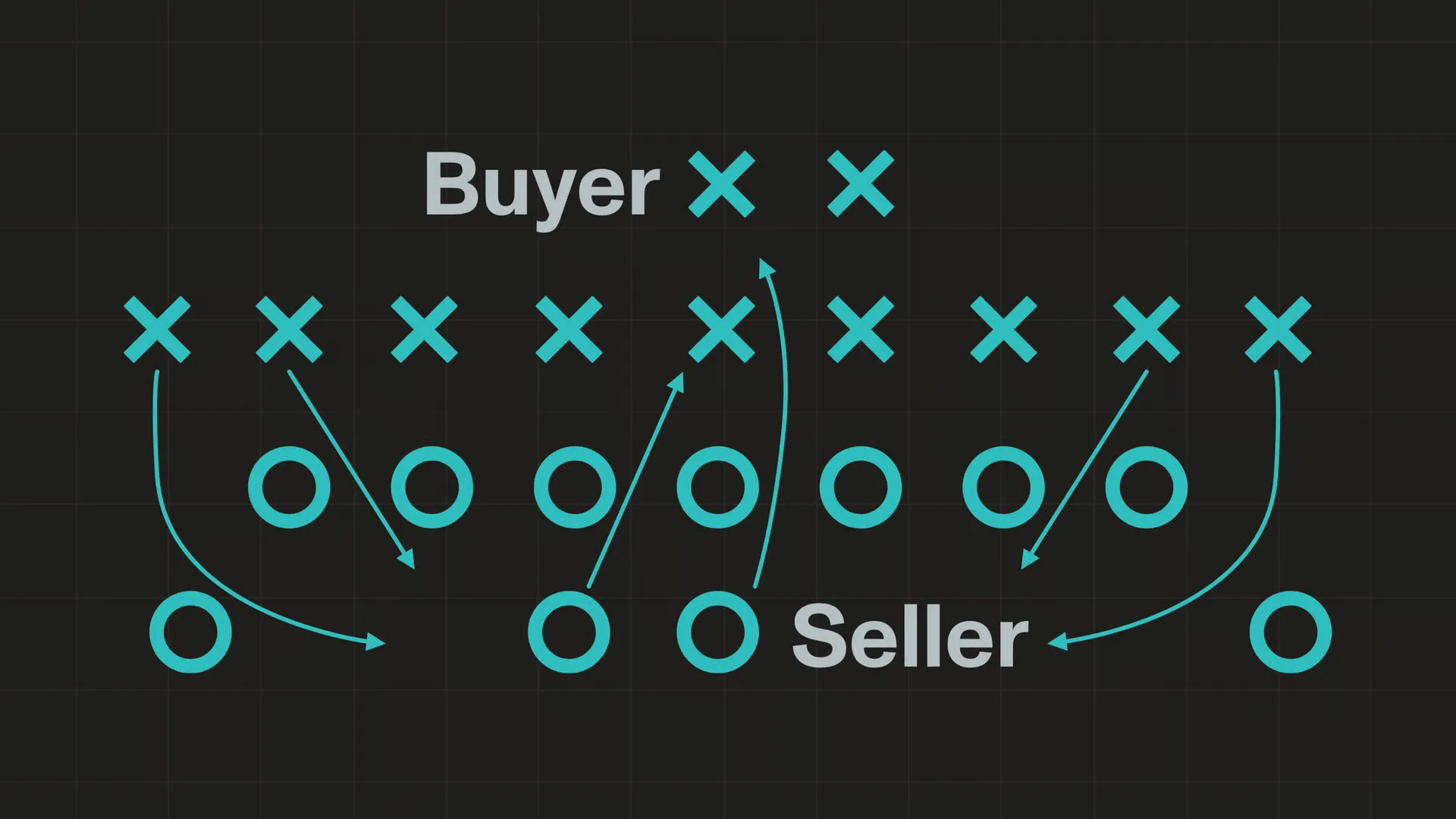
The ULTIMATE Guide to Building a Sellable Business We work with hundreds of scaling business owners every day. Most people run their business until they're miserable... And then they try to sell it. Don't be most people. Build a business so it's sellable... and you'll never have to sell. The Backwards Approach: Start with the End in Mind Here's the secret to building a sellable business: You need to work backwards from what makes a business valuable in a buyer's eyes. When you understand what buyers are looking for, you can design your business to be valuable whether you sell it or keep it . Because the qualities that make a business attractive to buyers are often the same ones that make it attractive to you as an owner. Think about it: A business that runs without you, generates predictable cash flow, and has systems in place is a business you'd want to own AND a business someone else would pay a premium for. A job: Stops producing when you stop working. Requires your specific skills or relationships. Often too small to hire an operator, and likely can’t be transferred to someone else without them taking over the job. An asset: Remains valuable even when you're not actively producing. Runs on systems and a team, not just you. Will continue running even if transferred to a new owner. The difference between these two determines how valuable your business is. Everything in this guide is about moving from the first category to the second. How Buyers Think About Value To build something valuable, you need to understand how buyers calculate what they'll pay. Let's break it down. The 4 things everyone will want to audit... Simplicity check: If you can't explain what you do in one clear sentence, you probably can't systematize it. Complexity might impress people, but it
Build a business so sellable you never have to sell it. The ultimate guide to working backwards from what buyers want: systems, profits, and less you.

How This Marine Veteran Bought an HVAC Business and Nearly Doubled Her Revenue in Two Years START HERE "I was tired of building something that wasn't mine" Meet Anna: Anna has spent over a decade in service. First, as a Marine Corps intelligence analyst. Then, as a civilian contractor, learning to assess risk, stay composed under pressure, and deliver results. After that came an MBA, during which she joined a tech startup as Chief Strategy Officer and simultaneously opened a CrossFit gym. The gym lasted about a year before a bad partnership forced her to shut it down. The startup lasted longer, about five years, but the pandemic hit it hard. It shrank from 20 employees down to five, and Anna was one of the last ones holding on. "I was burned out, tired of working so hard on something that wasn't technically mine. I had a little bit of equity, but it wasn't really mine." After leaving, she spent two years as a program manager on Pittsburgh Airport construction projects, working closely with the trades. That experience stuck. She started thinking differently about what kind of business she wanted. Not another startup. Not something she'd have to convince people they needed. Something essential. What followed was a $1.5M acquisition of a plumbing and HVAC company, its sister wholesale business, and the real estate underneath both. After about two years, Anna: Grew combined revenue from $2.5M to $4.7M , now growing roughly 40% YoY Weathered an $80K fraud event and kept the business on track Expects to hit a target of $6-7M this year and $10M within two to three years This is the story of how she got there. And what it can teach anyone looking to buy and build in the trades. KEY INSIGHT 1 conversation that changed her entire strategy Here's what frustrated Anna. She was
How This Marine Veteran Bought an HVAC Business and Nearly Doubled Her Revenue in Two Years

Why the smartest people stay stuck (and what to do about it) In life, most people obsess over the cost of taking the wrong action. Not enough people focus on the cost of taking no action at all . Inaction is quietly destroying some of the smartest minds we know. Below, we’re going to show you why it’s so damn lethal. FRAMEWORK Actors vs. Observers: the great divergence of 2026 What’s worth more: 2 years of imperfect action or 2 years of perfect preparation? Picture this analogy... > Mike spends 2 years “getting ready” to buy a business (a longtime goal of his). > He listens to a podcast or 2 about acquisitions. > Scrolls through listings a few times during breaks. > Tells himself he’ll start “actually getting serious about this” next quarter. > Comes back to the idea every few months, feeling excited, then gets distracted. “It’s just not the right time,” he tells himself... every time. “I wanna play it safe and learn more first.” His friend Nguyet, on the other hand, does things differently. > She signs up for an event like Main Street Millionaire Live in month 1. > Quickly gets up to speed on acquisition fundamentals and builds a plan of action for the weeks and months that follow. > Learns about due diligence and SBA financing, and applies those learnings to real deals in real time. > Builds models, works with brokers, takes guidance from experts, and drives out to meet sellers. > 2 years in, she owns a small portfolio and is already thinking about her next acquisition. The lesson: action runs circles around thinking about action . By not taking any action... Mike lost out on: Years of learning how deals actually work (and progressing on one) Years of building relationships with brokers Years of pattern recognition The learning that comes from making offers
Why the smartest people stay stuck (and what to do about it)

7 lessons from a serial business buyer who’s built up an impressive portfolio without leaving her career in Big Tech “I made good money. But the thing is, it just all came from one source, and that was scary.” Most people assume building ownership in a business requires a clean break from your job. That’s not what happened here. Nguyet Luong built her career in stable, Big Tech W-2 roles. But over time, one thing started to make her nervous: All of her income came from one place. Nguyet had never owned a business. She’d taken exactly one accounting class in college. But her search for additional income sources led her to the world of small business, and eventually to pack-and-ship stores. What appealed to her was how tangible they were. Physical locations. Clear demand. Simple unit economics. You could quickly see what worked and what didn’t. But she knew she didn’t want to run the day-to-day operations herself. So she partnered up with a close friend, and together they brought in their significant others. Nguyet and her friend stayed focused on the backbone of the business : Finance, and accounting Systems and technology Marketing and pricing Higher-level decisions around growth and structure Their partners handled the on-the-ground execution : Store operations Staffing and scheduling Customer-facing work That structure solved how the businesses would be run. Then came figuring out how to, well, actually own a business . Over the next couple of years, while maintaining her full-time role, she and her partners would go on to own 6 pack-and-ship stores across Texas, building a portfolio worth 7 figures. Here’s some of what you’ll get out of today’s newsletter: Here are 7 things she wants you to know... 1. If needed, buy literacy before assets When Nguyet first started
7 lessons from a serial business buyer who’s built up an impressive portfolio without leaving her career in Big Tech

What does the rest of 2026 realistically look like? These predictions come from working with thousands of business buyers and builders, and from ongoing conversations across our network. Most focus on how demographics, capital, and technology are reshaping small business ownership on the ground. Here they are... PREDICTION 1. In 2026, the “Boomer Business” economy outperforms The most resilient businesses in 2026 (and beyond) might not be those focused on A.G.I. but those focused on A.G.E. Older Americans hold a disproportionately large share of U.S. household wealth, and wealthier households account for a significant (and growing) share of consumer spending. As a result, a wide array of “boomer niches” will attract disproportionate acquisition interest: longevity and preventative clinics, in-home diagnostics, mobility and medical transport, hearing and vision services, home modification, senior moving and estate services, and operational adjacencies to senior living. These businesses will command premium valuations because their demand curve is anchored to biology. By the mid 2030s, business buyers who focused on “inevitable” demand rather than speculative growth will be seen as having made some of the smartest bets in small business. PREDICTION 2. AI matures as a double-edged valuation driver In 2026, business buyers will need to underwrite two things simultaneously: How much AI can remove drag from a business. How immune a core business is to AI substitution . Labor often represents 15-50% of total business costs in many service SMBs. Even modest automation in scheduling, bookkeeping, marketing, and quoting can materially expand margins. At the same time, many Main Street small businesses remain stubbornly physical. No large language model is transporting an elderly
6 data-backed business predictions for the rest of 2026: why Boomer businesses outperform, how capital and AI reshape small business ownership, and where to focus.

How The Owner of This Home Inspection Business Broke Through a $1M Ceiling and Grew 40% YoY START HERE “I Built My Business to a Certain Level. And It Just Wouldn’t Go Past It.” Ian Mayer had a degree in finance. Years in stable jobs. A steady income. A house. A family. The kind of setup that’s supposed to signal “security.” Then his company relocated. No relocation package. A pay cut if he followed. An unspoken reality that he wasn’t really invited. Ian had a wife, two kids, and a mortgage. Starting over in another state wasn’t an option. That moment forced a hard conclusion. “Even if I found another job, the same thing could happen again. So I decided I had to become an owner and be self-employed.” That decision pushed him into ownership with nothing lined up. No safety net. Just a belief that controlling his income was safer over the long term. What followed was a grind that included: 5 years running a one-man home inspection business Zero vacations early on, with income tied entirely to his labor A “ best year ever ” that still left his bank account nearly empty Hitting the same ceiling 4 years in a row , stuck just under $1M in revenue Finally hiring, building a team, and scaling past the $1M ceiling This is the story of: Why he got stuck How he broke through And how he changed his life Here’s what you’ll get out of today’s newsletter: Let’s dive in... Why This Business Made Sense to Him Ian grew up in San Francisco in the 70s and 80s, raised by a single mom who believed in the classic blueprint: school → college → job → stability. He followed it, mostly. He went to college, dropped out, then came back and finished a business degree in finance. He thought the degree would be his ticket. It wasn’t really. After graduation, he moved to Los Angeles to chase music. He
Ian's home inspection business was stuck at $1M. How he broke through the revenue ceiling and grew 40% year over year with better systems and hires.

This may be the fastest way we’ve ever improved our business. 44% of hours worked in the US today are now “automatable” with AI, per McKinsey. Another 13% are automatable via robots. With TODAY’S tech. Tech that’s currently the worst it’ll ever be. Think about that. We certainly are. But we’re trying to DO something about it, too. And below, we want to help you do the same. Okay, Here’s How to Reinvent Your Business With AI (And Have Fun Doing It) IDEA #1: Find Your CAO Everyone’s either excited about AI or thinks it’ll steal their job. We used to be on the fence. Then we hired a guy just to integrate AI into everything we do. To be our Chief Automation Officer / Head of AI Transformation / Supreme Leader of Tech-Enabled Productivity. Whatever you want to call it, that’s him. Our guy doesn’t really care about titles. His job? Find every unfair advantage AI gives us... and leverage the hell out of it Build cool, useful AI tools across our business Evangelize AI across our team He’s so great... we now have a whole team of AI-first employees. Whether you’re already a business owner or if you’re coming to Main Street Millionaire Live to learn how to buy a legacy business, this is something you need to be thinking about. Maybe it’s you. Maybe it’s someone who already works for you. Or maybe it’s someone you need to hire. But it’s a role someone needs to play, and you’ll likely fall behind without it. That’s the biggest opportunity billionaire Mark Cuban sees for young people right now. Not “AI.” Helping small businesses use AI. Lower middle market businesses often... Aren’t big enough to justify custom enterprise solutions or consulting Are manually process-heavy, with lots of “drag and click” work Have some budget to spend, but little to no AI expertise to spend it on They
This may be the fastest way we’ve ever improved our business.

How He Bought a 30-Year-Old Concrete Business, Unlocked Growth, and Reduced His Day-to-Day Role START HERE “The business was running. But everything was in their heads. There weren’t systems. There wasn’t documentation.” Today, we’re diving into an impressive 6-figure concrete business acquisition and growth story. 1 really cool thing: The owner, Erik, has scaled the business while working a full-time job, and managed to cut his active involvement down to about 5 hours a week. In 2023, Erik Swift went from learning the basics of acquisitions to buying a concrete restoration, repair, and replacement business that had been largely unchanged since the 1990s. There was no polished transition plan, no modern infrastructure, and no growth playbook waiting on the other side. Just a real business, a small team, and a lot of decisions to make once the deal closed. Impressively, Erik didn’t quit his W-2 job as a general contractor to do this. He stepped into an owner-operator role and spent time deep in the day-to-day: Replacing the former owners by taking over 100% of estimating and bookkeeping Cutting the service offering by roughly 50% to focus on higher-value work Raising prices by approximately 40% , driving up service quality and margins Rebuilding all core processes and SOPs from scratch Hiring, losing, and replacing day-to-day leadership Reducing active owner involvement to roughly ~ 5 hours per week This is the story of how he got there, and what the process can teach anyone trying to buy or build a business in 2026. Here’s what you’ll get out of today’s newsletter: Now let’s dive in... REMINDER Why a “Legacy Business” Is Often Hard to Take Over Erik’s career has revolved around project management, construction operations, and software, comprising a major part of his
How He Bought a 30-Year-Old Concrete Business, Unlocked Growth, and Reduced His Day-to-Day Role

3 psychological tools for crushing your goals We’ve watched thousands of smart people try to buy a business. If you do it right, it usually goes something like this... But many people don’t do it right. Usually, they lose momentum and get stuck right after the first big drop-off. That’s because, like most things, there’s a huge gap between people who talk about buying a business and people who actually do what’s necessary. One of the biggest lies people tend to tell themselves repeatedly is: “I’m going to do this... I just need to learn a little bit more .” “I just need to know more,” they usually say. “Then I’ll make a move...” Um... no. You will learn 10x more by doing than by thinking about doing. The people who actually make progress want to learn more, too, by the way. They just do it by taking action. More than that, they use practical systems that essentially bully them into taking action. See, when it comes to buying a business, the process can take time. You’re buying a business, after all. There are a lot of factors, decisions, and risks involved. It takes time to find the right business for you and structure the right deal. For Contrarian Academy member Jesus Wong, it took 6 months of focused search. Sometimes, it takes longer. For Alex Ramon, it was 18 months before he closed on the acquisition of a custom branding and merchandising company. That 1 move turned his existing business’s biggest expense into a new profit lever. “The owner had been running it for 23 years, was in his 70s, and was ready to retire,” Alex told us. “The employees had been there for over a decade. It was a perfect fit.” Other times, a deal can also happen relatively quickly. Take this person, who attended Main Street Millionaire Live : Really cool stuff
3 psychological tools for crushing your goals

In 2020, Peter Thiel sent an email that aged like a fine wine. He was applying basic incentive math: If... you load a generation with student debt. If... housing becomes structurally unaffordable for them. If... it gets too difficult for them to accumulate assets. Then... you shouldn’t be shocked when they turn against capitalism. If you don’t own anything, you can’t benefit from an economy that’s designed to increase asset values. Now Fast Forward to Today. As in, Literally Today... Last night, Democratic Socialist Zohran Mamdani was sworn in as mayor of New York City, the financial capital of the world. Young voters backed him overwhelmingly. His platform promises include rent price freezes, free childcare, and free public busing, paid for by higher taxes on the wealthy and corporations. The immediate reaction from critics has been understandable: claims that young people are entitled, economically illiterate, or infected with socialism through TikTok. Whether or not that’s true, capitalism depends on participation. Without it, the system loses its defenders. If you want the next generation to be pro-business , you have to make it easier for them to do business . That means creating real on-ramps to ownership, not just telling people to “trust the process.” Right now, trust is thin. And everywhere you look, there are few reasons for it to thicken... For Example, Look 3,000 Miles West Right now, California is staring down the barrel of a consequential tax debate. A coalition wants to put a ballot measure before voters that would impose a significant tax on the net worth of Californians with more than $1 billion in assets. If passed, it could raise billions of dollars. However, this is not a corporate tax on profits or receipts. This is a wealth tax on unrealized
Peter Thiel predicted it: a generation locked out of assets turns against capitalism. Inside America's economic participation crisis, and the fix.
START HERE “I Needed to Take On Something and Grow It. To Call It My Own.” Jesus Wong did everything right. Sixteen years in finance and accounting. Senior roles. Great salary. The kind of corporate resume that signals “made it.” And yet, something felt off. It wasn’t an itch. An itch is just a small scratch. This felt like a yearning. I needed to take on something and grow it. To call it my own.” That feeling eventually pushed him to walk away from corporate life with nothing lined up. No deal. No backup job. No income. Just a belief that ownership would deliver something a paycheck never could. What followed was a year-long grind that included: Reviewing 1,000+ businesses for sale Signing 200+ NDAs Reviewing hundreds of financial statements Submitting multiple offers And ultimately acquiring a $7M-revenue, multi-location manufacturing business in a niche most have probably never thought about before. This is the story of exactly how he got there. And more importantly, what his process can teach anyone trying to buy a business in 2026. Here’s what you’ll get out of today’s newsletter: Now let’s dive in... GETTING STARTED Making The Leap from a Corporate 9-5 When Jesus left his corporate role, he assumed he would start something from scratch. That assumption didn’t last long. “I didn’t realize how hard it is to start something. I spent a bunch of energy and resources on a few ideas and quickly realized starting something would take a long time, and that there was a lot of risk involved because of that.” That risk mattered more because he had no income coming in. So he started asking a different question: instead of building from zero, could he buy something that already worked? That idea led him toward the world of small business acquisitions. He dove in completely
After 16 years in corporate finance, Jesus Wong bought a 7-figure manufacturing business. Inside his acquisition journey and lessons for W-2 escapees.

“The best time to plant a tree was 20 years ago. The second best time is now.” Friends, Christmas has quietly become one of the most sophisticated sales funnels on earth for junk. No longer about God + family, but about your credit card. Sugar. Booze. Boxes of stuff. It’s worth asking, honestly: How much of this makes your life freer, fuller, or actually rewarding 2 months from now? Let’s make Christmas contrarian again. See people you love. Eat. Gift. Be the weirdo who enjoys the celebration, but ALSO uses the season to create, not just consume. Leave it with stronger relationships, better habits, a new skill, a path to wealth, or a clearer sense of purpose. If you want that, we want to help you. Not with resolutions or vague self-improvement. But with 2 concrete moves. Here’s the first, and it’s happening soon: Learn How to Build Ownership at MSM.LIVE Sam Altman once wrote: “Though there are some exceptions,” he added, “almost no one in the history of the Forbes list has gotten there with a salary. You get rich by owning things... ” Okay... but how do you... do that? The truth is, you can learn it. The problem is, “building ownership” isn’t one skill. It’s a broad stack of skills. You need to know how to: Source opportunities that others miss Analyze numbers with rigor Structure financing Negotiate terms Operate once you own Sell down the road (potentially) No matter who you are, this stack is now essential: If you’re in a W-2: Inflation is eating away at your wages while AI is eating away at your role. Negotiating equity, profit-sharing, or ownership stakes is increasingly important. If you’re looking to buy your 1st business: You need to know how to source, evaluate, finance, and operate deals in a way that fits your time, capital, and risk profile. If you
The best time to start was 20 years ago; the second best is now. A step-by-step path to business ownership in 2026, from mindset to money.

START HERE From $140K to $1.6M Some of the greatest career paths are rarely straight lines. Dave Ausdemore is a prime example. After college, Dave joined the Army National Guard and later spent about eight years on active duty in the Air Force, focused on preventive medicine. From there, he moved into the civilian side of government, spending 14 years at the Centers for Disease Control. That work took him deep inside laboratories and healthcare facilities across the country, from Alaska to Puerto Rico. “I received a lot of wonderful technical experience, leadership experience, an understanding of how large organizations work, and probably more importantly, how the government procurement system works.” In 2011, Dave retired from government service. “I knew I wanted to work for myself. I knew I wanted to lead that ship, make the decisions, and reap the rewards. I didn’t have much of a plan. I knew I had skill sets that could be valuable, but I didn’t really know where to market them.” What came next was still not a straight line into business ownership. Dave took an assignment running a 200-person NGO supporting CDC work during the Ebola crisis. He also began experimenting entrepreneurially. He tried shipping groceries into Liberia. He pursued a fiber optics project tied to a World Bank plan. He spent a month prospecting for diamonds in the Liberian bush. Some efforts stalled. Others came close. All of them forced him to make decisions without complete information and work through the consequences. Eventually, Dave found traction in a narrow, technical niche: delivering certified testing, validation, and compliance solutions for cleanrooms, healthcare, manufacturing, laboratories, and other critical spaces across the built environment. “When I started doing this
From $140K to $1.6M: how Dave Ausdemore quietly scaled a niche certification business to 7 figures after decades in military and government service.

“There is nothing so useless as doing efficiently that which should not be done at all.” -Peter Drucker We’ve served nearly 15,000 business builders in recent years. Lately, a lot of them are seeing the same thing: Across society, data is pointing toward less focus, less ownership, and more fragility. A growing number of them want to actively push back . Here are 11 powerful ideas they’re taking seriously. 1. Choose Unkind Truths Over Kind Lies This chart explains why so many people, companies, and countries have drifted into quiet failure. If you want 2026 to be different, start here. Here’s the tactical rule those in our Academy and Boardroom programs know is true: If a truth will eventually have to be said, say it at the earliest possible scale. In practice: Give feedback when it’s a sentence, not a termination. Address misalignment when it’s awkward, not explosive. Name the problem while it’s still reversible. This will save you from being a jerk later. As one X user put it : “The reason it’s incredibly hard to break out of a ‘kind lie’ doom loop is because the longer it’s gone on, the more unkindness is needed to get back on track. And the fact that you’re in this situation to begin with probably means your culture will hate that.” Kind lies don’t disappear. They hide until they’re expensive. 2. You May Win More By Being a Tad Cringe Certain mindsets are great for protecting your ego but terrible for producing results. That tradeoff is about to matter more than ever. Arjun Mahadevan, CEO of one of our portfolio companies, Doola , has a phrase he likes to use: “Keep climbing Cringe Mountain.” Another person put it perfectly : “I don’t think you necessarily need to ‘be cringe,’ but you need to try. Somewhere along the line, people figured not caring was cool . Man
11 powerful ideas from 15,000 business builders on ownership, focus, and freedom, plus how to put them to work in your life and business in 2026.

START HERE From Weekend Side Project to Managing 1,100 Doors Jimmy Murray has a funny way of describing his career arc: “I’m a millennial house hacker turned corporate dropout.” Jimmy grew up in a blue-collar household . Union carpenter dad. Nurse mom working nights. “Basically, a single-parent household most of the time,” he told us. “My dad worked seven to three. My mom worked until eleven.” Money was tight. “My dad was an awful cook. It was cereal, hot dogs, beans.” What was consistent was his dad’s advice: “Don’t swing a hammer like me. Go to school.” Jimmy did exactly that. Community college. Ohio State. A finance degree. Then Fidelity, where he stayed for 6 years. On paper, it looked like a great outcome. In reality, it felt hollow. “Everyone’s like, ‘Oh man, Fidelity. That sounds sexy,’” he said. “I was a financial analyst. I was going spreadsheet blind every day.” “One, I hated it. Two, I got paid pretty well. But three, it set me up for what I do today because I got to experience a lot of things that I liked and didn’t like.” In 2012, while still working full-time, Jimmy bought his first small multifamily property. A few months earlier, his grandfather, a World War II veteran and union plasterer, had asked him from a hospital bed, “Where do you think you’re going to go with the rest of your life?” Real estate felt concrete and timely in the aftermath of the financial crisis. His dad hated the decision. “He told me, ‘That may be the biggest mistake you’ve ever made in your life.’” But Jimmy began placing tenants. “My mortgage payment was $1,043 a month. I placed my first tenant at $900. The second at $950. I lived in one unit. I had an inherited tenant at $600.” “I began to think about how to really make this work. At that point, I realized that I didn’t
Jimmy manages 1,100 doors. How finding one bottleneck in his property management business unlocked $900K in new revenue.

“Show me the incentive, and I’ll show you the outcome.” -Charlie Munger We work with more than 2,500 Main Street business builders every day. When a $100 billion acquisition grenade goes off like this, it might seem so big that it’s irrelevant... But it’s not. Big deals and small deals almost always come down to a few specific, fascinating forces . Understand these forces, and every deal starts to make sense. First, What’s Happening? On December 5, Netflix announced an agreement to acquire Warner Bros. Discovery’s (WBD) “crown jewels” in a deal valued at $82.7 billion . That includes the Warner Bros. film & TV studios and HBO. The Catch? This is a complex “breakup” play. It requires WBD to spin off its linear networks (CNN, TNT, TBS). Netflix gets the growth assets and legendary IP (Harry Potter, Superman, Game of Thrones, etc.) without the baggage of cable channels in secular decline. Wow! Crazy! So we’re getting a Stranger Things x The Sopranos multiverse? Not so fast. Just three days later, Paramount Global launched a hostile $108 billion bid for the entirety of Warner Bros. Discovery. The reaction in our company Slack: Sorry, bankers. There are a few remarkable things to note here. Namely, Netflix once tried to sell itself to Blockbuster for just $50 million. Think about that. Here’s the story from Marc Randolph, the co-founder and first CEO of Netflix: “If you are unwilling to disrupt yourself , there will always be someone willing to disrupt your business for you.” Ain’t that the truth. Today, Netflix is worth around $430B, or 859,900% more than what they asked Blockbuster to buy them for in 2000. This story is one of the great investing examples, perhaps of all time, of the value in building something inevitable over a long enough time horizon. It’s also an
Big deals and small deals run on the same forces. The universal science of dealmaking, explained: incentives, leverage, timing, and trust.
START HERE 1 Strategy With Potential Across Any Industry... There’s a strategy we love called the Satellite Acquisition Model , and it’s how some of the smartest owners escape the trap of linear growth. Ideally, you have one successful, core business. But instead of letting that business stand alone forever, you find complementary businesses to pair with it. Example: A real estate company could strategically acquire: A property management company A social media agency A video production agency A landscaping company A mortgage brokerage Suddenly, the line items that used to be expenses are now positioned to be long-term profit centers. Let's look at how 3 other industries could use this model, and then we’ll show you exactly how 1 member of our community executed this with a 20+ year-old firm. 1. The Laundromat Most people see a laundromat as a simple business: washers, dryers, and quarters. But the biggest thinkers might see a foundation for multiple revenue streams: Acquire the vending machines (soap + snacks). Launch a wash & fold service. Acquire a fleet to offer pickup & delivery. Buy the property and rent out the extra commercial spaces. Sell private-label products (acquire a vendor?) 2. The Coffee Business The Average Order Value (AOV) of a coffee shop is notoriously low. Think about it this way: $5 for a latte = 200 customers just to crack $1,000 in sales for the day. Satellites can help solve the volume problem by increasing the overall basket size and adding new lines: Add a bakery/kitchen/catering (or partner with a local one). Buy the laundromat down the street, so they grab a drink while they wait. Don’t just buy beans; buy the roastery to control the supply chain. (Obviously, easier said than done.) We visited Atlas Coffee Club a while back and loved
The Satellite Acquisition Model: how one owner turned his biggest expense into a cash-flowing asset by pairing acquisitions with his core business.

"The cold and unromantic fact is: a good product with great distribution will almost always beat a great product with poor distribution." -Reid Hoffman Our goal at Contrarian Thinking is a great product with great distribution. Last week, we told you about how important it is to build a distribution-first business... Before you need it. Today, we want to show you exactly how we do this in our own business. But first, you need to understand 1 thing... Why is Distribution So Important? As AI lowers the barrier for creating things, it will raise the barrier for selling things. That means the latter will become an increasingly valuable capability. This goes for selling yourself, your brand, jobs you’re hiring for... all of it, not just “products.” Simply put, as we enter an age of creation abundance, it will require more to earn attention. Top investors, builders, and founders are already seeing this play out... As we showed you last week, technologist Balaji Srinivasan even says that startups now need a founding (content) “creator.” That nomenclature may be new, but the business need for people who understand distribution strategy really isn’t... Investor and former HotelTonight CEO Sam Shank recently said: "Don't start with the product. Start with distribution." Why would he say that so definitively? Because, in 2009, HotelTonight worked backwards to launch a product around a (then) brand new distribution channel: the Apple App Store. “That combo,” Sam says, “a unique distribution edge + a product tailored to it, powered our growth.” Most people flip that. They build something cool, ship it, and then wonder why no one showed up. Of course, any channel will eventually get harder to crack. David Sacks has called this the Law of Distribution Arbitrage . “The
A good product with great distribution beats a great product with poor distribution. Exactly how we turn attention into money at Contrarian Thinking.
START HERE How 5 Acquisitions Built a $2.5M, 19-Person Firm Most people think accounting is boring. Kelly Bender thinks that’s perfect. Kelly has been advising small business owners for 15 years, building an accounting firm around serving what she calls “the quiet everyday millionaire next door.” In 2018, she noticed something: “It felt like everybody around us in the accounting space was retiring or dying.” But rather than wait for the ground to shift under her, Kelly saw it as an opportunity. She started buying firms. Some smaller ones. Then bigger ones. Five acquisitions later, she’s built a 19-person , multi-location , $2.5M firm with a path to break $3M soon. But scaling there wasn’t linear. Kelly has hit hurdles in hiring, operations, and dealmaking. This is the story of how she pushed through those hurdles, survived a 6-figure loss, and used 1 key operational shift to hire effectively in one of the hardest labor markets in America. Lots of lessons you can steal below... THE PROBLEM The 10x ROI of Being in the Right Room If you want to know where future fortunes will be made, don’t look at markets; look at rooms. Why? Wealth follows proximity . The closer you are to capital, information, and ambition, the higher your expected return. Presence is an asset. Yield is measured in things like better relationships, asymmetric insight, and time saved. Like any asset, the earlier you invest, the greater your potential to compound. Economists call it agglomeration , the phenomenon where productivity and innovation rise as people and ideas cluster together. By the time Kelly joined our programs, she already had a relatively established firm and a clear operational base, with acquisitions ranging from just $35k to about $750k . Each deal taught her something different
Kelly Bender used 5 acquisitions and better systems to build a $2.5M, 19-person accounting firm serving the quiet everyday millionaire next door.

Everything to focus on now, to win the next year. “There are no Silver Bullets... Only lead bullets.” -Ben Horowitz We work with more than 2,500 business builders every day. Every single one wants to know where to focus their firepower next year. So, here are 7 things we’d focus on if we had to start again. 1. Speed Over Almost Everything Else In 2026, speed is a proxy for organizational health. In a market where AI lowers the barrier to entry, one of the few defensible moats left is speed itself. Competitors will increasingly launch faster than ever and cheaper than ever. The “OODA Loop” (Observe, Orient, Decide, Act) must be compressed with everything you do. The risk isn’t that your product is imperfect; it’s whether your product is perfect for customers who moved on 6 months ago. Take this from one of our portfolio CEOs: He’s right. If there’s a muscle the top 1% of builders flex better than anyone else, it’s urgency. Consider Bill Perkins . Mega-wealthy hedge fund dude + high-stakes poker player + the guy behind Die with Zero . Here’s what he told us: “I move faster than everyone else. So by the time most people have an idea, I’ve already taken action, done the thing, made 3 mistakes, and found a better way.” Preach. One way we’ve tried to implement this at Contrarian Thinking is through something called the 24-Hour Rule . If a prototype, solution, or idea cannot be executed in days, we’re likely too heavy for the current environment. You know how corporate America loves to say, “Let’s circle back on that next week”? Yeah, that makes us gag. 2. Selling Before You’re “Ready to Sell” In 2026, you need to stop thinking you need lots of money to move on an idea, a deal, or a business. It’s just no longer true.* *Unless you’re Sam Altman. Say we gave you 30 days to
Everything to focus on now, to win the next year.