You're not stuck, you're just alone at the top. Most entrepreneurs hit a ceiling, not because the opportunity isn't there, but because you're solving $10M problems with $1M strategies.
Buying a Plumbing Business: Inside a $1.4M Off Market Deal
May 21, 2025
8 min
From the Main Street Minute newsletter, originally sent May 21, 2025 as "Would you buy this $1.4M plumbing business?"
Quick answer: Buying a plumbing business works best when you secure the team and plan for working capital. Dana, a community member, offered about $1.4M, just under 3x SDE, for a nearly 20 year old plumbing company doing around $3M in revenue and over $500k in SDE. A broker she had worked with brought it to her before it hit the market. She planned to use an SBA loan, a seller note and about $400k of working capital financing, with her son, a licensed master plumber, leading the team.
Watch: Codie's 80 minute playbook on finding businesses to buy, including off market deals, the deal box and seller financing.
👋 Welcome to Main Street Minute, your shortcut to Main Street acquisitions.
This week, we take you inside a deal for a $1.4M plumbing business.
Let’s dive in.
INSIDE THE NUMBERS
Would You Buy This Business?
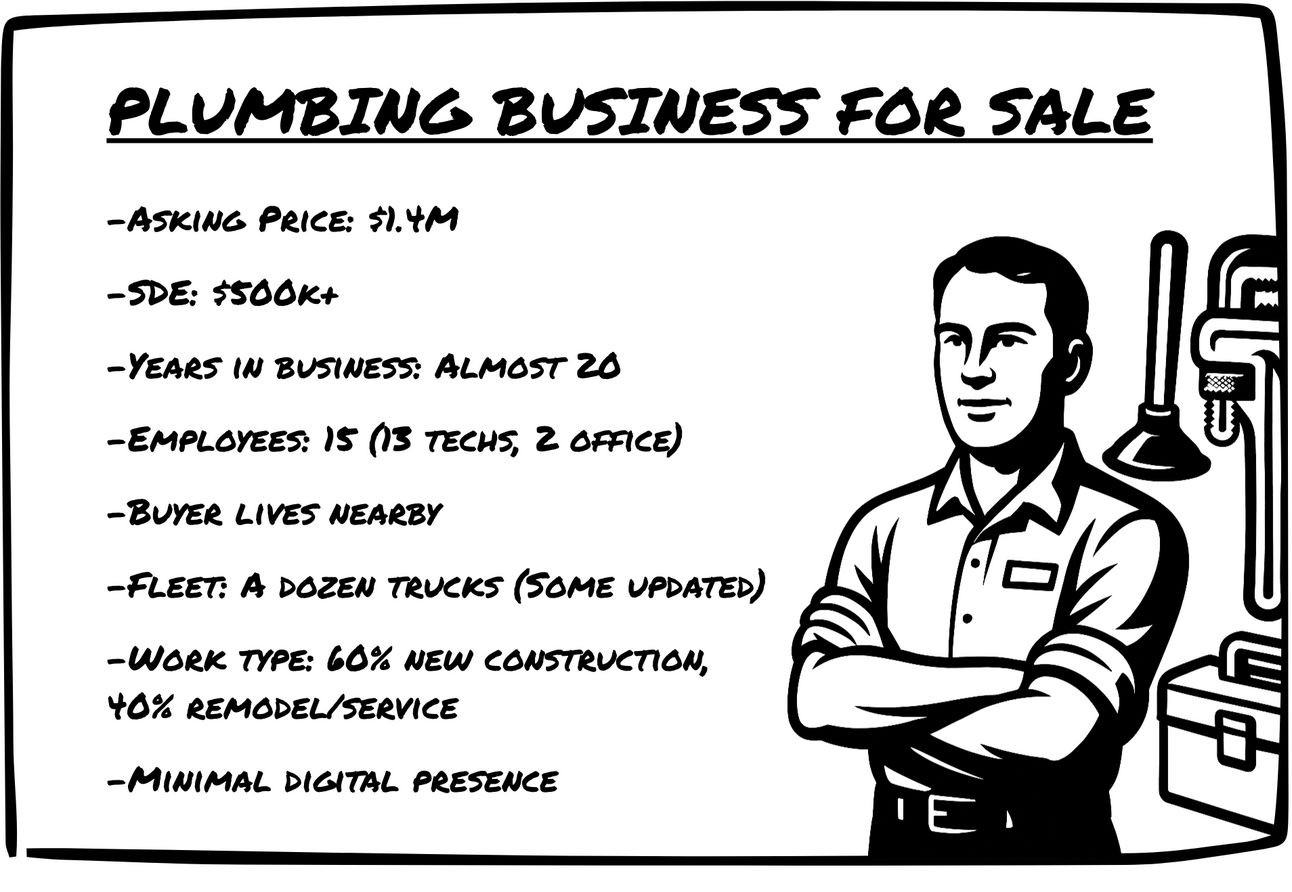
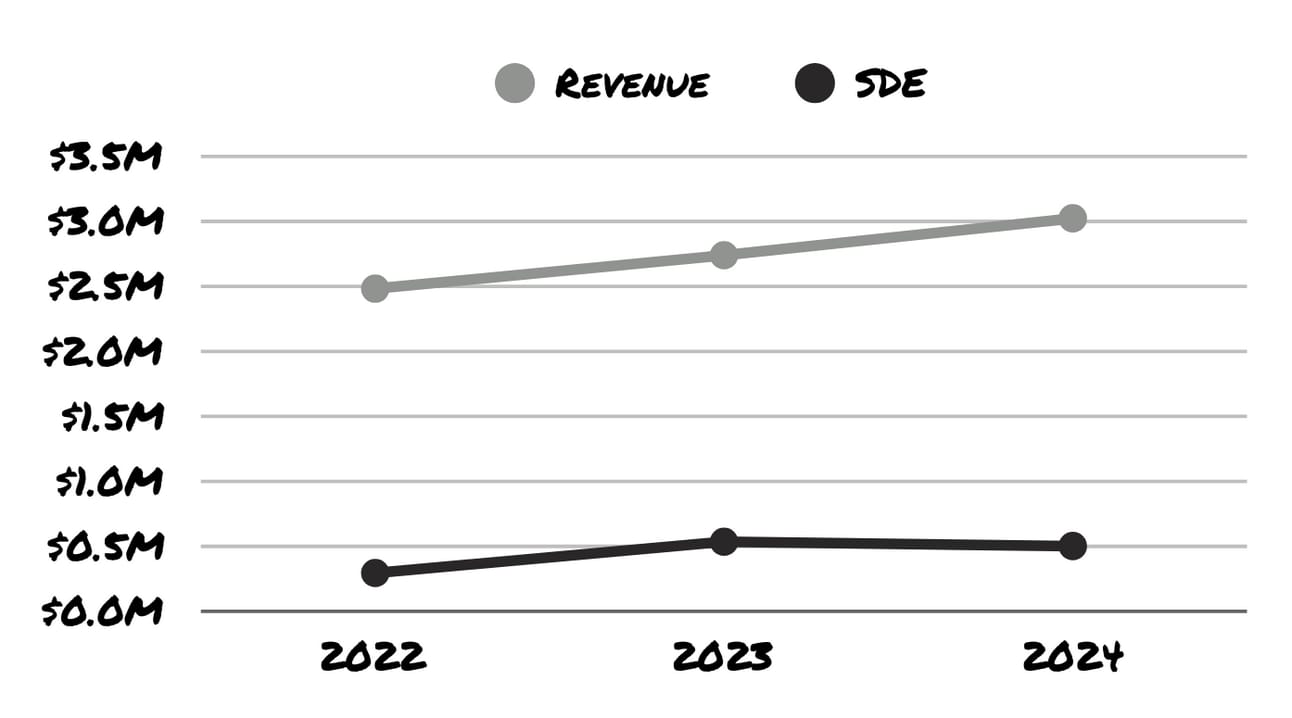
One of our community members — we’ll call them Dana — is deep in diligence on a nearly 20-year-old plumbing business generating around $3M in revenue and over $500k in SDE.
The business is split across new construction, remodeling, and service work, and it’s never officially hit the market.
Now she’s navigating legacy-focused sellers, potential key employee and customer risks, and a complex cash cycle. Her advantage? She’s bringing a licensed master plumber to lead the team, who also happens to be her son.
Let’s take a look under the hood.
DEAL GLANCE
What It Has Going For It
This nearly 20-year-old plumbing business was built from the ground up by two retiring owners who started with a single truck.
Today, it generates around $3M in revenue and over $500k in SDE, backed by a 15-person team, including 4 master plumbers and a fleet of more than a dozen vehicles, some of which have been recently upgraded.
Roughly 60% of the company’s work is in new construction, with the remaining 40% split between remodeling and service. Dana sees upside in growing that latter segment, potentially a higher-margin side of the business, especially since the current owners haven’t invested much in marketing. Importantly, there’s also no major customer concentration.
The deal is priced at approximately $1.4M, and Dana plans to finance it through a mix of an SBA loan, a seller note, and an estimated $400k in working capital financing on top of the purchase price.
One of the bigger challenges? The sellers have never sold a business before and are cautious. They’ve requested no conversations with customers or employees before closing. Dana is working to secure post-signing access to key staff as part of the transition plan.
The community’s deal coaches agreed: the foundation looks solid. The real question is whether Dana can bridge the gap between a good business… and a great handoff.
DIGGING DEEPER
Industry Snapshot
The broader plumbing and HVAC contractor industry includes more than 105k companies, employs over 1.2M workers, and generates a combined $218B in annual revenue.
It’s fragmented, hyper-local, and increasingly strained by a nationwide skilled labor shortage, making experienced teams (like Dana’s target) harder to find and more valuable.
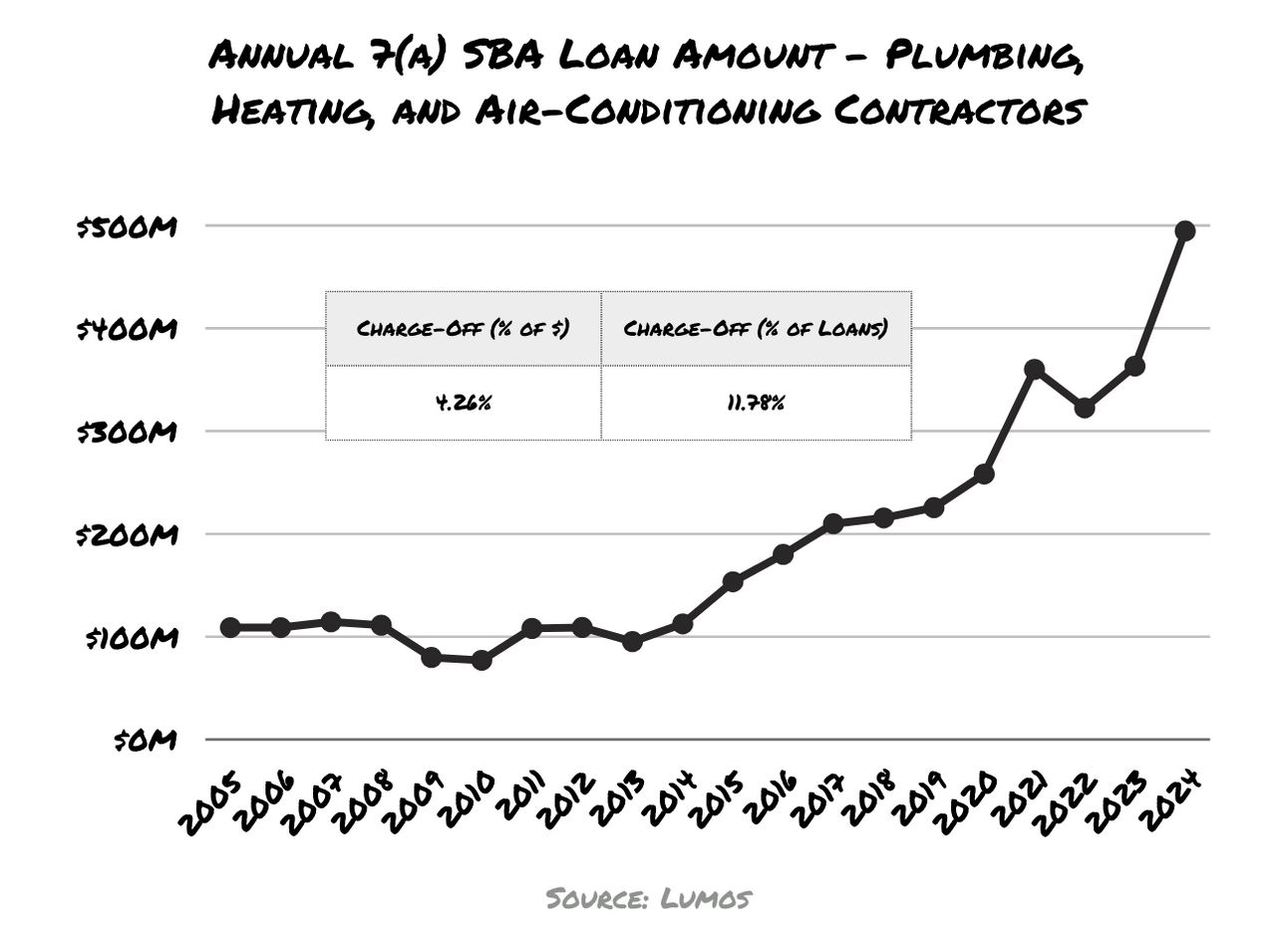
SBA lending activity in this sector has remained strong, with plumbing, heating, and AC contractors receiving hundreds of millions in 7(a) loans annually. It’s a sign of both lender confidence and ongoing buyer demand in the space.
Dana’s deal sits between two forces shaping the trades: construction plumbing, which rises and falls with building cycles, and service work, which tends to be more stable and higher margin. Her focus is on growing that latter side, and the business already has a solid base there.
What doesn’t it have? Much of an online presence. The company has a basic site and light SEO — no paid ads, no outbound. That could be a red flag… or a growth lever waiting to be pulled.
With a solid team and the right shifts, this business could be built for both durability and upside.
COMPS
What’s It Worth?
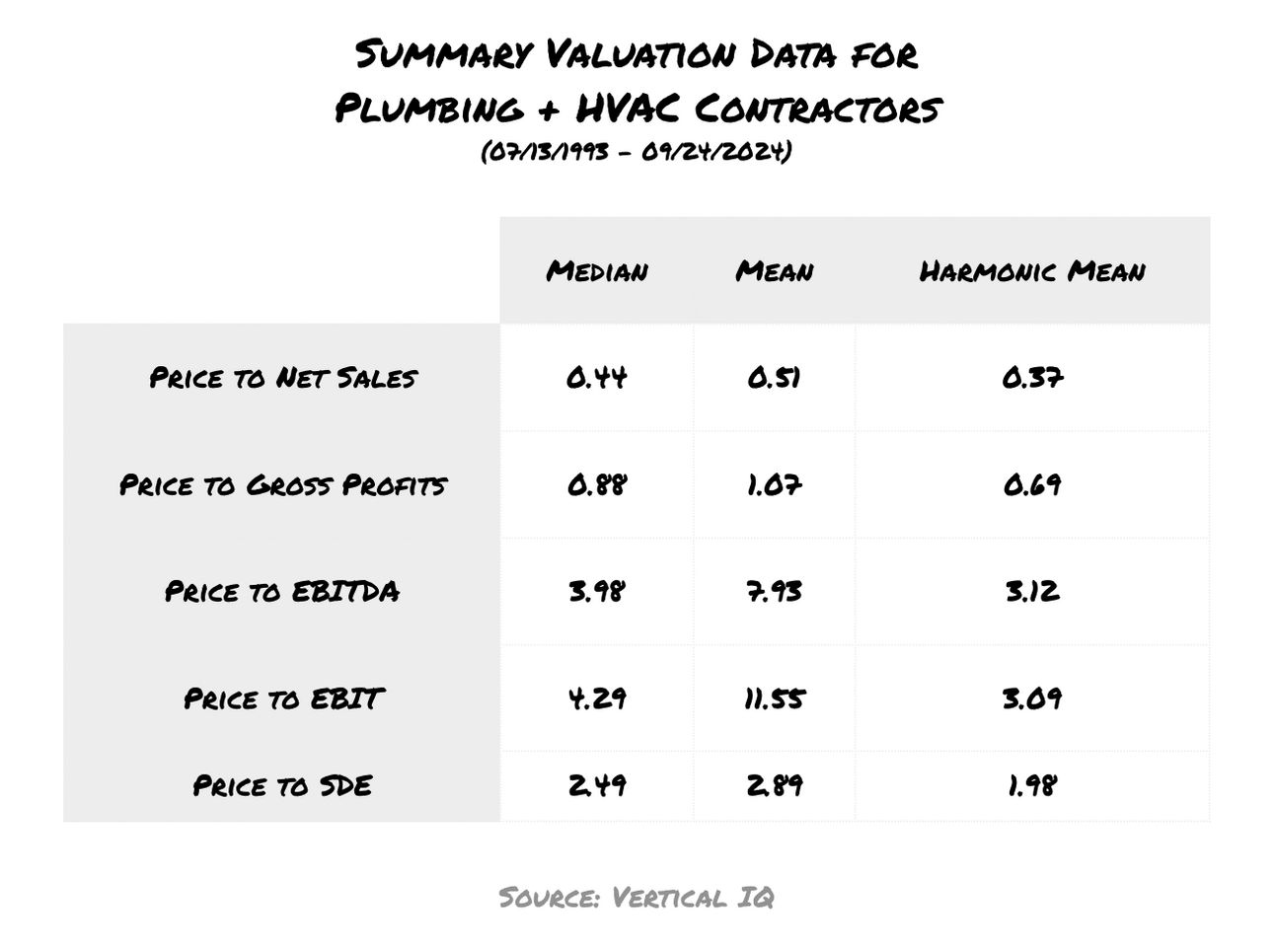
Dana’s offer of $1.4M lands just under 3x SDE, which aligns closely with industry benchmarks. Dana’s offer is slightly above the median — but not aggressive — especially given the company’s experienced team, modern fleet, and clean books.
The working capital requirement (an estimated $400k on top of the purchase price) does bump up total capital needed, but that’s common in construction-oriented deals where large projects can severely impact early cash flow.
The community’s deal coaches agreed: the multiple looks quite reasonable. The bigger variables now aren’t necessarily financial — they’re strategic.
The outcome may depend less on squeezing the price further and more on how Dana navigates due diligence, structures key protections into the deal, and manages the handoff.
RED FLAGS
Potential Roadblocks
Even strong deals come with trade-offs, and Dana’s team flagged a few key areas to navigate carefully.
1. No Pre-Close Access to Key Employees
The sellers don’t want Dana speaking to employees before close, including the most senior master plumber, who would be critical to a smooth transition. The concern isn’t just operational. It’s retention. During the deal review call, deal coach Lloyd Silver asked directly:
Dana said yes, and Lloyd recommended making that conversation a contractual contingency: once all other deal terms are locked, Dana can speak with the employee before close — and only move forward if the outcome is positive.
2. Cash Flow Timing and Working Capital Needs
Construction plumbing means unpredictable timing: progress payments, material pre-buys, and warranty holdbacks (as required by certain state laws) can all strain early liquidity. Dana is budgeting $400k in working capital to stay ahead, but year one will demand tight cash management.
3. Legacy-Focused Sellers Navigating Their First Exit
The sellers are thoughtful, but also new to the deal process. Their protectiveness over employee and customer relationships, while well-intentioned, has made diligence slower and more delicate. Dana is proposing a sign-then-close structure to unlock employee access after signing but before funding.
THE BOTTOM LINE
What Other Experts Flagged
Not every insight from a deal lives in a spreadsheet. During the community review, a few key themes emerged that could shape the outcome of this acquisition.
1. The Handoff Matters
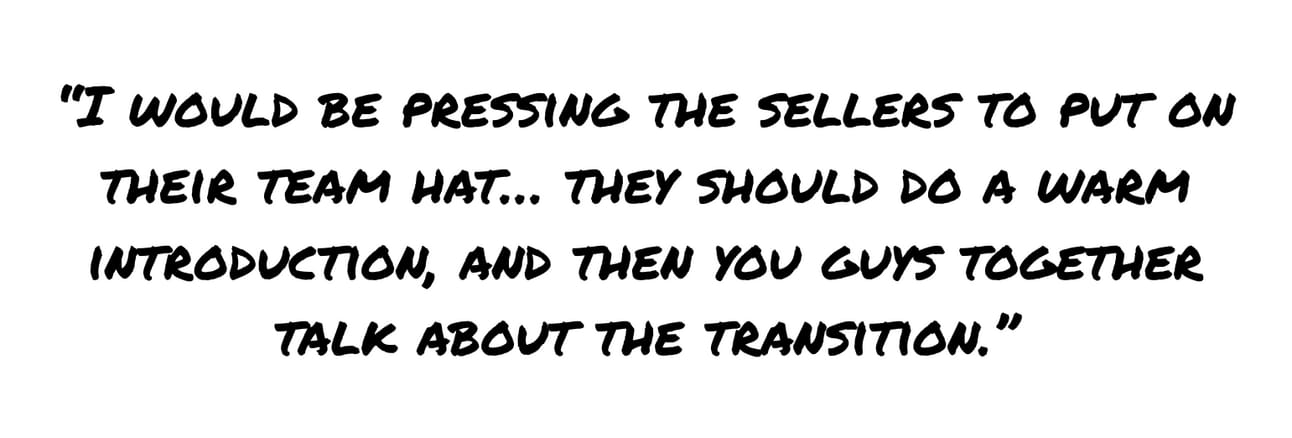
The sellers are protective of their team, but the transition still needs to be thoughtful and intentional. Deal coach Hants emphasized the importance of a collaborative approach:
Whether or not formal agreements with employees are possible pre-close, the tone of the transition could shape retention more than any clause in the agreements.
2. Relationships Drive Deal Flow
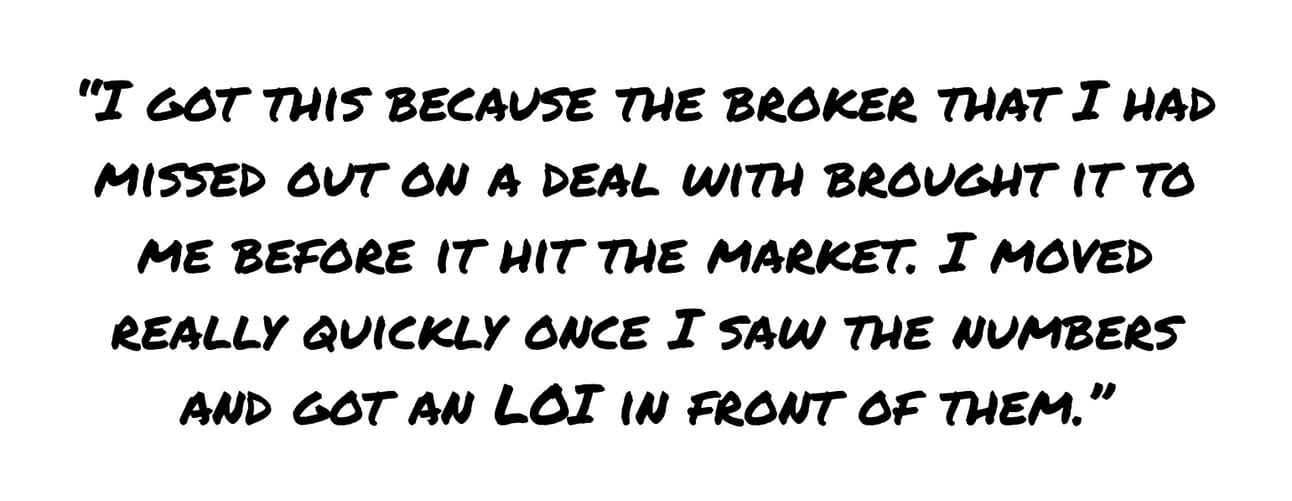
This opportunity never hit the market, but it didn’t land in Dana’s inbox by accident. It came from a broker she’d previously worked with, who brought her the deal because she’d proven herself to be a serious and reliable buyer.
The fundamentals are strong. The plan is in motion. What remains is execution, and how well Dana can protect what’s working while building what comes next.
THE DECISION
How It Played Out
Dana’s full steam ahead, but this phase is where deals truly get made or lost. Her next moves:
Finalize terms with contingency access to key employees
Continue diligence on cash flow, licensing, and working capital needs
Pressure test the handoff to make sure legacy, morale, and customer continuity are protected
Stay close to the seller and broker to keep momentum and trust intact
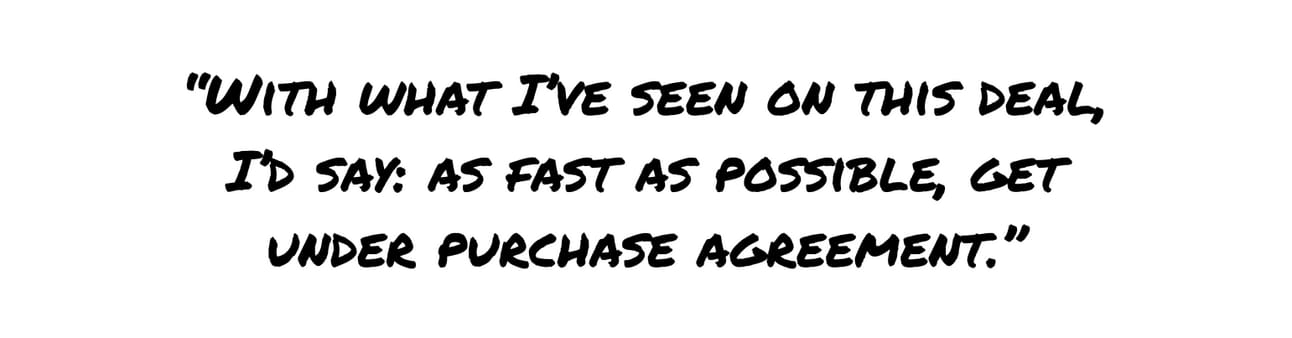
As our deal coach Hants put it:
Dana has played it right so far. If she keeps this pace — and locks in the right protections — she could find herself walking into day one with a real edge.
This story scratched the surface of just one of the dozens of real deals we break down inside the community every month. Want in? Reach out to our team here.
Buyer's Guide: How to Buy a Plumbing Business
Here is what any buyer can take from this deal, using only the numbers and lessons in the story above.
The deal by the numbers
Price: about $1.4M, just under 3x SDE.
Revenue: around $3M. SDE: over $500k.
Team: 15 people, including 4 master plumbers, and a fleet of more than a dozen vehicles.
Work mix: roughly 60% new construction, 40% remodeling and service.
Customer concentration: none of note.
Working capital: an estimated $400k on top of the purchase price.
How the financing worked
Dana planned to combine an SBA loan, a seller note and roughly $400k in working capital financing. The working capital piece matters in plumbing because construction work brings progress payments, buying materials up front and warranty holdbacks that tie up cash before you get paid.
The SBA caps 7(a) loans at $5 million and lists changes of ownership as an approved use, so most Main Street acquisitions fit inside the program (SBA).
The community's deal coaches agreed the multiple looked reasonable. The bigger questions were not the price but how she handled diligence, protections in the contract and the handoff.
What to look for in a plumbing business
Licensed leadership. Plumbing is licensed work. Dana's edge was bringing a master plumber, her son, to lead the team. Know your state's licensing rules before you offer.
Service versus construction mix. Construction rises and falls with building cycles. Service work tends to be steadier and higher margin, which is why Dana wanted to grow that side.
No customer concentration. A wide customer base means losing one builder will not sink you.
Marketing upside. The company had a basic website, light SEO and no paid ads or outbound. That can be a growth lever if the rest of the business is solid.
Skilled labor. The newsletter points to a nationwide skilled labor shortage, which makes an experienced team more valuable and harder to replace.
Risks and mistakes to avoid
No access to key employees. The sellers did not want Dana talking to staff before closing, including the most senior master plumber. Deal coach Lloyd Silver suggested making that conversation a contractual contingency once all other terms are locked.
Underfunding working capital. Year one of a construction heavy business demands tight cash management.
First time sellers. Sellers who have never sold before can slow diligence. Dana proposed a sign, then close, structure to unlock employee access after signing but before funding.
Rushing the handoff. Deal coach Hants stressed a collaborative transition, because the tone of the handoff can shape retention more than any clause.
Steps to buy a plumbing business
Line up licensed leadership, either yourself, a partner or a key hire.
Build broker relationships. This deal came from a broker who already knew Dana was a serious buyer.
Separate revenue by construction, remodel and service, and look at margins for each.
Budget working capital on top of the price.
Write employee access and retention into your terms.
Plan the transition with the sellers before closing day.
Frequently Asked Questions
How much is a plumbing business worth?
In this deal, about $1.4M on over $500k of SDE, just under 3x, which the community saw as aligned with industry benchmarks. Clean books, an experienced team and a modern fleet support a fair multiple.
Do you need to be a plumber to buy a plumbing business?
Not necessarily, but the business needs licensed leadership. Dana planned for her son, a licensed master plumber, to lead the team.
Why do plumbing businesses need working capital?
Construction plumbing involves progress payments, buying materials up front and warranty holdbacks that can strain cash early. Dana budgeted an estimated $400k on top of the price.
How do you find a plumbing business that is not listed?
Relationships. Dana's deal came from a broker she had worked with before, who brought it to her because she had proven herself a serious, reliable buyer.
The information contained here is educational, may not be typical, and does not guarantee returns. Background, education, effort, and application will affect your experience and the profitability of any business. Individual results may vary.
Thinking about buying a business? Learn how in Codie's free live masterclass.
A two day, in person workshop in Austin with the Contrarian Thinking team. Find hidden profits, close the gaps in your business and map the steps to grow revenue.