You're not stuck, you're just alone at the top. Most entrepreneurs hit a ceiling, not because the opportunity isn't there, but because you're solving $10M problems with $1M strategies.
Here’s the tactical rule those in our Academy and Boardroom programs know is true:
If a truth will eventually have to be said, say it at the earliest possible scale.
In practice:
Give feedback when it’s a sentence, not a termination.
Address misalignment when it’s awkward, not explosive.
Name the problem while it’s still reversible.
This will save you from being a jerk later. As one X user put it:
“The reason it’s incredibly hard to break out of a ‘kind lie’ doom loop is because the longer it’s gone on, the more unkindness is needed to get back on track. And the fact that you’re in this situation to begin with probably means your culture will hate that.”
Kind lies don’t disappear. They hide until they’re expensive.
2. You May Win More By Being a Tad Cringe
Certain mindsets are great for protecting your ego but terrible for producing results.
That tradeoff is about to matter more than ever.
Arjun Mahadevan, CEO of one of our portfolio companies, Doola, has a phrase he likes to use:
Another person put it perfectly: “I don’t think you necessarily need to ‘be cringe,’ but you need to try. Somewhere along the line, people figured not caring was cool. Man, nah. Stand for something. Try! Be chalant as hell. Care!”
Even Harley Finkelstein, President of the $210B company Shopify, agrees.
“Cool waits for results; cringe creates them.”
3. Thinking is Increasingly a Scarce Skill
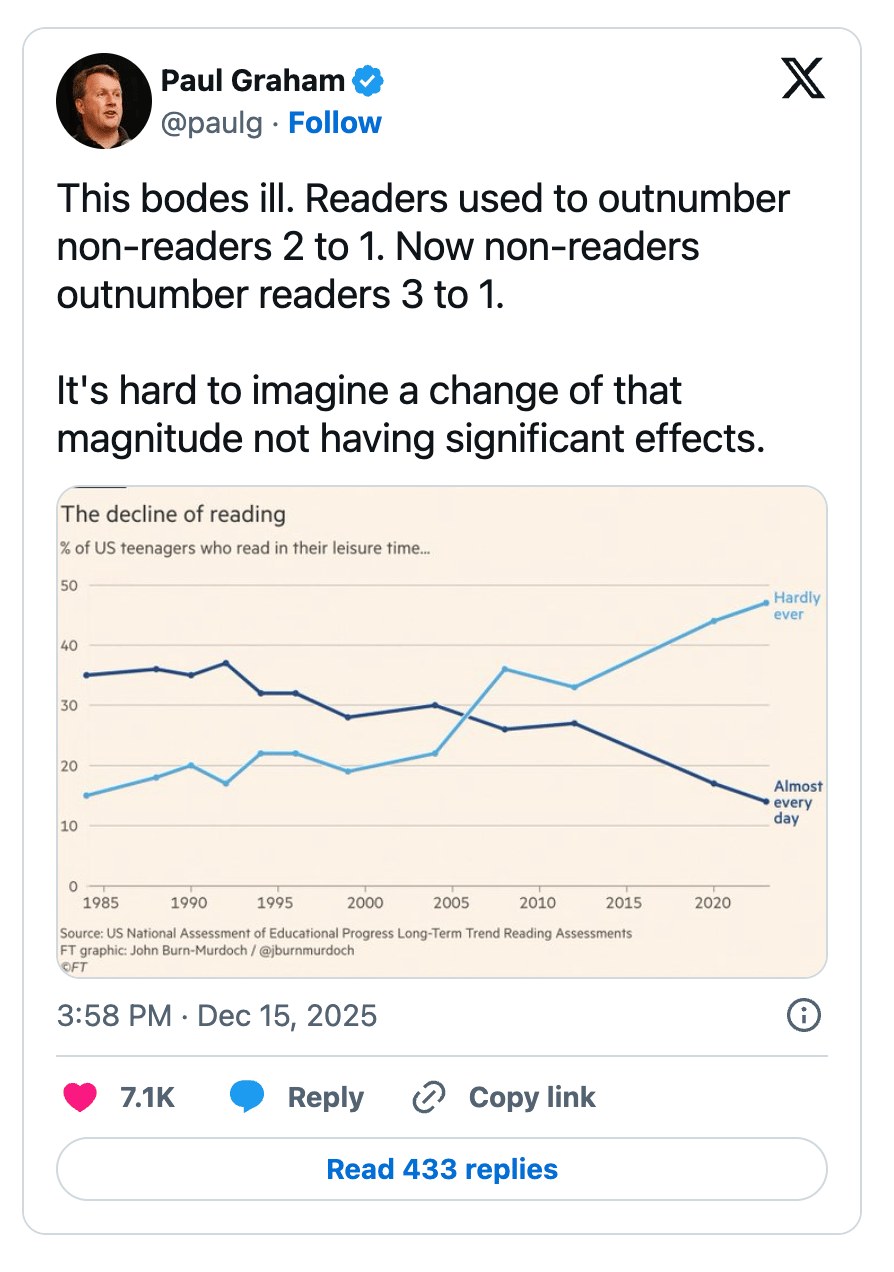
Over the last 25 years, daily reading habits have plummeted off a cliff.
National reading scores are at multi-decade lows. Elite college students aren’t reading books. Attention has moved from text to feeds, clips, and endless scroll.
Almost entirely the result of AI, something similar is happening with writing.
“Writing is thinking,” author and historian David McCullough said in 2002. “To write well is to think clearly. That’s why it’s so hard.”
In 2026, writing and reading well are hard evidence that you can think. When fewer people can do this, the ones who can gain leverage.
Of course, there are many exceptions. There are obviously times when AI reading, writing, and “thinking” is 100% the right, faster, better move, and we hunt for these opportunities at Contrarian Thinking every day.
But in a world optimizing for distraction, the ability to sit with ideas is becoming quietly powerful.
4. Which Means… You Should Probably Scroll Less
Scrolling too much appears to be correlated with cognitive decline.
“A systematic review of 71 studies with 98,000 participants published in 2025 reached an alarming finding… Heavy short-form video users showed moderate deficits in attention, inhibitory control, and memory,” wrote Derek Thompson.
Again, in 2026, sustained attention is likely to become a differentiator in life.
5. We’re Facing a Societal Decline in Ownership
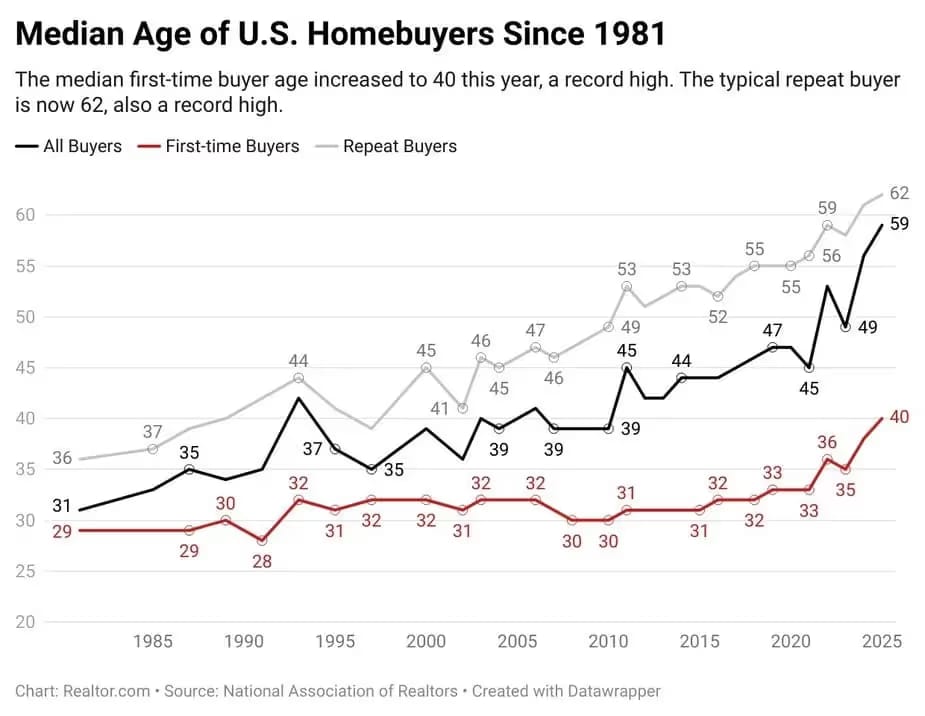
If you want to understand the next decade of politics, economics, and culture wars, start with this chart:
As homeownership declines, something deeper erodes with it. People lose not just physical ownership, but a sense of ownership itself. When you own, you care, and when fewer people own, you get a society full of this:
As Peter Thiel has said, “If one has no stake in the capitalist system, then one may well turn against it.”
THIS IS URGENT
6. Learn to Build Ownership… ASAP
No matter who you are, ownership is now an essential skill.
Through our programs and events, we help people build it, and we will bully you until you do too. It’s that important.
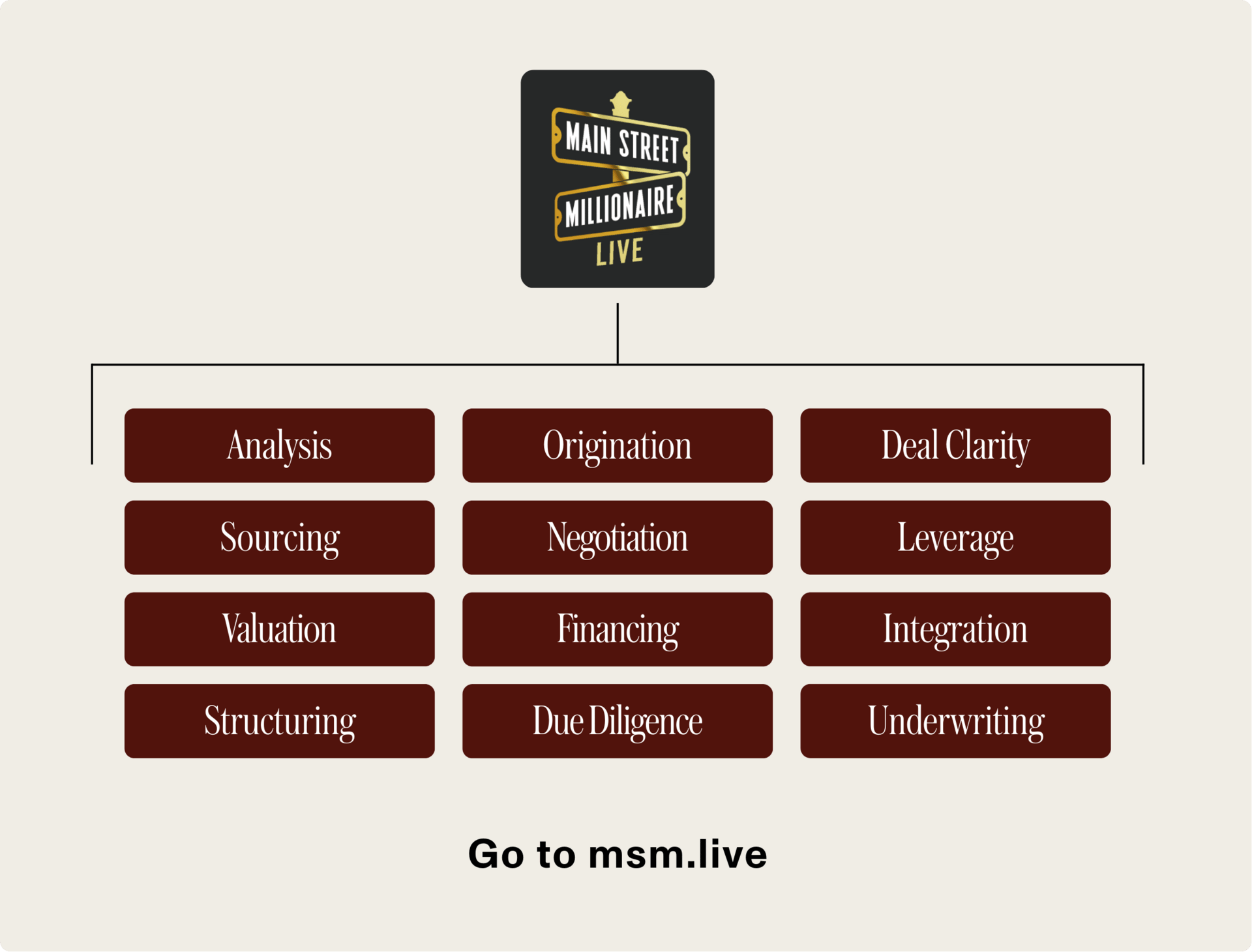
Cause here’s the thing: “acquisitions” and “building ownership” aren’t one skill. They’re a broad stack of skills. Most people learn them the slow, expensive way: trial and error.
Much of that is inevitable. But much of it can also be accelerated.
That’s why this February, we’re hosting Main Street Millionaire Live to affordably give you rapid, concentrated education in the skills we’ve seen matter most.
“This wasn’t just another hype-filled event. It was packed with real, actionable strategies and hands-on workshops. Codie and the team poured so much value into every session, and the energy in the room was next level.” -Adam C.
If you want to buy a small business with competence, discipline, and a realistic plan, that’s exactly what Main Street Millionaire Live can help you with.
But you should act soon. We go live virtually February 20th-22nd, but our most affordable pricing (just $47) will likely end on January 5th.
Let us know if you got a ticket and plan to attend. We’d love to see you.
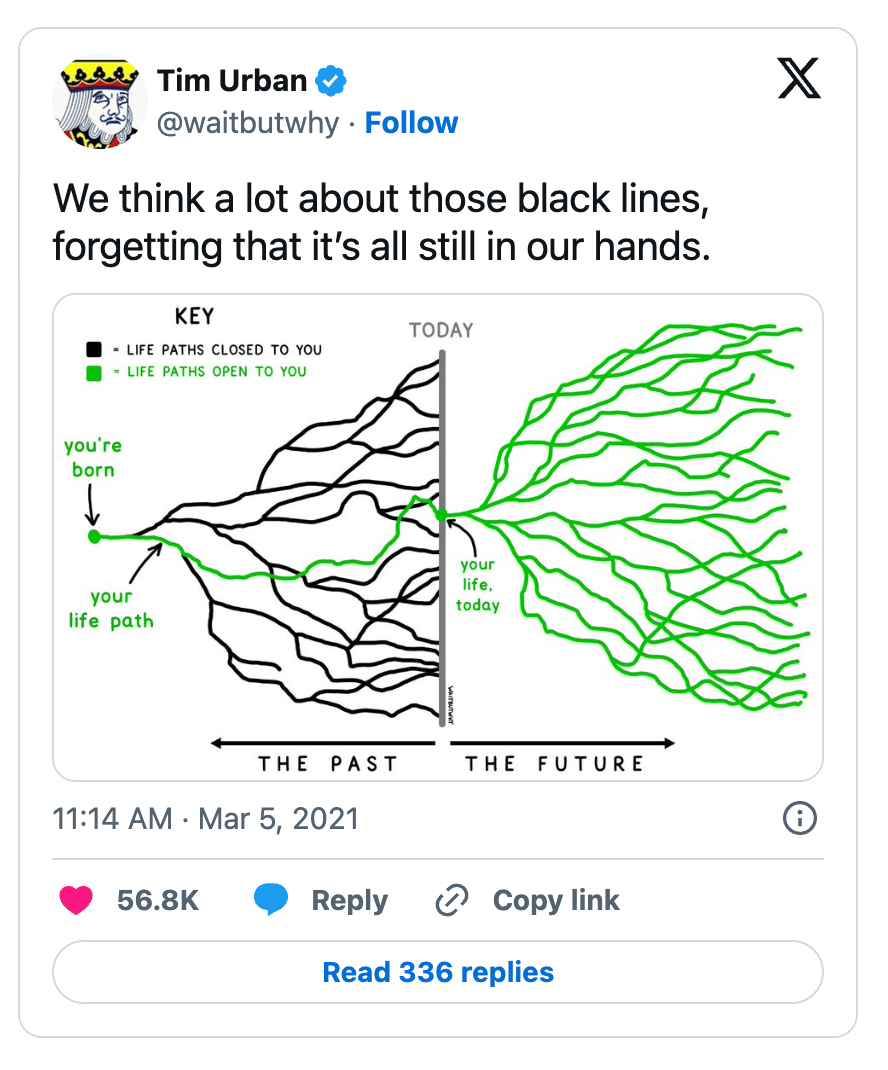
7. New Life Paths Will Soon Emerge
Between AI, labor markets, and ownership trends, we are on the precipice of major shifts in cultural, economic, and educational norms.
Life paths will soon look very different, and we’re already seeing some of this play out in our programs.
Here’s 1 life path we expect more young people will take:
Instead of contorting themselves into a mortgage they can’t truly afford, they will rent and maintain flexibility.
They’ll focus on building income, maybe even getting married, and working to build ownership in a business rather than a home.
A business will give them things a house likely won’t: cash flow, skills, and potential job protection in a terrible labor market.
Because they’re renting, they also won’t have to worry about all the added costs and responsibilities that come with homeownership.
For years, they will focus on pouring their energy into growing sales, improving operations, and paying down acquisition debt with profits.
Any surplus cash flow can be saved or reinvested in their business, rather than into a home’s surprise roof leaks, insurance spikes, and constant maintenance.
Then, when the timing is right, they can choose to buy a home from a position of strength.
By that point, they may own a business with meaningful cash flow (potentially worth multiples more as a result of their work), along with valuable experience.
If the old path was to buy a house, then build wealth, the new path might actually be the opposite: build wealth, then choose to buy a house if it makes sense for you.
8. But Life’s Constants Now Matter More Than Ever
AI is moving fast enough that even the very people building it aren’t sure if their jobs will exist soon.
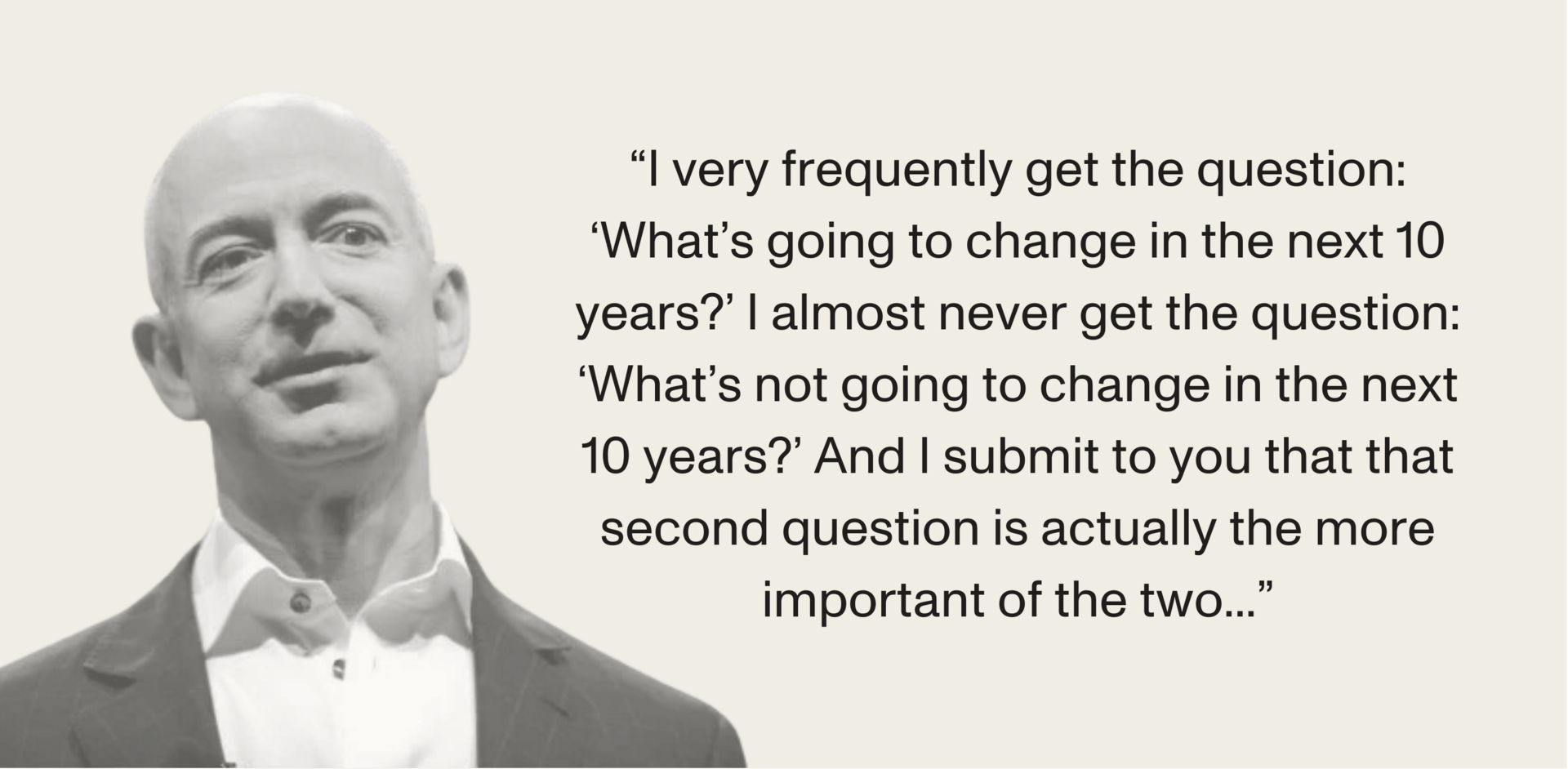
Jeff Bezos has an amazing framework for building an enduring business despite uncertainty. Instead of guessing trends, focus on what will never change:
“It’s impossible to imagine a future,” Bezos said, “where a customer comes up and says, ‘Jeff, I just wish the prices were a little higher,’ or, ‘I wish you’d deliver a little more slowly.’”
Whether you’re grinding at your 9-to-5 or are a local plumbing business owner in our Boardroom, the same principles can apply.
9. The R.O.I. of Proximity Will Continue to Rise
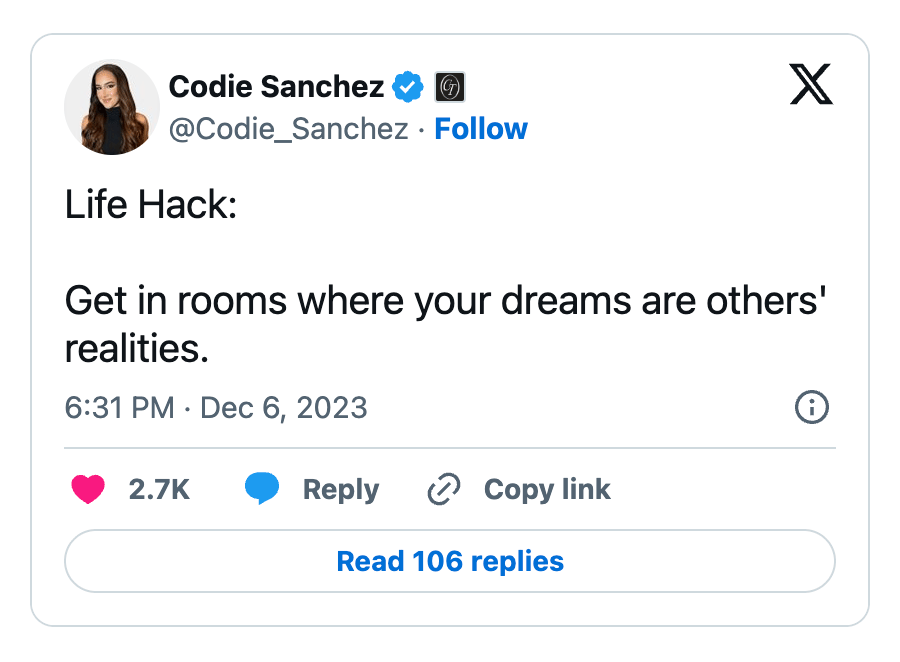
If you want to know where fortunes will be made in 2026, don’t look at markets; look at rooms.
Wealth follows proximity. The closer you are to capital, information, and ambition, the higher your expected return.
A face-to-face request is 34x more successful than the same ask over email.
Patents are far more likely to cite geographically nearby patents.
Economists analyzing 21 billion Facebook friendships found that “economic connectedness” across class lines is one of the strongest predictors of upward mobility.
A 2024 study found that higher social trust in leveraged buyouts is correlated with transaction synergies and long-term operating performance.
Like any asset, the earlier you buy in, the greater your potential to compound (better relationships, asymmetric insight, and time saved).
Economists call it agglomeration, the phenomenon where productivity and innovation rise as people and ideas cluster together.
We see this play out in real time, all the time, among our ~2,500 active members.
10. There’s About to Be (A Lot) Less Career Planning
Earlier this year, Ford CEO Jim Farley said AI will “replace literally half of all white-collar workers in the U.S.”
According to November data from the Federal Reserve Bank of New York, college-educated workers said the likelihood of finding a new job within three months, if laid off, has decreased to 47%.
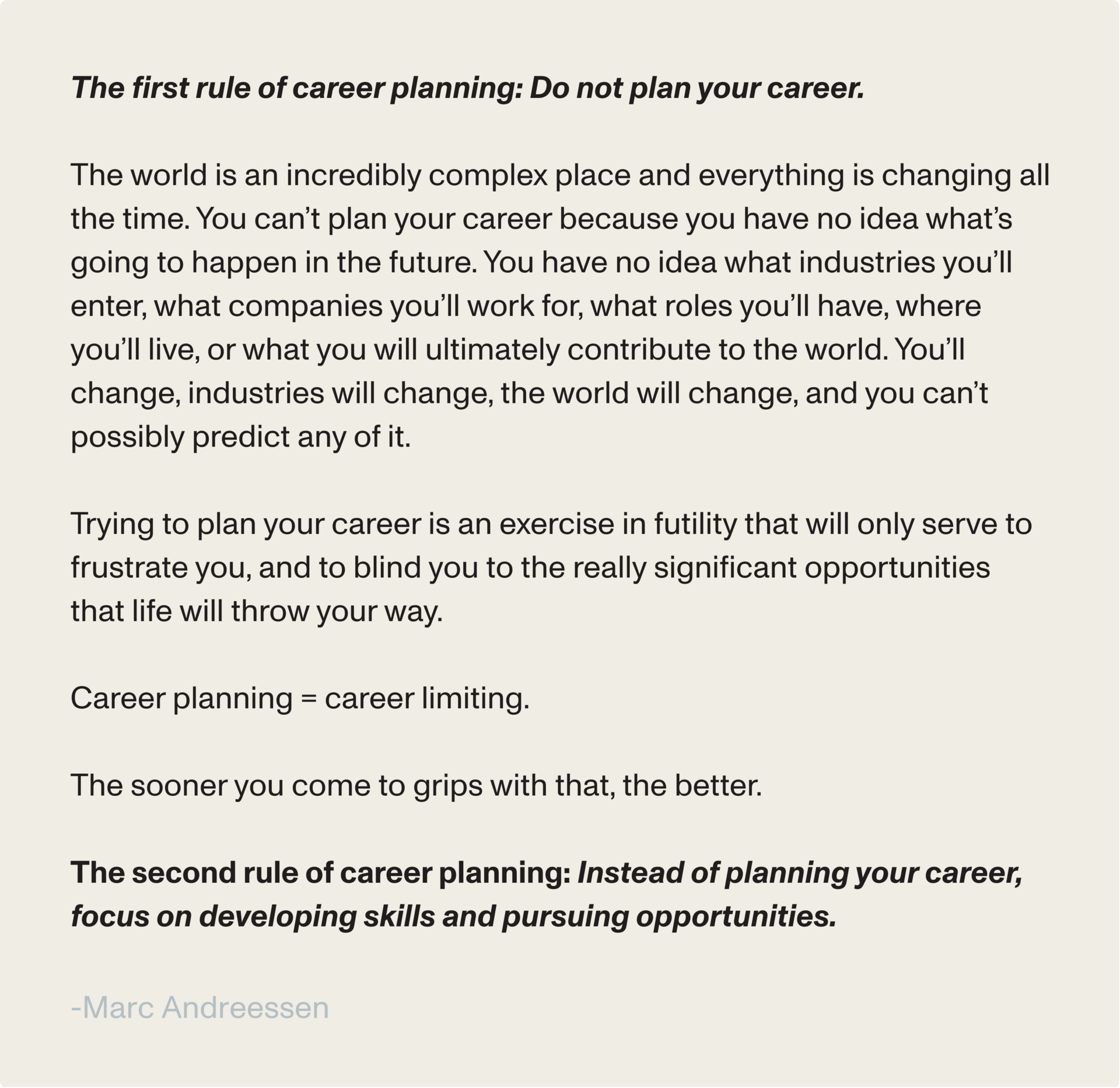
If this hits close to home, it would be wise to follow Marc Andreessen’s 1st rule of career planning:
Don’t.
He wrote this in 2007. It has never been more relevant than it will be in 2026. Next year, it will also be wise to follow Andreessen’s 2nd rule of career planning:
“Focus on developing skills and pursuing opportunities.”
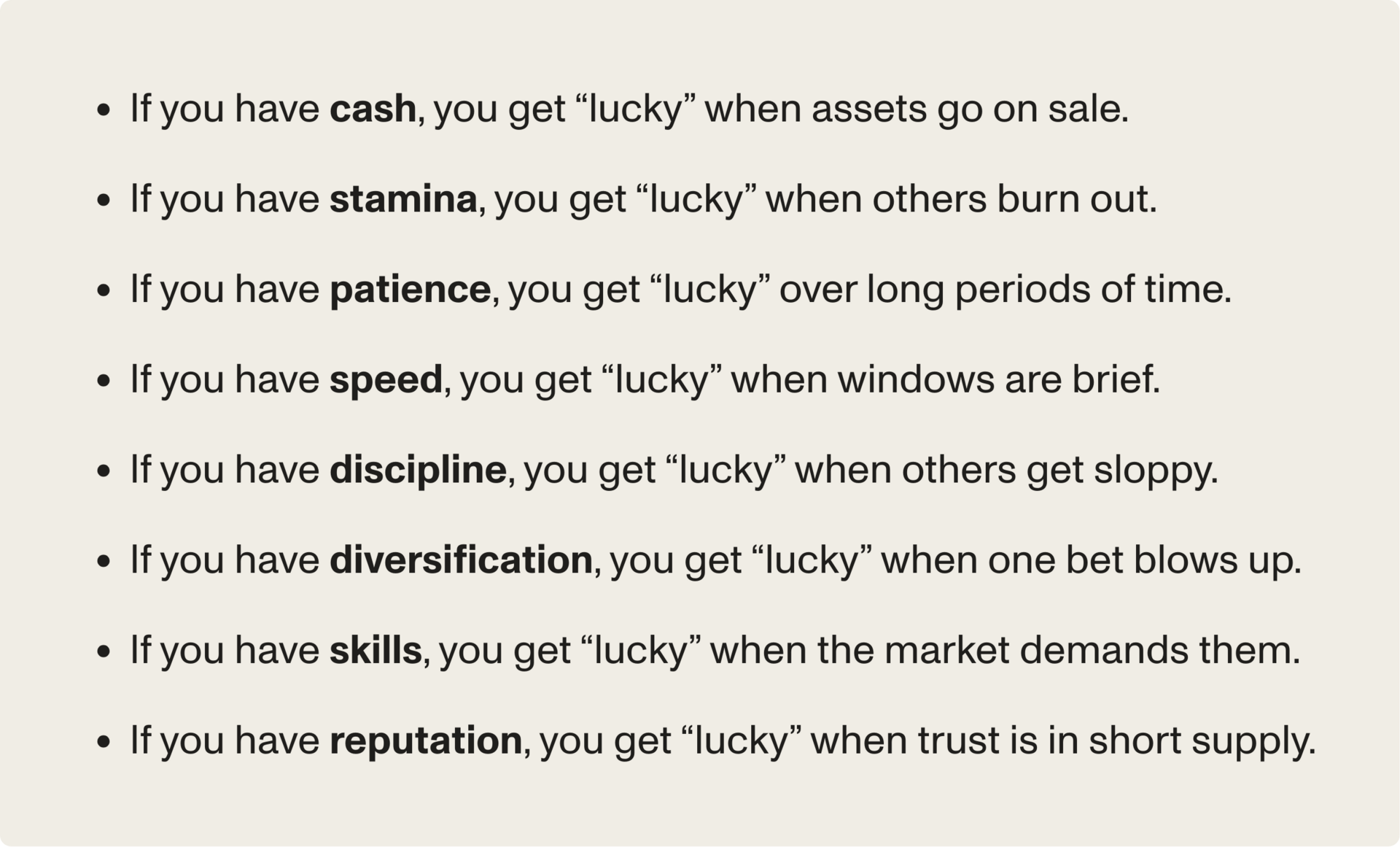
“Luck” in wealth-building isn’t usually that random. It’s probability bending toward people who’ve positioned themselves for it. Here’s how it actually works:
Work toward these, and watch your “luck” (and personal fulfillment) drastically expand in 2026.
We’ll be doing the same.
-Team Contrarian
The information contained here is educational, may not be typical, and does not guarantee returns. Background, education, effort, and application will affect your experience and the profitability of any business. Individual results may vary.




.png)






.png)







.svg)


