You're not stuck, you're just alone at the top. Most entrepreneurs hit a ceiling, not because the opportunity isn't there, but because you're solving $10M problems with $1M strategies.
You can tell a lot about a company by how its leaders talk about their team.
When they talk about them… do they look like this:
Do they sound like a breath of fresh air? Or like they’re about to be replaced by AI? Do they talk about them like adults? Or, like they’re running a daycare?
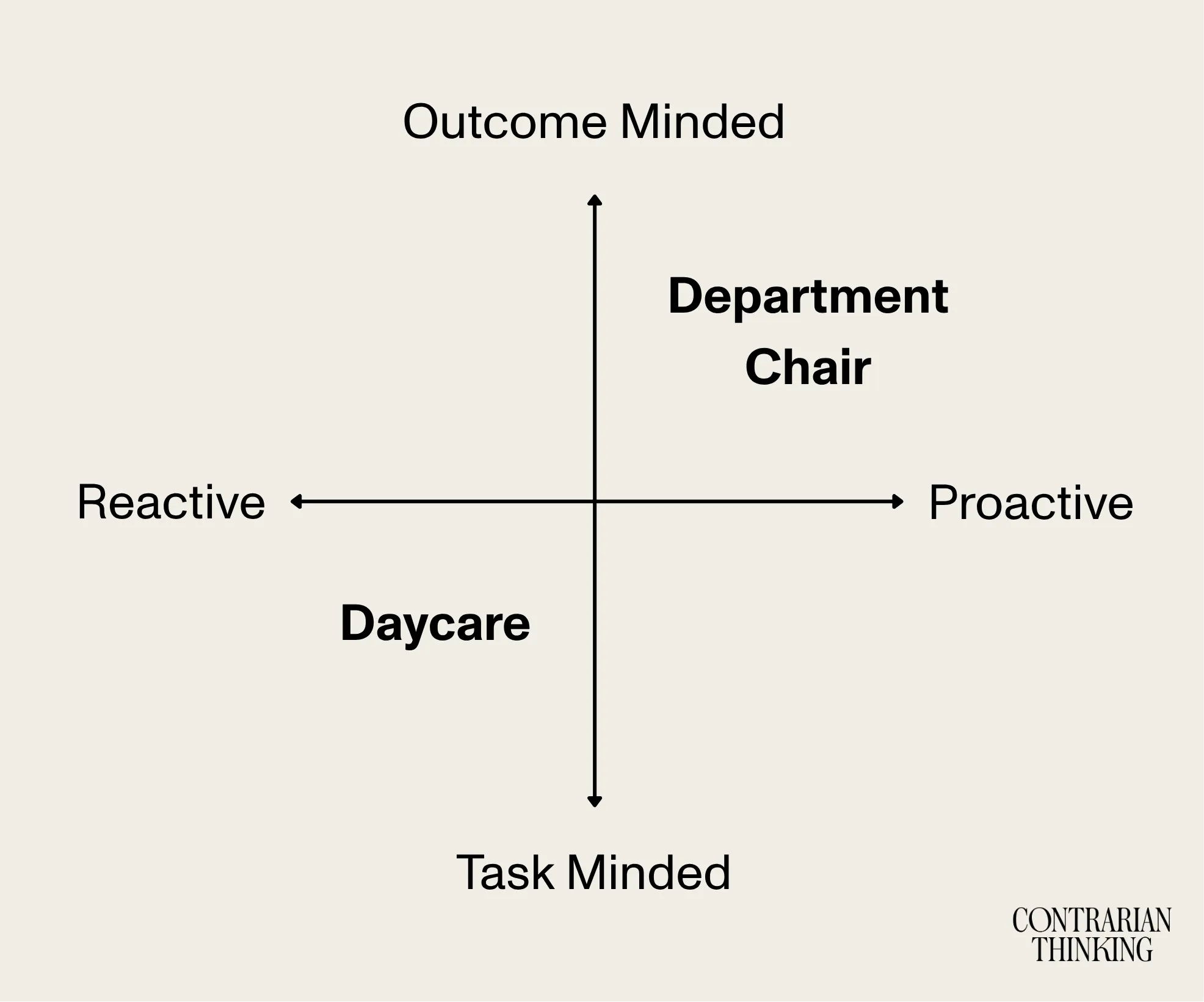
After running a business with 100+ people, I’ve started to notice that almost every single person falls into one of two categories.
Let’s unpack the two, figure out which one YOU are, which ones you’ve hired, and why the future is going to be incredibly kind to one and quietly brutal to the other.
I shared this with my team this week. You might not see the people around you, or yourself, the same way after reading this…
STOP RIGHT THERE
If you already own a business…
Come to Austin next month. Our Growth Accelerator Workshop is 3 days with us looking inside your business to help unlock its next level of growth. Hiring. Cash flow. Marketing. AI. We’ll show you what levers to pull and what to ignore.
Not ready for that just yet?
❇️ Start with our upcoming FREE virtual masterclass where we’ll show you how businesses in our network are spotting hidden profit leaks and pulling simple growth levers right now.
Now back to the meat…
The Hard Truth
If you spend enough time around owners, you start to realize many sound like teachers stuck in a bad preschool:
“I have to check on my team constantly.”
“If I don’t remind them, nothing gets done.”
“I’m chasing status updates like I’m collecting permission slips.”
But some are different. Some sound more like they’re leading a well-functioning university:
“I know things are moving even if I’m not in the room.”
“They flag issues early.”
“They bring me options, not just problems.”
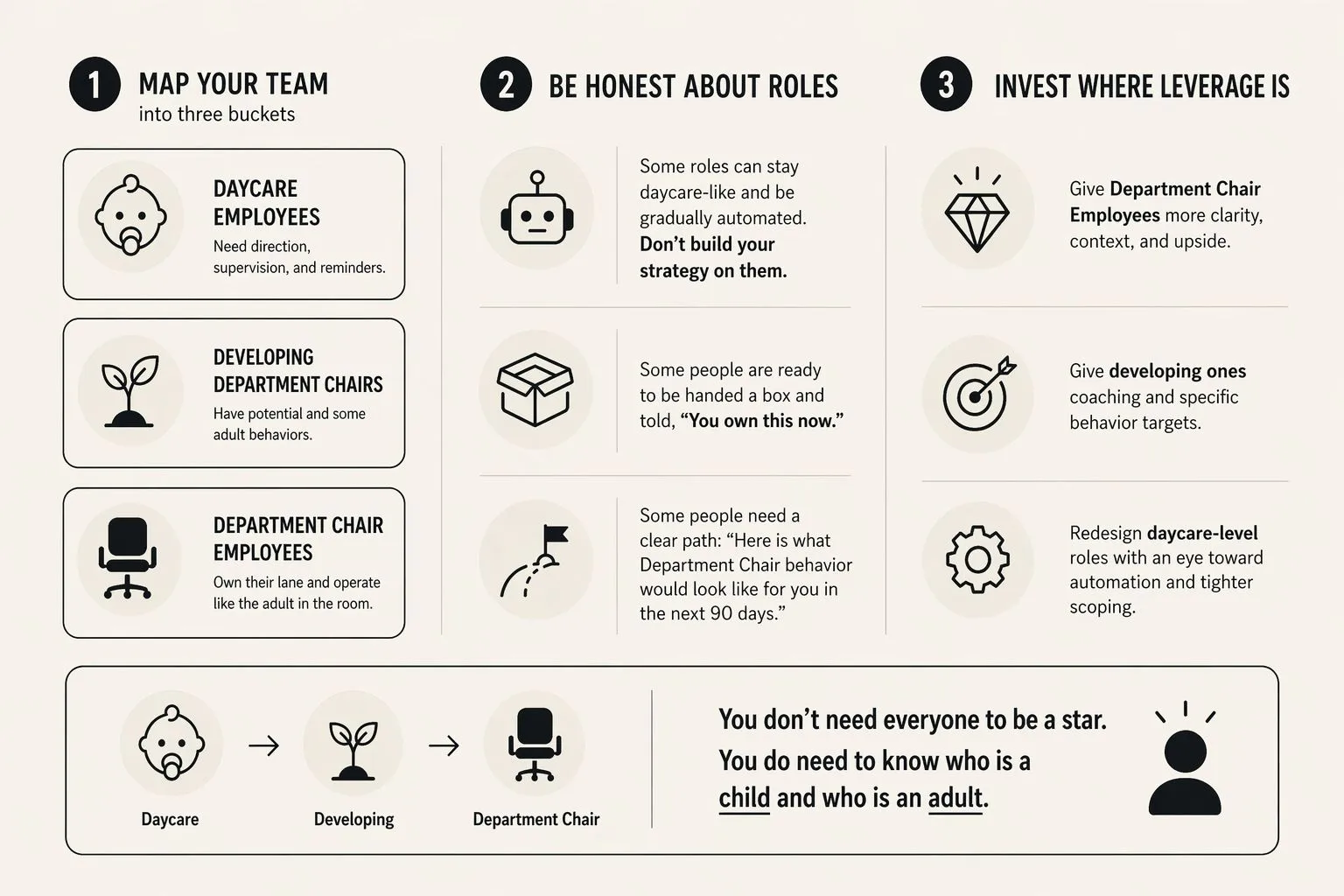
Over time, I’ve started referring to these two categories of employees as Daycare Employees and Department Chair Employees.
A Tale of Two Meetings…
A CEO in our Growth Boardroom recently told me about a Monday meeting with her team that finally broke her. She’d sent a clear message on Friday:
“On Monday, I need:
Draft of the sales page
Updated lead list
Short report on last week’s campaign… Just the top 3 learnings.”
Monday arrives. They hop on Zoom.
Marketing person: “I started a doc but wasn’t sure on the angle, so I haven’t finished it yet.”
SDR: “I didn’t get to the list because I was waiting to see what segment you wanted.”
Ops: “I have some numbers but not the top 3 yet; I wasn’t sure what format you wanted.”
Twenty minutes in, she realizes she’s not running a business meeting. She’s running circle time.
She’s handing out crayons and snacks, not paying adults to solve problems. This is Daycare Energy:
If you’re not standing in front of them —> nothing really moves
If you don’t clearly assign tasks —> tasks evaporate
If you don’t ask for an update —> there isn’t one
The work might get done eventually, but only via constant nudging, checking, reminding, and clarifying. That’s meeting #1.
Then there’s the other kind of meeting…
Contrast that with another founder I know. Before he even logs on, his inbox has:
A short video from marketing: “Here’s the draft sales page, three headline angles, and which one I recommend based on last week’s data.”
A note from sales: “Lead list attached. I prioritized A‑tier prospects and flagged ones that might be better for partnership.”
A message from ops: “Campaign report below. Three takeaways, one surprise, one thing I want to test next.”
They still have the meeting. But it’s about decisions. They tweak, they choose, they commit. If he had to step out for the day, the team would still move.
These are the Department Chair Employees. They don’t run the company. But inside their lane, they act like the adult in the room: noticing, communicating, deciding.
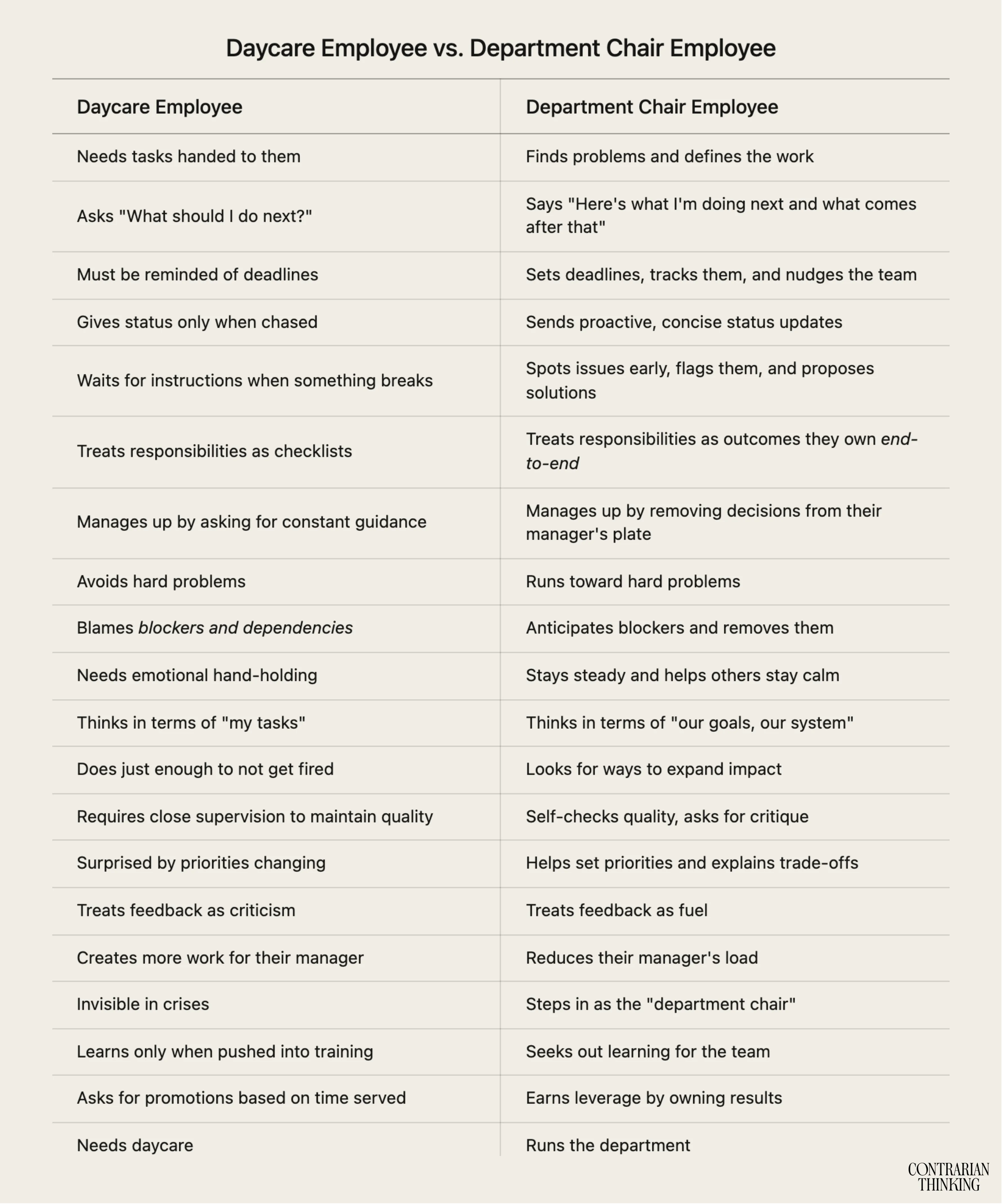
Let’s look at the side-by-side comparison:
You tell me which one sounds more valuable to your business?
Where are you on the Daycare Index?
Let’s start with the uncomfortable question:
Are you on your boss’s daycare bill?
The Daycare Index (self‑audit)
Score yourself 1-5 on each:
1 = never, 3 = sometimes, 5 = often.
My manager has to ping me for updates, rather than me proactively updating.
I regularly ask, “What do you want me to do next?” instead of proposing next steps.
I wait for direction when something breaks rather than suggesting a plan.
I'm surprised by deadline expectations or priority shifts I probably should have seen coming.
Other people notice my mistakes before I do.
Add it up (max 25):
20-25 → You are in Daycare. You might be competent, but you are not low‑maintenance.
13-19 → Mixed bag. Some adult behaviors, some daycare habits. A lot of untapped upside.
5-12 → Low Daycare. You’re doing better than most; your boss likely exhale‑smiles when they see your name on the calendar.
Now flip the lens.
The Department Chair Score (self‑audit)
Again, 1-5:
I often bring my manager a problem plus at least two proposed solutions with context.
I set my own deadlines (within reason) and communicate them clearly.
I send proactive updates about important work without being chased.
I can explain how my work connects to a bigger company goal.
When something breaks, I lean in early rather than duck.
Total:
20-25 → Department Chair. You are trusted, even if no one has said it out loud yet.
13-19 → You’re on your way. The foundation is there; you need reps and a bit more courage.
5-12 → Either you’re new, checked out, or hiding. All fixable, but not if you tell yourself you’re already crushing it.
If your Daycare Index is higher than your Department Chair Score, you’re increasing your boss’s management load. Good news is you can change. And you’d better, with tough love, fast. Because in the world we’re stepping into, “expensive to manage” is career‑threatening.
Who have you actually hired?
Now flip the script. As an owner or manager, you likely already know which employees drain you and which ones make you feel better. You just may not have the language for it.
I’ll give you some.
*Reminder…and I’m going to hold your hand as I say this… this is all your fault. You’re allowing this standard, and you aren’t giving enough good feedback (or taking the necessary action) when people don’t meet the level of a department chair. That means you can fix all of this.
The Management Load Formula
For each person who works for you, think about a typical week.
R = How many times do you have to remind them about tasks, deadlines, or updates?
U = How many unsolicited useful updates do they send you?
P = How many times do they bring a problem plus a proposed plan?
F = How many fires do they cause that you have to clean up?
S = How many fires do they stabilize without pulling you in?
No need for perfect numbers, just a gut sense. Then ask yourself, honestly:
Is this person’s presence raising my management load or lowering it?
I once (lol - often, many times, still have) had a team member who technically hit their KPIs. But every KPI was a wrestle. I had to nag, chase, and re‑clarify. They were “performing” on paper, but cost two extra hours of my week.
Another wasn’t perfect on metrics (yet), but they constantly sent updates, spotted risks early, and took messy problems off my plate. Over a year, the second person produced less immediate output but gave me back dozens of hours of brain space.
Guess which one got promoted, and which one got replaced by a tool and a contractor.
Why AI will eat Daycare work first
Now we get to the uncomfortable, inevitable part.
Think about what Daycare Employees spend most of their time doing… Checking boxes.
Much of it is exactly the work that AI and automation are already creep‑crawling into. THIS IS A GIANT RED FLAG.
Software is now happy to check boxes for a fraction of the cost, zero sick days, and no attitude. Meanwhile, Department Chair Employees spend their time on what AI still struggles with:
Deciding which projects matter this quarter
Navigating nuance between people, politics, and tradeoffs
Handling emotionally ugly situations with tact
Seeing second‑order consequences of decisions
Translating chaos into a clear plan that other humans will follow
Taking responsibility when a call turns out to be wrong
Agents will make suggestions and run tasks. Department Chairs will weigh their priorities, design the inputs and outputs, argue with them, and choose.
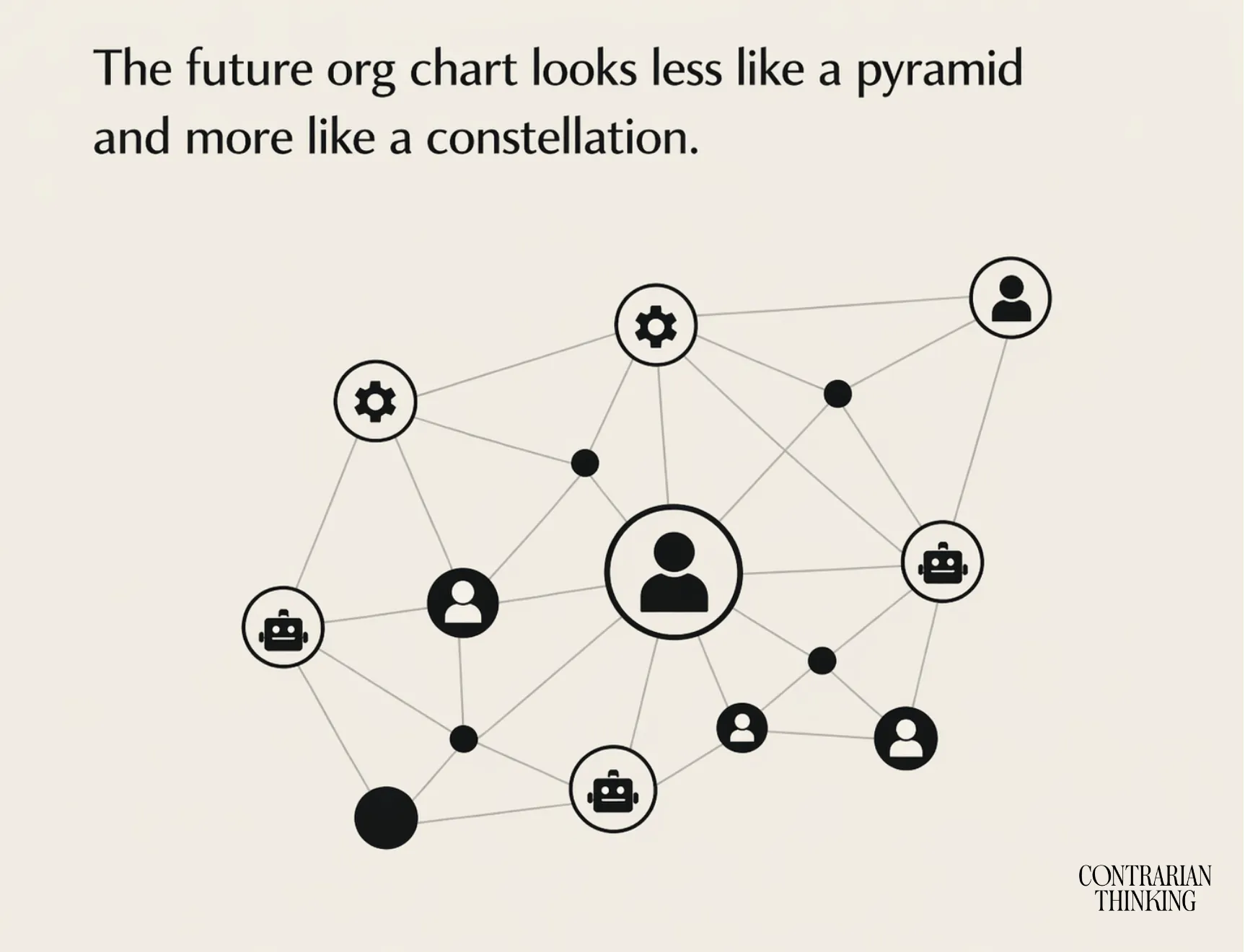
The future will look like:
A small number of high-ownership humans with Department Chair behaviors
A swarm of agents and automations doing the repetitive, structured, define‑and‑do tasks.
Contractors and specialists called in for spike work.
If you’re a human who needs daycare‑level supervision, you are sitting in the one part of that picture that is getting narrower every quarter.
Employees: How to move from Daycare to Department Chair
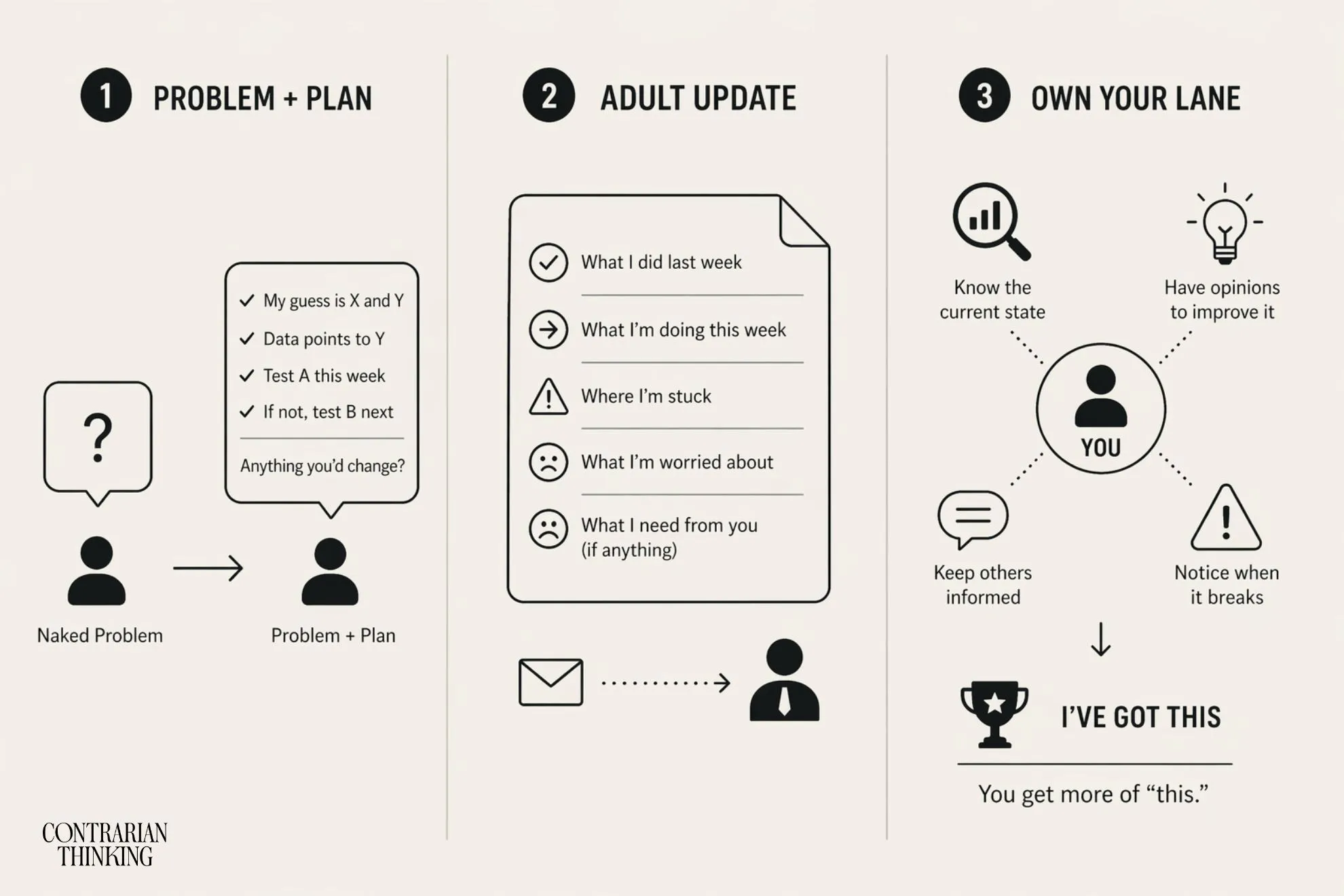
If you read this and thought, “Well, this is no bueno… I might be more Daycare than I’d like to admit,” good. Now you know, and after you learn this 3-step fix, you’ll be able to change course.
1. Start bringing “problems + plans”
2. Send the “Adult Update”
3. Choose a lane and quietly own it
When your behavior consistently says, “I’ve got this,” people start giving you more “this.”
Founders: How to move from Daycares to Department Chairs
If you’re a business owner, you’re probably already naming names in your head. “This person is absolutely Daycare.” “This one is a quiet Department Chair.” “This one could go either way.”
Here’s how to make that useful instead of resentful:
It’s time to pick a side
Quick storytime.
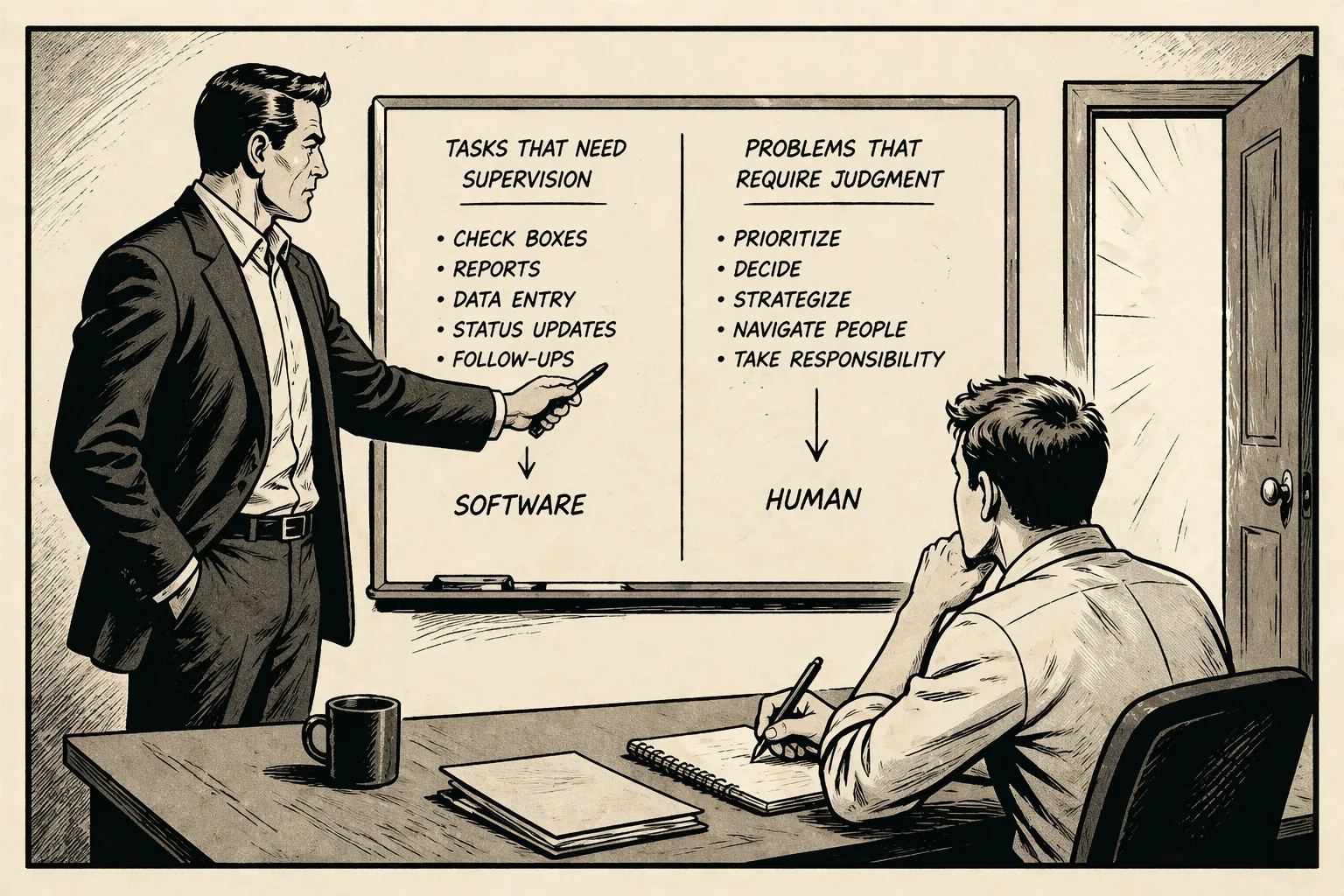
One time, an investment partner at a top firm was fed up. He walked his analyst into a room, pointed at a whiteboard, and said, “Here’s the mess. I’m gone for the afternoon. When I come back, I want progress.”
The analyst immediately tried to drag him back into daycare. “What’s the priority? Spreadsheet or deck? How detailed?”
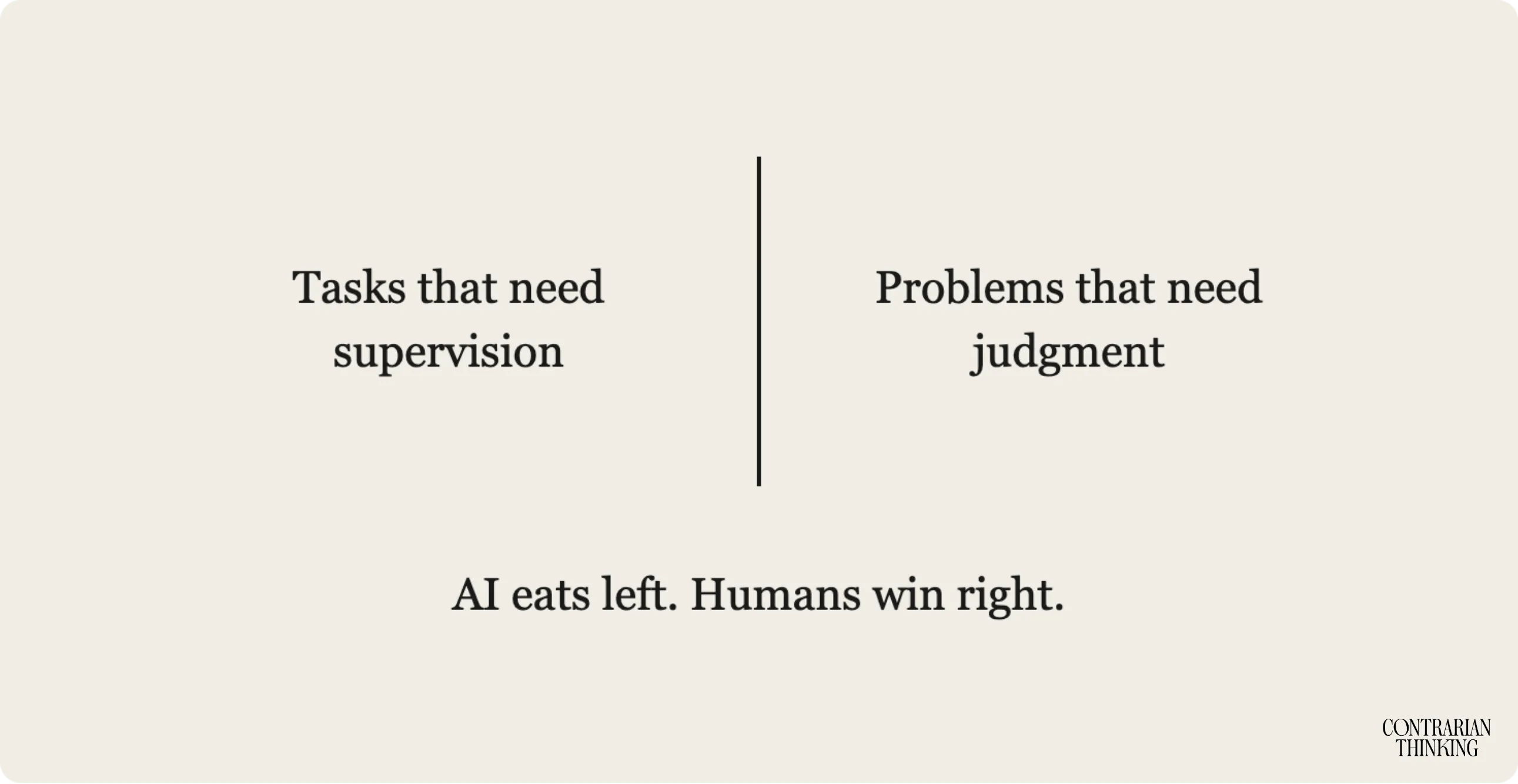
The partner drew a line down the middle of the board. One side: “Tasks that need supervision.” The other: “Problems that require judgment.”
“The first side is going to software.” He tapped the other. “This is the only reason a human has a job. I’m leaving to find out which side you’re on.”
The analyst flailed, waited, then finally did the one adult thing: picked priorities, made calls, sent a note. “Here’s what I’m doing and why. If it’s wrong, I’ll fix it.”
That’s it. That’s the bar now.
You don’t have to run the whole school. But if you still need someone to hold your hand every time you cross the hallway, an AI agent is coming for your job, and it won’t ask about snack time.
I love you, builders… So I’m here to bully you into being better. Because no one else will.
-Codie
The information contained here is educational, may not be typical, and does not guarantee returns. Background, education, effort, and application will affect your experience and the profitability of any business. Individual results may vary.
















.svg)


