You're not stuck, you're just alone at the top. Most entrepreneurs hit a ceiling, not because the opportunity isn't there, but because you're solving $10M problems with $1M strategies.
How She Owns 6 Main Street Businesses Without Leaving Her Career in Big Tech
January 28, 2026
10 min read
“I made good money. But the thing is, it just all came from one source, and that was scary.”
Most people assume building ownership in a business requires a clean break from your job.
That’s not what happened here.
Nguyet Luong built her career in stable, Big Tech W-2 roles.
But over time, one thing started to make her nervous:
All of her income came from one place.
Nguyet had never owned a business. She’d taken exactly one accounting class in college.
But her search for additional income sources led her to the world of small business, and eventually to pack-and-ship stores.
What appealed to her was how tangible they were.
Physical locations. Clear demand. Simple unit economics. You could quickly see what worked and what didn’t. But she knew she didn’t want to run the day-to-day operations herself.
So she partnered up with a close friend, and together they brought in their significant others.
Nguyet and her friend stayed focused on the backbone of the business:
Finance, and accounting
Systems and technology
Marketing and pricing
Higher-level decisions around growth and structure
Their partners handled the on-the-ground execution:
Store operations
Staffing and scheduling
Customer-facing work
That structure solved how the businesses would be run.
Then came figuring out how to, well, actually own a business.
Over the next couple of years, while maintaining her full-time role, she and her partners would go on to own 6 pack-and-ship stores across Texas, building a portfolio worth 7 figures.
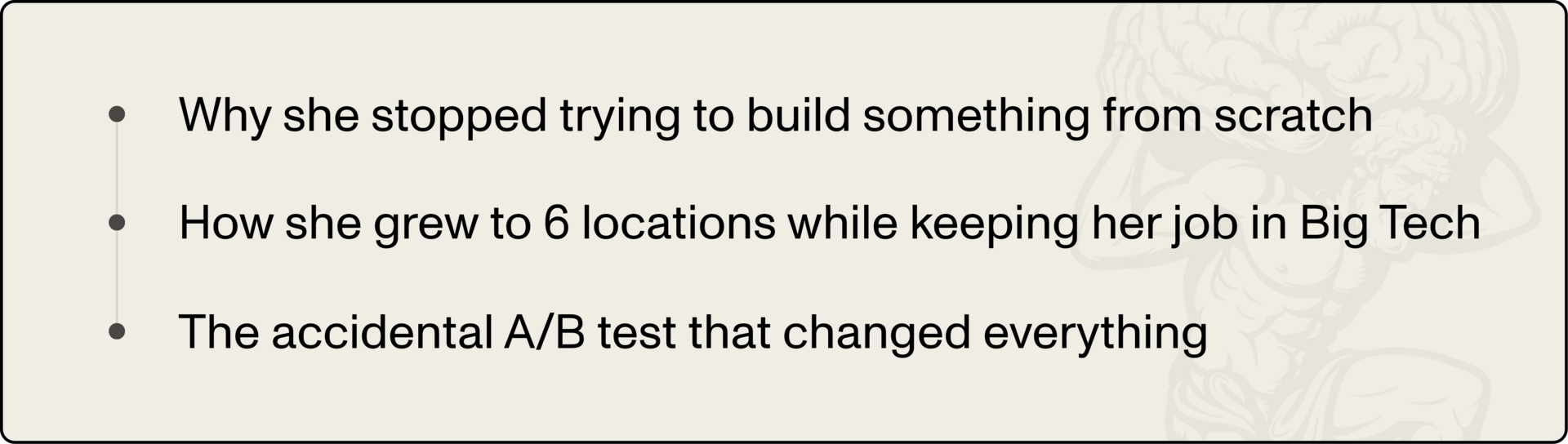
Here’s some of what you’ll get out of today’s newsletter:
Here are 7 things she wants you to know…
1. If needed, buy literacy before assets
When Nguyet first started looking at pack-and-ship businesses, she and her partner didn’t lack opportunities. In fact, they found deals that were actually quite good; they just didn’t know it.
“We didn’t know what we were looking for. We missed out on great deals because it took us too long for us to understand what would be worth buying.”
The first unlock came from paying for expert guidance early.
Nguyet cold-emailed an experienced pack and ship operator and hired them as a mentor, compressing years of learning into structured sessions with someone who had already done this before.
That way, by the time they zeroed in on their first acquisition, an 18-year-old store in Austin, they were better equipped to evaluate it.
And once she saw how effective that technique was for learning about an industry, as the deal moved along, Nguyet realized she needed deeper fluency in how acquisitions actually work.
That’s when she joined the Contrarian Academy.
“I was going through the program while going through the SBA process, so I could put what I was learning to use in real time.”
Nguyet treated knowledge as her first acquisition. Everything else followed.
2. One good business can teach you what ten bad ones can’t
Nguyet’s early advantage came from an unusual sequence of events.
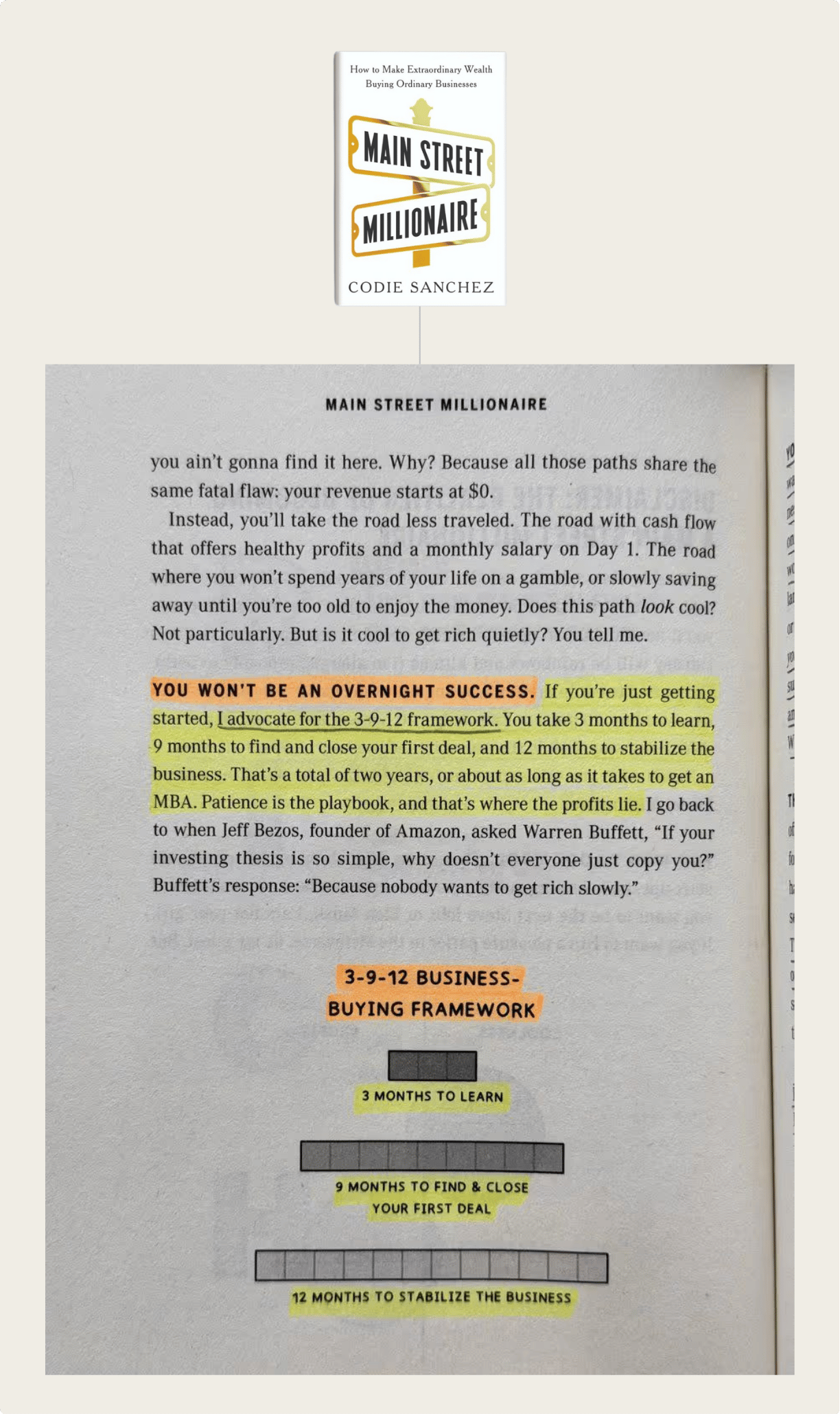
Initially, she and her partners had actually decided to build a pack-and-ship store from scratch. The lease was signed, and the plan was in motion.
Then, unexpectedly, they found an existing pack-and-ship store for sale.
Rather than choosing one path and abandoning the other, they decided to do both.
Because the new store wasn’t open yet, they had a short window of 3 months to learn the ropes inside the acquired business.
Nguyet traces much of their success to the fact that the seller was an engineer who had spent 18 years refining the business.
Processes were tight. The store layout was intentional. Pricing, workflow, and handoffs were consistent. Nguyet and her team were able to learn a ton.
Those learnings proved essential with their second acquisition.
It was a store that had been operating for 30 years, but “it was not made to scale,” Nguyet told us. Employees couldn’t replicate decisions. There was no rhyme or reason to pricing. The business only worked because the owner was physically there.
“If we bought that store first, I don’t think we would have ever scaled past it. It was just so inefficient,” she admits.
But by then, they had pattern recognition. For her, fixable problems spelled opportunity.
3. Don’t hit pause unless you absolutely have to
After every buildout and acquisition, Nguyet and her partner said they’d slow down.
After the 1st store: “We need to focus.”
After the 2nd and 3rd, “Maybe we should take a break and focus on the ones we have.”
After the 4th: “I think we should take a break.”
They never did.
And at the end of 2024, while stabilizing their fourth store, a customer mentioned a competitor 20 minutes away was closing.
They drove over that day and secured a deal.
Six months later, another opportunity surfaced by chance.
A listing they’d missed years ago came back on the market.
The owner wanted out and agreed to seller financing on great terms.
Nguyet’s takeaway was simple:
“You don’t need to take a break from opportunity just to focus on operations unless it’s necessary. If you can do both, I’d try to do both. Each time we acquire a new store, we learn something new that we can translate to the other stores.”
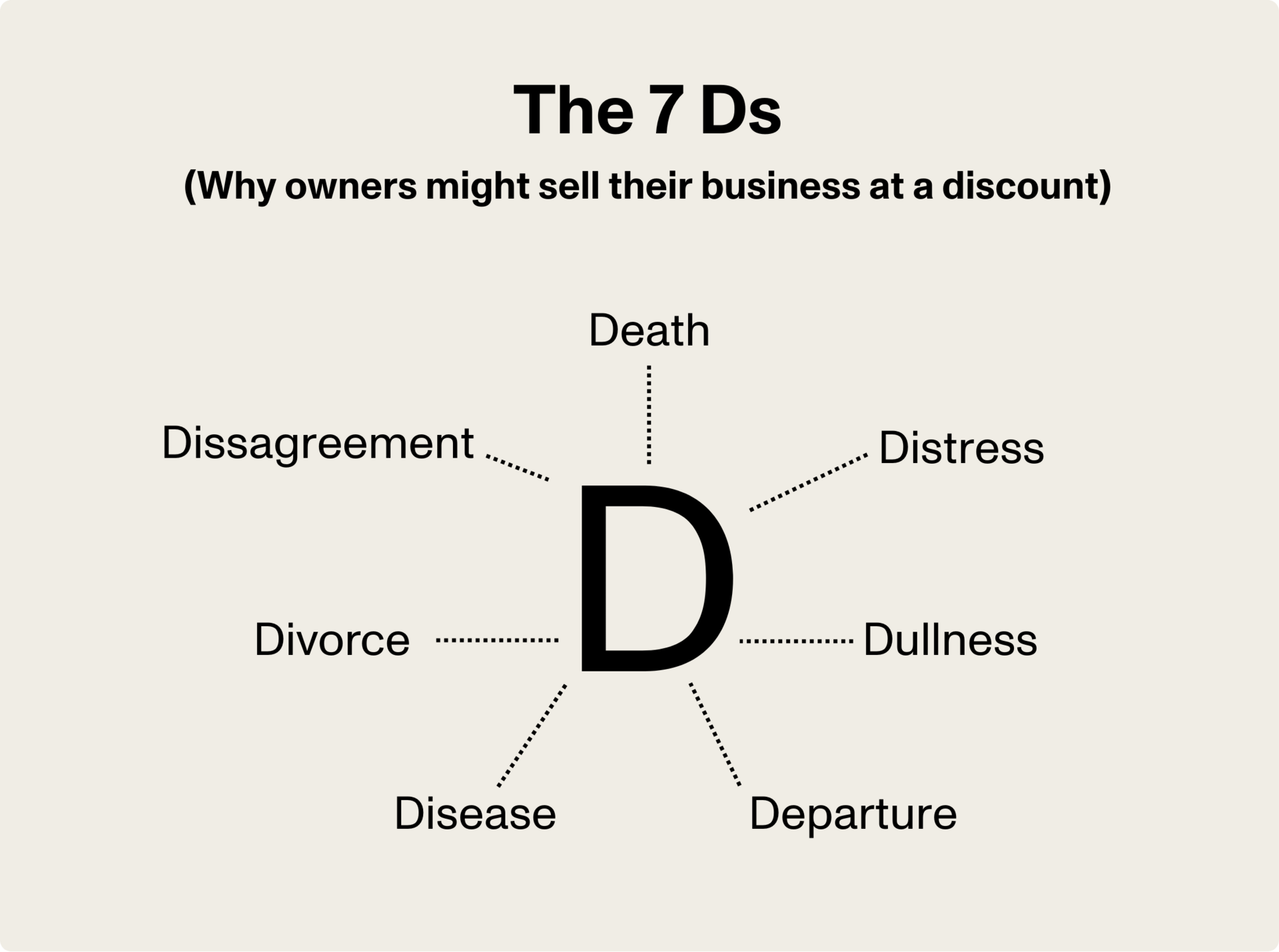
4. Owners may sell for reasons that don’t show up in the numbers
Some of Nguyet’s best deals have come from situations most buyers can’t predict.
For the pack-and-ship store that was about to close, the owner’s wife had passed away, his father was sick, the lease was expiring, and walking away that week while protecting his reputation mattered more to him than maximizing price.
“We reassured him that this wasn’t our first rodeo. We already had four stores. We don’t just start businesses to make a profit. We came across as genuine people.”
Another came from a seller worn down by a 90-minute commute each way. After two years of running the business, he was exhausted and ready to be done.
When Nguyet proposed seller financing, he countered with terms even better than what they were expecting.
In both cases, the numbers mattered. But the deals closed because Nguyet understood what the sellers actually wanted: relief, continuity, and trust.
5. Being an owner can make you better at your W-2 job
Conventional wisdom might tell you that “side” businesses distract from career growth.
Nguyet found the opposite to be true.
“It actually made me a better corporate employee,” she insists. “Even my colleagues were like, the way you think and manage now is so different.”
Her corporate communication has shifted from formal and dry to conversational and impact-focused. “It’s more like business-to-customer, very tailored to what they need.”
The difference comes down to mindset, she says. Kind of like our hammer vs. nail analogy:
“I don’t work with an employee mindset anymore. I work with an owner mindset. I don’t wait for guidance. I’m like, ‘Okay, we need to solve this problem. If we solve this problem, this is the impact. Here’s how we solve this problem.’”
This creates a virtuous cycle. Nguyet’s Big Tech salary provides stability and a safety net for acquisitions, and the businesses teach her skills that make her more valuable in her corporate role. “Both things help each other out,” she says.
6. Everyone needs to own a lane
Nguyet’s partnership works because it was designed intentionally, not improvised.
Four people. Four clear lanes.
One partner owned finance, accounting, and tax strategy.
One focused on daily operations and risk, pressure-testing new ideas.
One focused on daily operations and people, managing staff and customers.
And Nguyet owned systems, market, and tech, eliminating manual work wherever possible.
Deals can be evaluated from multiple angles at once. Decisions don’t bottleneck. The business doesn’t depend on one person’s time or energy.
They debate. They disagree. They adjust. But shared values and clear ownership keep things moving. That’s how they scaled quickly without requiring Nguyet to step away from her W-2.
7. Let your constraints do the filtering
Nguyet made one decision early that shaped everything:
She wasn’t quitting her W-2.
From the beginning, that constraint was an important filter.
It forced her to focus on certain business models and partnership formats.
Over time, she’s been able to push this even further.
“We’re testing a new model where we train our long-term staff to handle a lot of admin work for us, so we’re moving them into manager roles.”
This intentional structure, she thinks, will allow her to scale from 6 to 12 locations while maintaining a full-time job.
“Do you want more time? Do you want to work in the store? Do you want to be restricted to a physical location, or do you want to be able to work anywhere? That really dictates what business you acquire,” Nguyet will tell you.
Keeping her W-2 lowered pressure. Partnering spread the load. Buying systems instead of inventing them reduced her risk.
Six stores later, the result is flexibility and control, and there’s no sign she’s slowing down.
Want to join thousands of smart business builders and buyers?
The information contained here is educational, may not be typical, and does not guarantee returns. Background, education, effort, and application will affect your experience and the profitability of any business. Individual results may vary.










%20(3).png)







.svg)


