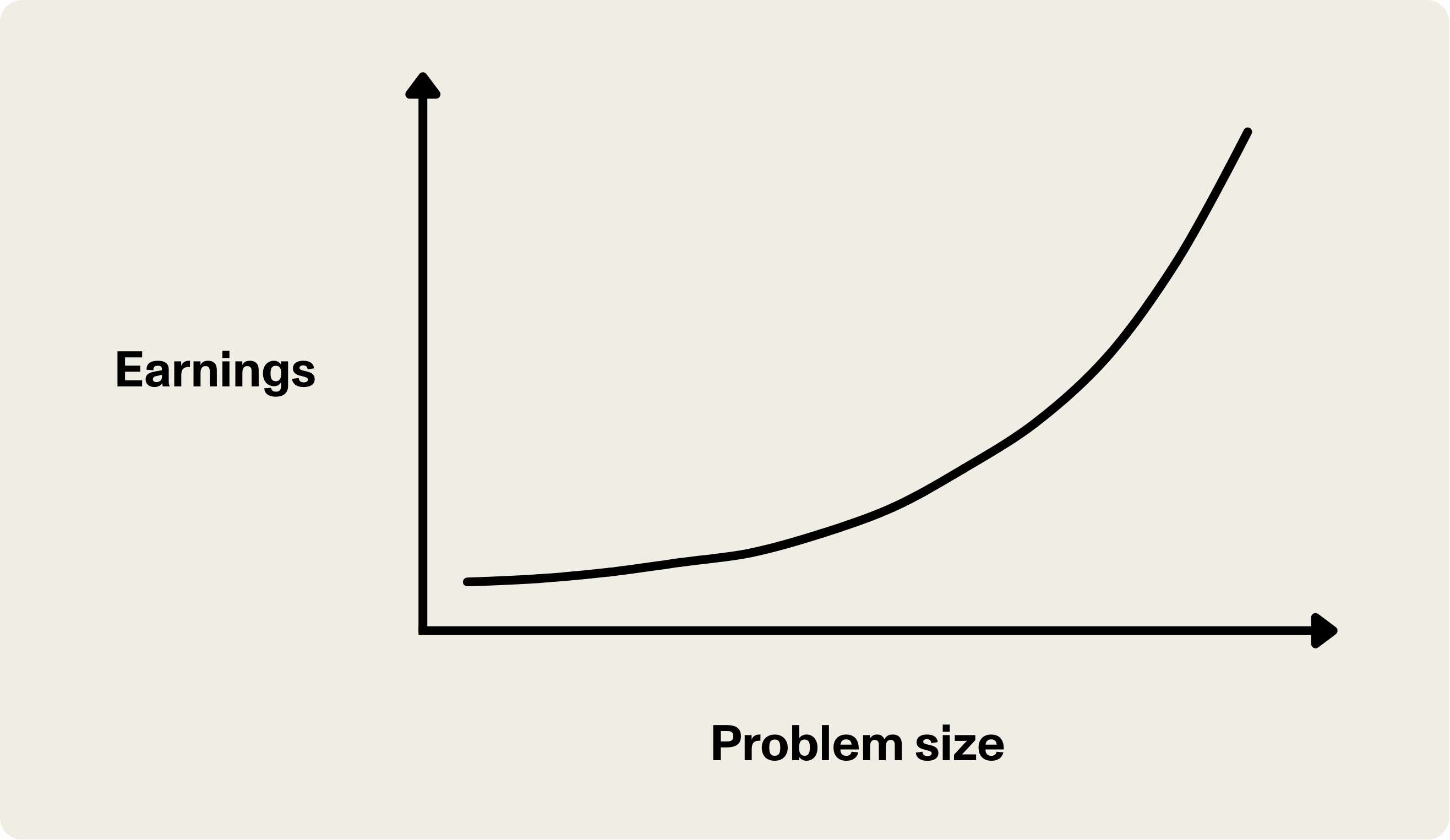
You're not stuck, you're just alone at the top. Most entrepreneurs hit a ceiling, not because the opportunity isn't there, but because you're solving $10M problems with $1M strategies.
How He Built a Franchise and a 6-Figure/Month Online Business Before Age 25
March 10, 2026
10 min read
START HERE
"Revenue is vanity. Profit is sanity. Cash flow is reality."
Meet Jared.
Jared is 24 years old. Never had a W-2. Never finished college. He grew up working in his dad's funeral homes in New Jersey, where the lesson was simple:
"Number one, if you don't work, you don't eat. Number two, don't work for anyone."
It stuck. At 16, he started his first marketing agency. It took nine months to make $5k, but eventually it took off. Then COVID hit. He rebuilt in a new niche, scaled a second agency to $300k a month in revenue, tried to exit, but walked away with little more than what was already in the bank. A few more swings followed. Some worked, some didn't.
By 2024, eight years into entrepreneurship, Jared had experience and scar tissue. Here's what he’s done with it:
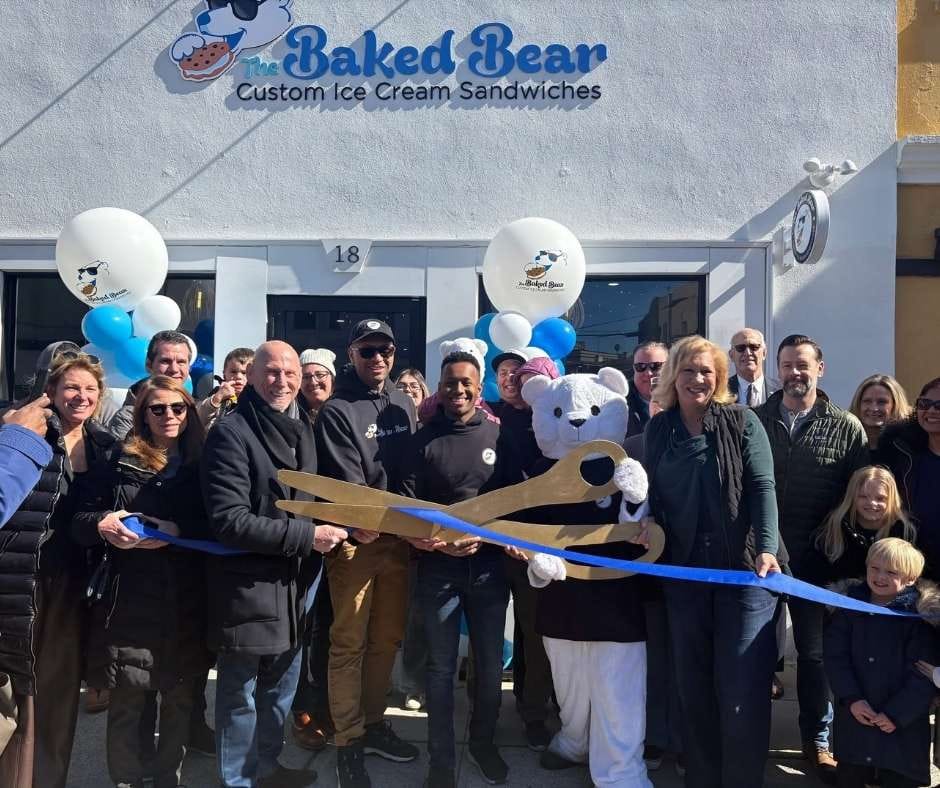
Opened an ice cream franchise and did nearly $1M in revenue
Acquired a capital-stacking business via seller financing
Grew it to $200k+ in monthly revenue and $100k+ in net profit
Built an 11-person global team with no outside investors
This is the story of how he got there.
LESSON 1
The Constraint Framework That Runs His Entire Life
Jared spent the first nine months of his first marketing agency making less than $5k total. He'll be the first to tell you that's not unusual.
"People think they're going to get into business and see massive success. They don't realize there's going to be periods where you’re just going to feel stuck. A lot of people give up at those points."
He didn't. Instead, he developed a habit he still uses today: at any given moment, he's asking himself what the single biggest problem actually is. Not a list. One thing. And he puts his energy there until it's solved.
"At a certain point, I looked around and said, 'Okay, here is my biggest constraint, this is what I need to solve for.' And then things started skyrocketing."
He's backed that approach with serious investment in his own education. Not college, but peer networks, live events, and advisory services. “I knew buying an existing business would be easier than starting from scratch again,” as he put it.
“We wouldn't have scaled as quickly if we'd started from scratch. So I joined the Contrarian Academy and got tons of great ideas for how to do this and where to look."
LESSON 2
The "Side Quest" That Does Almost $1M in Annual Revenue
Jared probably isn’t who you'd picture opening an ice cream franchise. He'll tell you himself that when he mentioned it to Codie, her reaction was something close to: "What?”
But here's how it happened. He was at the Jersey Shore one day, standing outside a Baked Bear location he'd been to plenty of times before, when something clicked.
"I saw the line and thought it would be a good business in another spot I know."
So he found the franchisee on LinkedIn, cold-messaged him, got a response, and eventually they agreed to expand the brand north.
The total project cost came out to about $320k, split between the two of them. A New Jersey grant for opening a Main Street business knocked roughly $50k off that, bringing their share down to around $270k.
From day one, the plan was never for Jared to run the floor. So before the store even opened, they hired a GM and flew her out to get corporate training. Then they built her compensation in a specific way: a competitive salary, plus a bonus tied directly to managing things effectively and keeping costs below a certain threshold.
In year one, the store did nearly $1M in revenue. Jared averages about two hours of active time in the store per week. "You can't afford not to pay a good GM," as he puts it.
LESSON 3
Broken Business or Broken Process?
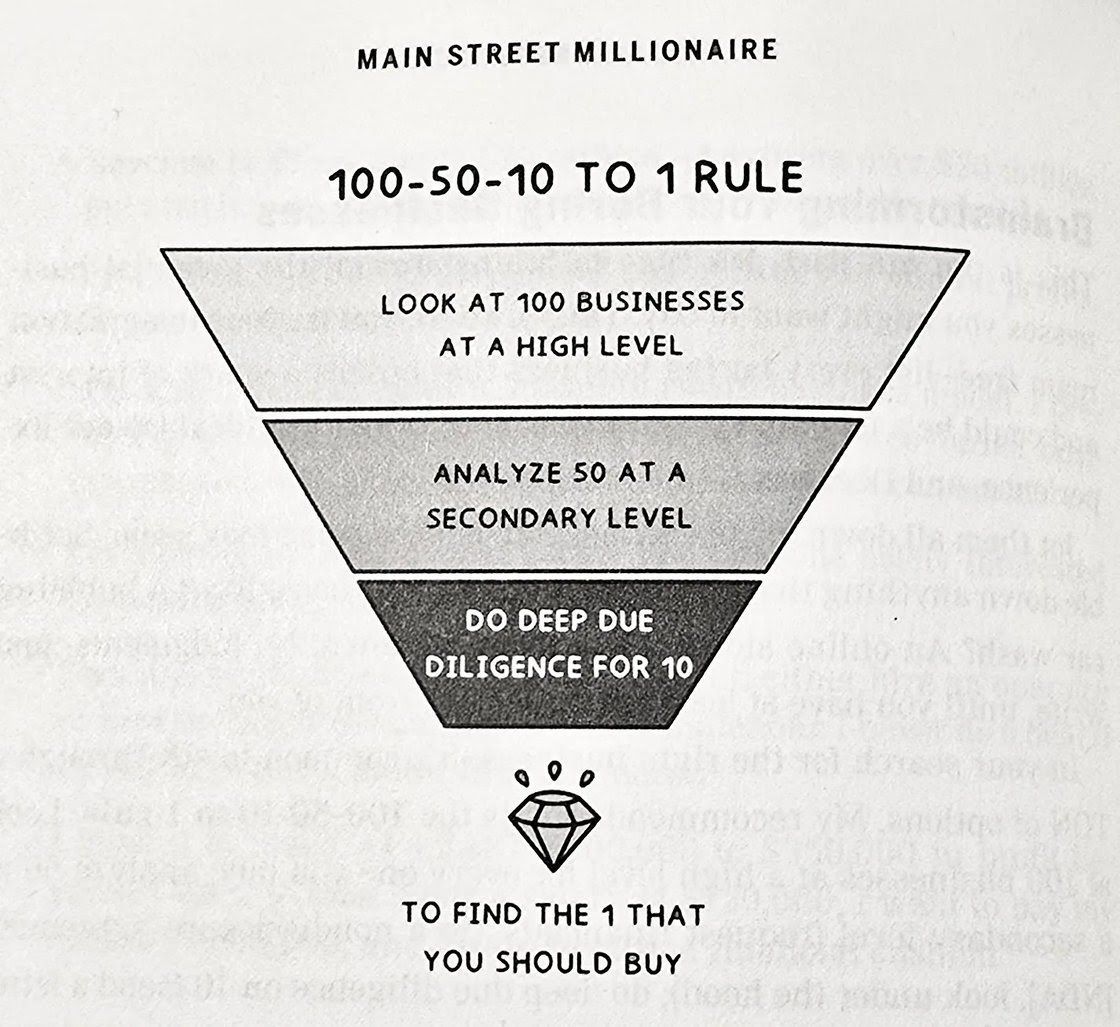
While the franchise was up and running, Jared was deep into his search for an acquisition. In fact, he’d been at it for over a year.
He went under contract on a daycare, a fire truck auto shop, a moving company, and a handful of others that either fell through or went to other buyers.
He wasn't looking for an online business. But he was running out of patience for deals that kept falling apart.
Then came a conversation with someone he knew through a shared peer group. The guy ran a small business that helped entrepreneurs access capital, and he was thinking about shutting it down. Jared took a closer look.
"It was a company that was about to go out of business. Completely seller-financed, no money down. And I probably paid more than I should have paid."
But as Jared learned, the problem didn’t appear to be the business itself. Rather, it was that nobody was actively selling the service to customers. And selling was exactly what Jared had spent years learning how to do.
That distinction is worth keeping in mind when you're looking at distressed deals. A broken business model is genuinely hard to fix. A solid model with a neglected sales function is a much more solvable problem, if you know how to take the lead on it.
"I didn't want to buy an online business, but I could see how I could make money with this. And I'm so happy I did because I think this will be the biggest company I ever run."
Jared rebuilt the sales team. The results? According to him, “Last month: $213k in revenue, $110k in net profit.”
LESSON 4
What His Dad's Funeral Home Business Taught Him About Risk
Jared is clear-eyed about how long all of this has taken.
"I wouldn't have been able to do what I'm doing now without all the experience I had before. It's been eight years, and I'm really starting to make something from all this."
After years of building, here's the thing he keeps coming back to:
“The only risk most of us really have is ego risk.”
He first heard this at a Contrarian Thinking event, and it's stayed with him. One of the biggest barriers people face when building a business isn't the money. It's the fear of how things will look if they don't work out.
His test: when you find yourself stalling, ask whether your hesitation is based on a concrete downside you can actually quantify, or whether it's really about perception. If you can quantify it, try to solve for it. If you can't, it's probably ego risk.
Growing up in and around his dad's funeral homes gave him a pretty direct way of thinking about this.
“You're going to die. Trust me, I've seen it. Death is real. You're going to be on a metal table, and you're going to die. So, at some point, you really just have to do it."
Hard to argue with that.
Want to join our groups of thousands of smart business builders and buyers?
The information contained here is educational, may not be typical, and does not guarantee returns. Background, education, effort, and application will affect your experience and the profitability of any business. Individual results may vary.











.svg)


