You're not stuck, you're just alone at the top. Most entrepreneurs hit a ceiling, not because the opportunity isn't there, but because you're solving $10M problems with $1M strategies.
I've hired well over 700 people, and honestly I've messed up a good chunk of those.
After enough time though, most hires blur together…
But it only takes a few disasters to change everything.
In fact, my first hire was a HUGE mistake.
It was back when I was still in Finance, and this guy must’ve been the worst hire in history.
He was:
Always late
Rude to everyone
Lazy as hell
Openly disrespectful
Talk about a bad fit!
I got bamboozled, because he interviewed well enough and I was in a hurry to find someone. Ultimately, I had to sack up and fire him.
It was a good lesson, but one that wasted time and could’ve easily been avoided.
After one or two big blunders like that, you stop trusting your gut and start building a process.
So here's the exact hiring playbook I run every time we bring on new talent, to make sure we’re getting the best of the best.
Most founders skip this to hire on “vibes,” or stay out of the process entirely.
Both are a mistake.
Because if you have high turnover or poor performance, here’s the truth:
You don't have a hiring problem. You have a filtering problem.
You post a job, get 200 applicants, and by week 3 you're so sick of screening resumes you panic-hire the least terrible one.
Then you act shocked when it doesn't work out…
The fix isn't a punchier job title, or AI resume readers: it's filtering earlier, before you've even written a description.
If you follow my 7-step process, you’ll be able to bring on (and keep) A-players, without wasting a ton of time blind-dating applicants.
(Whatever you do though, DON’T skip step 6…)
Step 1: Diagnose the problem.
"We're overwhelmed" isn't a problem, it's a symptom.
Find the actual bottleneck, and put a real number on what it's costing you every week.
Are you overwhelmed because you need an assistant to handle bookings, calls, and invoicing?
Or do you just need an expert to help you set up an AI agent?
If you can’t answer clearly, you're not ready to hire.
Put a number behind the cost, and the projected increase in revenue.
Then do the one that makes the most sense.
Step 2: Define the results, not the duties.
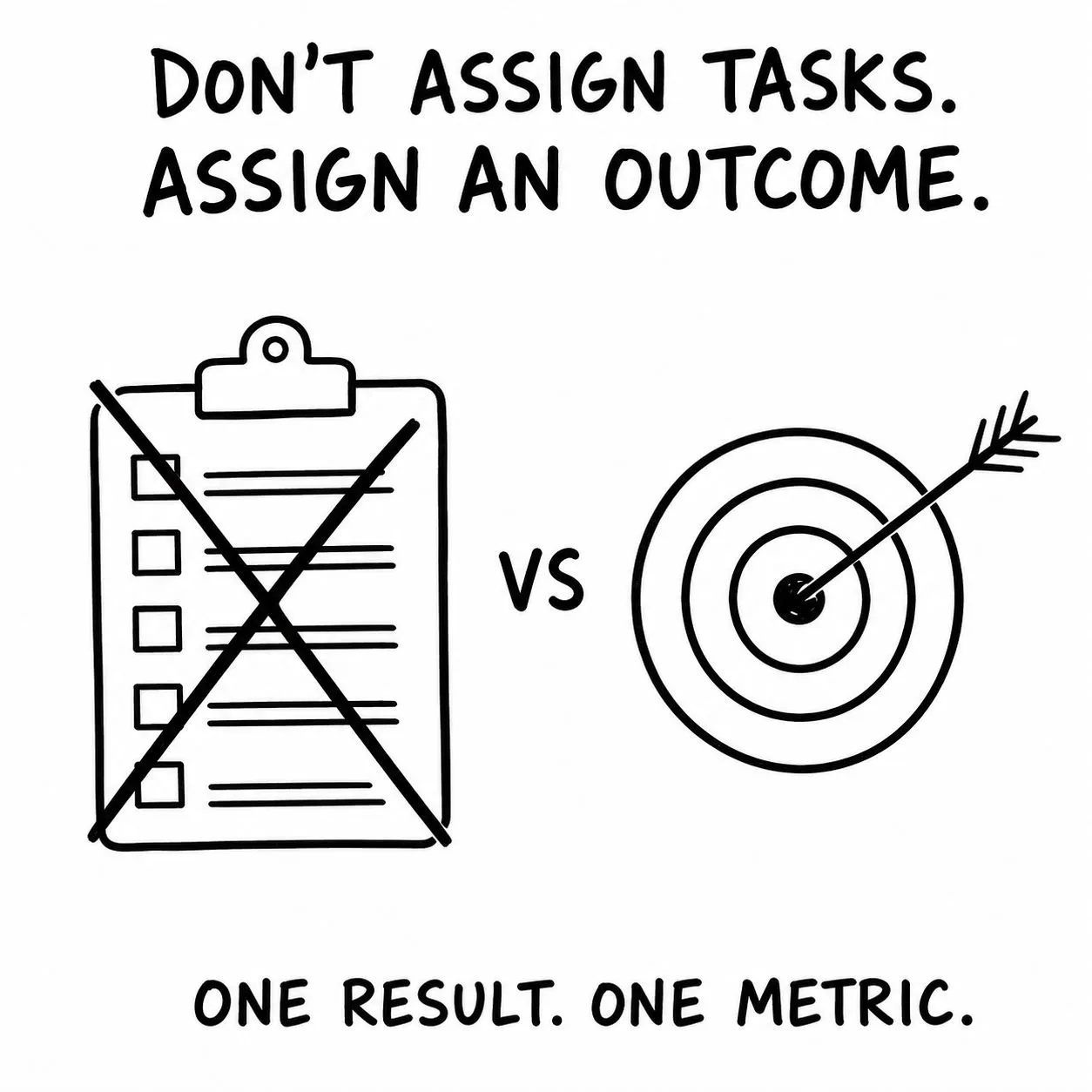
Don't hand someone a task list, hand them an outcome.
What will they own in 90 days?
Give them one North Star metric, not five responsibilities nobody's going to measure.
A-players typically have their own ideas and systems, so don’t get bogged down in the “how” of the job.
Think about the RESULT you want, then make it real and measurable. Revenue, followers, jobs completed, etc. are all great North Stars.
Everything else will follow.
Step 3: Build the perfect-hire avatar.
This is the step everyone skips, then blames the market when the hire flops.
Score every candidate 0-5 on:
Known: has someone you trust actually worked with them?
Proven experience: have they done this exact job?
Proven industry: in your market?
Proven scale: at your size or bigger?
Proven problem set: solved your specific problem before?
No 3s.
A 3 just means you're avoiding an opinion. Score hard, 0 to 5 on each.
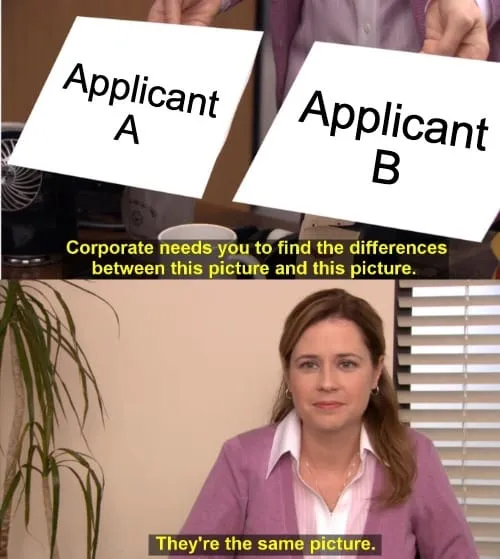
It sounds harsh, but it’ll keep you out of hire purgatory, where all your applicants start looking the same.
Can't get to 18 out of 25?
You don't have your hire yet, even if you like them… especially if you like them. That never ends well.
Step 4: Write the job description. (Yes, step 4.)
Most companies start here, which is exactly why they attract a pile of people they don't want.
And while it feels backwards, it works.
By now, you know the outcome and the bar you're holding people to. So it’s time to write something that repels the wrong people and makes the right one lean in.
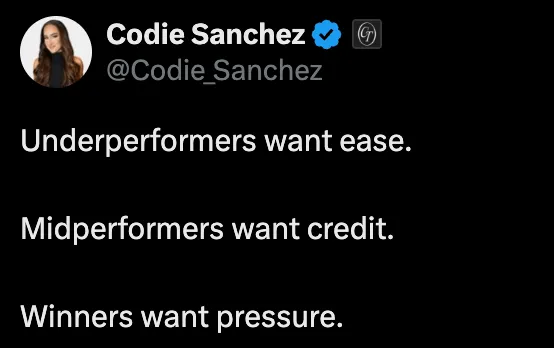
In fact, one of my favorite lines when I hire is, “Winners WANT pressure.”
It keeps people who just want to coast out of the pipeline, which helps everyone and saves a ton of time.
Step 5: Time to hunt.
A recruiter once called me about a candidate for a senior position, coming off a big shiny tech logo. She was perfect for the role, but the recruiter was worried she might think we were too small.
So I got on a call with her myself and asked one question: what would you make if nobody had to sign off on it? She lit up.
Three ideas poured out, sharper than anything on her résumé.
A-players aren't refreshing job boards, and they don’t care as much about a big name as you might think.
You go find them, ask the right question, and sell them on something bigger than what they've got.
If you can offer them creative control or more freedom than they had in their last role, you’d be surprised who you can attract.
Step 6: Create a daily cadence.
Why will most of you never even meet 80% of your potential A-players? Because you put too much trust in the LinkedIn algorithm!
Respectfully, you’re being lazy…
Every day, until someone's in the seat:
Spend 30 minutes of sourcing
Send 5 personal DMs
Review every new candidate that comes in
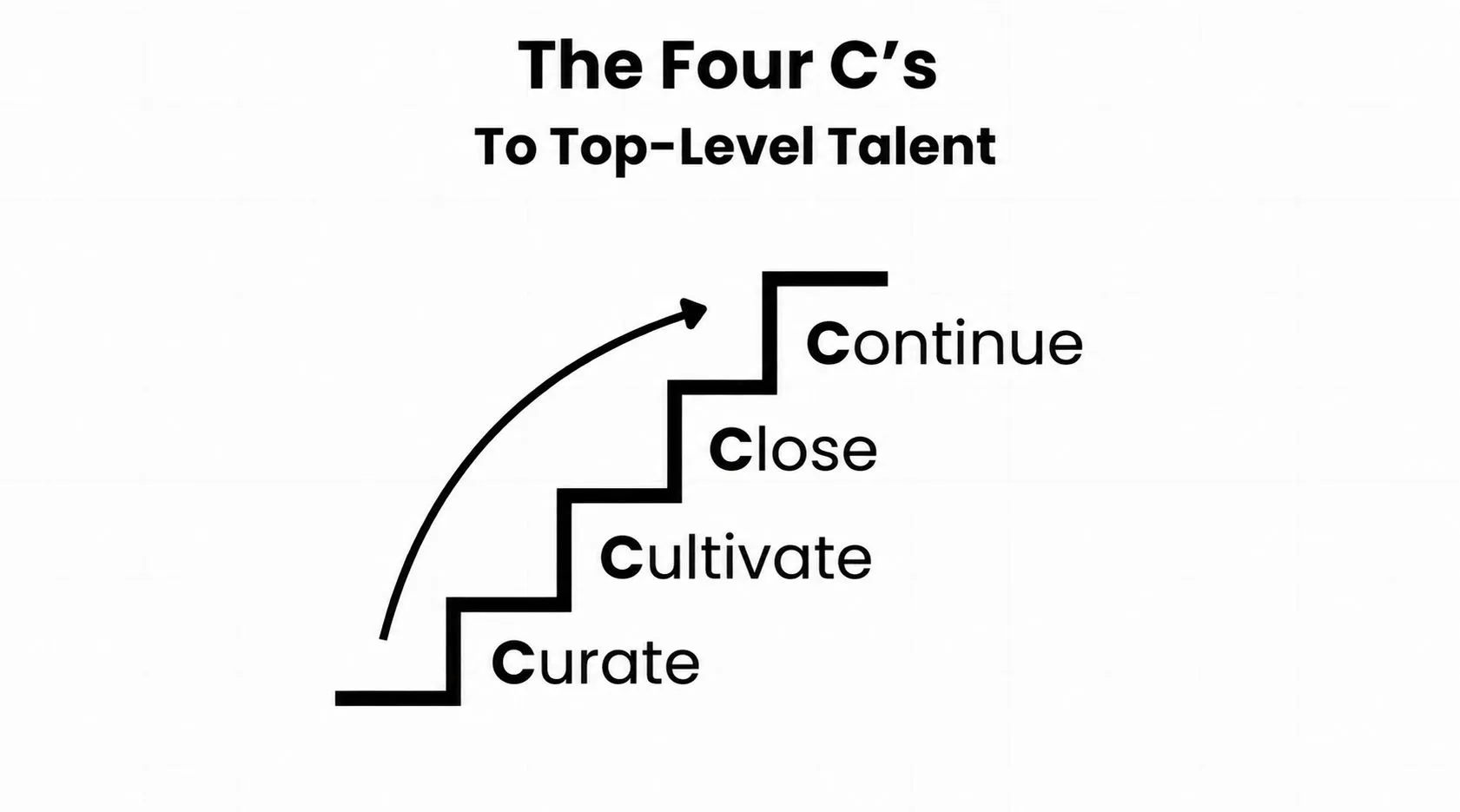
And if it helps, just remember the 4 C’s of hiring…
Most founders do this for 3 days, get discouraged, and go back to hoping the algorithm hands them a hero.
It won't.
You have to be patient and trust the process.
Step 7: Decide if you actually need a recruiter.
Is the role senior, specialized, or confidential? Go ahead and bring one in.
Everything else?
Own the search yourself.
When you hand your standards to a stranger, it’s like asking your partner to do the dishes…
They’ll get done. Just not how YOU would do them.
Most founders post a job and pray, but A-players get identified, pursued, and closed.
Need an A-player? Start today, not “someday” when things calm down.
(They never calm down.)
I go deeper on all of this in my new book, Own or Be Owned, the full Hiring Matrix, the indoor cat vs outdoor cat filter I use to spot real operators, and the actual scripts I use in cold DMs.
Sign up here for the free launch event, learn how to become a hiring wizard, AND potentially win part of $1M+ in cash and prizes.
And remember:
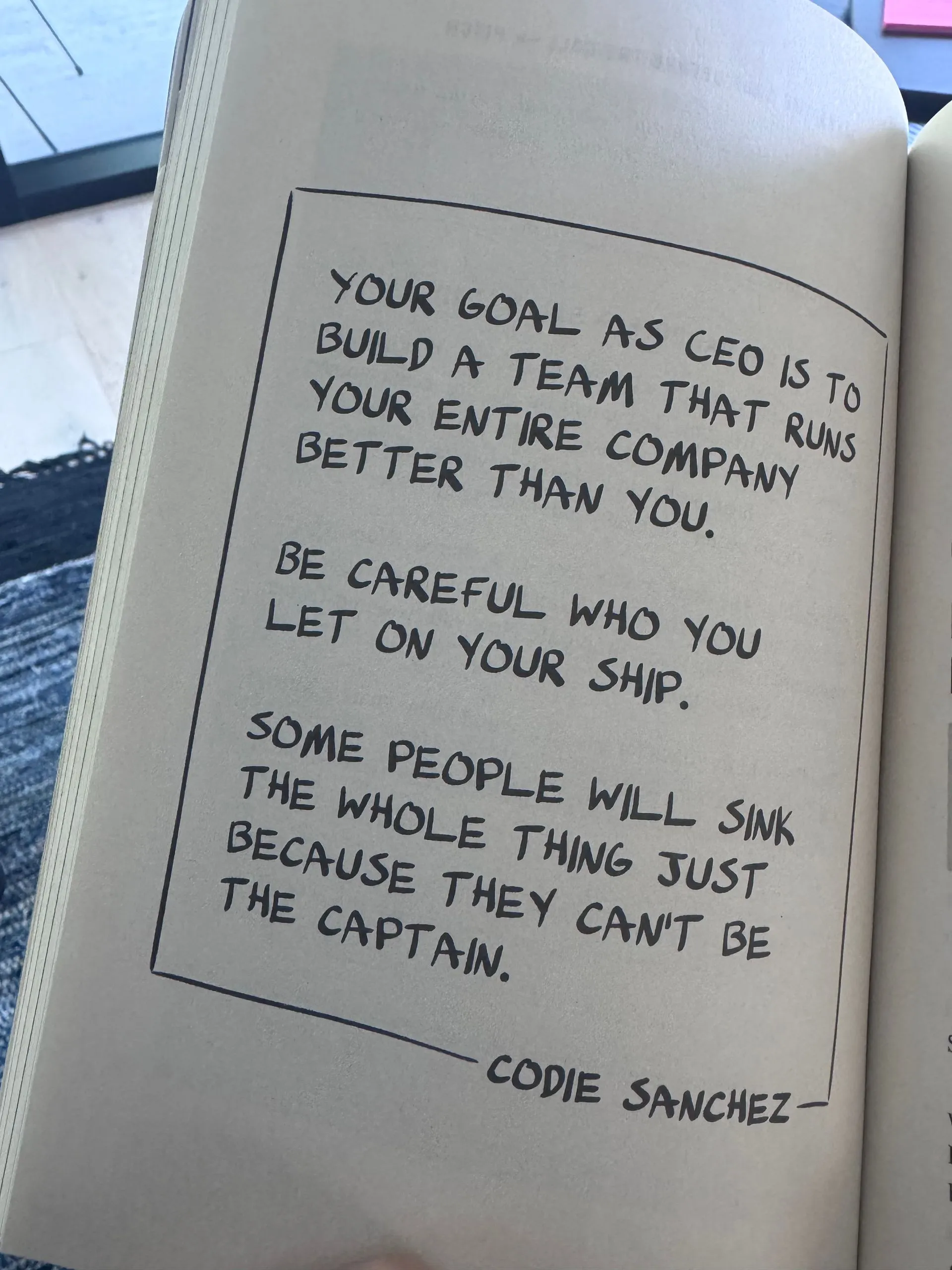
Every person you let in either raises your bar or lowers it, so choose wisely.
Because while the best hires will take you further than you could imagine…
One bad hire can cost you years.
Talk soon,
-Codie
The information contained here is educational, may not be typical, and does not guarantee returns. Background, education, effort, and application will affect your experience and the profitability of any business. Individual results may vary.














.svg)


