You're not stuck, you're just alone at the top. Most entrepreneurs hit a ceiling, not because the opportunity isn't there, but because you're solving $10M problems with $1M strategies.
Buying a Car Wash: What a $4.2M Land and Business Deal Teaches
September 24, 2025
5 min read
From the Main Street Minute newsletter, originally sent September 24, 2025 as "Would you buy this $4M car wash business?"
Quick answer: Buying a car wash is often a real estate deal in disguise, so value the land and the operating business separately. A buyer in Arizona set out to buy the land under a tunnel and wand car wash for about $2.4M, but the seller wanted to sell the land and business together for $4.2M. His analysis put the deal closer to $1.7M to $2.2M, so he floated about $3M, mostly tied to the land, and leaned on a strong relationship with the seller to keep talks alive.
Watch: Codie on why a 22 year old bought a car wash, how seller financing made it work and how to replicate the deal.
NUMBERS
So, What’s the Deal on the Table
Not every car wash is just quarters and soap. Sometimes it’s a real estate deal in disguise.
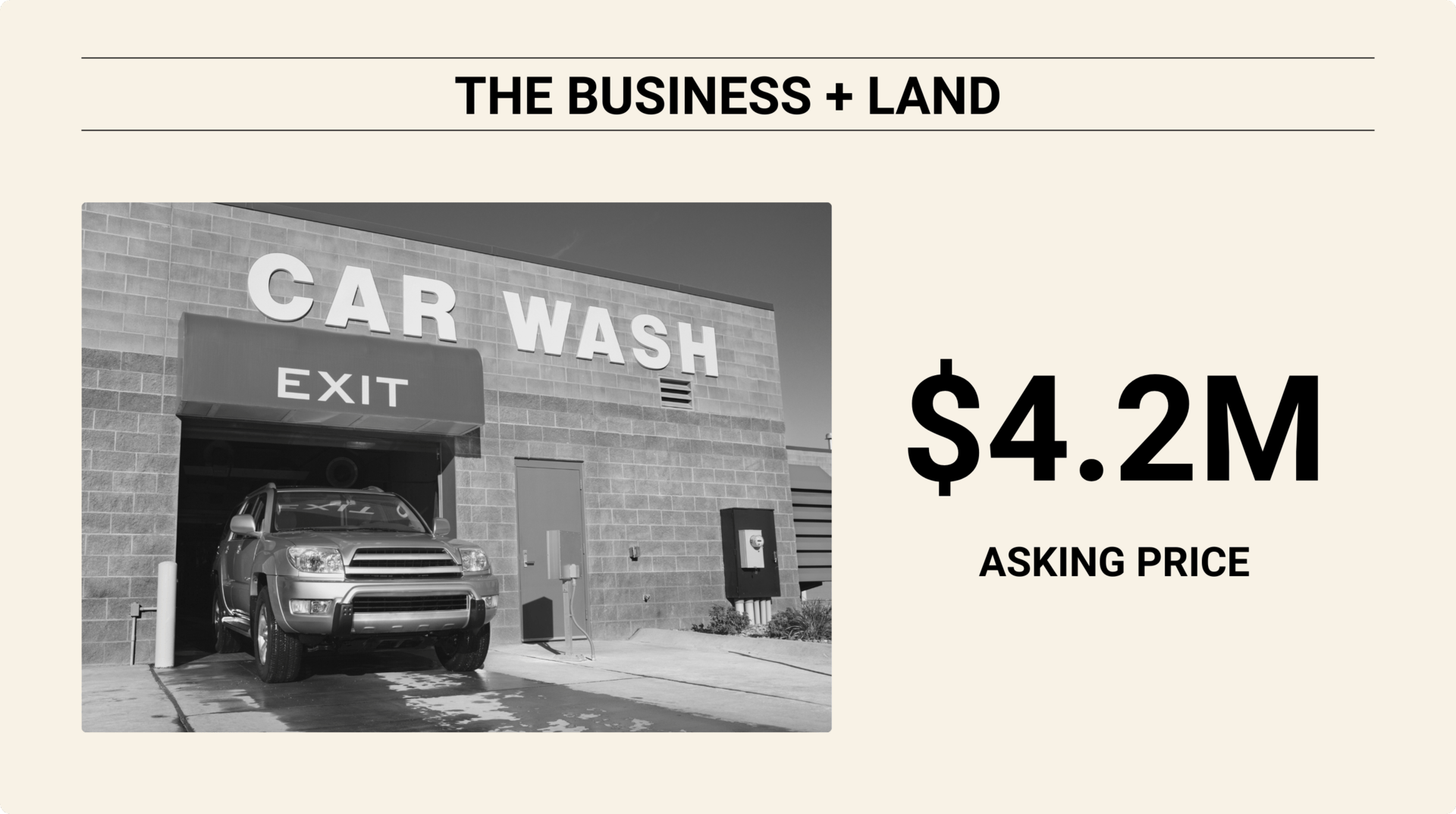
A buyer in Arizona thought he was evaluating the land underneath a small tunnel-and-wand car wash. But once conversations started, the seller made it clear he wanted to sell the land and the business together. That turned a potential $2.4M land purchase into a $4.2M package deal.
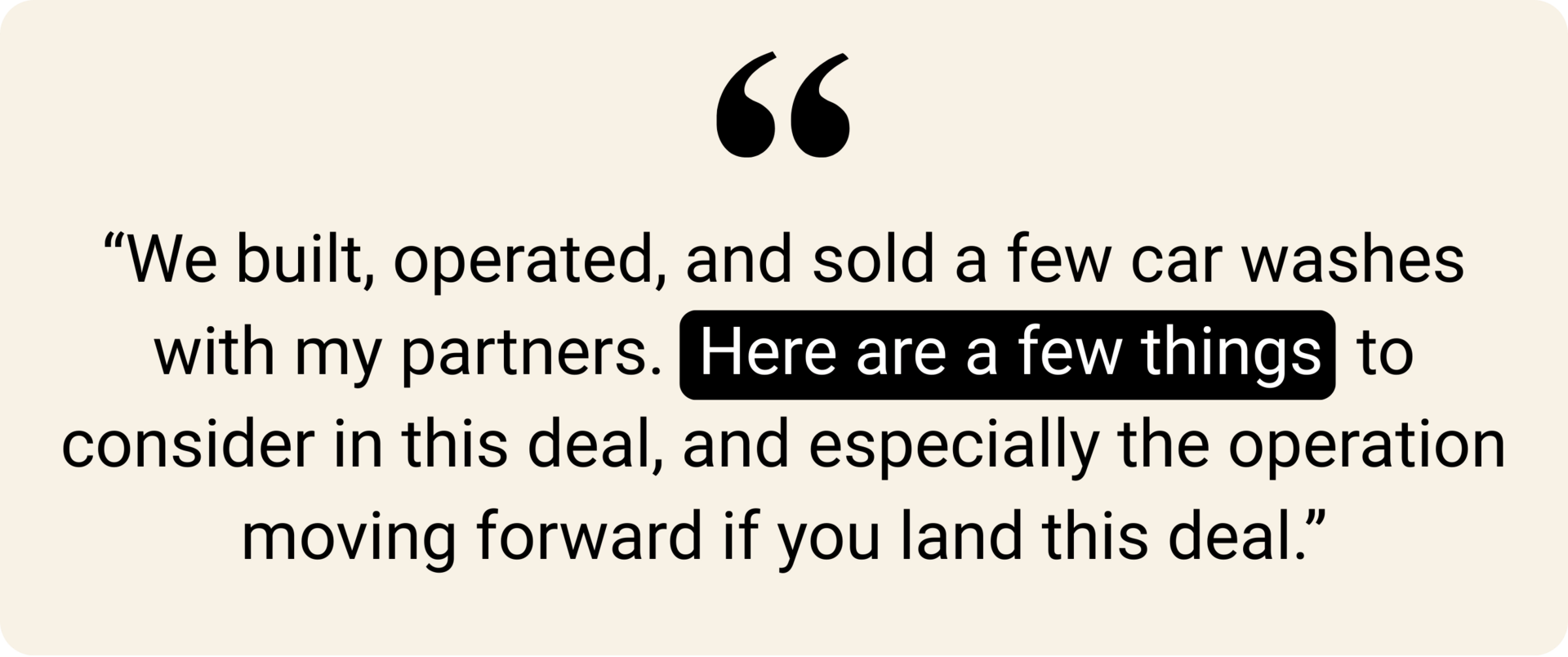
It runs mostly absentee with part-time employees, and since 2020, the seller has rebuilt the auto tunnel (which was down for nine months in 2024 during the upgrade), replaced equipment, gone cashless, and added a 24/7 membership wand wash system.
The location has strong anchors nearby, including a coffee chain and a gas station, and the city has even recognized the seller for improving the local property value.
The buyer’s analysis suggested this deal would really pencil closer to $1.7M–$2.2M. Still, he floated a possible purchase price of around $3M, with most of that tied to the land, as a way to keep negotiations moving.
The buyer came to the community with questions, setting off a practical breakdown of how to approach deals like this, from valuation and financing to environmental risk and seller psychology…
KEY IDEAS
1 Big Lesson Any Buyer Can Take from This Deal
From the start, this deal was about trust. The buyer worked to really connect with the seller. He shared his buyer profile, explained his background, and made it clear he cared about the business, not just the dirt under it. That simple step mattered:
Even with private equity firms circling, the seller continued engaging with him directly. At one point, the seller bypassed the broker and sent a personal text:
That kind of outreach doesn’t happen if a seller thinks you’re just another number-cruncher. It happens because they feel respected and believe you might be the right steward for what they’ve built.
The lesson? Strong relationships can unlock creative deal structures.
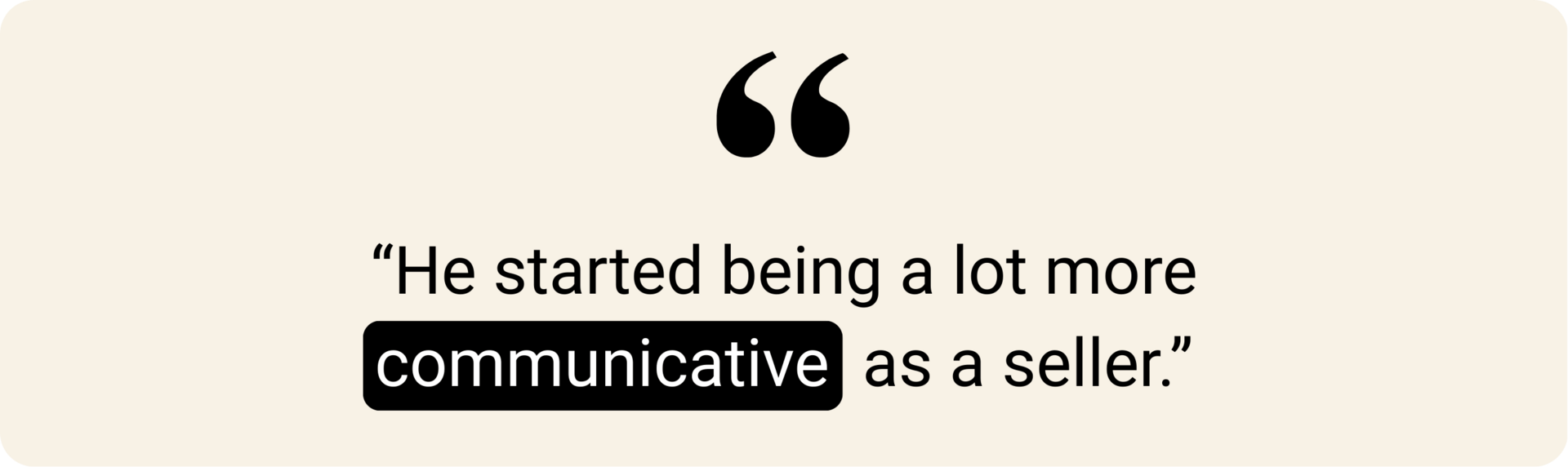
As one deal coach pointed out, this is rare:
Another deal coach emphasized how you keep that creative door open: “Don’t just say, ‘Here’s what I’m willing to do.’ Ask the seller, ‘What are you willing to do?’”
And this is where a practical tool comes in. One deal coach shared how he uses ChatGPT to expand the playbook when talks stall:
RED FLAG
What to Watch Out For in This Deal
The land is both an opportunity and a risk here. Because the wash sits next to a gas station, any purchase of the property would require environmental studies, as one deal coach flagged:
Beyond the land, operating a car wash brings its own unique challenges. One of our deal coaches spelled it out in the community Slack:
Among his points:
Equipment is expensive to maintain and repair.
Customers sometimes claim the wash caused damage, which can lead to costly disputes.
Even with cameras, fraud and legitimate accidents both happen.
Negative online reviews are common, and staying on top of them is essential.
Car washes can look deceptively simple, but the reality is a mix of real estate, operations, and reputation management.
INDUSTRY
What You Need to Know
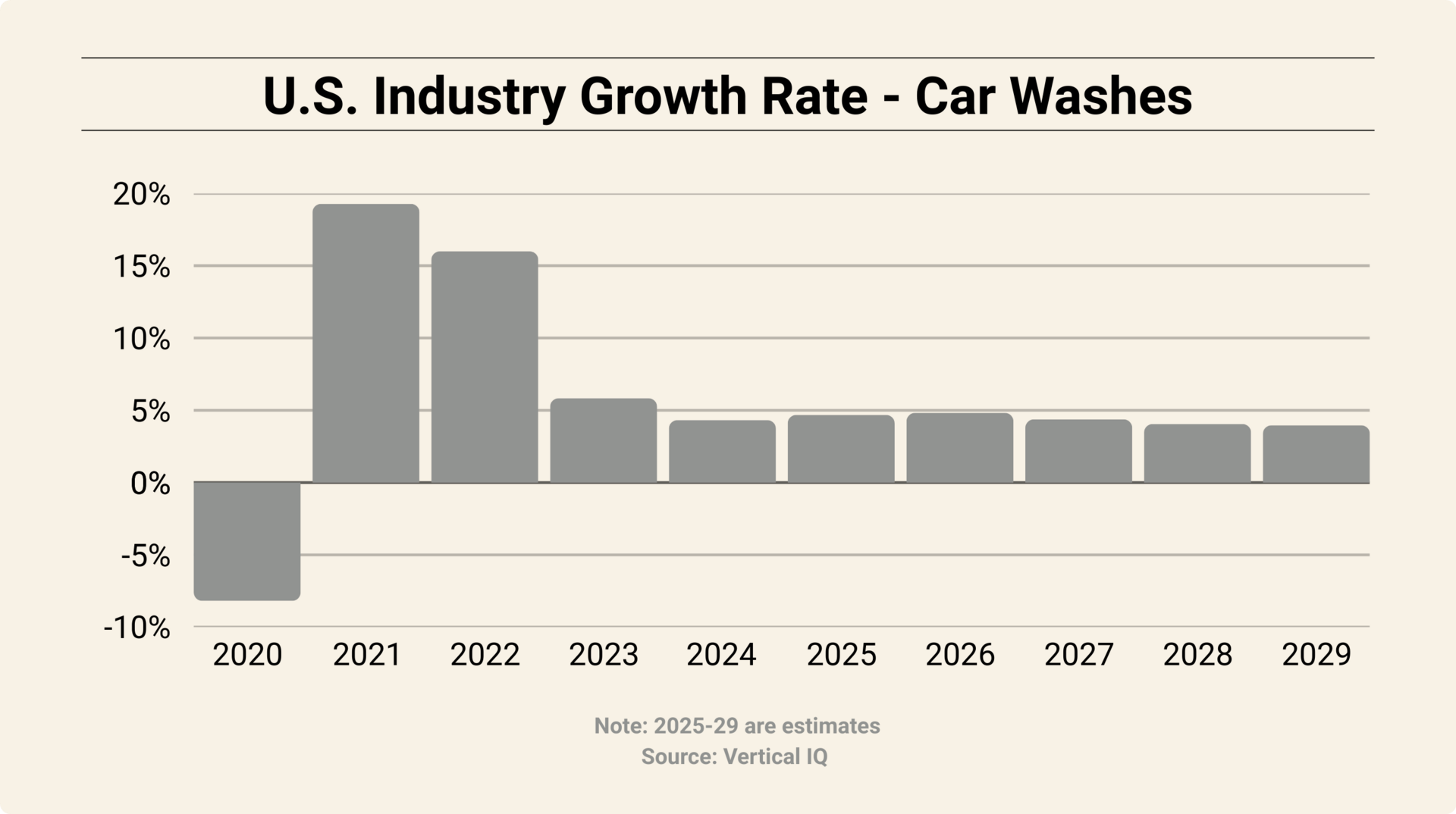
The car wash industry is large but fragmented, with 15,600 firms operating nearly 19,500 locations and generating $16.3B annually. The top 50 players account for only 20% of revenue, leaving the rest to independents and small chains.
When the buyer pulled comps, most similar washes in busier markets traded at far lower valuations. Many of those high-traffic, fully automated washes were valued at 1–1.5x revenue, sometimes 2x if they were doing $600K–$700K a year.
What drives value in the industry?
Volume. Most washes draw customers from within 3–5 miles. Prime locations command higher multiples.
Revenue per visit. Membership models, upsells, and add-ons like detailing can push margins higher.
Efficiency. Faster cycles mean more cars per hour. Automation has reshaped expectations.
THE BOTTOM LINE
What Happens Next?
As the buyer heads into another meeting with the seller, there’s plenty to weigh: the land risk, the operational realities, and whether there’s a structure where this deal could actually pencil out… or just wash away.
With private equity circling and a wide valuation gap still on the table, the buyer now has to determine how far creativity and relationship-building can take him.
Want your deals reviewed by hundreds of smart business builders and buyers?
Get access to our live expert calls (and so much more) when you join the Contrarian Community.
Buyer's Guide: How to Buy a Car Wash
Here is what any buyer can take from this deal, using only the numbers and lessons in the story above.
The deal by the numbers
Original target: the land, at about $2.4M.
Seller's package: land plus business at $4.2M.
Buyer's own valuation: about $1.7M to $2.2M. Possible offer floated: around $3M, mostly for the land.
Operations: mostly absentee with part time staff, a rebuilt auto tunnel that was down for nine months in 2024 during the upgrade, new equipment, cashless payments and a 24/7 membership wand wash.
Location: strong nearby anchors, including a coffee chain and a gas station.
How car washes are valued
The buyer's comps showed that similar high traffic, fully automated washes in busier markets were often valued at 1 to 1.5x revenue, sometimes 2x when doing $600k to $700k a year. The value drivers called out in the newsletter are volume, since most washes draw from a 3 to 5 mile radius, revenue per visit from memberships and add ons, and efficiency, meaning more cars per hour.
When land is part of the deal, split the price in your head. Ask what the real estate is worth on its own, what the operating business is worth on its own, and whether the seller's number makes sense as the sum of the two.
How to structure a car wash deal
Deal coaches pushed the buyer to keep the creative door open. One coach's advice: do not just say what you are willing to do, ask the seller what they are willing to do. Strong relationships unlock structures like seller financing or separating the real estate from the business.
The SBA caps 7(a) loans at $5 million and lists changes of ownership as an approved use, so most Main Street acquisitions fit inside the program (SBA). Deals that include real estate can push the total past that cap, which is one more reason to know exactly what the land is worth.
Risks to check before you buy
Environmental issues. Because this wash sits next to a gas station, any purchase of the property would require environmental studies.
Equipment costs. Car wash equipment is expensive to maintain and repair, and a down tunnel can take a big piece of revenue offline, as the nine month rebuild here showed.
Damage claims and fraud. Customers sometimes claim the wash damaged their car. Even with cameras, fraud and real accidents both happen.
Online reviews. Negative reviews are common and need active management.
Competition for the deal. Private equity firms were circling this one.
Steps to buy a car wash
Decide whether you want the land, the business or both.
Pull comps from similar washes and compare on revenue, volume and membership mix.
Order environmental studies early if the land is in the deal.
Inspect the equipment and get a sense of repair history.
Build trust with the seller. This buyer shared his buyer profile and background, and the seller kept engaging with him directly even with other bidders around.
Make an offer the cash flow can carry, and be ready to walk if the gap does not close.
Frequently Asked Questions
Is a car wash a good business to buy?
It can be, especially with memberships and a strong location, but it mixes real estate, operations and reputation management. The industry is large and fragmented, with the top 50 players holding only about 20% of revenue.
How much is a car wash worth?
Comps this buyer found for high traffic, automated washes often landed at 1 to 1.5x revenue, sometimes 2x. His own math on this one came out to about $1.7M to $2.2M versus a $4.2M asking price for land and business.
Should you buy the land with a car wash?
It depends on price and risk. Land can add value, but next to a gas station it brings environmental risk, and it can stretch your financing. Value the land and business separately.
What are the biggest risks of owning a car wash?
Equipment repairs, damage claims, fraud, negative reviews and environmental issues on the property, according to the deal coaches in this story.
The information contained here is educational, may not be typical, and does not guarantee returns. Background, education, effort, and application will affect your experience and the profitability of any business. Individual results may vary.
Thinking about buying a business? Learn how in Codie's free live masterclass.
A two day, in person workshop in Austin with the Contrarian Thinking team. Find hidden profits, close the gaps in your business and map the steps to grow revenue.