You're not stuck, you're just alone at the top. Most entrepreneurs hit a ceiling, not because the opportunity isn't there, but because you're solving $10M problems with $1M strategies.
What does the rest of 2026 realistically look like?
These predictions come from working with thousands of business buyers and builders, and from ongoing conversations across our network.
Most focus on how demographics, capital, and technology are reshaping small business ownership on the ground.
Here they are…
PREDICTION
1. In 2026, the “Boomer Business” economy outperforms
The most resilient businesses in 2026 (and beyond) might not be those focused on A.G.I. but those focused on A.G.E.
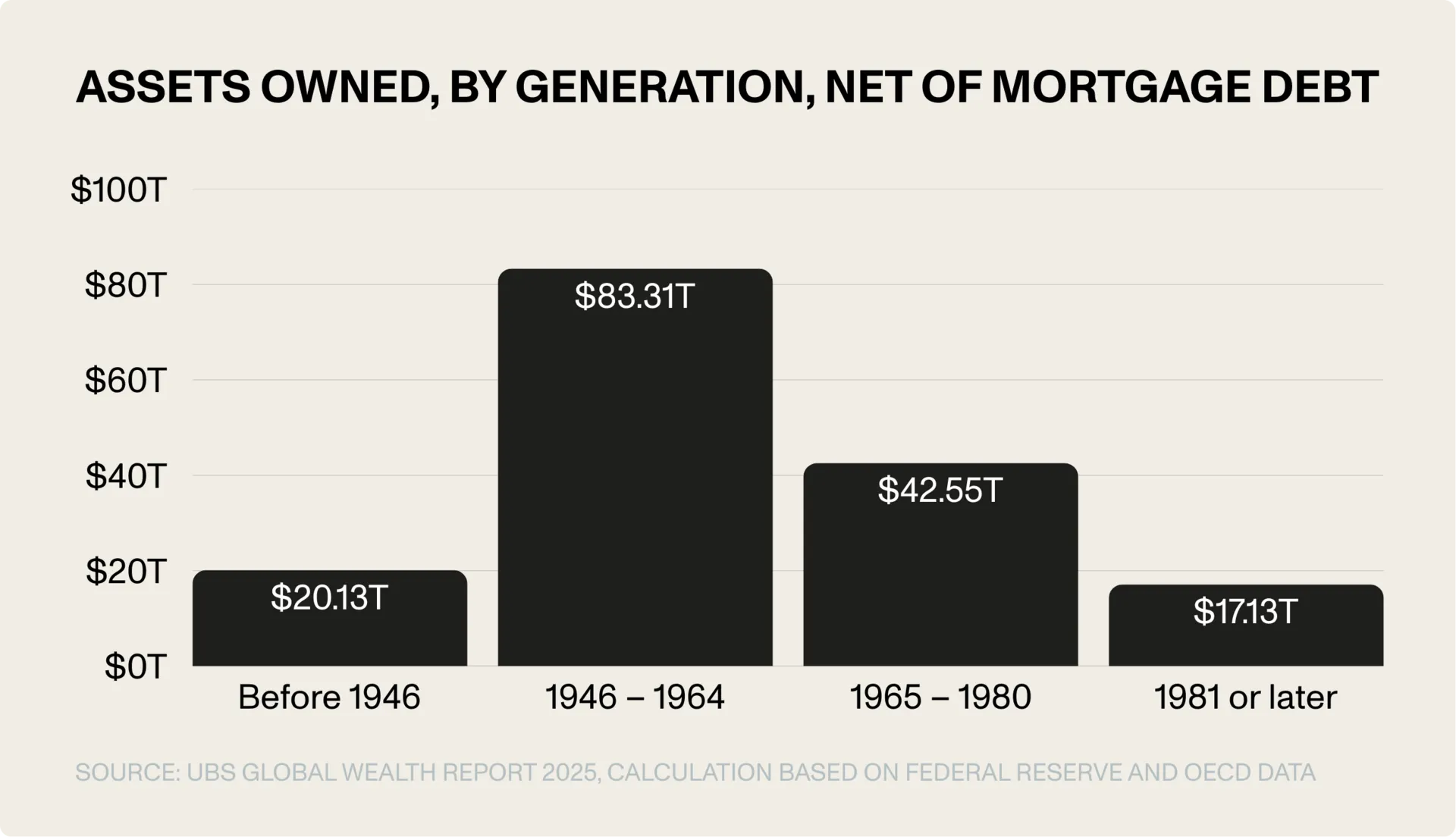
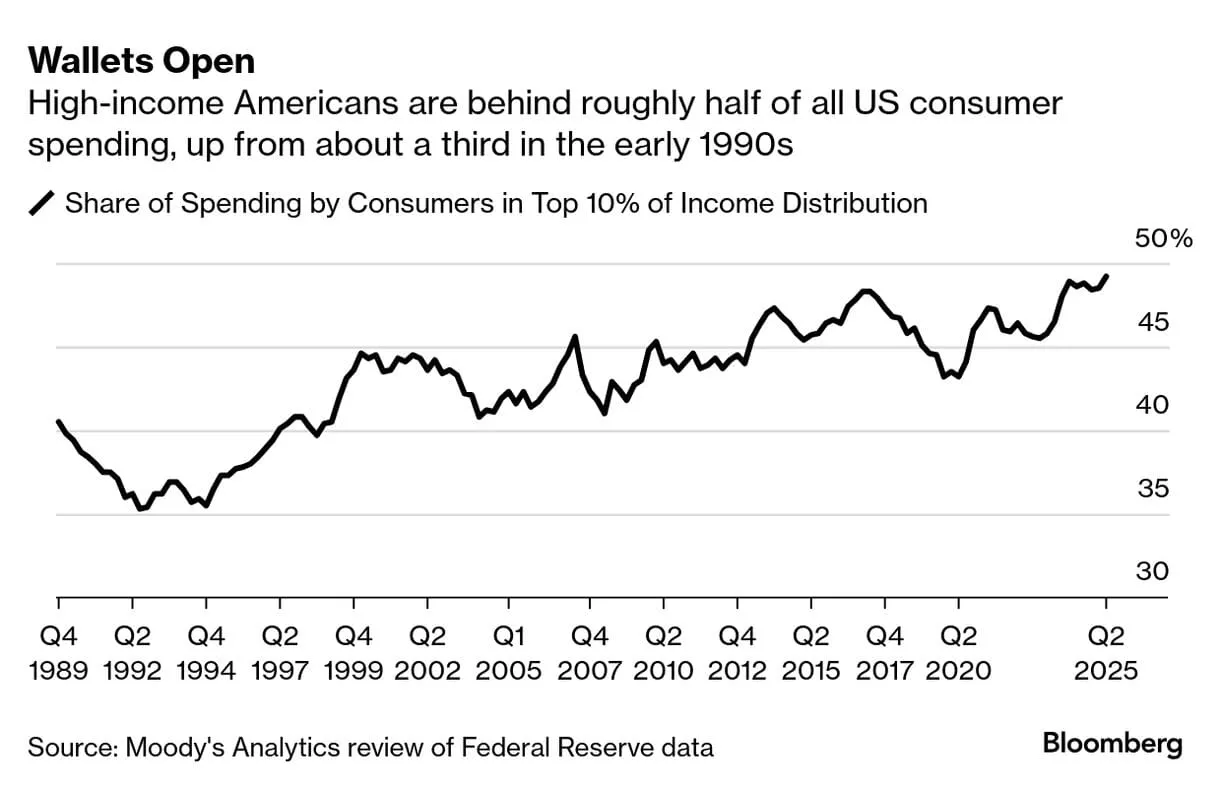
Older Americans hold a disproportionately large share of U.S. household wealth, and wealthier households account for a significant (and growing) share of consumer spending.
As a result, a wide array of “boomer niches” will attract disproportionate acquisition interest: longevity and preventative clinics, in-home diagnostics, mobility and medical transport, hearing and vision services, home modification, senior moving and estate services, and operational adjacencies to senior living.
These businesses will command premium valuations because their demand curve is anchored to biology. By the mid 2030s, business buyers who focused on “inevitable” demand rather than speculative growth will be seen as having made some of the smartest bets in small business.
PREDICTION
2. AI matures as a double-edged valuation driver
In 2026, business buyers will need to underwrite two things simultaneously:
How much AI can remove drag from a business.
How immune a core business is to AI substitution.
Labor often represents 15-50% of total business costs in many service SMBs. Even modest automation in scheduling, bookkeeping, marketing, and quoting can materially expand margins.
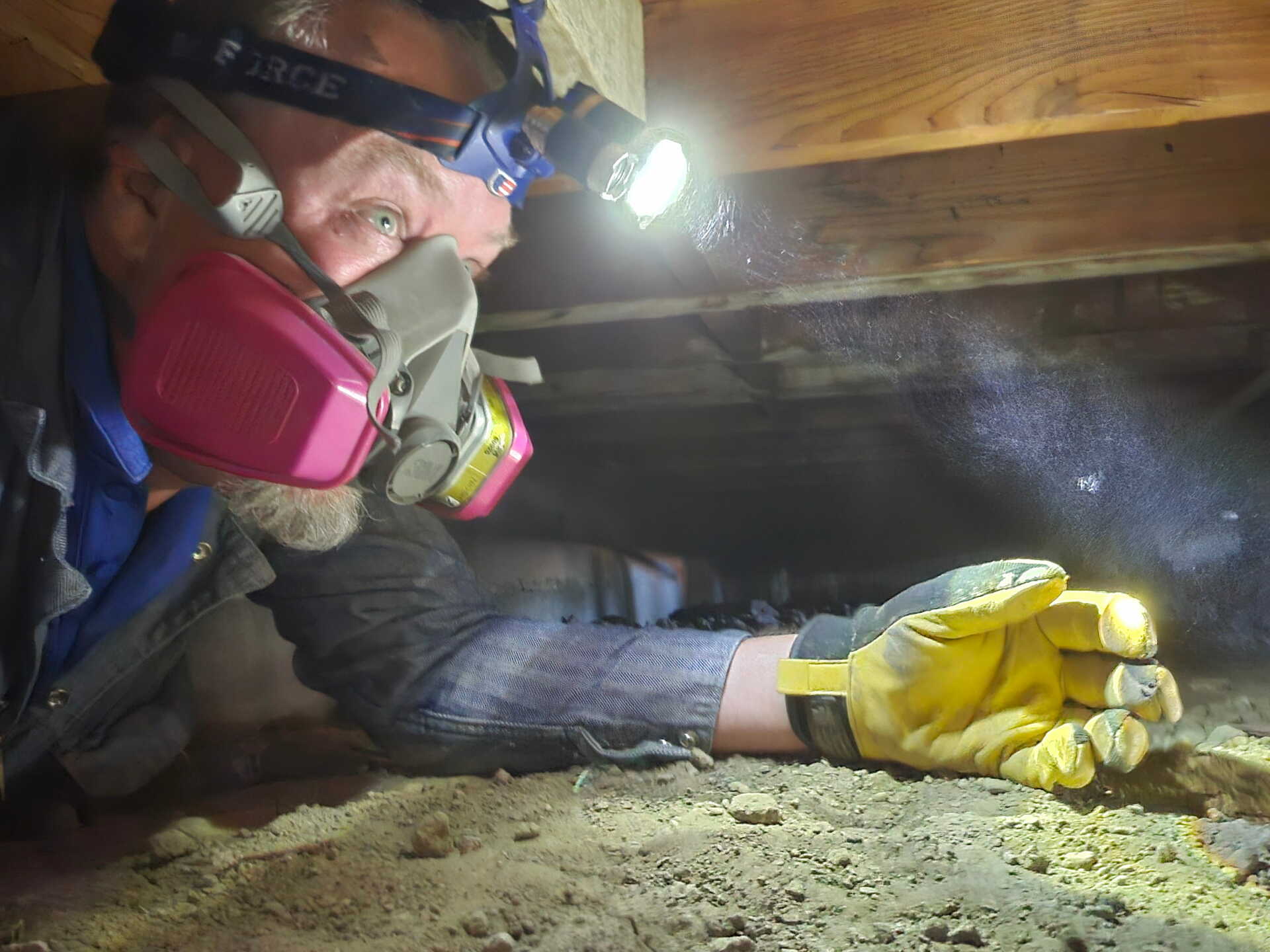
At the same time, many Main Street small businesses remain stubbornly physical. No large language model is transporting an elderly patient with utmost trust and care, unclogging a sewer line, installing an HVAC system, or inspecting a crawlspace, for now.
Growth Boardroom member Ian Mayer, who owns a home inspection business
The result is that businesses that are both A) positively exposed to AI-driven margin expansion and B) structurally protected from AI substitution will be increasingly valuable. In 2026, it will be your job to find them.
PREDICTION
3. Private Equity keeps moving downmarket
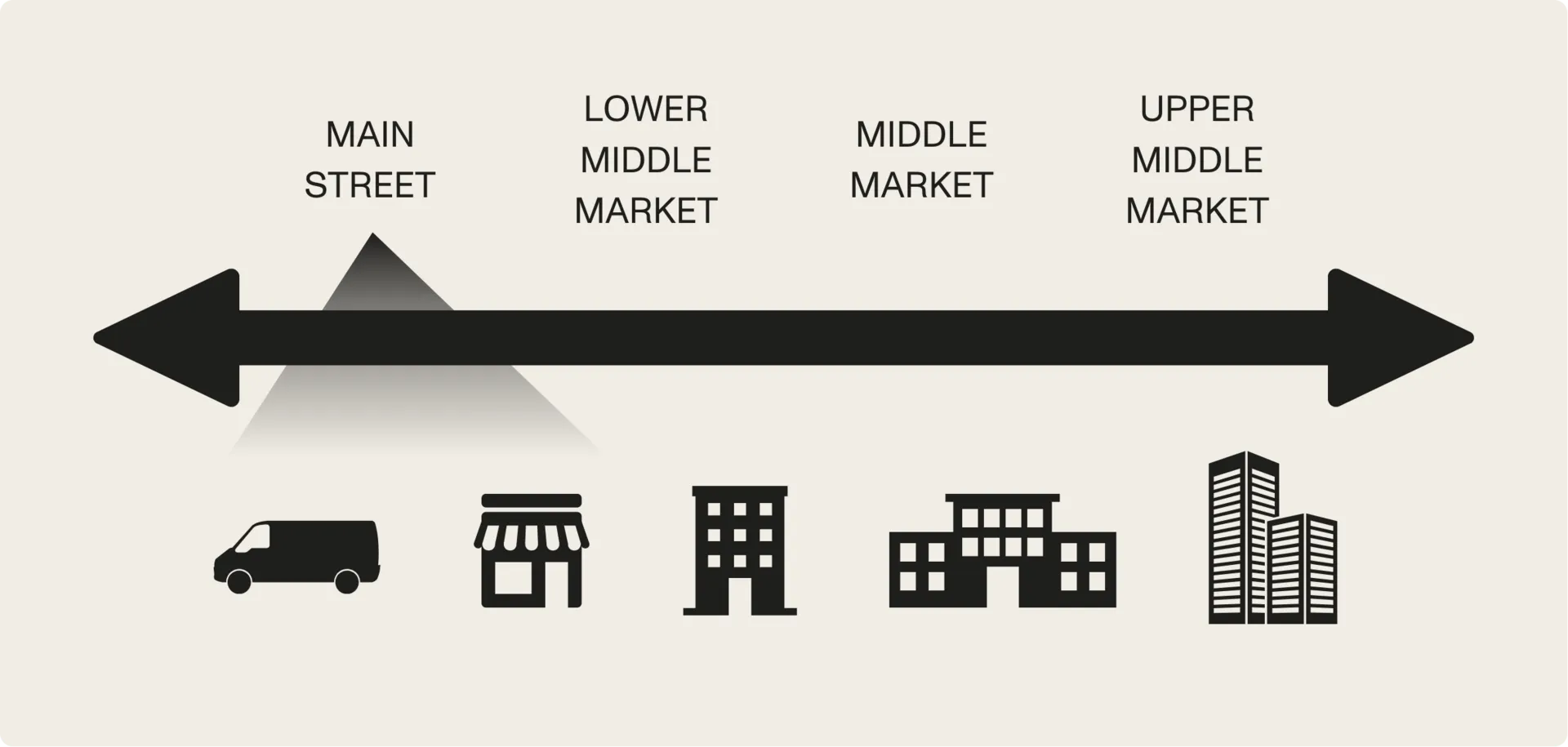
In 2026, more business buyers will discover that “Main Street territory” is no longer protected ground. Private equity dry powder sits in the trillions globally, and competition inside the asset class continues to push capital toward more, smaller deals. Search funds, micro-PE, family offices, and sponsor-backed independents now routinely pursue businesses in EBITDA ranges that individual buyers once had to themselves.
If you’re using an SBA loan and targeting on-market businesses above $1M EBITDA, you should now expect to be outbid 10 times out of 10. Winning in this environment may require a choice:
Look off-market, finding deals others overlook
Look smaller, where scrappiness still scares institutional capital
Or think bigger, by working with others or bringing something other than price to the table.
In any case, every buyer must learn to move faster and build stronger credibility. That’s exactly how buyers like Jesus Wong closed a 7-figure manufacturing deal in a hyper-competitive landscape. In 2026, capital alone likely won’t win you deals. Credibility, relationships, and the agency to close will.
PREDICTION
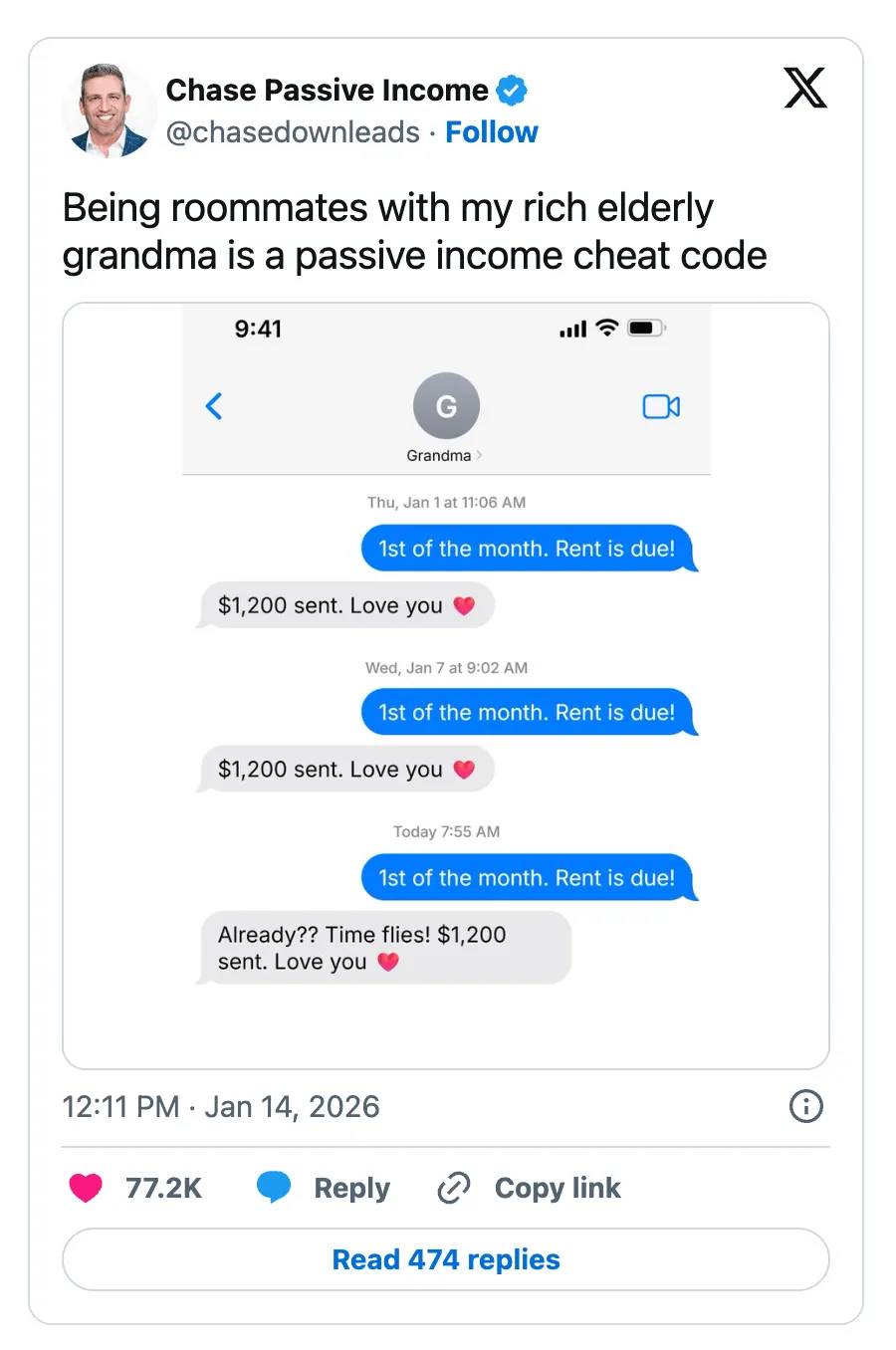
4. “Passive Income” becomes a socially unacceptable phrase
Unless you’re this dude, of course:
But seriously, in 2026, the dream of buying a “boring” business, hiring an operator, and managing it from a beach in Tulum will officially be laid to rest in the graveyard of false financial prophets. It is certainly possible to:
Develop a highly relevant skillset
Work a flexible 9-to-5
Buy a business on the side
Put in 1-2 years of grueling work developing systems and hiring talent
Get it to a point where you can spend much less time in it day to day
People we know have done that. Erik Swift bought a concrete business, worked relentlessly to scale it while in a W-2 job, and managed to grow it while cutting his active involvement down to about 5 hours a week. But that is rare and requires true agency.
If you walk into a bank today with a plan to buy a business and spend 5 hours a week on it, you’ll be laughed out of the room. And if you buy a small business with debt and your bottom line isn’t aggressively maintained and optimized, you will end up serving as an unpaid intern for the bank.
This is becoming common knowledge, and by the end of 2026, we expect to see a growing movement away from “passive income” and toward “active income.” At least, we think (and hope) so.
5. The “Silver Tsunami” doesn’t happen the way many assumed
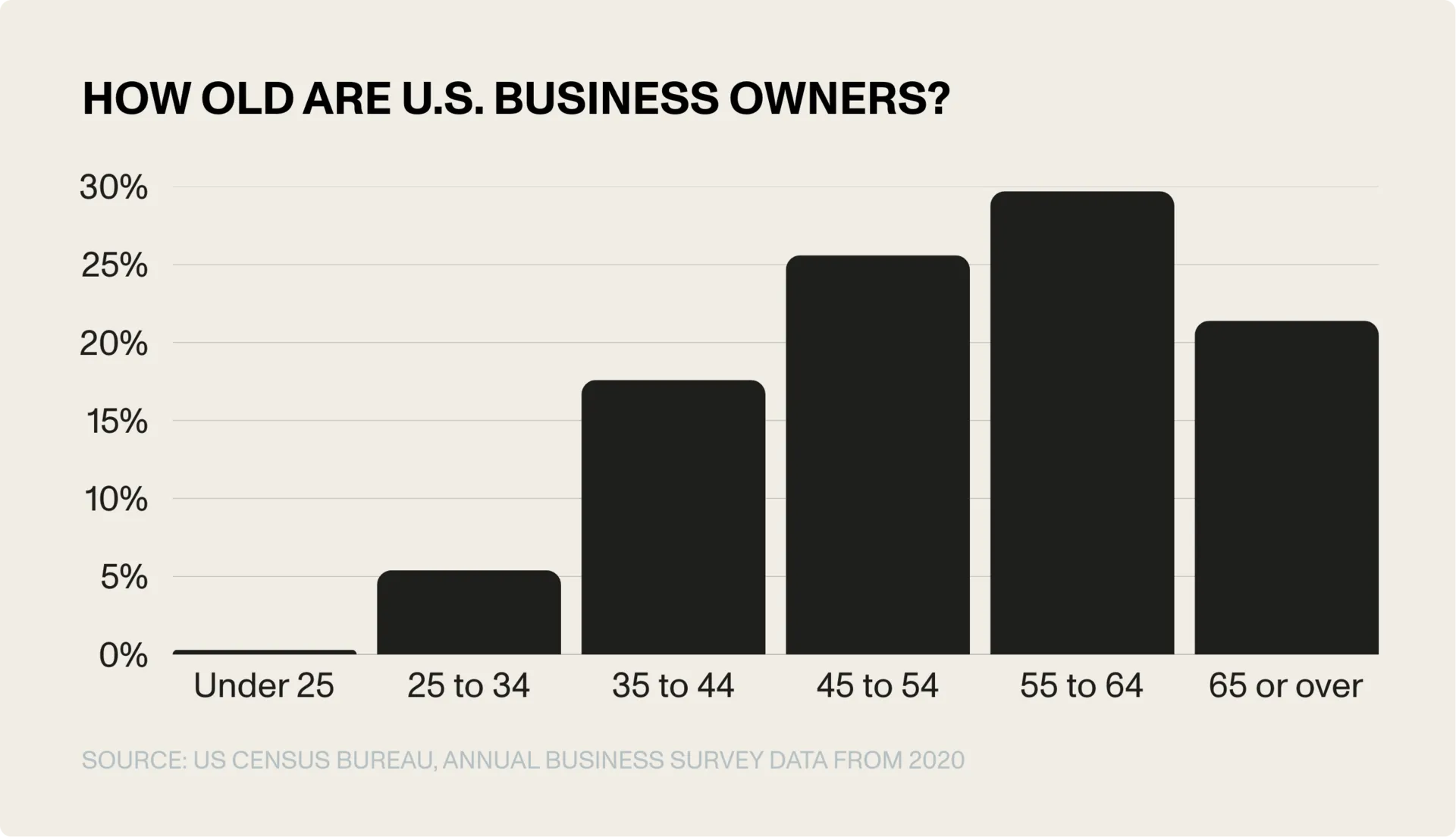
By the end of 2026, it will become clear that the supply of sellable businesses isn’t simply a function of overall owner ages. For years, buyers were told to expect a wave of retiring Baby Boomer owners dumping businesses onto the market like hotcakes. And while massive generational shifts are certainly underway, many people (us included) underestimated how certain dynamics would play out in practice.
For one, buyer demand has surged, too. Institutional capital continues to move downmarket, entrepreneurship-through-acquisition programs like ours have expanded, search funds remain active, and more Gen X, Millennial, and even Gen Z owners now pursue acquisitions as a core strategy. That would all be fine, except that accessible seller supply hasn’t quite kept up.
Many would-be sellers are constrained by messy financials, outdated valuation anchors, massively appreciated real estate values their operating businesses can no longer support, and psychological hurdles.
That’s one reason we’re building BizScout. To make it easier for owners and brokers to do deals. There are still many, many real opportunities out there. We’re seeing them worked on every day in the Contrarian Academy. But they require sound judgment, action, and creativity.
In 2026, the silver tsunami won’t hand buyers easy wins, but reward those who understand why selling a business is hard, and know how to help make it possible.
6. Entrepreneurship stops meaning “venture-backed”
For the better part of two decades, Silicon Valley has held a cultural monopoly over the word “entrepreneur.” To “build a company” in today’s vocabulary has often come to mean building something with venture dollars and ridiculously massive hopes for scale (that will likely never be realized).
In 2026, that framing officially breaks. “Entrepreneurship” will revert to its actual meaning: “The activity of setting up a business or businesses, taking on financial risks in the hope of profit.” Ownership and profitability will become the leading aspiration again, not dollars raised.
This is even happening within the tech industry itself. As Replit CEO Amjad Masad put it, “The way we define entrepreneurship today in Silicon Valley is you build a venture-scale business… but I think the form of entrepreneurship that will come back is the more small business entrepreneurship.”
AI CEO: How To Make A $10M Business With AI Employees (Amjad Masad, CEO of @replit)
“Silicon Valley,” he’s said, “will chase fewer and larger deals while the everyday software company can be comfortably bootstrapped from anywhere.”
PREDICTION
The year 2026 will belong to…
2026 will belong to The Builders.
To the people who stop looking for the “Tsunami” to carry them, and who just build a boat and start rowing. The ones who understand that there is no single moment, no perfect market, no demographic wave that does the work for you.
These builders will focus on fundamentals. They’ll move faster than most, talk less than most, take action more than most, and stay in the game longer than most.
And for these people, the opportunities will be endless.
-Team Contrarian
The information contained here is educational, may not be typical, and does not guarantee returns. Background, education, effort, and application will affect your experience and the profitability of any business. Individual results may vary.



.webp)




.svg)


