You're not stuck, you're just alone at the top. Most entrepreneurs hit a ceiling, not because the opportunity isn't there, but because you're solving $10M problems with $1M strategies.
How a Hospital PA With Zero Business Experience Bought a Senior Care Company
September 8, 2026
5 min read
Meet Brian
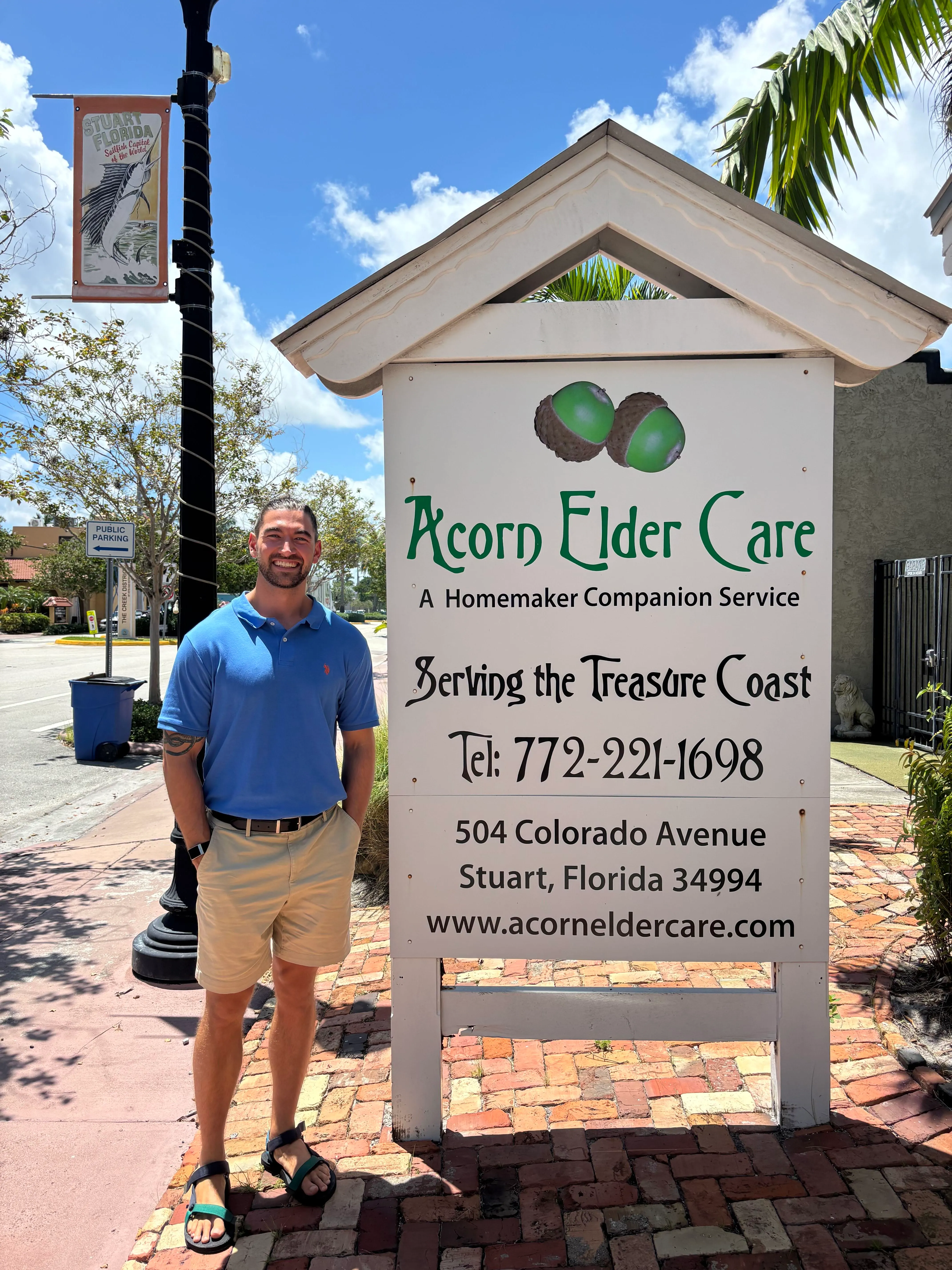
Brian Barnett is a physician assistant, who just acquired a senior care business in Florida.
His story is one of following the process, being flexible, and working his butt off. Exactly the kind of person we love working with at Contrarian Thinking. And based on our interview, we’ve got no doubt he’s going to scale his business and keep growing.
The only question is how big does he want to go?
While he recently moved down to sunny Stuart, Florida to keep an eye on his new business, he doesn’t plan on living there forever. His family is up in New York, and he wants to return to his day job there once everything is running smoothly.
And that’s something people miss: you don’t have to hate your job to want to become an owner and scale a business. You also don’t have to sacrifice your life to run and scale a business.
(In fact, building a business so good it runs without you is kinda our thing…)
What pulled him toward business buying was a question about his savings, not his career. “Initially it was really more of a financial goal,” he told us. “What do I do with my other money? How do I invest this? The stock market?”
Then he started getting our newsletter. Other people’s stories kept landing in his inbox, and one day he decided this whole “buying a business thing” was 100% possible for him too. Ownership started looking less like a pipe dream, and more like an asset class he could control.
So he joined the Academy with no idea what he wanted to buy and no business background at all.
Then, on August 10, he closed on a senior home care company in Stuart, Florida.
Here’s how he got there.
1. The first 8 months didn’t count
Brian finished the course and then did what almost everybody does.
Not much.
“I realistically didn’t spend enough time searching as I realized I needed to,” he said of those first 8 months.
He was browsing businesses, looking at e-commerce and online companies because he and his girlfriend were both working travel PA contracts and he wanted something he could run from anywhere.
Nothing happened, because nothing is ever going to happen if you’re “just browsing.”
So he got serious. He started staying on top of broker outreach and built himself a CRM in Excel. Nothing fancy, just columns tracking where he stood with each one. Sent info here. Call scheduled there.
“Once I really started taking it more seriously, that’s when I started to notice the difference.”
That’s also when his buy box moved. He dropped the online stuff and started looking at traditional operating businesses.
“Your buy box switches all the time as you learn more and more,” he said. “Having learned how to search for a business and buy a business made it easier to pivot my focus.”
He pulled financials on a lot of listings that went nowhere, talked to a lot of brokers, and got deep enough on 2 or 3 deals to be dangerous.
Brian is already setting himself up to run the Owner Operating System outlined in Own or Be Owned by documenting his process. And if you want to learn how to do the same, check this out.
The lesson: Put your search on the calendar like a shift at your day job. Every deal you walk away from is a rep, and the reps build the pattern recognition required to spot the one you’ll finally buy.
2. Show up pre-qualified and you skip the line
Brian eventually found the business on a listing site.
What made him different from every other buyer though, was what he brought to the first phone call.
He already had a pre-qualification letter from a lender he’d been connected to through an inside relationship in the community. With his buyer profile pre-built, the broker’s reaction was more positive than someone coming in cold.
“She was like, oh, I’m going to put you at the top of the list here.”
Think about what that broker deals with all day. A stack of inquiries from people who’ve never bought anything, half of whom vanish after the NDA. Then a guy calls with financing lined up and a one-pager on who he is.
You’d move him to the top too.
The lesson: Brokers aren’t gatekeeping you. They’re triaging you. Bring proof you can close and you won’t look like a tire-kicker in their inbox.
Learn the same steps we taught him
If you’ve been reading this newsletter for a while, you KNOW it’s possible to buy and scale a business to supplement or replace your income.
But if you’re not an owner yet? No problem.
If you’re working a W-2, the principles outlined in Own or Be Owned translate directly to your career.
Your “Price” is your salary.
Your “Customer” is your employer.
Your “Product” is the value you create.
And your “Business” is your work.
So here’s the deal: on September 18th, Codie goes live for the Own or Be Owned book launch to give away the secrets she used to build 7, 8, and even 9 figure businesses.
If you’re stalled out in your life or career, this FREE event is the perfect place to get a jumpstart.
His LOI got accepted in mid-March, and he closed August 10. That’s about 5 months, most of it spent going back and forth with the SBA.
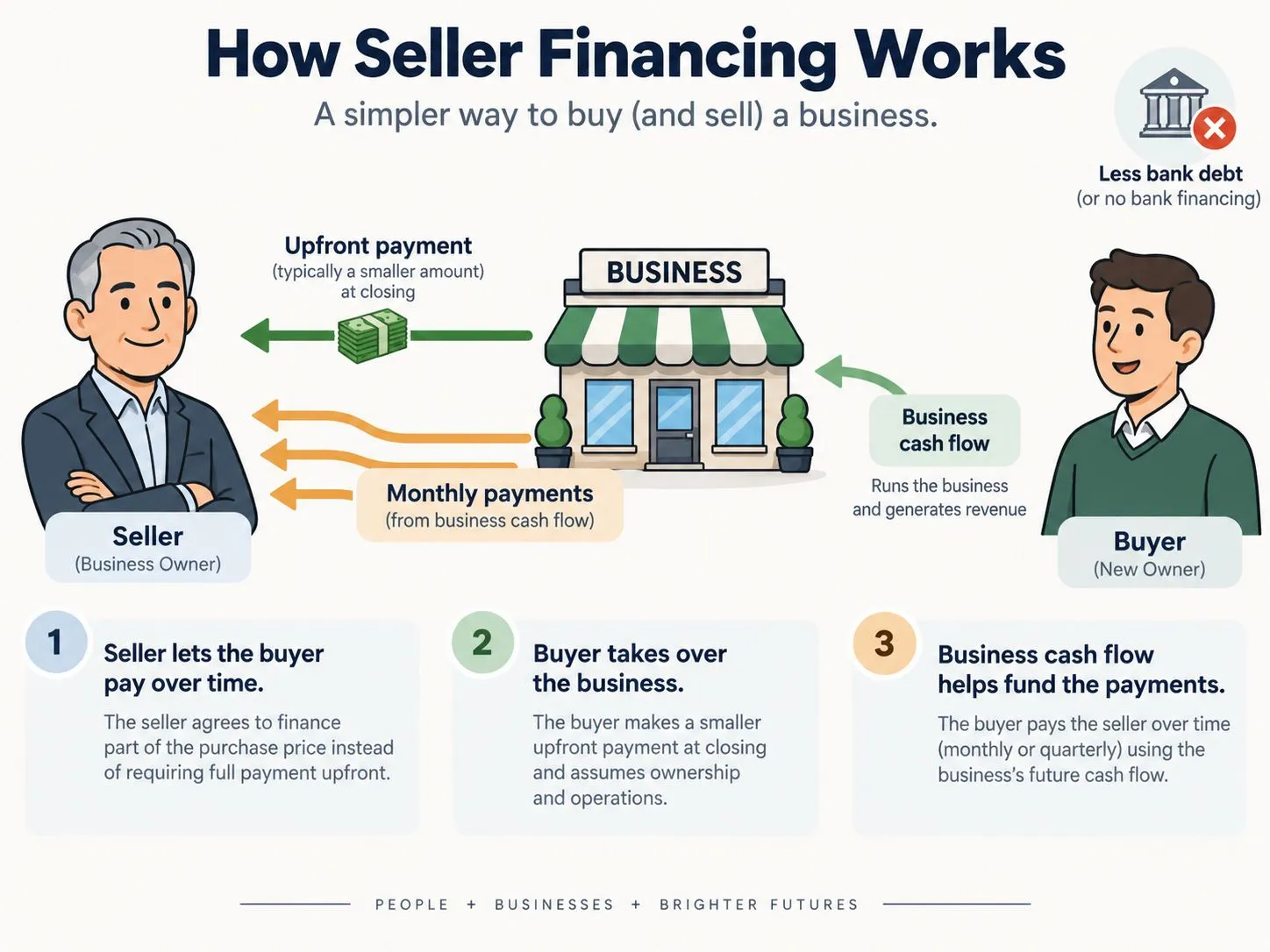
Ultimately he was able to negotiate down below the million-dollar listing price, get reasonable terms, and snag a decent seller note due to the structure of his SBA loan.
“That was something that benefited me,” he said. And the other side didn’t push back. “They wanted to get the deal done and make sure it went through, so they were pretty flexible with all of that purchase price allocation.”
Brian mentioned the rest of the process was pretty by-the-book. The story the seller told at the beginning is the story the financials told at the end.
“All the due diligence things checked out. Everything lined up.”
The lesson: Some of the lender’s requirements are protections you’d otherwise have to negotiate for yourself. Read every SBA condition twice and ask which ones work in your favor. It’s something we can help you with in The Academy.
4. Buy where you already speak the language
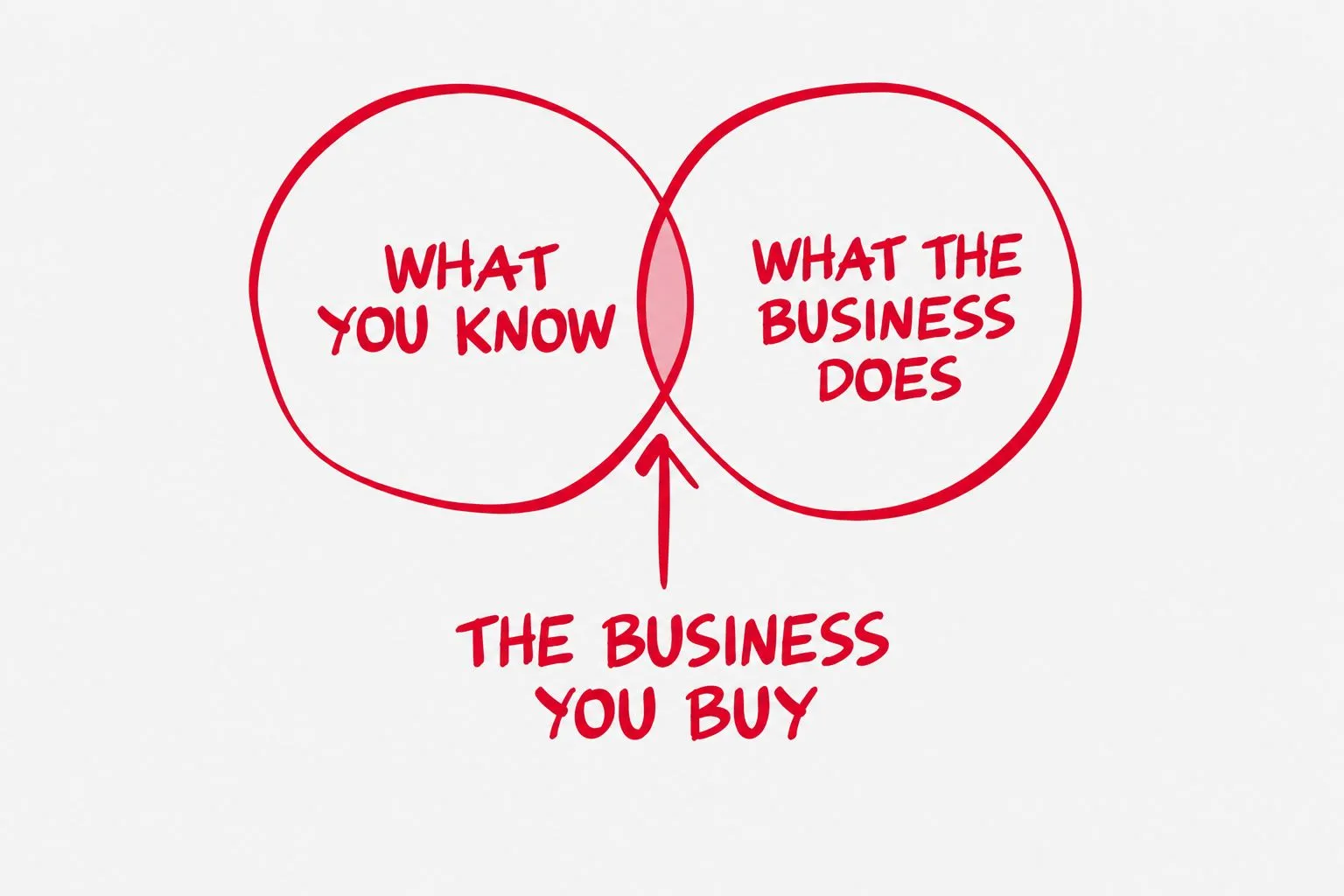
Brian is a PA who’s spent 4 years around patients and hospitals, so going into senior care doesn’t require a huge learning curve.
“Having that background made this one feel a little bit safer for me. More enticing, because I felt like I understood the clients better.”
He wasn’t buying an industry he’d have to learn from scratch on top of learning ownership from scratch. He knew who the customer was, what they needed, and why they’d stay.
So when he spotted a deal where the seller was retiring to spend time with her grandkids, it was a no-brainer.
The lesson: Your day job is an unfair advantage in one specific vertical. Find out which one before you go shopping in a category you’d be learning blind.
5. The DMV Test
Brian’s first 2 weeks as an owner looked glamorous.
He was at the DMV.
He’d moved from New York to Florida full-time for the business, which meant a new license, tax paperwork, all of it. So there he sat, an hour deep in a plastic chair, brand new owner of a company he’d just spent 5 months buying.
And that’s the moment it landed.
“I’m sitting in the DMV for an hour right now, and fortunately, things are still running.”
Caregivers showed up, clients got care, invoices went out, and nobody needed him for any of it.
We’re calling this the DMV Test, and it’s the cleanest way we’ve found to explain what you’re paying for when you buy instead of build.
A startup fails the DMV Test on day 1. There’s nothing to run without you in the room.
Meanwhile, a business with a real team and an office manager who’s been there for years passes it without breaking a sweat.
Brian got lucky with his people, and he knows it. The former owner and the office manager both stayed on through transition. “Phenomenal people,” he said. “I got very lucky.”
Having a good team in place means he’s getting paid even when he’s not around.
The lesson: What you’re buying is measured in the hours you can be gone before anything breaks. Ask that question in diligence, not in the DMV parking lot. You want to buy a business, not a job.
6. Everything runs on paper
Here’s what surprised him most about his first month as an owner.
The checks.
Paper checks, cut by hand, to caregivers every pay period. Paper checks coming in from clients. No CRM. No connected systems.
“I don’t know if I’ve ever had to write a deposit slip. Now I’m using one for the first time.”
He gets why it works that way, and while he knows installing new tech will make things more efficient, he’s not rushing to gut the system.
“First steps should be to learn the business. Learn the people, learn your employees, the clients, the staff. Really spend your first time learning how things are actually running.”
That’s the line every new owner should tape to their monitor.
The lesson: The paper checks are your opportunity, and they’ll still be there in 90 days. Learn why the business works before you improve the parts you don’t understand yet.
What’s next?
The plan from here isn’t complicated.
The business already holds licenses across 3 Florida counties, and there’s almost no activity in the southern one.
That’s the first growth lever. But there’s no rush.
After the holidays he plans to pick up per diem shifts at a hospital, because he still likes being a PA and never planned to stop.
Down the road, maybe an adjacent acquisition. Medical equipment, imaging, something that plugs into what he already owns.
Almost 4 weeks in, he’s still surprised by the pace.
“Every week is just going by quick, and in a good way. I’m busy doing things I like.”
Brian is the poster boy for what we preach, and he’s following the playbook perfectly.
And if you want to steal the exact playbook we taught him to grow in life and business, click here.
- Team Contrarian
Want to join our groups of thousands of smart business builders and buyers?
The information contained here is educational, may not be typical, and does not guarantee returns. Background, education, effort, and application will affect your experience and the profitability of any business. Individual results may vary.







.webp)







.svg)


