You're not stuck, you're just alone at the top. Most entrepreneurs hit a ceiling, not because the opportunity isn't there, but because you're solving $10M problems with $1M strategies.
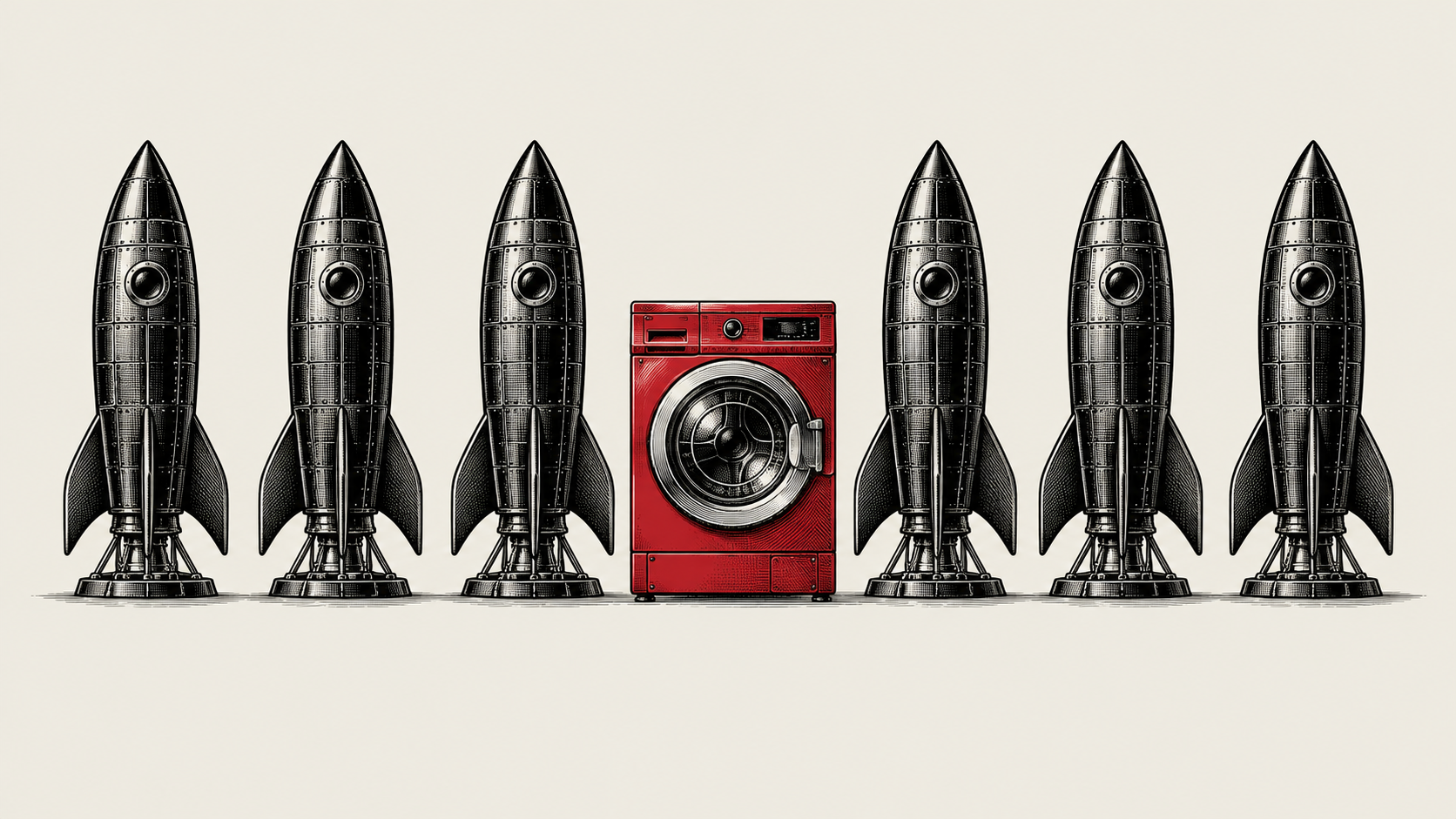
“There are no Silver Bullets... Only lead bullets.” -Ben Horowitz
We work with more than 2,500 business builders every day.
Every single one wants to know where to focus their firepower next year.
So, here are 7 things we’d focus on if we had to start again.
1. Speed Over Almost Everything Else
In 2026, speed is a proxy for organizational health.
In a market where AI lowers the barrier to entry, one of the few defensible moats left is speed itself. Competitors will increasingly launch faster than ever and cheaper than ever.
The “OODA Loop” (Observe, Orient, Decide, Act) must be compressed with everything you do.
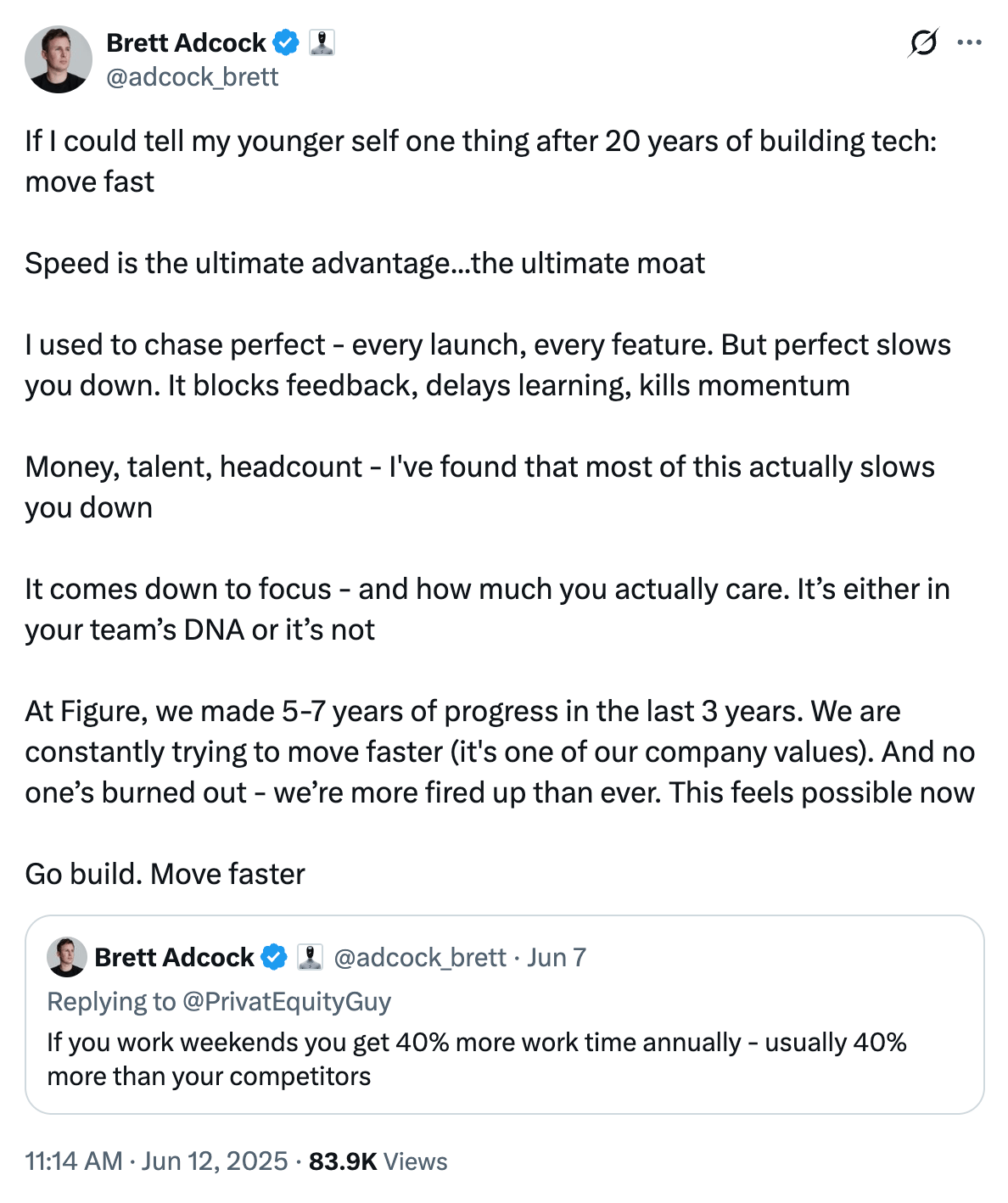
The risk isn’t that your product is imperfect; it’s whether your product is perfect for customers who moved on 6 months ago. Take this from one of our portfolio CEOs:
He’s right. If there’s a muscle the top 1% of builders flex better than anyone else, it’s urgency. Consider Bill Perkins. Mega-wealthy hedge fund dude + high-stakes poker player + the guy behind Die with Zero. Here’s what he told us:
“I move faster than everyone else. So by the time most people have an idea, I’ve already taken action, done the thing, made 3 mistakes, and found a better way.”
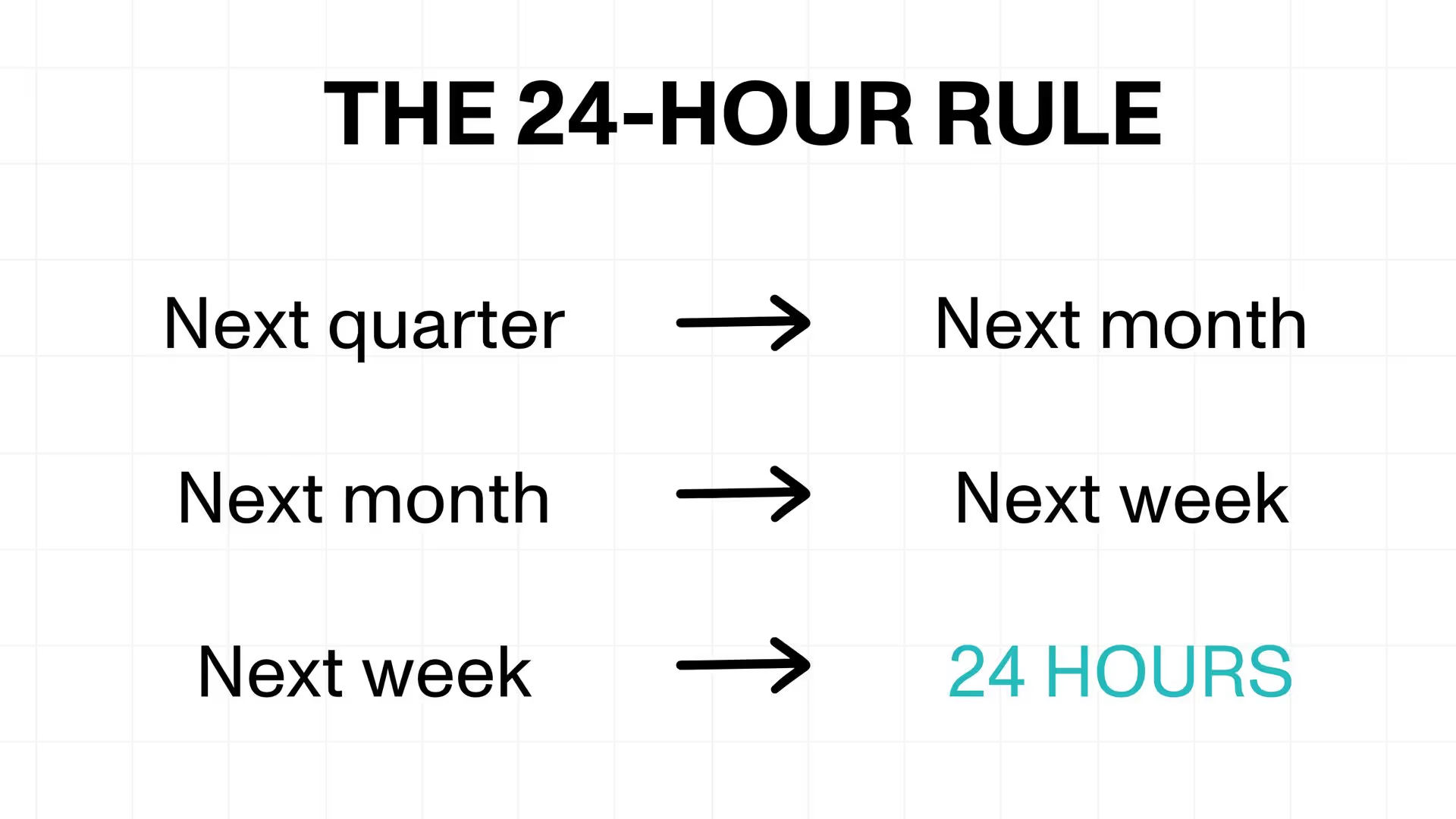
Preach. One way we’ve tried to implement this at Contrarian Thinking is through something called the 24-Hour Rule. If a prototype, solution, or idea cannot be executed in days, we’re likely too heavy for the current environment.
You know how corporate America loves to say, “Let’s circle back on that next week”? Yeah, that makes us gag.
2. Selling Before You’re “Ready to Sell”
In 2026, you need to stop thinking you need lots of money to move on an idea, a deal, or a business. It’s just no longer true.*
*Unless you’re Sam Altman.
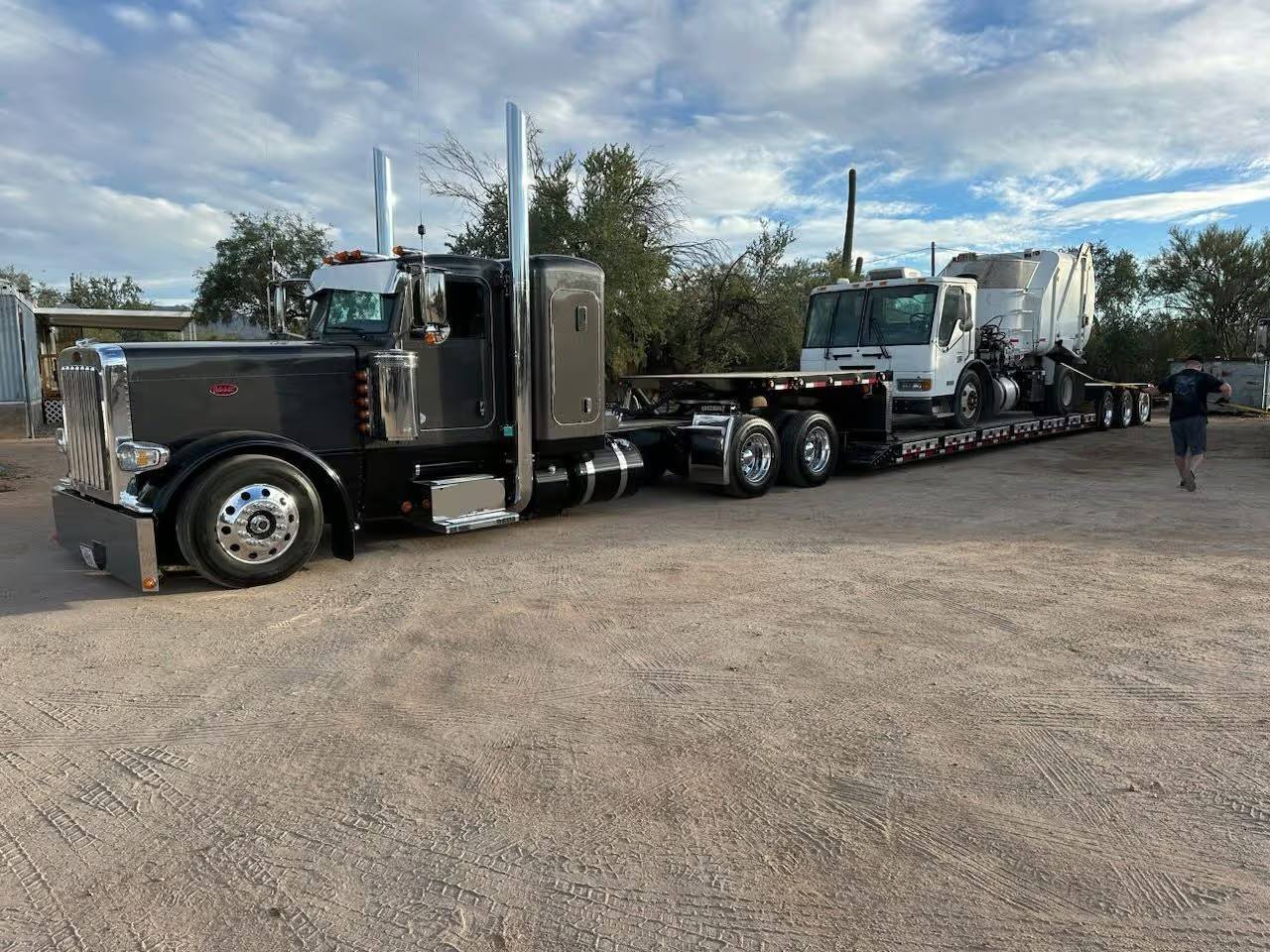
Say we gave you 30 days to launch a garbage company in 2026 (truck, bins, customers, revenue, the whole thing)… could you do it?
Could you raise $40,000 for a garbage truck from Facebook Marketplace, learn hydraulics on YouTube, survey 200 neighbors, find product-market fit, and get them to prepay for a service… all in the span of a month?
Our friend Spencer Scott figured it out.
Spencer didn’t start his business, Lone Star Trash, with trucks, licenses, or capital. He started with a Facebook rant.
His neighbors were furious about their existing trash service provider. So Spencer, the curious man he is, ran the numbers:
400 homes × $33/month = $13,200 in monthly recurring revenue
…for ONE pickup day per week! Instead of guessing, he tested. He spun up a pre-made Webflow template for trash businesses, embedded a payment system, and borrowed a referral trick from Harry’s Razors:
5 signups = free t-shirt
10 = 3 months free
25 = a year free
His pitch to his neighbors: “If 200 people prepay for 3 months, I’ll launch the company. If not, I’ll refund you.”
Nearly 200 households put real money down, meaning he could buy a truck and equipment before he even ran the service.
People are going to find ways to do this more and more in 2026.
One of the worst offenses we see in businesses throughout the Contrarian Academy and Growth Boardroom is the allocation of resources to unverified demand.
You can always find ways to sell first, then build. To test demand, get cash in the door, then put it to use.
Doing so achieves 2 things: you increase speed AND de-risk an investment (a knockout combo punch in 2026).
3. When You Do Sell, Try Selling to the Rich
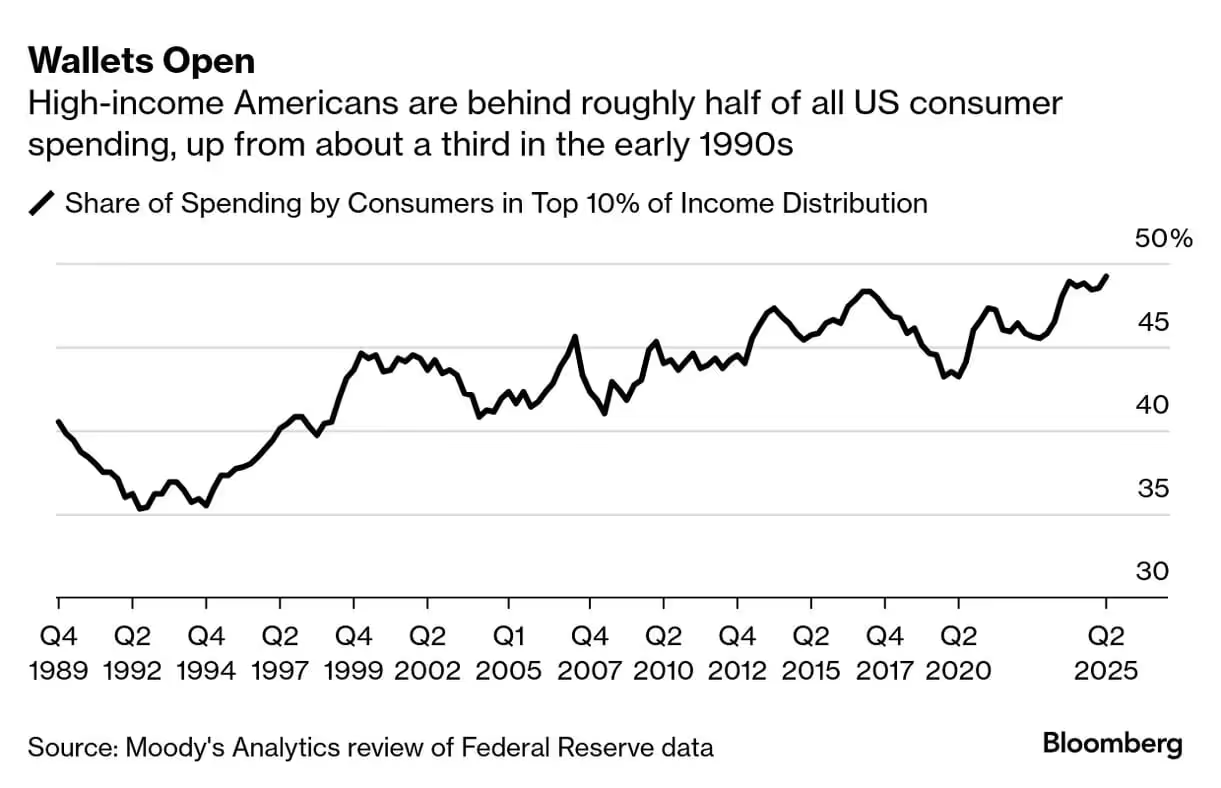
In recent years, inflationary pressure has constrained the purchasing power of the mass market, while the High Net Worth (HNW), asset-owning segment is proving to be ultra-resilient.
Macroeconomic data points to a sustained ”K-shaped” trend:
Upside: High earners with stock-based comp, companies in AI, chips, cloud, defense tech, and owners of appreciating assets (real estate, strong SMBs).
Downside: Low-wage workers hit by inflation, industries disrupted by automation, people locked out of homeownership, and small businesses without pricing power.
Logically, this suggests more businesses will look to move up-market in 2026. Put another way, more businesses will start “selling to the rich.”
In both our programs, we consistently see that businesses with better pricing power (the ability to raise prices without losing volume) are often the ones that weather volatility better.
Competing in a low-margin environment is very difficult. It’s built some of the biggest business empires (Walmart, Amazon, McDonald’s, etc). But, for smaller players:
That game is brutally competitive.
Scaling requires massive infrastructure.
Even the best eventually move into higher-margin products.
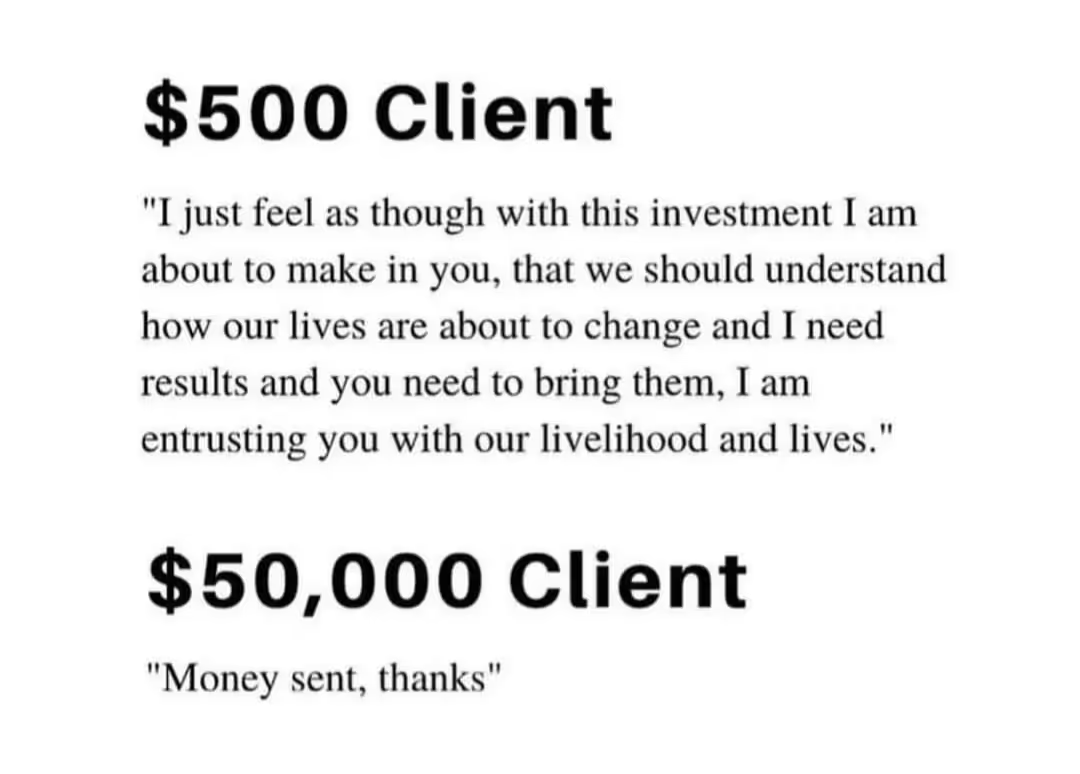
Expect to see more people targeting the top decile of the market with high-ticket, high-touch services. (Rich people want you to sell them something, remember that.)
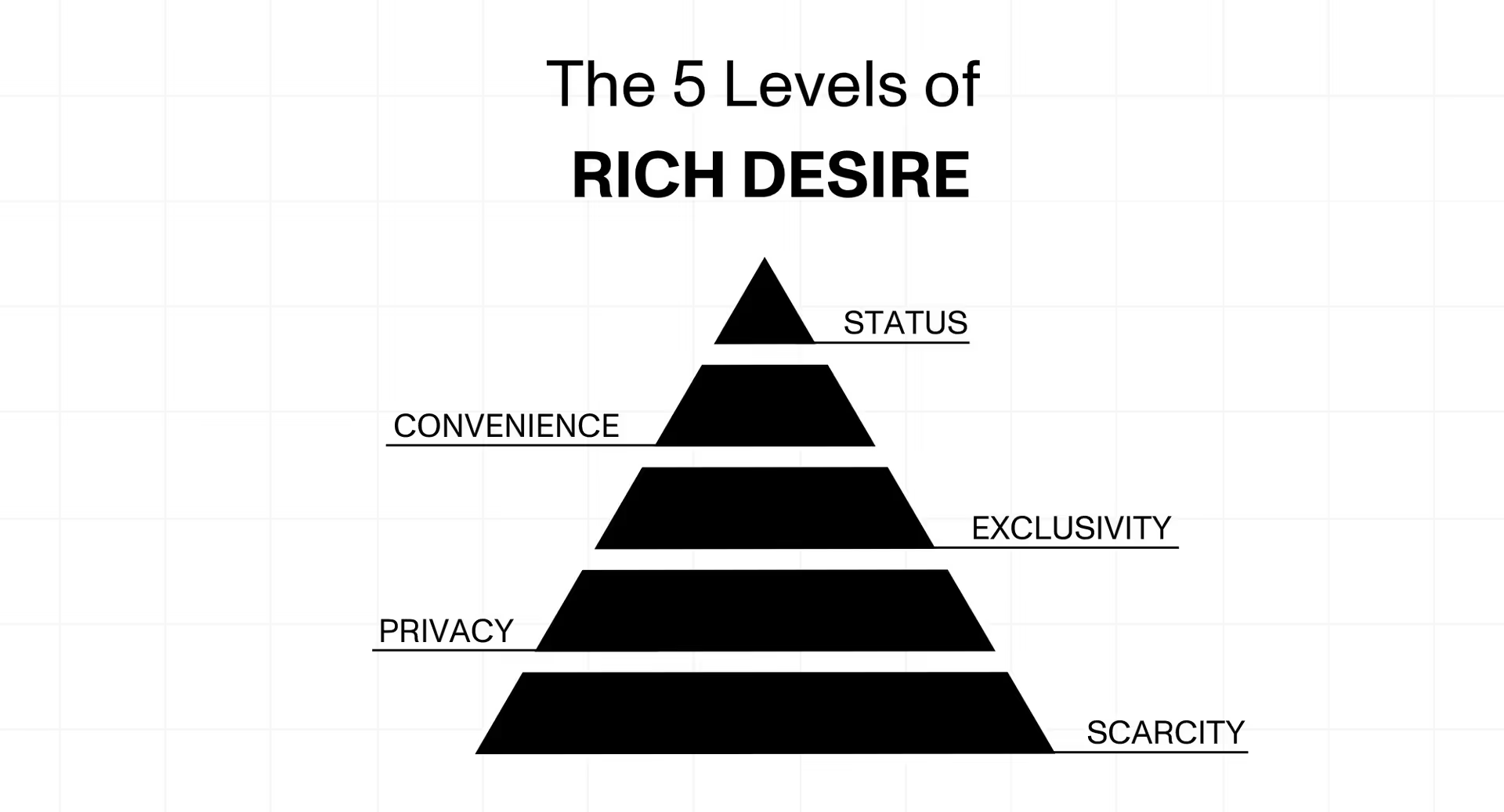
Also, there are 5 reasons rich people buy. Every single one falls into this hierarchy we call The Rich Desire Pyramid.
If you want to sell to wealthy customers in 2026, ask yourself: Does your offer hit at least ONE of these categories?
We certainly ask ourselves questions like this every day. Our programs are not cheap, but they offer extremely high value for those looking to scale or buy businesses.
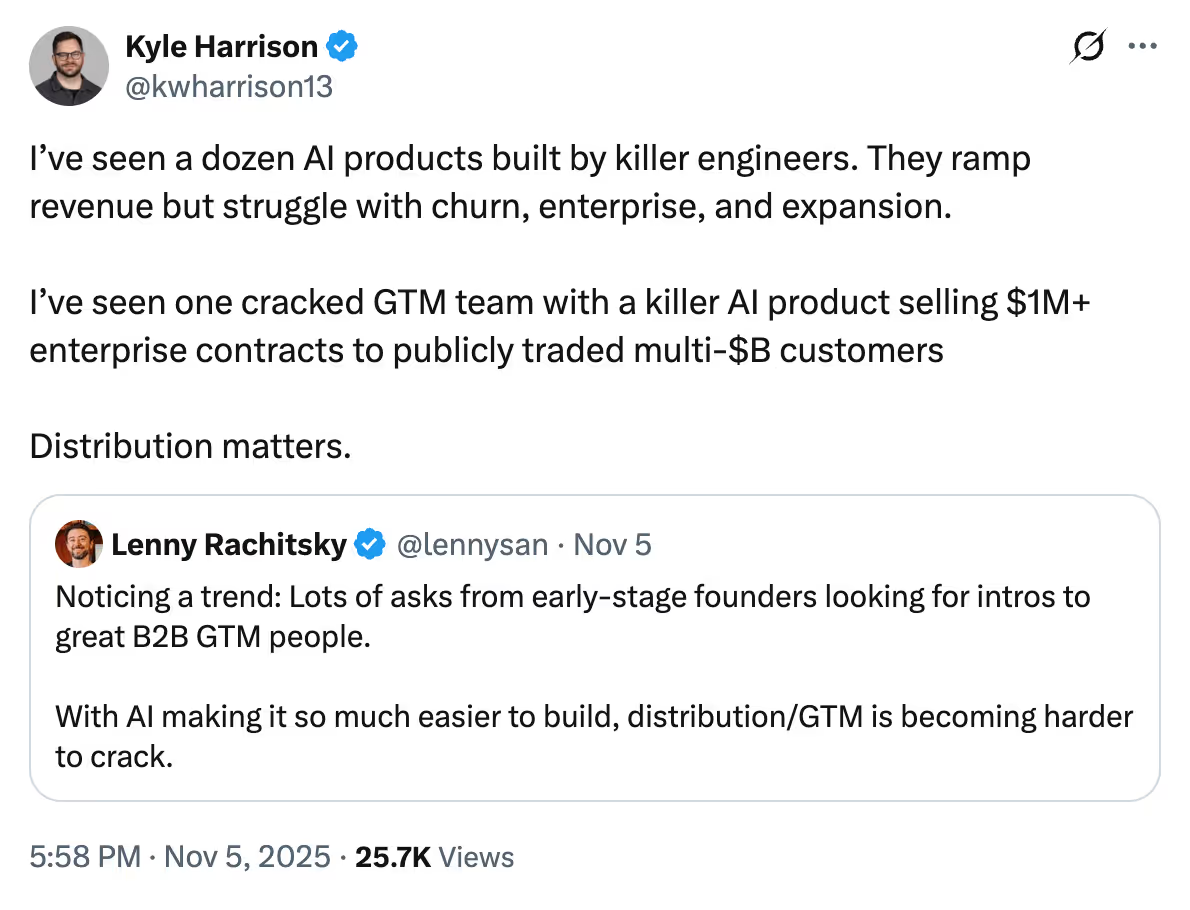
4. Build a Distribution-First Business… Before You Need it
Not investing in owned distribution will be a painful mistake for many businesses in 2026.
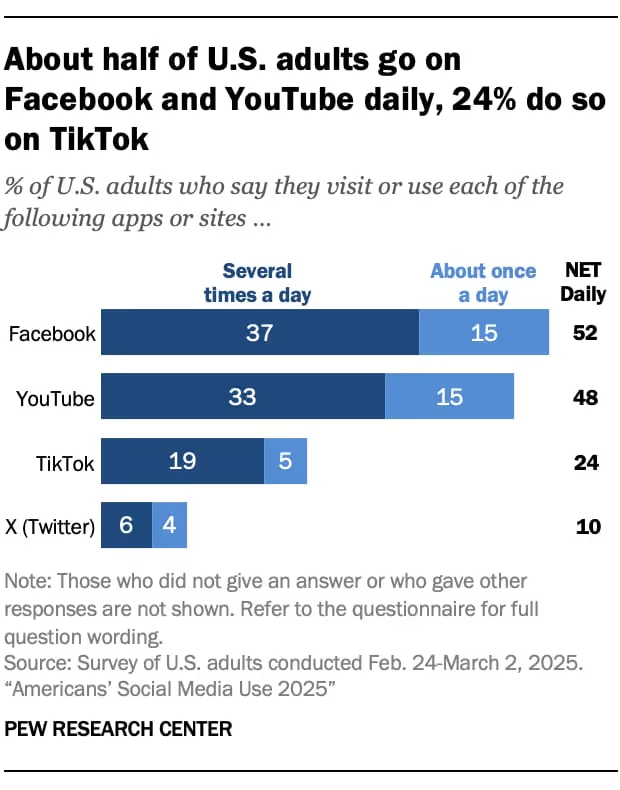
Owning at least some of your top of funnel provides an increasingly key structural advantage over competitors who must rent the attention they receive.
Digital CAC has risen dramatically over the last decade. Negative CAC (Customer Acquisition Cost) will be a key focus next year in industries that never expected to rely on it.
More and more top investors are highlighting distribution as a critical element of a successful business moving forward.
Technologist Balaji Srinivasan says that every startup now needs a founding content “creator,” CEO or otherwise.
Why? As AI lowers the barrier to building things, it raises the barrier for getting people to buy into those things.
5. Make This 1 Scarce Skill Your Unfair Advantage
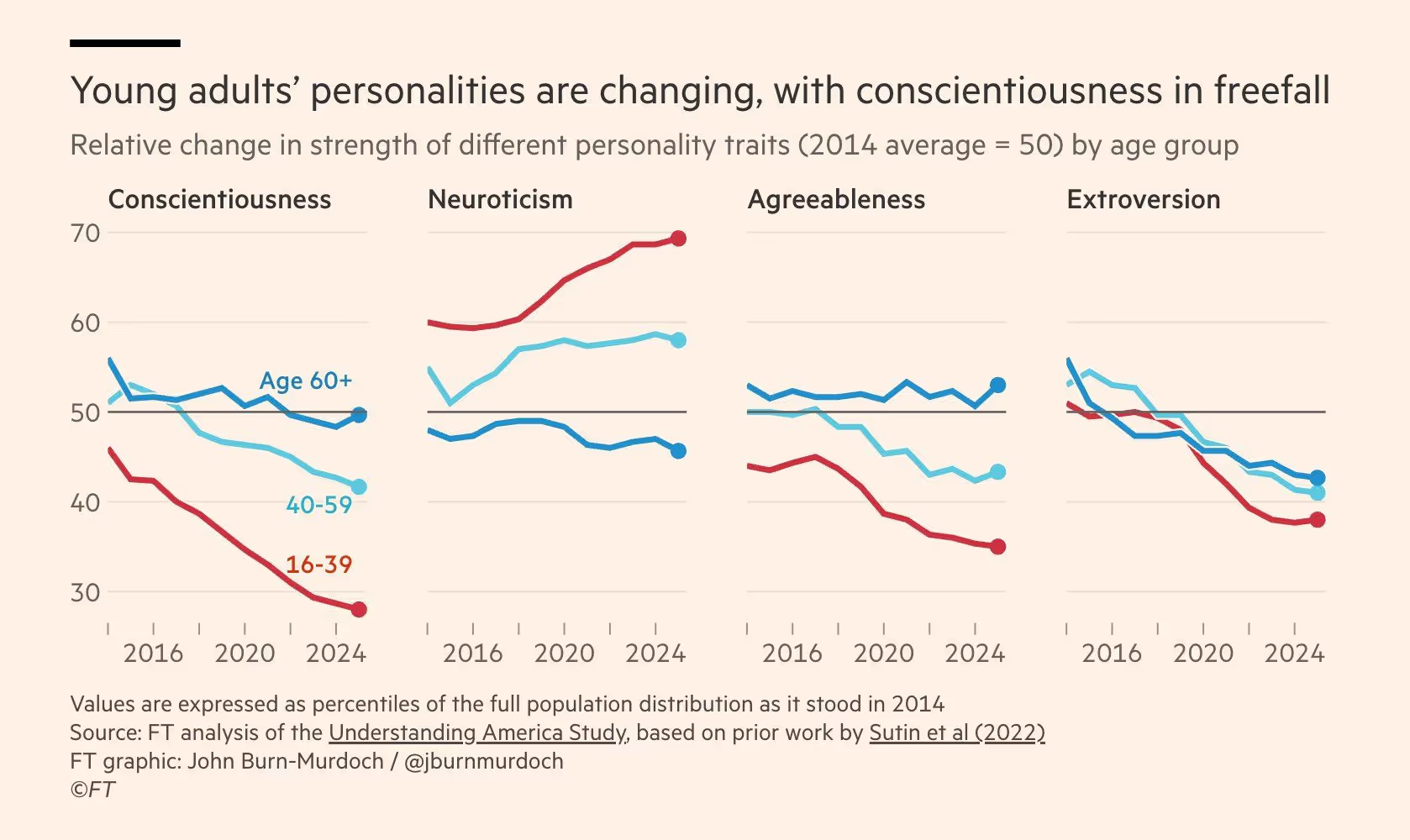
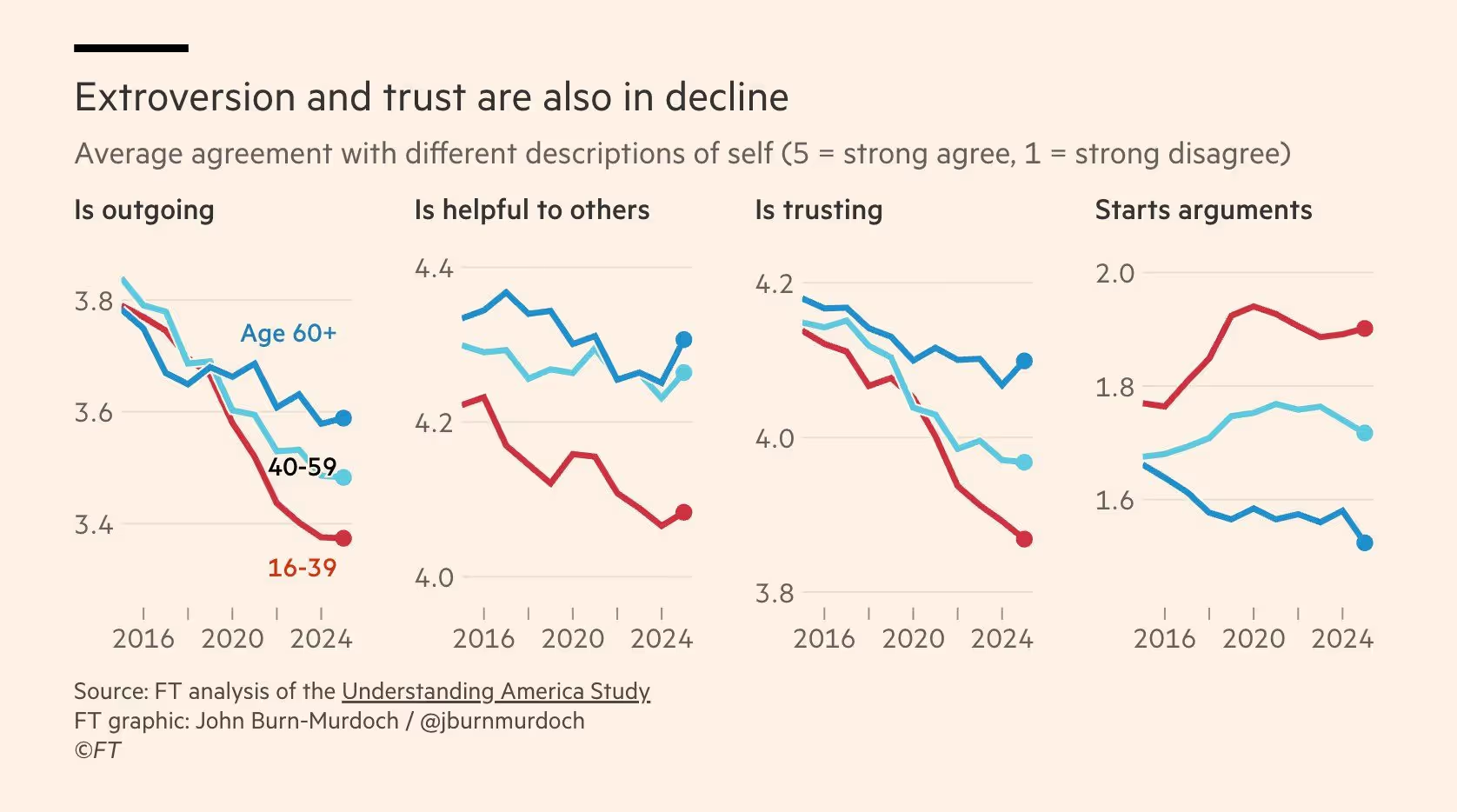
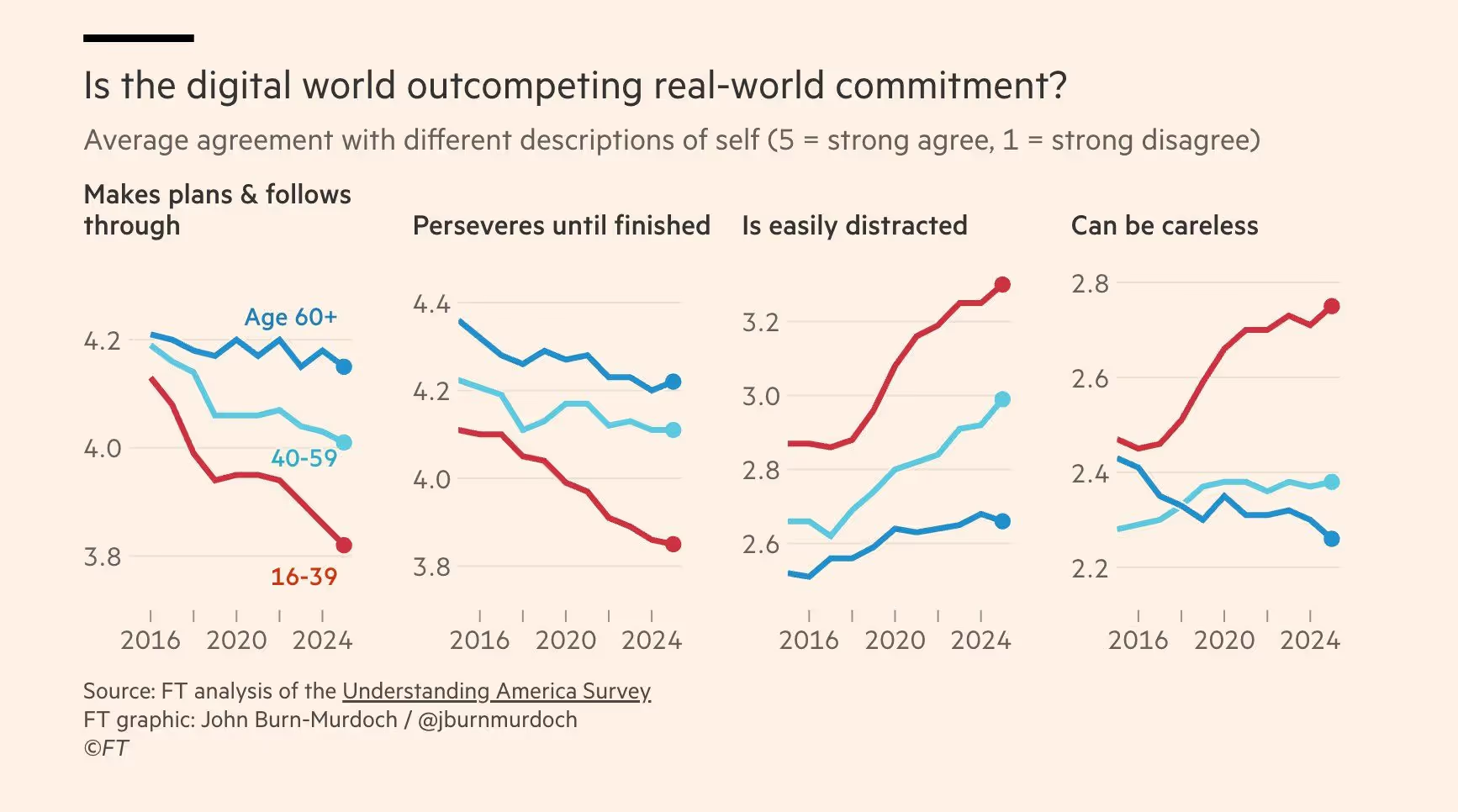
In the coming years, as digital trust declines, real-world relationship-building will become an increasingly rare and valuable skillset.
This is why…
At scale, the younger generations’ prospects for building strong, trusted, sales-focused relationships are simply not looking good.
In an environment where fewer people can do this well, those and their teams who can will command disproportionate influence, and their businesses will likely be more successful.
This is especially true in the world of SMBs.
(By the way, we just hired a few new sales pros, and are still looking to hire for 14 roles.)
6. Build an AI-First Company, Not an AI-Eventually Company
Companies that integrate AI into operations, sales, support, and product are going to move faster and likely grow faster than their peers.
Historically, scaling a company usually meant needing to scale headcount. In 2026, whether you like it or not, we are witnessing a decoupling of revenue from labor.
We’re already seeing it across our investment portfolio, with companies like ResiBrands and Drillbit.
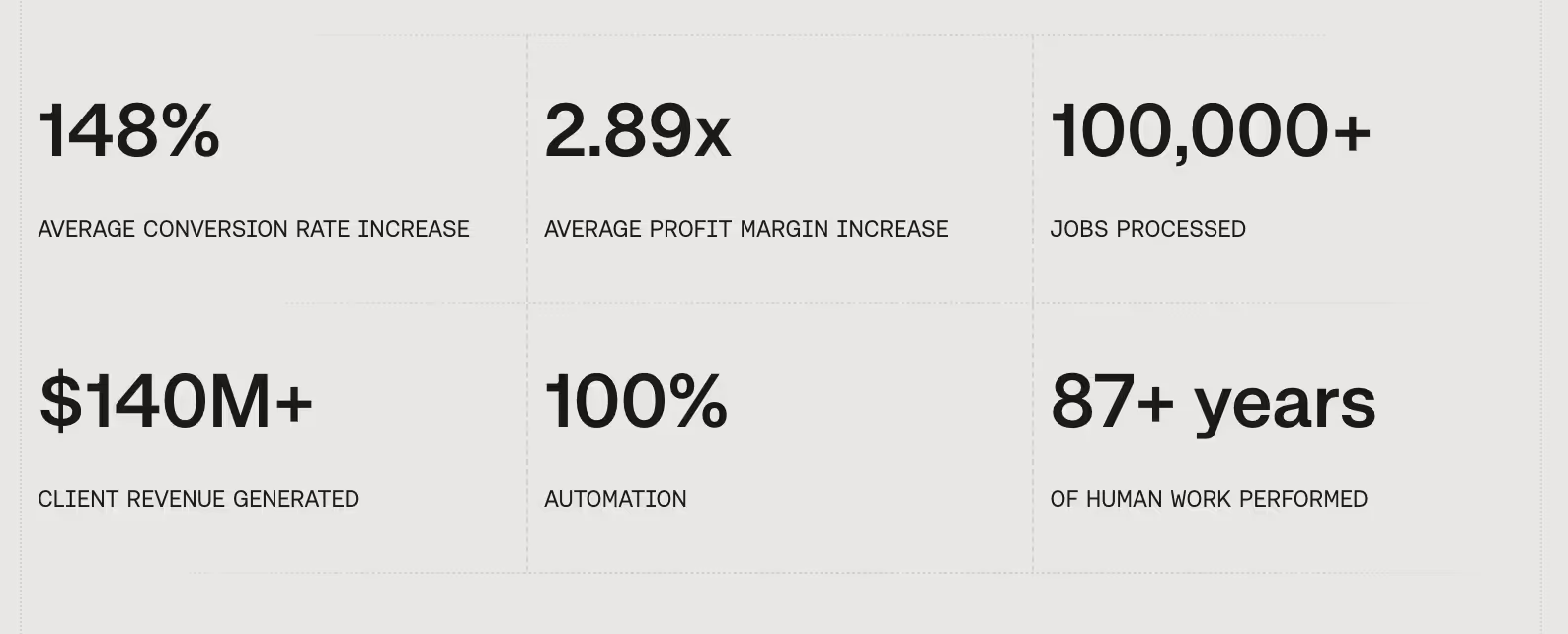
Drillbit helps home service brands (roofing, painting, plumbing, etc.) deploy AI “workforces” across their businesses. It’s pretty darn cool, and it’s a peek into the future.
Here’s the impact they’ve had so far for customers:
The goal in 2026 will no longer just be to “use” AI to do things like write emails, but to structure your entire business around Agentic Workflows.
(If that’s something you want us to write more about, let us know!)
7. Decide What You Want Your Obituary to Say
Sorry, that just got real morbid real fast.
But it’s true. To build something deeply rewarding for you in 2026, you need to be thinking deeply about your “why.”
Take a moment to read the words below. These are some of the last words Warren Buffett, worth ~$150 billion, chose to write in his final shareholder letter. They may surprise you.
-Team Contrarian
A Few Final Thoughts
One perhaps self-serving observation. I'm happy to say I feel better about the second half of my life than the first. My advice: Don't beat yourself up over past mistakes — learn at least a little from them and move on. It is never too late to improve. Get the right heroes and copy them. You can start with Tom Murphy; he was the best.
Remember Alfred Nobel, later of Nobel Prize fame, who — reportedly — read his own obituary that was mistakenly printed when his brother died and a newspaper got mixed up. He was horrified at what he read and realized he should change his behavior.
Don't count on a newsroom mix-up: Decide what you would like your obituary to say and live the life to deserve it.
Greatness does not come about through accumulating great amounts of money, great amounts of publicity or great power in government. When you help someone in any of thousands of ways, you help the world. Kindness is costless but also priceless. Whether you are religious or not, it's hard to beat The Golden Rule as a guide to behavior.
I write this as one who has been thoughtless countless times and made many mistakes but also became very lucky in learning from some wonderful friends how to behave better (still a long way from perfect, however). Keep in mind that the cleaning lady is as much a human being as the Chairman.
-Warren Buffett
The information contained here is educational, may not be typical, and does not guarantee returns. Background, education, effort, and application will affect your experience and the profitability of any business. Individual results may vary.









.png)


.svg)


