You're not stuck, you're just alone at the top. Most entrepreneurs hit a ceiling, not because the opportunity isn't there, but because you're solving $10M problems with $1M strategies.
Law of Distribution: How We Turn Attention Into Money
December 5, 2025
14 min read
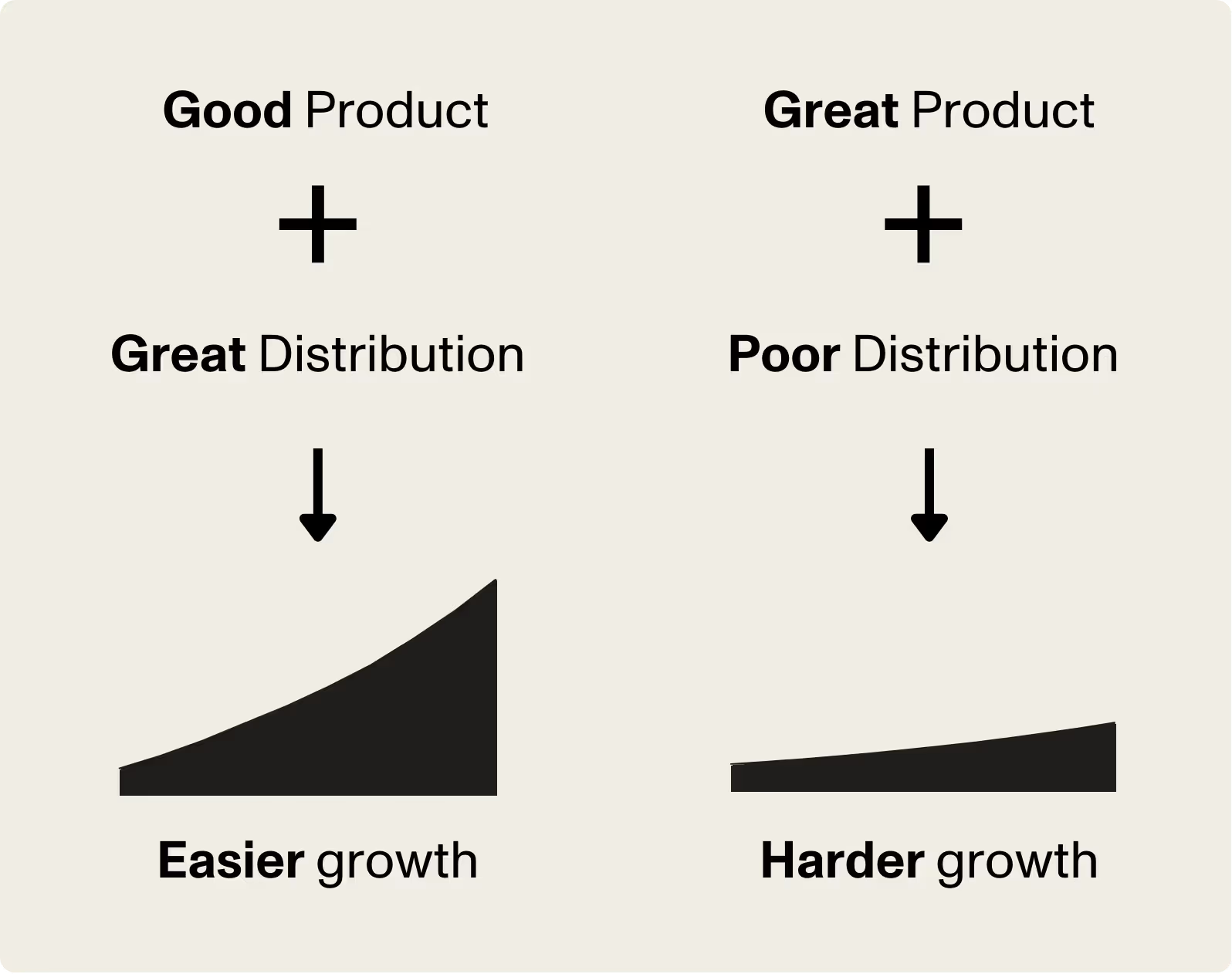
"The cold and unromantic fact is: a good product with great distribution will almost always beat a great product with poor distribution." -Reid Hoffman
Our goal at Contrarian Thinking is a great product with great distribution.
Last week, we told you about how important it is to build a distribution-first business… Before you need it.
Today, we want to show you exactly how we do this in our own business.
But first, you need to understand 1 thing…
Why is Distribution So Important?
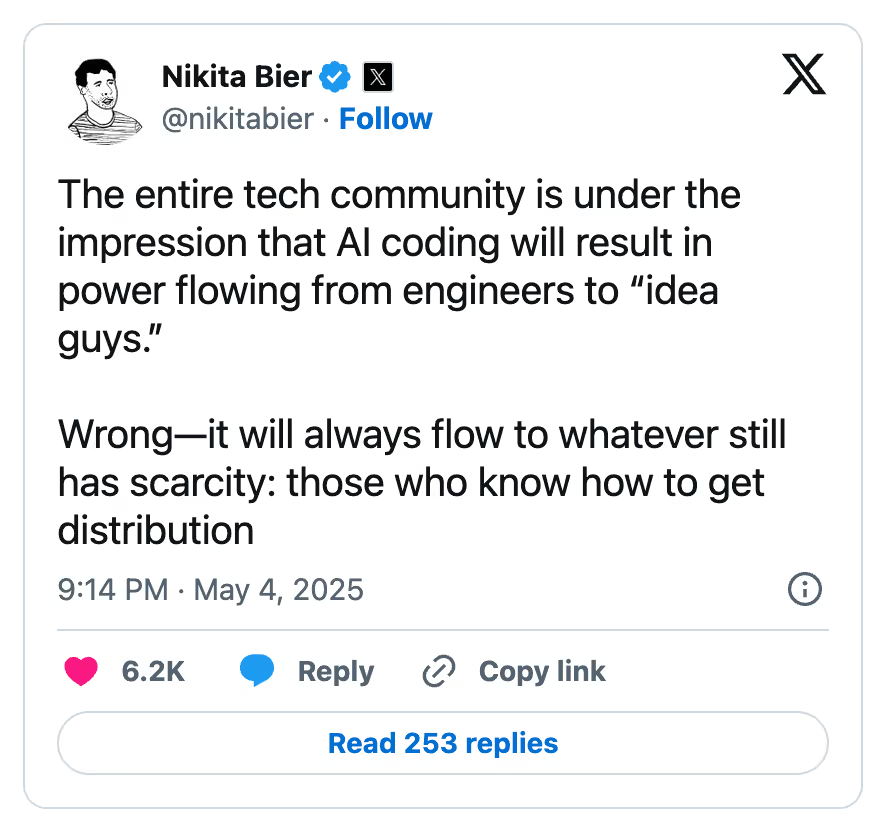
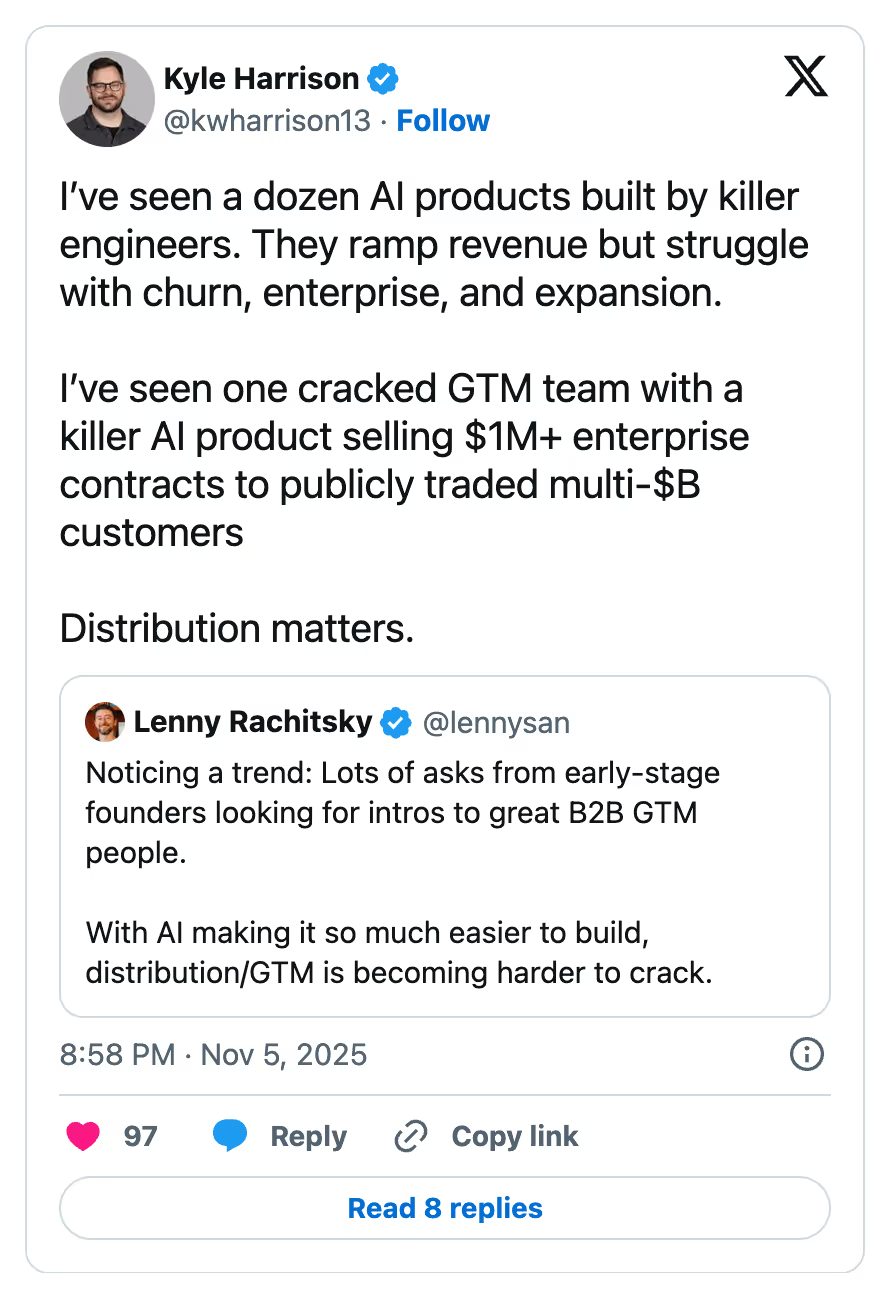
As AI lowers the barrier for creating things, it will raise the barrier for selling things. That means the latter will become an increasingly valuable capability.
This goes for selling yourself, your brand, jobs you’re hiring for… all of it, not just “products.” Simply put, as we enter an age of creation abundance, it will require more to earn attention.
Top investors, builders, and founders are already seeing this play out…
As we showed you last week, technologist Balaji Srinivasan even says that startups now need a founding (content) “creator.”
That nomenclature may be new, but the business need for people who understand distribution strategy really isn’t…
Investor and former HotelTonight CEO Sam Shank recently said:
"Don't start with the product. Start with distribution."
Why would he say that so definitively? Because, in 2009, HotelTonight worked backwards to launch a product around a (then) brand new distribution channel: the Apple App Store. “That combo,” Sam says, “a unique distribution edge + a product tailored to it, powered our growth.”
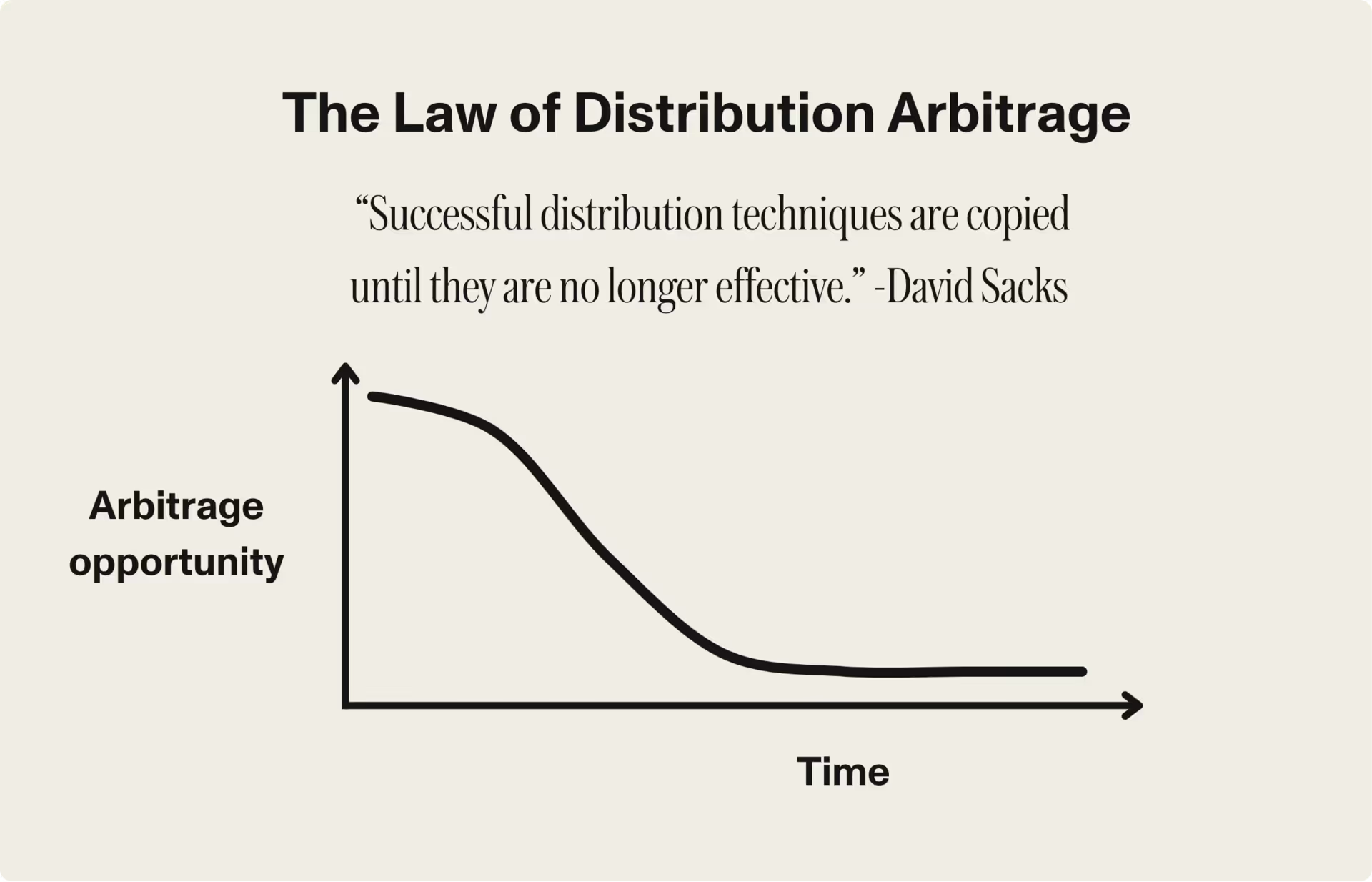
Most people flip that. They build something cool, ship it, and then wonder why no one showed up. Of course, any channel will eventually get harder to crack. David Sacks has called this the Law of Distribution Arbitrage.
“The biggest mistake I see these days is brilliant founders who… haven’t thought about how they’re going to make their product grow,” Sacks said years ago.
Once a tactic works, people copy it. SEO. Emails. SMS. They all eventually get flooded. In other words, distribution is a strategic lever where you have to be consistently innovating.
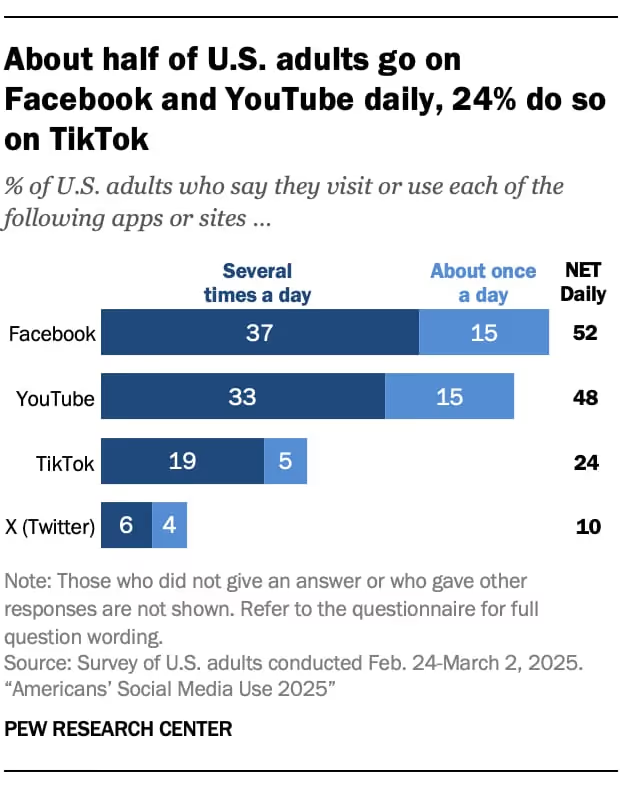
That has only grown truer over time. Digital CAC (Customer Acquisition Cost) has risen dramatically over the last decade and will continue to do so as these spaces grow more crowded:
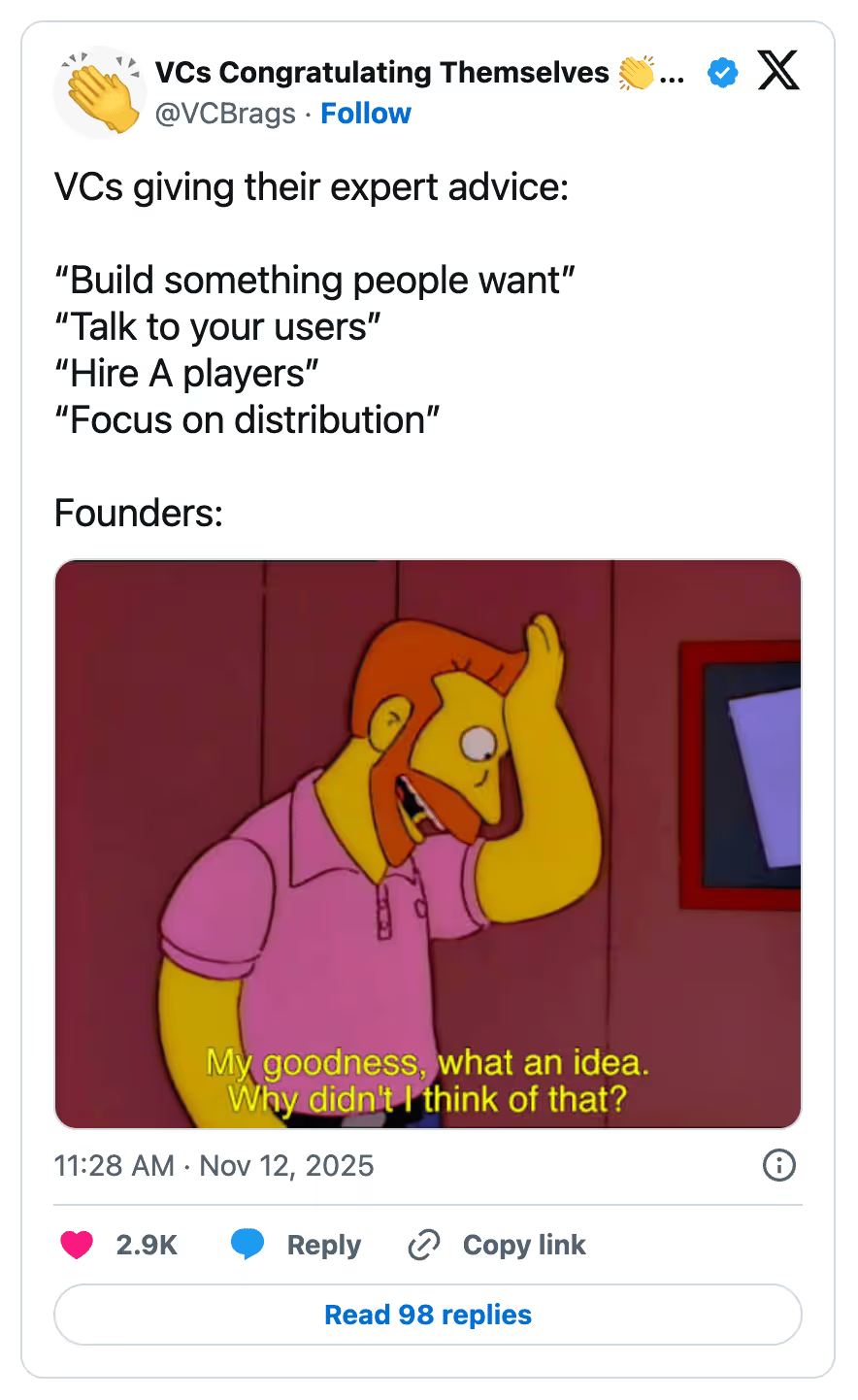
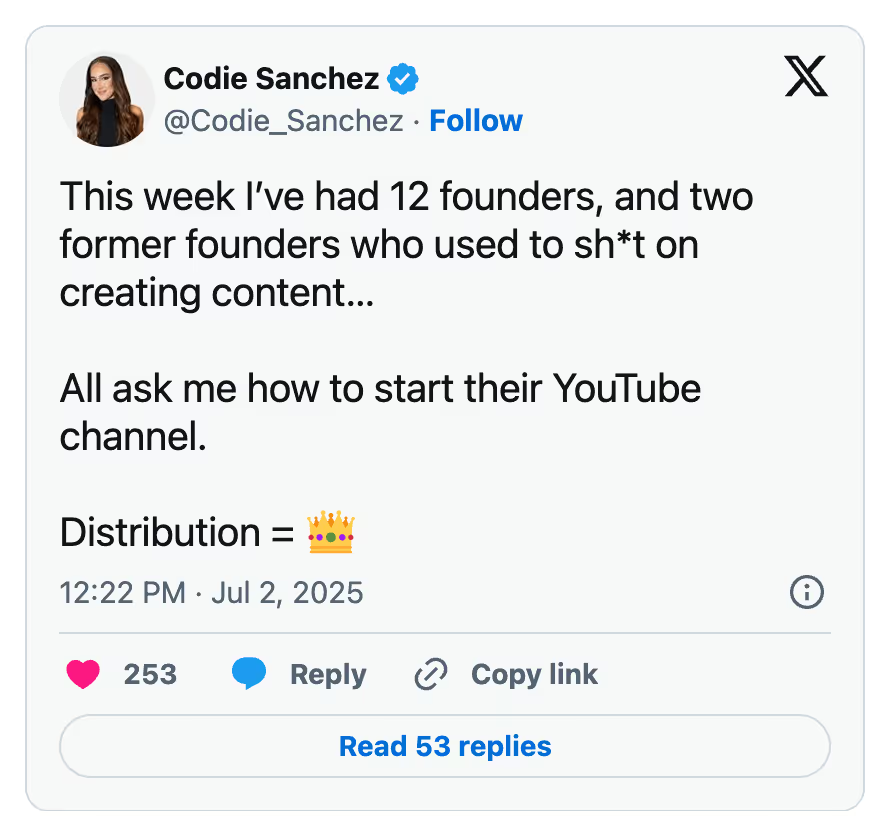
Not investing in owned distribution will be a painful mistake for many businesses in 2026. So many people are talking about this right now, actually, that the literal act of talking about it has achieved meme status:
And yet… Many builders struggle deeply with distribution. It’s why people talk about it! It’s hard.
But why are they struggling, really? Maybe because “distribution” is actually a vague thing. There are a thousand angles to attack it from, and a thousand more ways it can take shape.
So instead of treating it like a mystery, we’re just going to tell you exactly how we think about distribution fueling practically everything we do.
Contrarian Thinking’s Mother of All Flywheels
When people hear “distribution,” they usually think “Views. Marketing. Content… The end.” We try to think beyond that.
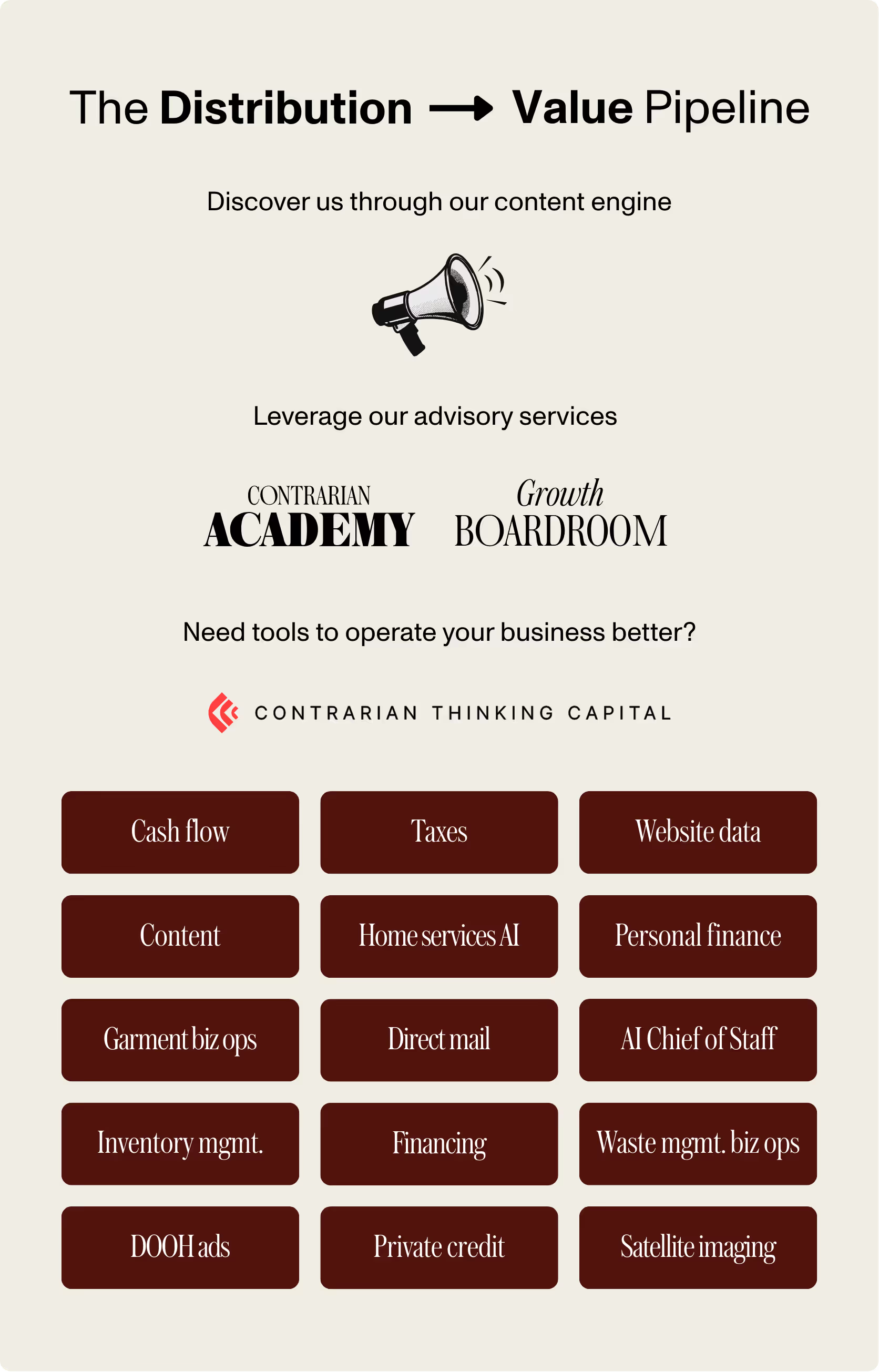
We view distribution as a core piece of infrastructure that every arm of our company plugs into. Distribution is a central hub. Everything else is a spoke.
It fuels customer acquisition.
It fuels investment deal flow.
It fuels product testing.
It fuels hiring quality.
It fuels the value we provide our customers.
It fuels our portfolio companies’ growth.
And all of it (ideally) feeds back into a bigger, stronger, circular ecosystem, often in ways we can’t even predict.
That’s why our “media business” isn’t actually that separate from our advisory or investing work. They’re all part of the same flywheel engine that lets us:
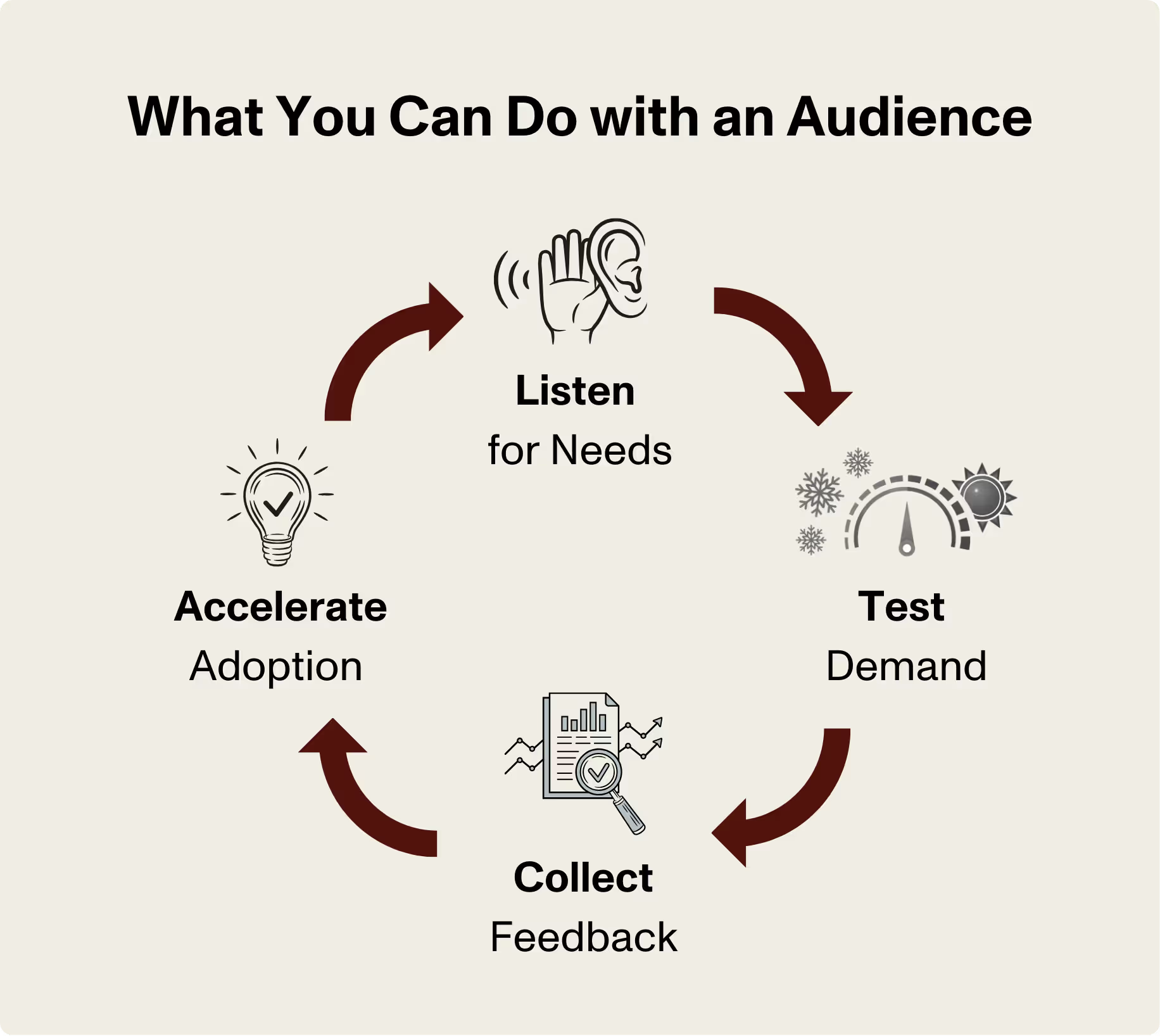
Test ideas fast through audiences, feedback, and access
Acquire and engage some customers at little to no cost
Spot market gaps long before others
Compound learnings across a dynamic, ever-expanding database of insights
Help our customers when they need vertical-specific solutions
Build products leveraging real-time data from thousands of people
Win more, better deals because builders already know who we are
The traditional model is fairly linear. Build a product. Try to get people to see it. Hope it catches. Our model is more cyclical. We are constantly connecting with people, understanding what they need, going very deep to build for that demand, and accelerating adoption.
Here Are a Few Specific Ways We’ve Done This…
1. The ResiBrands Deal
Last year, we became owners in ResiBrands, one of the fastest-growing home services franchise groups in America. We’re talking:
750+ units
40k+ completed jobs this year
20k+ Google reviews across painting, window cleaning, garage renovation, roofing, and handyman brands.
One thing we immediately noticed about them was how seriously they also valued distribution. Their Pink’s Window Services brand had scaled across dozens of states by leaning into a nostalgic identity that worked both online and in person.
It was an attention magnet, and we loved it.
Here’s how distribution has played a role in our relationship:
Flywheel Effect #1:Media discovery → investment. We first discovered ResiBrands through our media team when we were covering Pink’s for a story. That story turned into an introduction, which developed into a relationship and eventually one of our holding company’s largest investments to date.
Flywheel Effect #2:Solution alignment. Our Academy and Boardroom programs serve thousands of people looking to buy and scale businesses. Some of them are interested in franchise models but want a trusted partner. Now they have one, and we’re able to help them achieve their goals without leaving our ecosystem.
Flywheel Effect #3: Cross-portfolio utility. ResiBrands has also leveraged Drillbit, an AI company in our venture portfolio, to optimize its operations. This means Drillbit gained a new customer base, ResiBrands is scaling more efficiently, and our members can reap the benefits. A win-win-win.
2. A Distribution-Powered Venture Strategy
Our venture arm has invested in technology businesses across SMB finance, garment care, pool services, agriculture, robotics, future of work, mobility, logistics, and cross-border trade.
One of the major reasons we’ve been able to invest in these sectors (and others) is that very same distribution engine that powers everything else:
Flywheel Effect #1: Deal flow. Our media and advisory platforms give us deep subject-matter expertise, visibility, and exposure to interesting verticals. Mission-aligned founders and investors can also see our impact and easily understand our value-add.
Flywheel Effect #2: Product demand. Our programs attract thousands of business builders and owners who are actively hunting for the best tools, software, and services on the market. This is natural, high-intent demand for the right portfolio companies.
Flywheel Effect #3: Embedded solutions. When it makes sense for our members, we try to integrate portfolio company offers and tools directly into our programs. That means our customers can get curated, convenient solutions to their problems, and portfolio companies can get more users.
3. BizScout: The Answer to the Most Common Question We Get
BizScout is one of the clearest examples of how our distribution engine feeds product development, and how the product then feeds the entire ecosystem right back.
We’re now facilitating almost 100 direct buyer-seller connections every day, and as the tool becomes a core part of how people do Main Street acquisitions, the flywheel keeps spinning:
Flywheel Effect #1: Distribution surfaces demand. Through our newsletters, videos, events, and social content, we kept hearing the same thing from thousands of buyers and sellers: “I need better tools.” That signal told us exactly what to build and gave us an audience ready to test it on day one.
Flywheel Effect #2: Product serves the audience. We can now direct our audience to our own acquisitions tool if they need one. BizScout is already helping buyers and sellers operate, which keeps them inside our ecosystem and deepens trust.
Flywheel Effect #3: Data improves the product. As more users engage, we not only improve BizScout but also collect real data on SMB multiples, industry trends, geographies, and demand patterns. This can inform our content, advisory services, and even our investments.
Flywheel Effect #4: Audience accelerates the product. With thousands of buyers engaging, we can now attack the supply side more directly across brokers, owners, and sellers, getting them onto BizScout faster and more intelligently.
Early on, none of the “flywheels” above were obvious to us. We’ve also shifted gears (aka: failed) many times (and still do, often).
But we’ve always — ALWAYS — remained focused on growing our audiences, learning more about them, and serving them. And that, friends, is what it means to build a distribution-first business. Do that for enough time, and you’ll see some really cool things happen.
How We Got Started… And How You Can, Too
Want to know one of the key ways this company got off the ground?
You’re looking right at it.
Email.
In the last 90 days, we’ve sent roughly 5 million of them. It wasn’t always like that, but email was our original distribution channel.
That’s actually a big reason we were able to invest in Beehiiv. We wanted to use it. It now helps us connect with you, and we think it’s the best place to launch and scale a newsletter today.
The cool thing is, we still believe email will be a wildly powerful channel in 2026. More crowded, but more capable, too.
Email is intimate. Direct. Personal. It’s 1-to-many but also 1-to-1. There’s no “views” counter at the bottom. Just a chance to talk straight to another human being. That’s why it’s a great on-ramp into an ecosystem.
Every time we send something out, we get replies from real humans. It’s awesome! Sometimes you’re annoyed at us. Most times, we get to hear about your wins, challenges, and ideas. All of it is priceless.
It really doesn’t matter if you’re emailing 100,000 people or 10 people. WHO those people are is what matters. We don’t take it lightly that you choose to open these emails, learn something, and be part of this journey with us.
Thank you for being here.
-Team Contrarian
The information contained here is educational, may not be typical, and does not guarantee returns. Background, education, effort, and application will affect your experience and the profitability of any business. Individual results may vary.













.svg)


