You're not stuck, you're just alone at the top. Most entrepreneurs hit a ceiling, not because the opportunity isn't there, but because you're solving $10M problems with $1M strategies.
A sweaty room full of rebels sign their names to one of the most important documents in history, committing treason against the most powerful empire on earth.
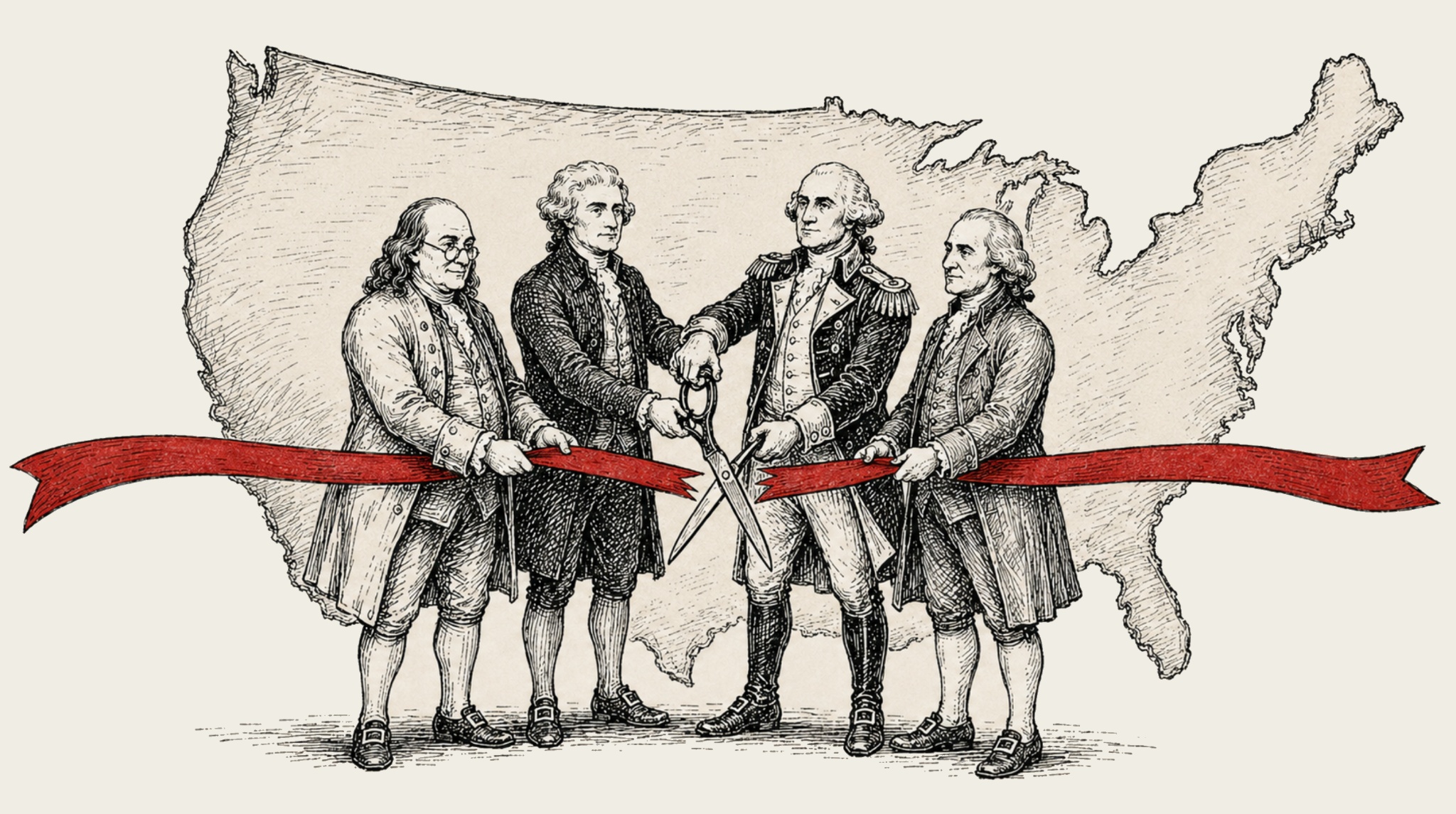
We refer to these brave men as the Founding Fathers.
But they were also owners.
John Hancock inherited one of the largest shipping and import operations in the colonies.
He owned a fleet of ships, a chain of retail stores, and hundreds of employees.
As someone dependent on imports, he knew what it meant to operate in an unfair system stacked against the little guy. Especially when it came to that famous refrain, "No taxation without representation."
So when it came time to sign the Declaration, he didn't flinch. He wrote his name so big the King could read it without glasses.
Owners aren't afraid to be seen.
Benjamin Franklin ran a printing business that disseminated news across the colonies, and sold 10,000 copies of Poor Richard's Almanack a year, every year, for 25 years straight.
He also owned 89 rental properties in Philadelphia, and franchised his print shops to other colonies for half the profits.
We're not sure what came first, electricity or dividends…
But by his early 40s, Franklin was pulling in an income reportedly equivalent to roughly $300,000 a year in today's dollars.
As a man who built his fortune brick by brick, he exemplifies what's possible in America's economic system with a little know-how and elbow grease.
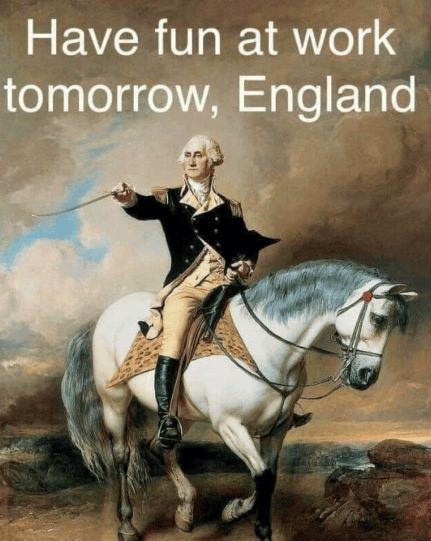
George Washington ran his 8,000-acre estate at Mount Vernon like a vertically integrated business.
Farming, milling, and distilling in one place made his whiskey distillery the largest in the country by 1799.
Five copper stills, producing 11,000 gallons a year, were reportedly valued at roughly $120,000 in today's dollars. 15 times what the average Virginia distillery made.
He commanded an army AND a P&L.
Samuel Adams inherited his family's malthouse from his father.
And here's the honest version: he wasn't good at it (he said so himself) and the malthouse closed not long after he took it over.
But Adams found his actual leverage somewhere else.
Organizing people.
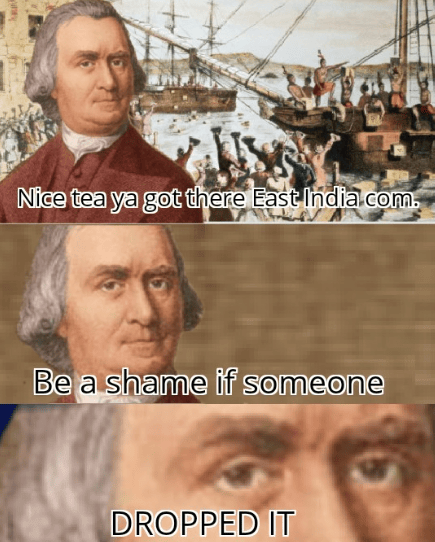
Writing things that moved a room to action and organizing the Boston Tea Party.
Sam Adams the businessman failed, but Sam Adams the operator of a movement changed the country.
Not every founder is built to run the business. Some are built to run the thing the business becomes.
But it takes one to get to the other.
The Founding Owners
America wasn't founded by politicians who happened to have day jobs.
It was founded by operators who were so passionate about economic and personal freedom, they started a whole country.
And the Declaration wasn't just a political document.
It was also the most consequential business decision in American history, signed by men who understood the value of what they were building, because they'd already built something themselves.
It wasn't an angry teenage rebellion for its own sake. The revolution was about radical ownership as much as anything else.
Which Founding Owner are you?
Every business owner carries a little of all 4, but which Founding Owner do you align with?
The Hancock — You put your name on it. You're the personality behind the brand and probably a great venture capitalist. Focus on building recognition and status for your business.
The Franklin — You built a killer distribution network. Whether it's media, logistics, or something unique to your industry, you figured out the channel and executed the vision. Double down on pushing out content or product.
The Washington — You never bet on 1 thing. Multiple ventures running at once, all pulling weight, your strength is in knowing how to support the teams that pull it all off. Get your systems right and you'll go far.
The Adams — You're not the best operator in the room, and you know it. But you're relentless at the 1 thing you're actually great at, and you've learned to let the rest go. Cultivate your focus and execute. Everything else is delegated.
None of these is the "right" one, and all 4 built something that outlasted them.
STOP RIGHT THERE!
If reading about 4 guys running shipping companies and malthouses has you thinking about your own business a little differently, that's the point.
Want help scaling your business like a Founding Father?
On July 15, we're hosting a free workshop to go over the 5 levers you can pull to accelerate your growth.
Find your highest-leverage move — use the 12-P analysis and the Owner Scorecard to identify the 1 move that matters most, not 20.
Optimize the money you already make — plug the cash leaks and grow profit without needing more revenue.
Move faster with a real plan — walk away with a plan you can run Monday morning, not a someday wish list.
Surround yourself with the best people — stop growing alone, get in a room with owners a few steps ahead of you.
None of the Founding Operators were guaranteed to win.
Hancock could've lost his fleet, Franklin’s writings could've been ignored, Washington could've lost the war and the farm with it, and Adams could've resigned to be a failed maltster and nothing else.
They bet big anyway.
You live in a country built by people who chose ownership over safety.
That's not a metaphor.
Being an owner means leaving your comfort behind, in the hopes all your hard work will lead to something bigger than you could've imagined.
(Kinda like America itself.)
So enjoy your hot dogs and your fireworks this weekend.
But remember what you're actually celebrating.
Not just independence from a king…
Independence to build something that's 100% yours.
Happy 4th.
-Team Contrarian
The information contained here is educational, may not be typical, and does not guarantee returns. Background, education, effort, and application will affect your experience and the profitability of any business. Individual results may vary.






.png)



.svg)


