You're not stuck, you're just alone at the top. Most entrepreneurs hit a ceiling, not because the opportunity isn't there, but because you're solving $10M problems with $1M strategies.
In life, most people obsess over the cost of taking the wrong action.
Not enough people focus on the cost of taking no action at all.
Inaction is quietly destroying some of the smartest minds we know.
Below, we’re going to show you why it’s so damn lethal.
FRAMEWORK
Actors vs. Observers: the great divergence of 2026
What’s worth more:
2 years of imperfect action or 2 years of perfect preparation?
Picture this analogy…
> Mike spends 2 years “getting ready” to buy a business (a longtime goal of his).
> He listens to a podcast or 2 about acquisitions.
> Scrolls through listings a few times during breaks.
> Tells himself he’ll start “actually getting serious about this” next quarter.
> Comes back to the idea every few months, feeling excited, then gets distracted. “It’s just not the right time,” he tells himself… every time. “I wanna play it safe and learn more first.”
His friend Nguyet, on the other hand, does things differently.
> Quickly gets up to speed on acquisition fundamentals and builds a plan of action for the weeks and months that follow.
> Learns about due diligence and SBA financing, and applies those learnings to real deals in real time.
> Builds models, works with brokers, takes guidance from experts, and drives out to meet sellers.
> 2 years in, she owns a small portfolio and is already thinking about her next acquisition.
The lesson: action runs circles around thinking about action. By not taking any action…
Mike lost out on:
Years of learning how deals actually work (and progressing on one)
Years of building relationships with brokers
Years of pattern recognition
The learning that comes from making offers, negotiating, and facing rejections
The confidence that comes from closing a deal
The irony is that the caution he thought would reduce risk actually increased it.
“Well, at this point, I’ve lost 2 years. Now it’s even more risky…”
It’s honestly really sad to see this happen to people in real life.
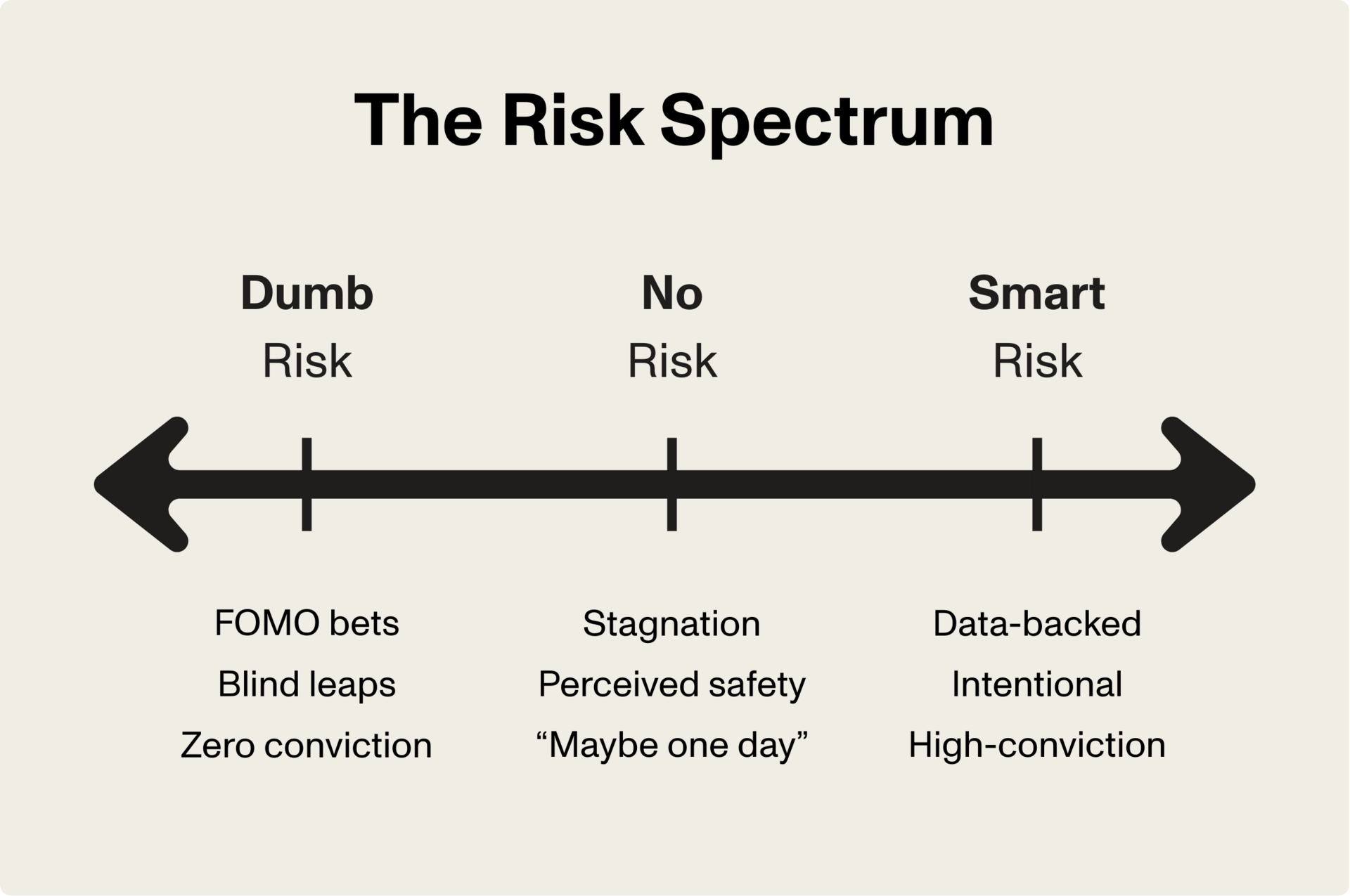
Most of the time, it’s because they never learn to take smart risks.
Every smart risk usually has 3 things behind it:
Context: You understand the terrain
Conviction: You have confidence in the action
Contingency: You know you can come out alive if it goes sideways
Nguyet took a smart risk. Her real story isn’t exactly like the example above, but it may actually be even more interesting.
Not only did she build up a small portfolio of 6 local pack and ship businesses in a relatively short time, but she did it, intentionally, without leaving her Big Tech W-2 (smart risk).
Here she is with the keys to the castle:
Plenty of people build real wealth and ownership inside their W-2 alone.
That includes Nguyet, who’s a wonderful employee and loves her job.
But she (and many others) have read the writing on the wall.
“I make good money at my job, but the thing is, it just all came from one source, and that was scary.”
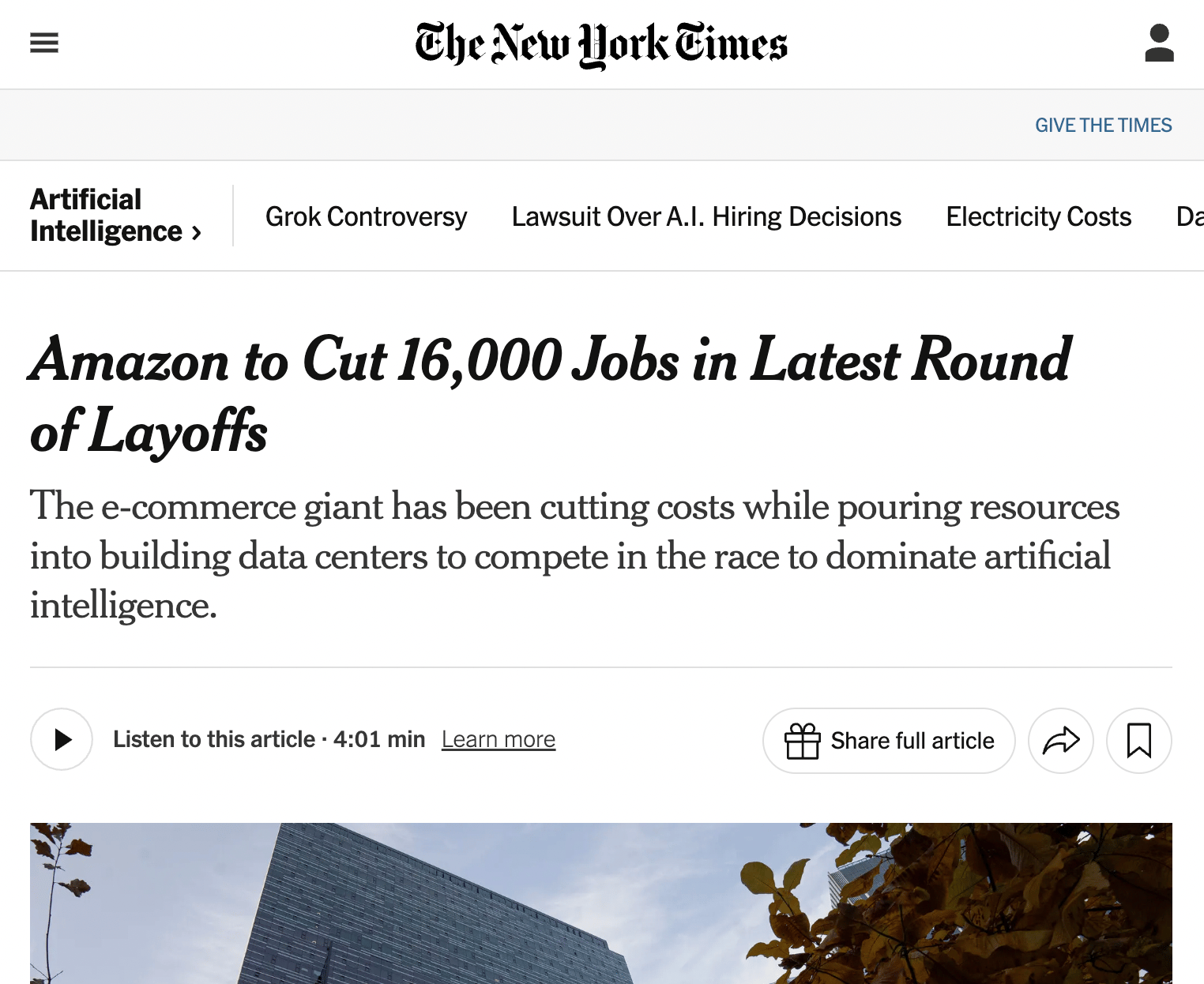
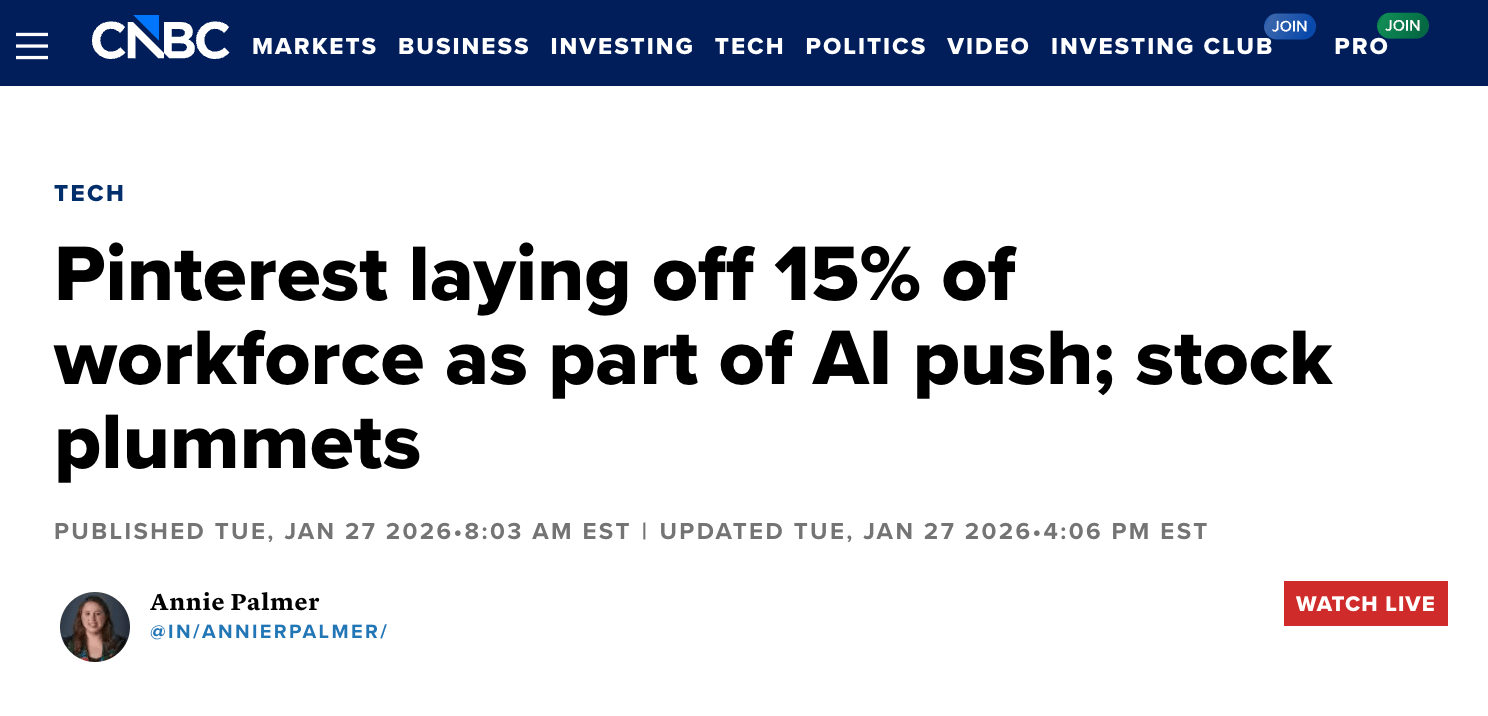
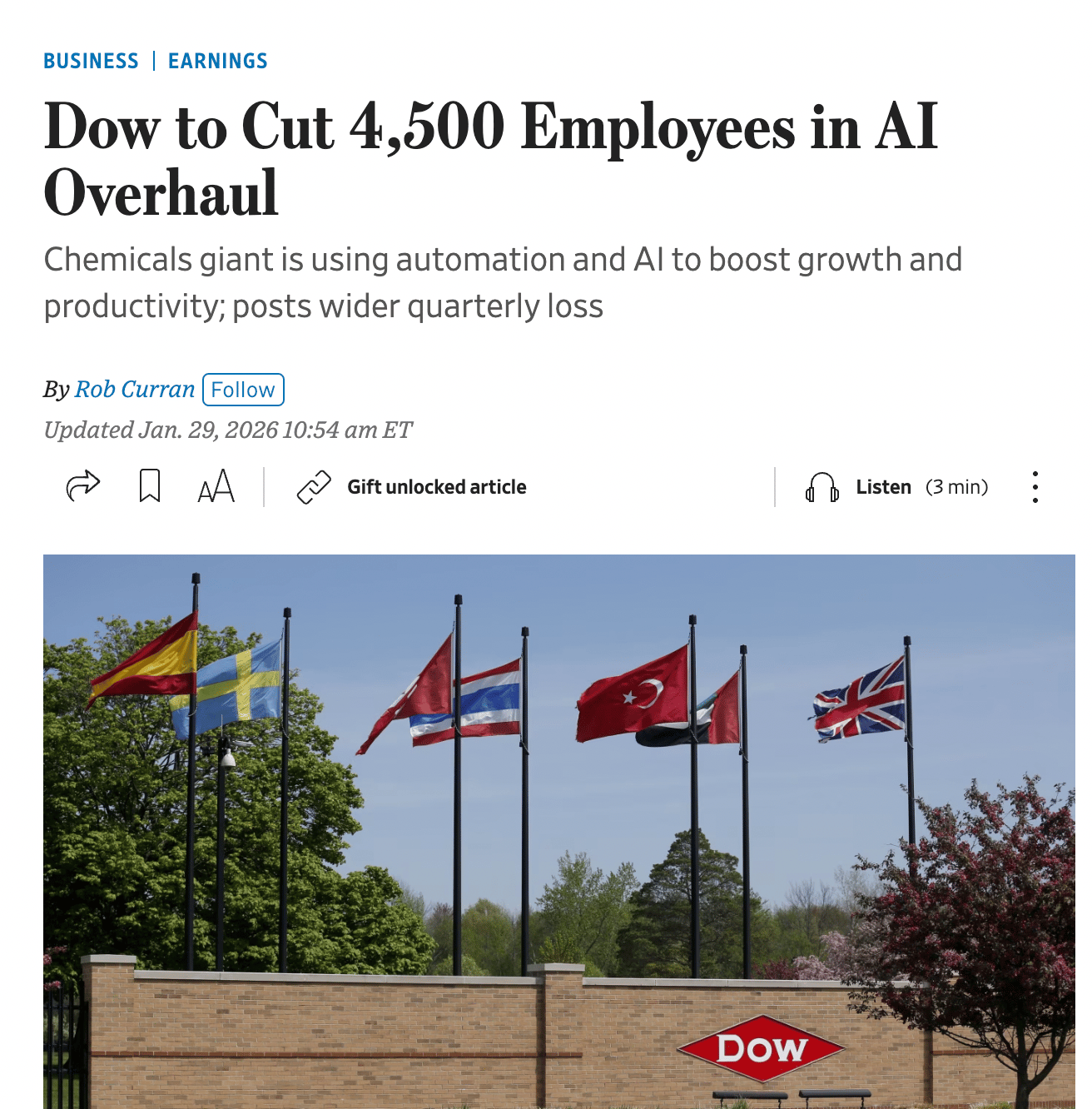
Clarity around job security is declining. It just is.
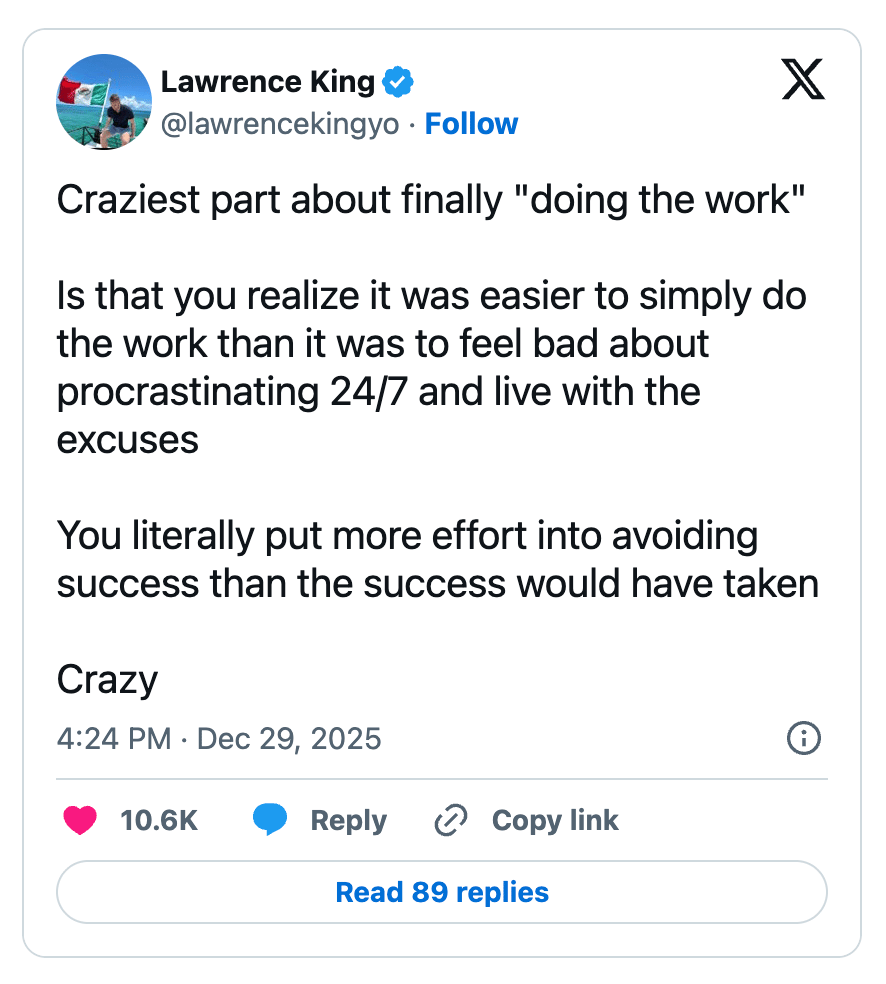
(That was all from this week, and the week’s not over.)
In the coming years, if you’re planning on “just going through the motions” in a large corporate setting, you’re asking for trouble.
AI is compressing job ladders.
Assets keep growing more expensive.
Inaction (either inside or outside of your job) has never been more costly.
And it’s not a one-and-done cost either.
It is a compounding one.
Right now, the economy is splitting between actors and observers.
And observers are facing a silent recession.
The biggest mistake right now isn’t making the “wrong move.” It’s making no move.
No move to build more knowledge
No move to build more skills
No move to build more ownership
And the longer you wait, the more brutal the math becomes.
THEORY
Why do some people stay stuck while others compound?
By now, you probably know that compounding is the most powerful force in finance.
But it’s often an overlooked force in life at large.
And sometimes, it’s the most dangerous one.
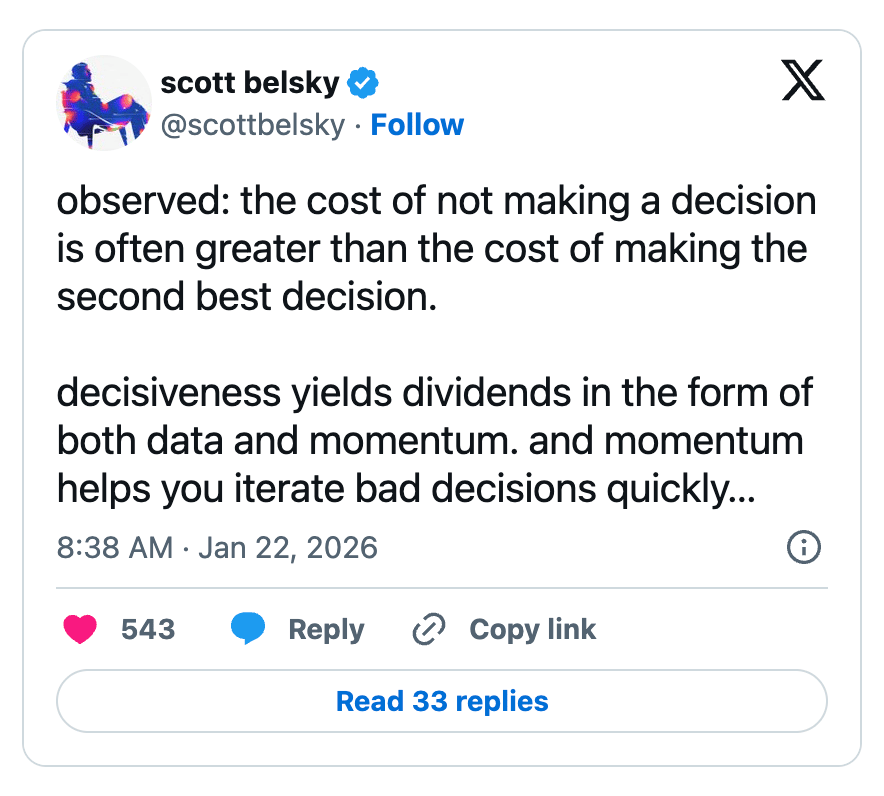
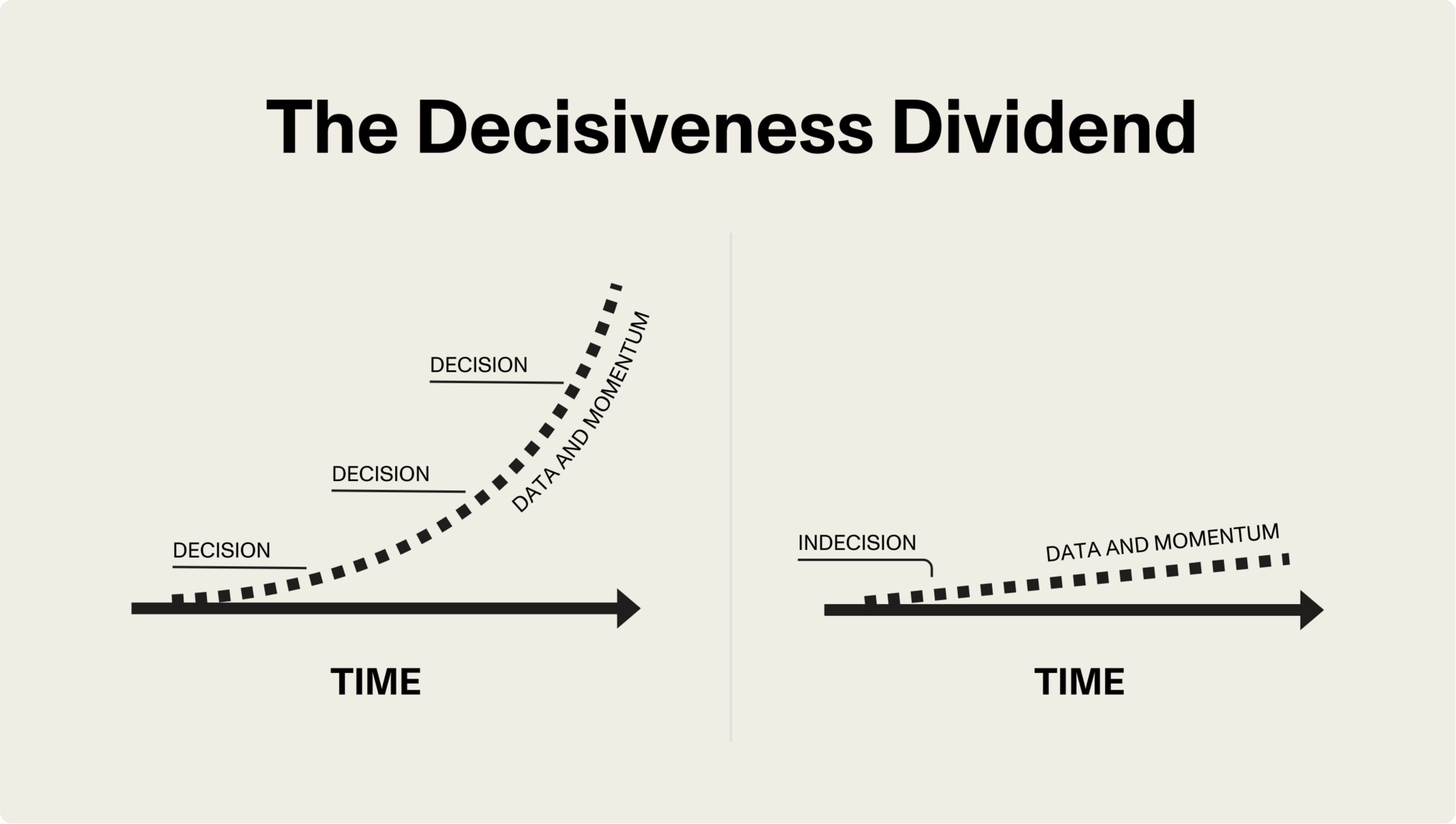
Scott Belsky recently observed something we’re going to call The Decisiveness Dividend:
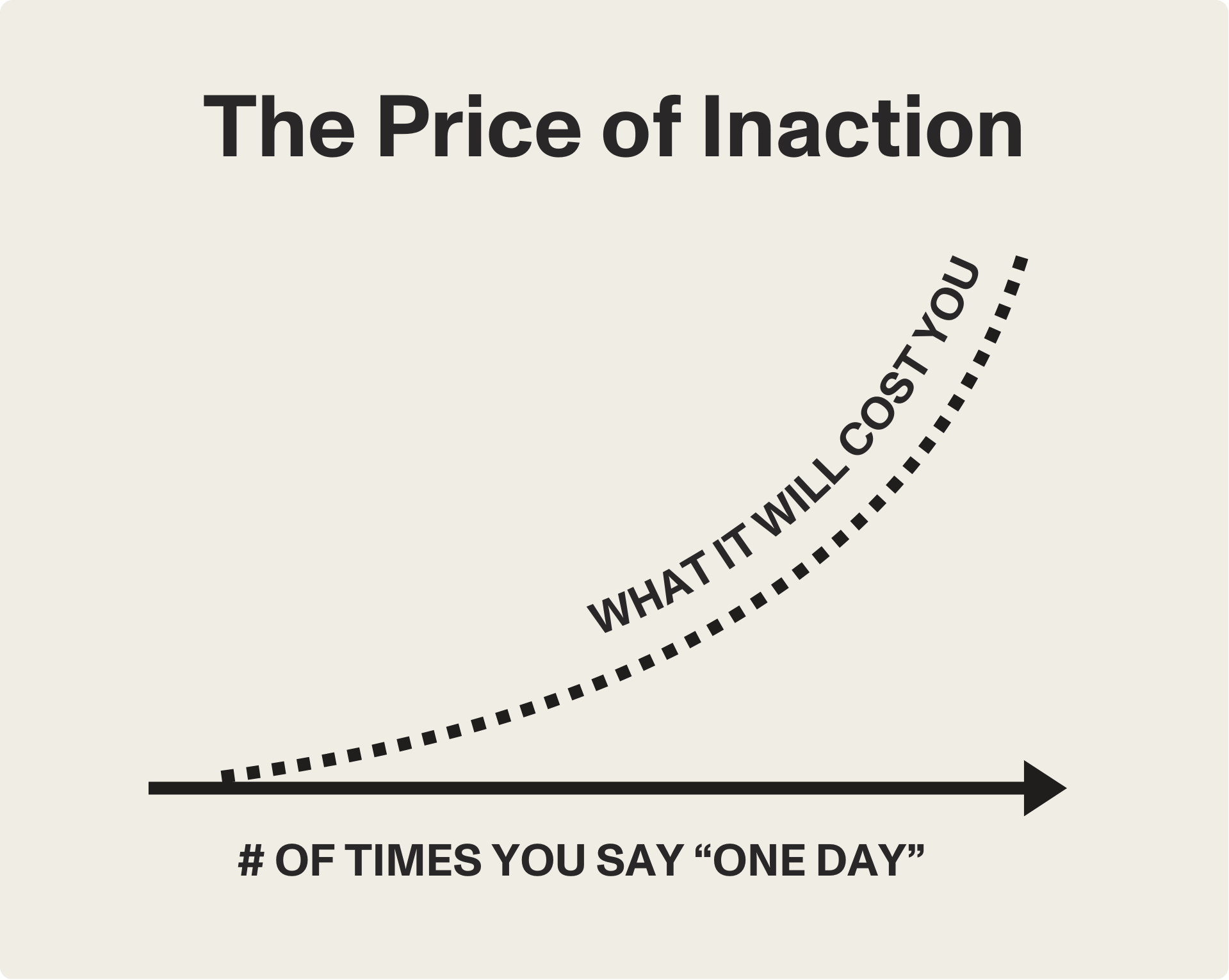
Here’s that idea, visualized:
What’s this look like in practice?
> 2 product managers are deciding whether to build feature A or B.
> PM #1 spends 3 months analyzing user data, running surveys, and building business cases.
> PM #2 spends an afternoon on rough analysis. Decides to focus on feature A. Uses Lovable to test a basic prototype the next day. In the process, discovers users actually want neither A nor B. Pivots to C. Ships that 2 weeks later, and iterates on it 3 more times using new data. Massive hit.
> PM #1 is just now building their V1 based on an analysis that’s now 12 weeks old.
> Who’s ahead after 3 months? PM #2, and it’s not even close.
Taking action generated more insights, which generated even better actions.
But forget product management for a second. This pattern is universal.
People talk endlessly about how compounding works in your favor.
What we usually don’t talk about: compounding works both ways.
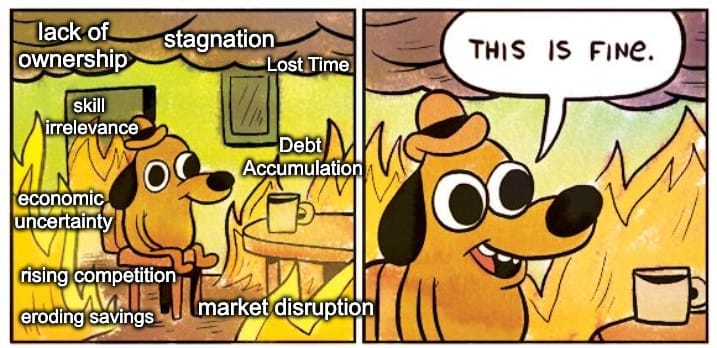
Inaction isn’t neutral. It compounds too. Just in the wrong direction.
LESSON
When compounding works against you…
In the moment, inaction feels “smart”.
You? Making mistakes? No. You’re being thoughtful, strategic, and careful. What could be wrong with that?
But inaction is actually a decision with compounding costs.
The thing you think is reducing risk or stress (waiting, deliberating, being careful) is actually often the source of it.
Jeff Bezos has described this beautifully:
“I think one of the things that’s very important to note about stress is that stress primarily comes from not taking action over something that you can have some control over. So if I find that some particular thing is causing me to have stress that’s a warning flag for me. What it means is there’s something that I haven’t completely identified perhaps in my conscious mind that is bothering me and I haven’t yet taken any action on it.”
“I find as soon as I identify it and make the first phone call or send off the first email message or whatever it is that we’re going to do to start to address that situation, even if it’s not solved, the mere fact that we’re addressing it dramatically reduces any stress that might come from it…”
Think about the type of people feeling stressed right now when it comes to AI.
It’s the highly credentialed, analytically strong, and perpetually preparing… who have no idea how to take action.
For much of recent human history, being “smart” meant you could synthesize information better than others and come up with good ideas. But AI is commoditizing intelligence.
Being “smart” now means pairing intelligence (~$20/month with a Claude subscription) with personal agency (priceless).
The ratio has shifted weight from idea —> action.
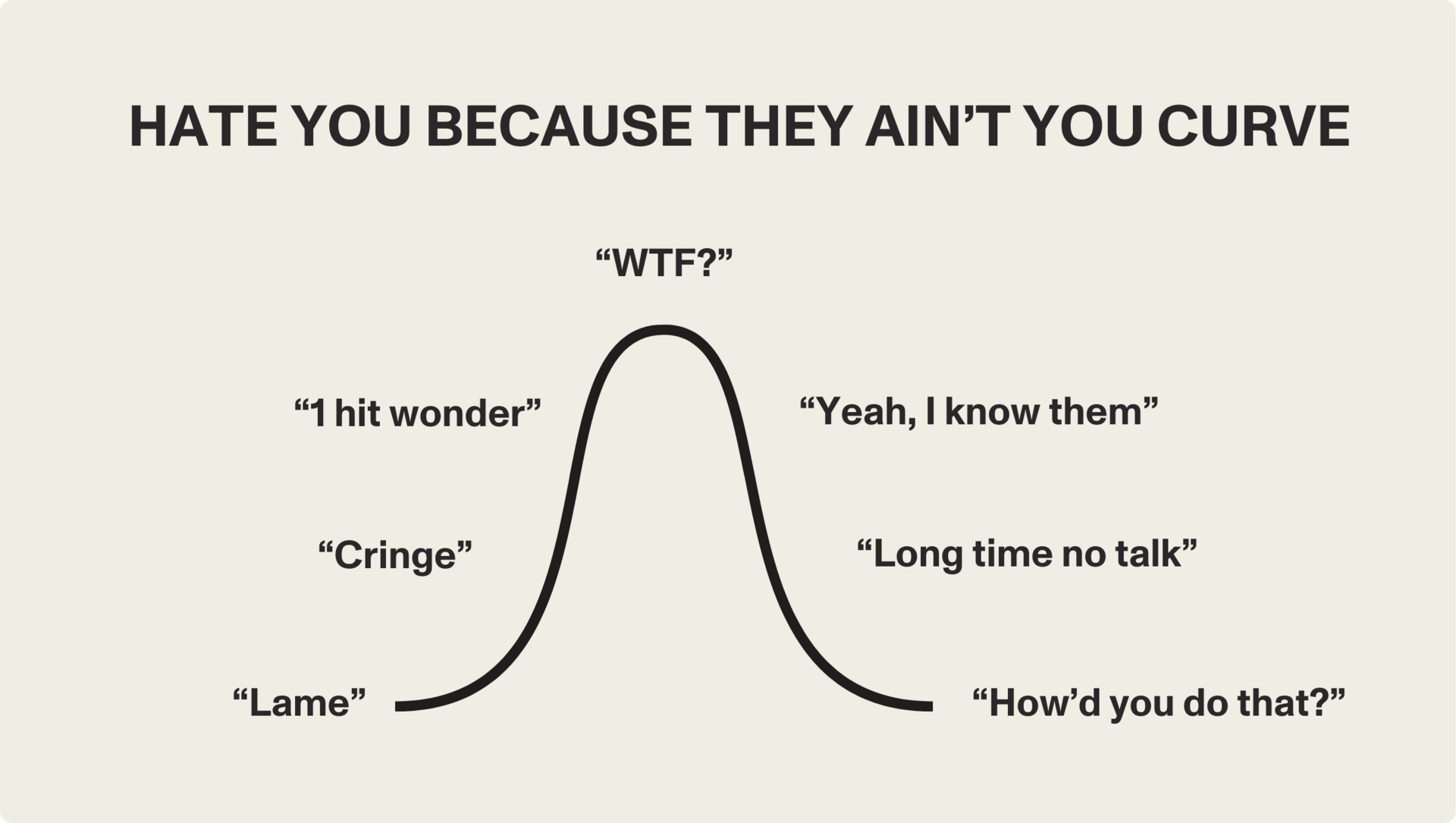
The cool part? Relentless actors often lead observers along a very technical, very scientific curve that looks something like this…
The truth is, the observers will always have a theory about why your early action is flawed. They’ll have spreadsheets, podcasts, and “concerns” to back themselves up.
But while they’re busy trying to be “right”, people like Nguyet are busy being owners.
And that’s a pretty darn cool place to be.
-Team Contrarian
The information contained here is educational, may not be typical, and does not guarantee returns. Background, education, effort, and application will affect your experience and the profitability of any business. Individual results may vary.



.png)







.svg)


