You're not stuck, you're just alone at the top. Most entrepreneurs hit a ceiling, not because the opportunity isn't there, but because you're solving $10M problems with $1M strategies.
How to Negotiate Buying a Business: FBI Tactics for When a Seller Goes Quiet
October 9, 2024
3 min read
From the Main Street Minute newsletter, originally sent October 9, 2024 as "Top Biz Buying Tips (From an FBI Hostage Negotiator)"
Quick answer: When a seller stops responding, try the line former FBI hostage negotiator Chris Voss recommends in Never Split the Difference: "Have you given up on ___?" For a business deal that might be "Have you given up on a smooth transition?" Then say nothing else. It reopens the conversation without demanding a reply. Before you get that far, check the deal for concentrated risk: one big customer, one key employee, one product or one aging machine.
Watch: Codie on seven business types with lower risk, according to the data.
The information contained here may not be typical and does not guarantee returns. Background, education, effort, and application will affect your experience. Your results will likely vary.
Biz-Buyers,
Whether you’re curious or serious about buying an SMB, you’re in the right place. This is where we share some of the best tips, tools, and ideas from inside our small business acquisitions community.
Now let’s get down to business.
“Negotiation… is nothing more than communication with results”
- Chris Voss, former FBI hostage negotiator
How to Do Deals Like The FBI
Tips For When You're Ghosted
Since joining the Contrarian Community last year, Mark attended dozens of calls, contributed to countless conversations, and participated in multiple deal reviews.
About a month ago, his long, hard work paid off when he became the owner of a painting franchise (and made it to what we like to call… the starting line).
But now, Mark is facing the business equivalent of a hostage situation. What was supposed to be a smooth transition of ownership has turned into a game of tag with a seller who’s seemingly gone AWOL. For Mark, days can now go by before the seller responds to basic questions over text, like:
Initially, Mark tried to bake in financial incentives to keep the seller engaged during the transition, but ultimately those didn’t pan out, and now he’s paying for it.
“For sure, he may have something going on,” Mark said, “but the transition overall the last month has been tough.”
Here’s the good news
Another community member swooped in with a tip from former FBI hostage negotiator Chris Voss’s book, Never Split the Difference.
The tip: Voss’s golden phrase for when someone you’re negotiating with goes radio silent:
It’s brilliant. You’re reopening the conversation without demanding a response — but you’re also making it awkward for them not to reply. One community member even used it on a friend who had ghosted them for 6 months. “Have you given up on our friendship?” Within a day? Boom — an apology and a full response.
So what could this look like in SMB acquisitions? Well, it could be as simple as, “Have you given up on a smooth transition?” But here’s the key: say nothing else. Let the silence do the talking.
It’s the kind of Jedi mind trick that can get people back to the table. And if it works on actual hostage-takers, who’s to say it can’t help here?
Is That a Business or a Jenga Tower?
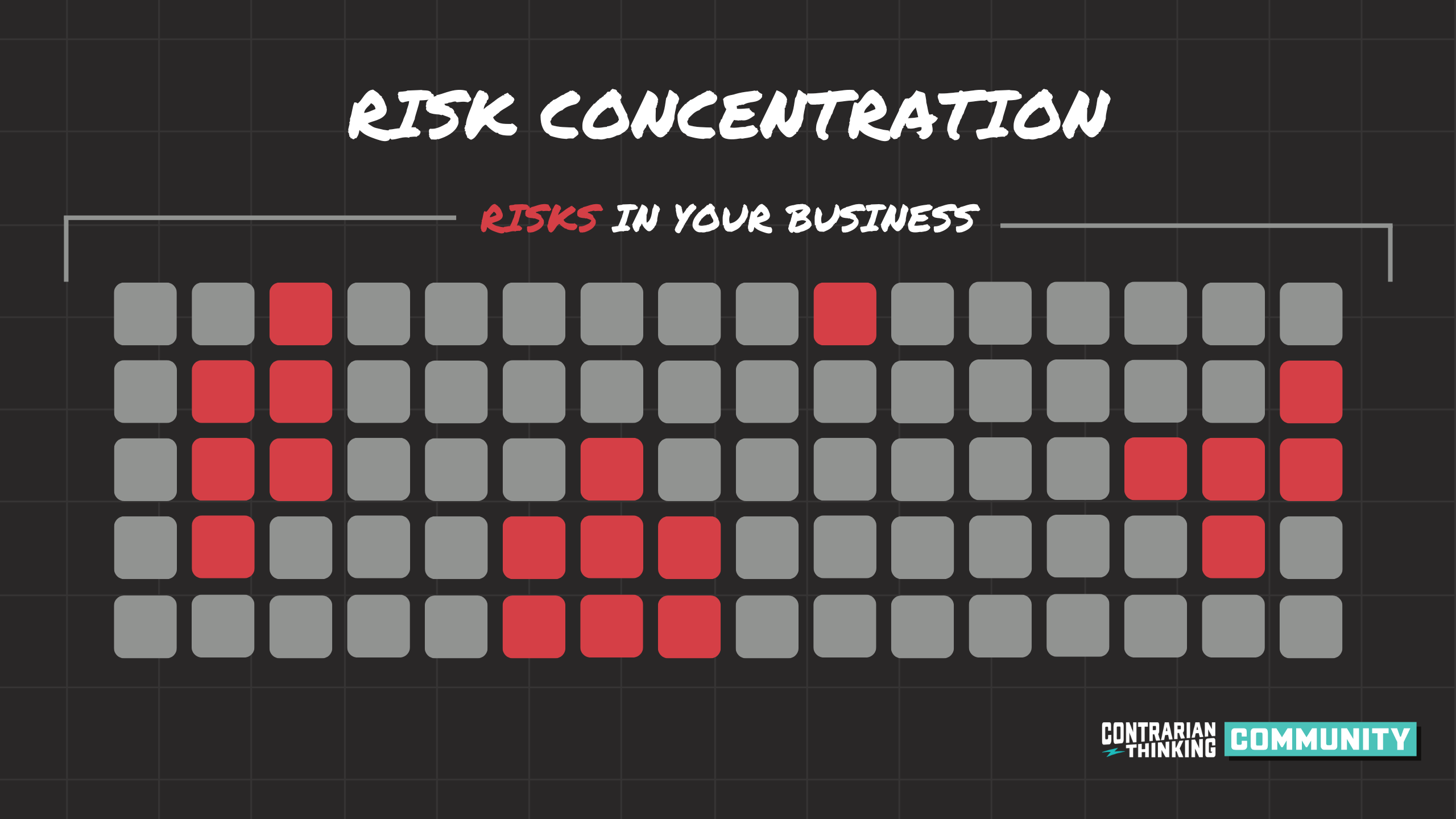
Thoughts on Risk Concentration
Imagine riding a unicycle on a tightrope — sure, it looks cool, but one slip and it’s over. In other words, your risk is extremely concentrated.
Whether it’s all your revenue coming from one client, one employee’s expertise holding the business together, or one product pulling all the weight, risks like these should make prospective buyers sweat.
You want confidence, not chaos, and too much concentrated risk can be the ultimate confidence killer.
Types of Risk
Customer Risk: If one customer accounts for most of your revenue, you’re not running a business — you’re running a hostage situation. Customer risk is a key concern among smart buyers.
Key Man Risk: If Janet wins the lottery and never shows up again, will your business collapse? Buyers need to watch out for businesses that’ll crumble the moment their “key man” leaves.
Revenue Risk: If your business only offers one product or service, are you a market shift or a new competitor away from being in trouble?
Technological Risk: When that expensive, aging machine you rely on breaks, will your cash flow break with it? (Good luck covering debt payments with a $500K repair bill.)
If you have the resources, skillset, or strategy to mitigate certain risks, you can potentially acquire a business at a better price, round it out effectively, and still build value.
But that’s one hell of a big “if.”
Negotiation Guide: Keeping a Business Deal Moving
Why the one line works
Voss's core idea, as his firm describes the book, is that people respond on instinct first and justify with logic later, and that a well placed "no" can make the other side feel safe enough to engage (The Black Swan Group). "Have you given up on a smooth transition?" invites a quick "No, of course not" and a reply, without pressure.
The silence after you send it matters as much as the words. Do not add a paragraph of explanation or a list of questions. Let the seller fill the gap.
Know your walk away point before you need it
Harvard's Program on Negotiation calls your best alternative to a negotiated agreement your BATNA, and says it determines whether you should accept a deal, how much leverage you have and when it makes sense to walk away (PON at Harvard Law School).
For a buyer, your BATNA might be the next deal in your pipeline or simply keeping your job. The stronger it is, the calmer you can be when a seller goes quiet or pushes for a higher price.
Build cooperation into the deal itself
Mark tried financial incentives to keep his seller engaged during the transition, and they did not pan out. The lesson is to agree on the transition before closing: how long the seller stays, what they hand over, how fast they respond and what happens if they do not.
Writing those terms down also gives you something concrete to point to later. The SBA's guide to buying a business recommends asking about contracts, leases, cash flow and inventory before you commit (SBA). Add the transition plan to that list.
Spot concentrated risk in due diligence
Customer: ask for revenue by customer and look at what happens if the largest one leaves.
Key person: list who holds the relationships, licenses and know how, and whether they are staying.
Revenue: check how much depends on one product or service.
Technology and equipment: find out the age and condition of anything the business cannot run without.
If you can reduce one of these risks after closing, it can justify a better price. If you cannot, it is a reason to walk away.
Frequently Asked Questions
What do you say when a seller stops responding?
Try a short question such as "Have you given up on a smooth transition?" and then say nothing else. It is a tactic from former FBI negotiator Chris Voss that reopens the conversation without demanding a reply.
What is Never Split the Difference about?
It is Chris Voss's book on negotiation, drawn from his work as an FBI negotiator. It argues that emotion drives decisions and teaches tactics like tactical empathy and questions that invite a "no".
What is concentration risk when buying a business?
It is when too much of the business depends on one thing, such as one customer, one employee, one product or one piece of equipment. Losing that one thing can sink the cash flow you are counting on.
How do I keep a seller engaged after closing?
Agree on the transition before you close: how long the seller stays, what they hand over and how quickly they respond. Put it in writing so both sides know what was promised.
The information contained here is educational, may not be typical, and does not guarantee returns. Background, education, effort, and application will affect your experience and the profitability of any business. Individual results may vary.
Thinking about buying a business? Learn how in Codie's free live masterclass.
A two day, in person workshop in Austin with the Contrarian Thinking team. Find hidden profits, close the gaps in your business and map the steps to grow revenue.