
The Delusion Premium The Delusion Premium Why being “realistic" is holding you back. The kid sitting across from me couldn't even spell diligence. No joke, I'd seen him misspell it in three separate emails that week. Then the director walked into the Goldman conference room, clapped him on the shoulder, told him he'd earned a promotion, and asked me to be patient. I'd been doing most of his work for six months... That night I went to an expensive restaurant by myself, ordered a bottle of wine I couldn't really afford, and made the decision that ended up building most of my net worth. I was going to start acting delusional. Specifically, I was going to assume I deserved more than what the world was offering me, and I was going to behave that way until reality caught up. Three months later I asked for a raise so absurd my boss laughed in my face. I got half of it, which is to say I got way more than I would've gotten by staying quiet. Ten months after that I was buying into laundromats, car washes, and the kinds of unsexy cash-flowing businesses bankers love to make fun of at dinner parties. Today I own pieces of dozens of them. Those bankers still work for someone else. The delusion had to come first for any of the other skills to matter, and it cost me years to figure that out. And here's the line that really pisses people off: Spare me the manifestation TikToks. I'm describing the kind of belief that lets you walk into a room, ask for the unreasonable thing, and act like the answer was always going to be yes. Most people roll their eyes at that sentence, but that eye roll is part of why their bank account looks the way it does. A guy on the internet said it better than most therapists This was bouncing around X a while back. And I think it's the subconscious line that
Being realistic might be the most expensive habit you have. The Delusion Premium: why irrational self-belief pays, and how to earn yours.

How a Career SBA Underwriter Built a Lending Desk That Makes Banks Compete Meet Jordan: He Can Save You Thousands On Your Loan Jordan has spent his entire career inside the SBA machine. Credit union Loan packager Legacy underwriting team at a bank A CDC doing 504 loans 7(a), 504, express, and even micro loans. If the SBA funds it, Jordan has underwritten it. Then he saw what most SBA veterans never see: a community full of buyers who were serious, educated, and hungry to close. So he joined Contrarian Thinking to build our lending desk from scratch. Most communities point you to a broker and wish you luck. We hired one. He's on a mission to help our Academy and Boardroom members learn how to buy a business with the best terms possible , so you can build your dream without sacrificing your whole paycheck every month. You don't get this anywhere else. If you’re part of the Academy or Boardroom, you automatically get access to a guy who could save you $75K over the life of your loan (more on that later) without you having to do any of the work. Our community loves this guy: 45 days in, he's got 402 applicants in his pipeline, and he's about to start funding deals. Here's what he's learned about helping people secure SBA loans, and what he wants you to know before you ever sign a loan doc. FREE EVENT Wednesday, July 15th at 11am CST , Codie is hosting a FREE webinar to teach you how to scale your business without adding employees or hours. She's walking you through the 5 levers you can pull to accelerate growth without adding more stress. In only 90 minutes, you’ll: 1. Diagnose What's Actually Holding You Back Most owners guess at their bottleneck and fix the wrong thing. We'll show you how to find the real constraint before you waste another quarter on it. 2. Find Your
A career SBA underwriter built a lending desk that makes banks compete for your loan. How Jordan saves business buyers thousands on SBA financing.
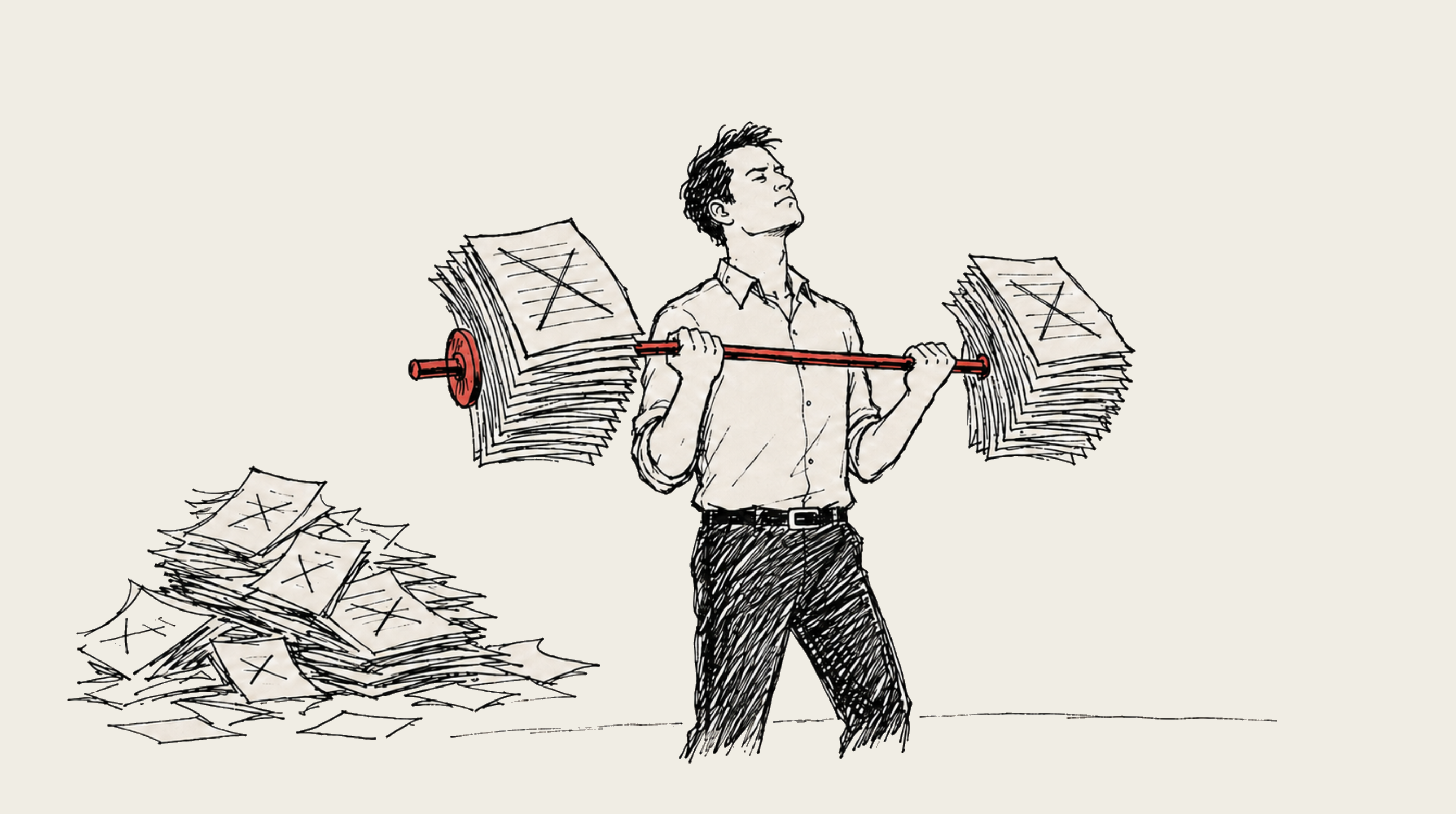
Deal Reps & Muscle Memory Ask any experienced buyer in our Academy how many deals they looked at before finding the one . The answer is almost always the same. "Probably a couple hundred." Not 10. Not 50. Over a hundred. The first time you hear that, it sounds like a warning... Like maybe this whole "business buying thing" is harder than you thought it would be. But here's the truth: that big, scary number is just your admission ticket. See, a lot of people think the entire goal is to find a business in their price-range. (It’s not.) So they only look at the sell price, ignoring all the dirty details behind the actual business. Weeks go by, and they finally see something they can afford. But when they get into the nitty-gritty, everything falls apart. Because you can't wish your way into dealmaking fluency. You have to do the reps first. And it's not just deals. Expertise in any complex skill comes from shots on goal. If you never actually shoot, what are the chances your first try is going to be a slam dunk? You have to start by doing the thing badly, then less badly, then better, then well. Until the pattern recognition becomes automatic. Don’t believe me? We’ve got the research to prove it. Build Your Deal Muscles (With Science!) In 1993, psychologist K. Anders Ericsson published what would eventually become one of the most influential studies in performance science. He wanted to know what separated elite performers from everyone else. Was it talent? Natural ability? Some innate gift? What he found was far less romantic, but 100% more useful. Expert performance, his research showed, was predominantly the result of prolonged, deliberate effort. You know how Steph Curry basically never misses a shot? That's not an innate gift. He worked his frickin' butt off to be
Experienced buyers review hundreds of deals before finding the one. Why deal reps build the muscle memory that makes buying a business easier.

How This Music Teacher Bought a Locksmithing School After His First Deal Fell Apart “I started picking locks at home, and just fell in love with the business of locksmithing.” Meet Austin Kebely Austin spent 8 years teaching music. Bachelor’s degree, credentials, and 2 years of subbing just to land a permanent classroom right as Covid turned it into a Zoom window. He loved teaching, but the system around it? Not so much. No amount of effort inside the classroom could fix what was broken outside. Then his wife found Codie on YouTube. For a year, they watched ordinary people buy the small, unglamorous businesses that run Main Street. So Austin stopped watching and joined Contrarian Academy . “Because I’m a teacher, I love to learn. That whole process was fun for me. It ignited the light.” The search took over a year, included a dead deal, and a bank that moved like molasses. Finally, on April 7, he closed on a locksmithing school. Let’s dive in... Buy the skill, not the trade Austin searched his lane first: daycares, tutoring centers, music stores, and dog training. But then a locksmithing school crossed his desk. “I don’t know locksmithing. But I’m an educator. I know how I learn. I know how I like to teach.” So before he bought the school, he enrolled in it . He took the courses as a student, studied how the lessons got built, and started picking locks at home for fun. And he saw what the listing couldn’t tell him: this isn’t a locksmithing business. It’s an education business that happens to teach locksmithing. Here’s the lesson : your transferable skill matters more than industry experience. Ask what the business actually does all day, not just what it sells. The bank buys the books, not the business Austin’s first deal looked great on paper. It was a dog training
Austin taught music for 8 years. After his first deal collapsed, he bought a locksmithing school. Why not every deal is the right one to jump on.
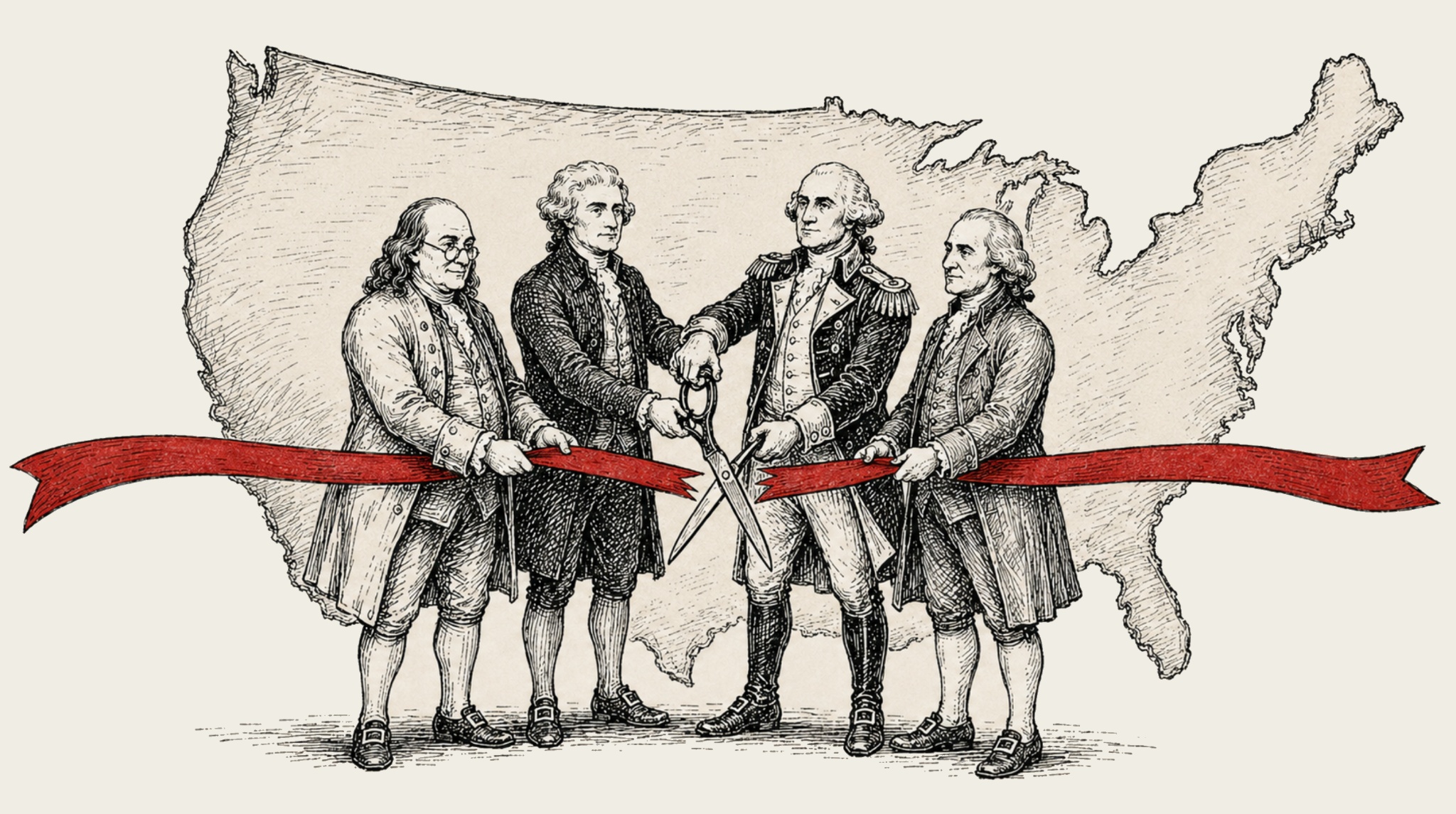
The Founding Owners The declaration of independent businesses July 4, 1776. A sweaty room full of rebels sign their names to one of the most important documents in history, committing treason against the most powerful empire on earth. We refer to these brave men as the Founding Fathers. But they were also owners. John Hancock inherited one of the largest shipping and import operations in the colonies. He owned a fleet of ships, a chain of retail stores, and hundreds of employees. As someone dependent on imports, he knew what it meant to operate in an unfair system stacked against the little guy. Especially when it came to that famous refrain, " No taxation without representation. " So when it came time to sign the Declaration, he didn't flinch. He wrote his name so big the King could read it without glasses. Owners aren't afraid to be seen. Benjamin Franklin ran a printing business that disseminated news across the colonies, and sold 10,000 copies of Poor Richard's Almanack a year, every year, for 25 years straight. He also owned 89 rental properties in Philadelphia, and franchised his print shops to other colonies for half the profits. We're not sure what came first, electricity or dividends... But by his early 40s, Franklin was pulling in an income reportedly equivalent to roughly $300,000 a year in today's dollars. As a man who built his fortune brick by brick, he exemplifies what's possible in America's economic system with a little know-how and elbow grease. George Washington ran his 8,000-acre estate at Mount Vernon like a vertically integrated business. Farming, milling, and distilling in one place made his whiskey distillery the largest in the country by 1799. Five copper stills, producing 11,000 gallons a year, were reportedly valued at roughly $120,000 in
The Founding Fathers were also founders: owners, operators, and dealmakers. What July 4, 1776 teaches about the link between ownership and freedom.
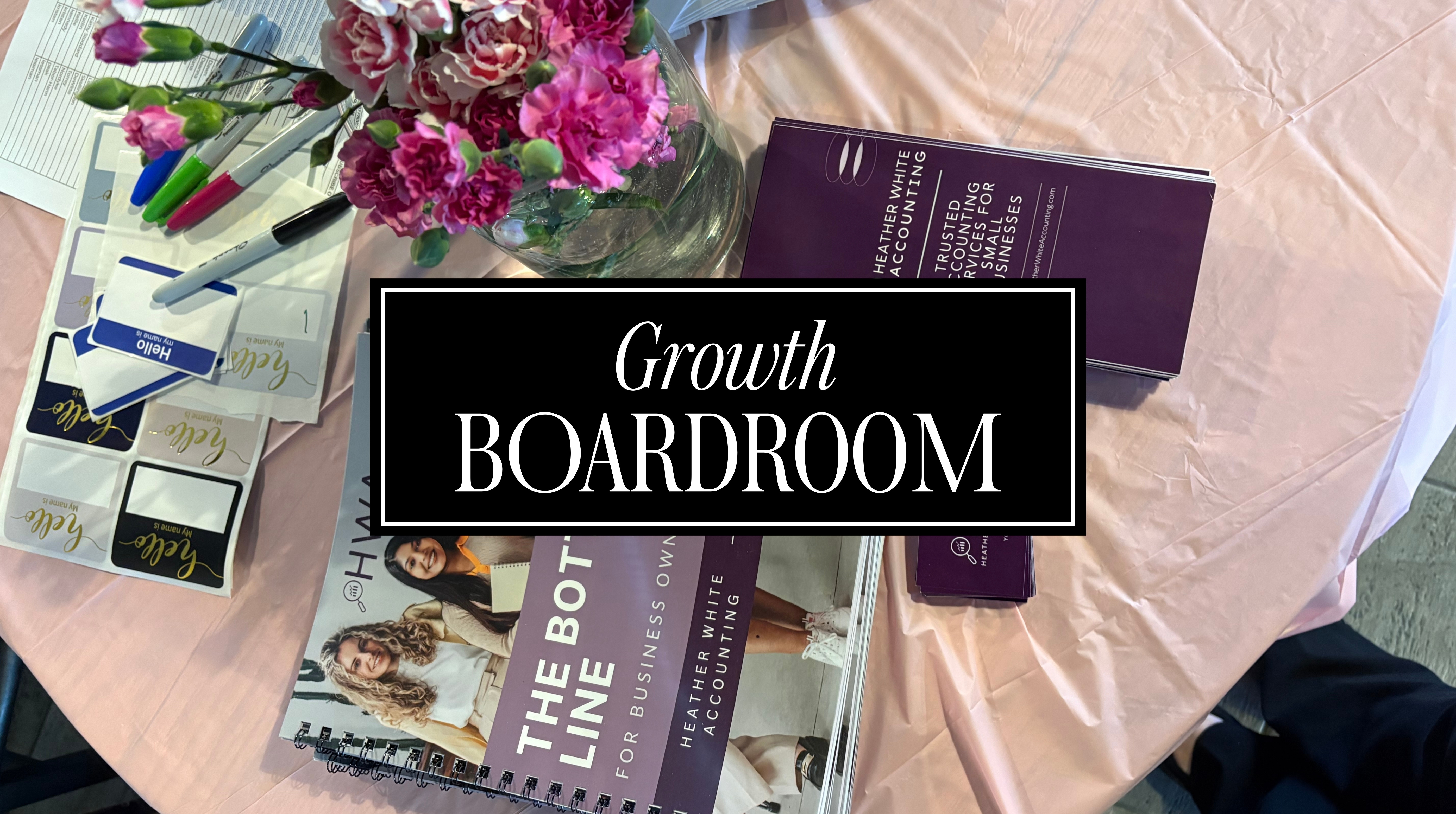
How a Weekend Side Hustle Became a 10-Person Firm She Never Meant to Build The accountant who built her firm by accident Meet Heather. "Believe it or not, not all of us went into business to be millionaires." Heather runs an accounting firm in Moore County, North Carolina. 12 years into the profession, she had a comfortable corporate job and zero plans to leave it. Then, about 4 years ago, she started freelancing on weekends. One client wanted Power BI dashboards, and a food truck needed its books done. Nothing she couldn't knock out on a Sunday afternoon. Then one person told two people. Who told two more. Who told two more . Pretty soon the side job outgrew her weekends. So she hired her first employee, Trisha, a semi-retired pro who wanted a part-time remote gig. Trisha did the work, Heather took a small cut, and everybody was happy. The day job stayed put. Then 2 solo accountants in her county passed away right at the start of tax season. Hundreds of local clients suddenly had nowhere to go, in a place already short on accountants. So Heather made a call: take a 3-month leave, do the returns, hire one more person, then head back to corporate. That's not what happened. Those clients told 10 more people, who told 10 more. By the time the dust settled she had "a whole dang firm," and the math on going back stopped making sense. Late last year she joined our Growth Boardroom to get help scaling operations. Here's what happened next. Growth rarely asks permission Heather sat down with her Boardroom coach, Carter, and laid out a goal she thought was ambitious: add about $100K in revenue this year, same as last year. Manageable. Reasonable. Carter told her she was thinking way too small, by a factor of 5. " I believe my exact words were , that sounds exhausting, " she
Heather's weekend freelancing accidentally became a 10-person accounting firm. How saying yes to the right clients built a business she never planned.

I Almost Didn't Tell You I Was Pregnant You don't see the part where I'm on the floor with a syringe. You don't see the part where I miss the window. You don't see the part where I have to ask a Navy SEAL to please just hold me because I cannot do it by myself. You only see the part where I post a video about how to build a business. So this is for all the mothers who had to go through difficulty, all those still trying, and all those who it never worked out for. I see you. So here’s the story. I’m 14 weeks pregnant. My husband and I are having a baby, and we’re thrilled. I want to say that out loud because I’ve spent years unable to. If you’ve spent years not being able to say something, anything , you know what comes next in the body before it happens. The tightening of the chest. The reach for the phone you shouldn’t be reaching for. The moment you almost tell the cashier at the grocery store, of all people, because she doesn’t know you, and you don’t have to perform for her. It’s not just about me though. It’s about us. My husband is a former Navy SEAL and the most capable man I know. He follows through on what he says, he doesn’t forget anything, and he fixes the things that break in our house and most of the things that break in our company. He fixes things for a living. He fixes things on principle. For years, I’ve had to tell him, over and over, that there was nothing he could fix. The thing was inside my body, and the doctors didn’t know yet whether it would work. There was no door he could break down, no plane he could call, no plan he could write that would solve a hormonal cycle that didn’t care about who he was. He had to sit on the edge of the bed and watch. It was damn hard on him too. One night, I had to look at him and say, “ Chris, I am not handling
Codie Sanchez on the part of the story you don't see: IVF, fear, and building businesses while trying to become a mother. A letter to the mothers.

How She Built a Multi-Million Dollar Wellness Practice After Going Bankrupt From Bankrupt to Multiple Millions Meet Dr. Mollie James She’s a former trauma surgeon and ICU doctor, and having spent the worst months of the pandemic in a Brooklyn ICU, she's the real deal. She’s also a kick-butt owner who’s grown James Clinic into a multimillion-dollar integrative and concierge wellness practice , doubled revenue every year since 2021, and grew a team from two people to 54. All of that AFTER she went bankrupt in 2018. Stud. She joined The Growth Boardroom last August, and the year since has been a masterclass in what separates a business babysitter from an elite operator. Let’s dive in... Being good at your job doesn’t make you an owner Dr. James opened her first two practices on a belief a lot of skilled operators share. “I'm excellent at what I do, so people will find me. We'll figure the rest out.” So she opened her doors without any marketing, sales, or SOPs... And went bankrupt. Most business owners would’ve thrown in the towel right there. Not her. Undeterred and passionate about helping people, she rebuilt. James Clinic opened in September 2021 with her as the care provider, one nurse, a laptop, a website, and a cell phone. When Delta hit the clinic scaled fast: 25 staff, 100 new patient consults a day, and roughly 4,000 patients treated in four months as a brand-new business. Then Omicron swept in, and revenue dropped 90% overnight. She had to cut the team down and rebuild again , this time centered around concierge and integrative care. That version has doubled every year since. Here’s the lesson: your skill is the product, but it’s not the business. The business is the vehicle that gets the product to the right people, prices it correctly, and keeps the lights on
Dr. Mollie James went from bankruptcy to a multimillion-dollar wellness practice, doubling revenue every year since 2021. Here's her comeback playbook.

The ONE Regret That Haunts You Forever Bill Perkins always knows exactly what to say to get you thinking. We were at a Main Street Over Wall Street event, surrounded by people who had already built businesses, bet on themselves, and done “hard” things. And Perkins, hedge fund manager and author of Die With Zero , stood up and said something that’s still clanging around in my head: "All of my regrets basically come down to one thing: whenever I didn't do my best . Whatever period of life you're in, if you've chosen a dream, do your fucking best to pursue it. " -Bill Perkins In a world where it feels like everyone’s looking at you and you’re one wrong move away from being memed, it’s easy to phone it in and play it safe. But you shouldn’t. Because that’s how you die with regrets. The Avoidance Trap Most people spend their lives afraid of the wrong kind of regret. They're terrified of failing, of looking stupid, or of putting real effort into something and having it not work out. So they hedge. They keep 1 foot in and 1 foot out, "think about it" for another year, and then try a half-assed version of the thing they actually want to do. And here's the painful irony: that avoidance is exactly what creates the regret they were trying to avoid. You won't regret trying and failing, but you WILL regret trying halfway. How To Minimize Regret Jeff Bezos figured this out in 1994. (You’ve heard of him, right?) As the story goes, he had a secure, well-paid job at a Wall Street hedge fund, when he had this crazy idea for an online bookstore. His boss warned him to think carefully before throwing it all away, so Bezos gave himself 48 hours and built what he called the Regret Minimization Framework . Here’s how it works: project yourself forward to age 80, look back, and ask 1
The ONE Regret That Haunts You Forever
.jpg)
How She Beat Out An Industry Vet and Bought Her Dream Business for $65K "I'm a clean freak. I love laundry. I just didn't know that was a business plan." Meet Erin, Owner of Crossway Laundromat: Erin is a mom of three who taught elementary school for 15 years in Naples, Florida making about $70,000 a year. After beating cancer, the way she thought about time shifted dramatically, and she wanted to figure out a way to spend more of her life with family. So Erin spent a year searching, considered almost every business category imaginable, and even lost about $15,000 on a bad deal. Juuuust when it looked like it might not happen, she closed on a Tallahassee laundromat for $65,000. One month in: Tracking $250K in revenue Saved $8,000 a year on insurance, renegotiated immediately Projected $8,000+ from the vending machine (it was empty at closing) Found evidence of ~$30K in skimmed revenue she didn't know was missing Here's how she got there, and what it can teach anyone who thinks they have to go big to get going. The Year of False Starts. "Every other month I'd say, okay, now I'm looking at this one. My family thought I was the girl who cried wolf." Here's what Erin did before she bought anything: spun her wheels for a full year. (She also lost about $15,000 along the way.) On one deal, Erin put a deposit down, paid the attorney to review the lease, and then watched it all fall apart. Her husband was practically ready to stage an intervention. Which is why we tell every single member on day one: figure out what you want before you go shopping. I’ve talked about it before, but you absolutely MUST fill out your Deal Box. If you don't, you're gonna end up with a cart full of shiny bullshit that can't sustain you. And I know it can be tough to go through the process
Erin, a teacher and cancer survivor, beat an industry vet to buy her dream laundromat for $65K. How she won the deal and her advice for first-timers.

How to Rewire Your Brain for Business Success Proof Changes People About a week ago I posted a story of me jogging, talking about Snoop Dog. And it got a TON of engagement. Maybe because running in this sweltering Texas heat makes for a funny video, or maybe because we all love Snoop... But maybe, just maybe, it’s because something about running reminds us how capable we are of incredible things. Take the 4-minute mile: Physiologists called it impossible, there was a rumor that just attempting it could kill you, and most runners were too afraid to even try. So the world record had been stuck at 4:01.3 since 1945. Elite runners trained their entire careers but kept coming back defeated, each one of them just a few agonizing milliseconds short. The experts had reached a consensus: the human body just couldn’t do it. Then on May 6, 1954, a 25-year-old medical student named Roger Bannister crossed the finish line at Oxford's Iffley Road track in 3 minutes, 59.4 seconds. But that’s not the coolest part... Only 46 days later, an Australian named John Landy ran a 3:57.9. And within 3 years, 15 more runners had broken through the barrier. The question you SHOULD be asking: If that many people could do it, why did it take so long to break through the 4-minute barrier? The runners training in 1953 trained just as hard as the runners in 1955. Human bodies didn’t suddenly evolve to be a few seconds faster. So what changed? The only thing that mattered. Belief. I’ll say again for the people in the back: BELIEF! Once people had seen Roger Bannister do it, they began to believe they could do it too. And that was enough. Suddenly all their doubts and limiting beliefs didn’t matter. Because seeing someone else do the “ impossible ” rewires your brain. It’s one of the most
The 4-minute mile was impossible until someone proved otherwise. How to rewire your brain for business success with proof, reps, and identity shifts.
How 1 Karaoke Night Became a $700K Entertainment Business "I absolutely destroyed my first wedding. Not in a good way." Meet Stephen “Stir Fry”Rice, founder of Rocket Entertainment His dad owned a trailer park in Alabama, and young Stephen would often ride along on rent collection runs. While that sounds a lot like the logline for a new Taylor Sheridan TV show, learning how to get money from surly tenants during contentious midnight confrontations were Stephen’s business school. Fast-forward through a media sales career (TV, radio), a marketing agency he launched a little too early, a cashed-out 401k, a sold house, and a divorce in 2016... And Stephen needed something new. He wan’t looking for his next business though. Instead, he just wanted a reason to get off the couch after dark. So he started hosting karaoke. The first gig was a Sunday night at a bar he describes as " a dive bar, then amplify that times two. " He didn't own any gear either. He just showed up to work the mic. But he was good at it. Really good. And within a few months he’d bought more equipment , added a second and third night to his schedule, and then the breakthrough: his first wedding gig. " I absolutely destroyed my first wedding. Not in a good way. " Most people would’ve tucked tail and run back to the dive bar. But not Stephen. Undeterred, he locked in and figured it out on the second try. 18 months later, he was running karaoke and DJing 5 or 6 venues a week across town. And his branding was fantastic. Everyone knew him not as Stephen, but as his college nickname Stir Fry . " If you were in Walmart right now and you yelled 'Steven' versus 'Stir Fry,' I would probably pick up on Stir Fry first. " Our boy Stephen had accidentally built himself a little name recognition, and it was time to
Stephen Rice turned one karaoke night into Rocket Entertainment, a $700K events business. His playbook for turning side gigs into real companies.

Here's what that means for the future of business education: The Diploma Was Just a Permission Slip One of the most expensive degrees in America just went on sale. In May, the Wall Street Journal reported that certain business schools are slashing tuition to fill seats. Purdue's MBA is about 40% off, roughly $36k now instead of $60k, and other schools cutting up to half with Johns Hopkins handing 50% scholarships to in-state grads. What you see here is playing out across multiple industries. As interest wanes and attention goes elsewhere, prices are getting slashed. Meanwhile, legacy institutions can lean on “exclusivity” to continue inflating costs. But I want you to focus on the MBA flash sale, because when a product gets marked down that hard, that fast, the market is trying to tell you something. So listen up: Education used to run on a simple trade. You give it 4 years and a pile of money in exchange for a stable career with a decent salary. But the degree was never really about what you learned. It was just a permission slip, a foot in the door, a note that let an employer skip some of the hard, expensive work of judging you for themselves. The diploma said: Safe to interview. That's the actual product. Not knowledge — permission. And right now, the market is repricing that permission slip in real time. But why? Because the market doesn’t care about your doctor’s note anymore. Just watch how the schools are responding. They're not rebuilding the product, they’re cutting prices and pasting the letters "AI" onto the syllabus. If the one of the most prestigious, most expensive credential in the country gets moved to a 40%-off rack... What exactly is the advice you're about to give your 17-year-old? There was a time, not that long ago, when you could skip the line
Here's what that means for the future of business education:
How She Bought a Locksmith Business Doing $1.3M in Total Revenue "I didn't really know how to analyze a business myself. I didn't know what to look for." That was a year ago. Now she owns her own locksmith business. Meet Mary. She read Rich Dad Poor Dad in college, and it flipped a switch. Financial independence Investing Ownership She went all way down the rabbit hole. By 23, she owned her first rental property in San Diego, a mix of long-term and medium-term tenants. She held it about a year, sold it, and made her money back plus a little extra. A fine result. But one thing nagged at her. The returns on a long-term rental weren't much better than just parking the cash in the stock market. She'd taken on a second job as a landlord for basically the same number. Around that time, she found Codie on social media, read her book, and watched a webinar. And the idea of owning a real business (one with cash flow and customers) got its hooks in. She joined Contrarian Academy in June of last year. Then, and this is key, she actually used it. After a 4-month search and a deal that nearly died twice, Mary closed on an established San Diego locksmith business this March. Since closing, Mary has: Built a 3-person dispatch team from scratch and trained them to run tickets from 7 a.m. to 11 p.m., 7 days a week Brought on a Google Ads specialist to level up her leads Recorded every call with the seller to build a rock-solid operations manual "I loved that there were deal coaches and other people who'd bought similar businesses who could give me their insight. That's why I joined." Here’s how she did it. How She Found a Business That Came With Customers Attached Mary didn't just casually browse businesses. She hunted. For the first stretch after joining, she spent 1 to 2 hours going
Mary read Rich Dad Poor Dad, bought a rental at 23, then a locksmith business doing $1.3M in revenue. How she learned to analyze and close her first deal.

You're asking the WRONG question... I have (no joke) had thousands of people ask me what business they should buy. And every single time, I tell them they're asking the wrong question. There isn't one right business... But there is one right business for you. Most people skip that last part, and it can cost them years. You know what happens when you buy a new pair of shoes without thinking about how they fit? You get blisters. (Ouch!) The same thing happens when you buy the wrong business. Except instead of painful lesions on your heels, you get to sink tens of thousands of dollars into a sinking ship. No bueno. You might spend 18 months staring at SBA listings, copy-pasting BizBuySell links in your group chat, and convincing yourself the next car wash is the one. And when it isn’t, you walk away, start over, and (eventually) quit. Here’s the thing though, I don’t think you’re a quitter. I just think you’ve been asking the wrong questions... (I’ll get to the right question in a minute.) See, I used to examine every small business that came across my desk like it might contain the answers to the universe. Which is exactly how I wasted hundreds of hours spinning my wheels. And while it didn’t quite drive me insane, it came pretty close... But the problem wasn't with the businesses, the problem was that I had no filter. So I built one. The Deal Box The right deal mirrors the buyer. But how do you hold that mirror up in the first place? I call it The Deal Box, and before you scroll a single listing, lock in these 6 criteria. It’ll save you a ton of time, and (possibly) your sanity. The YOU side: Your Ideal Owner Experience — what do you want your life to look like as the owner of this thing? Hours? Travel? Energy? Your Zone of Genius — what work are you good at and can't
'What business should I buy?' is the wrong question. The right one: which business is right for YOU? How to find your fit and skip the blisters.
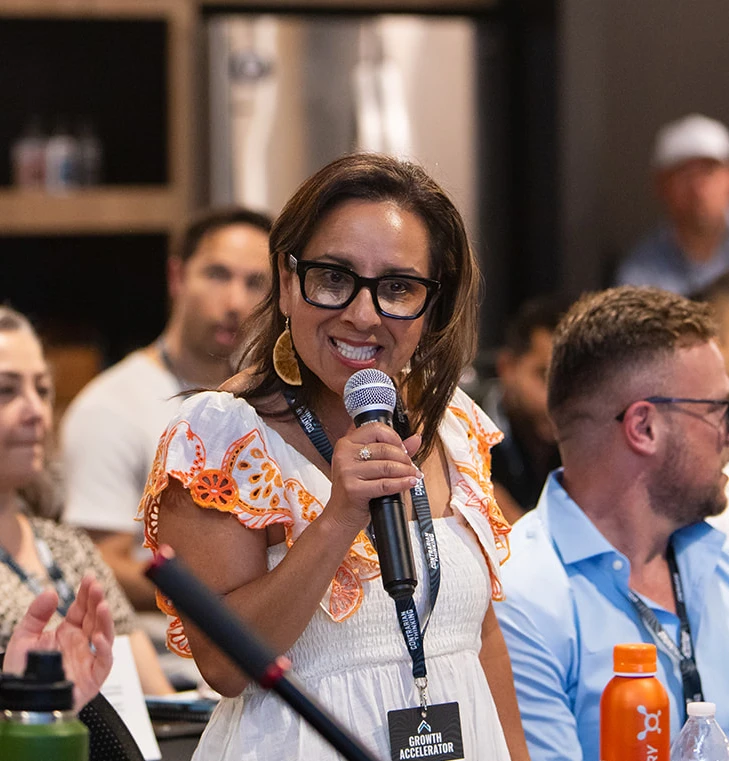
3 Powerful Lessons to Help You Buy Your First Business Welcome to The Main Street Minute , your shortcut to small business buying and scaling. Today, we’re diving into 3 powerful lessons our Academy members learned buying their businesses. Inside today’s story: How thinking small is holding you back Why you should look closer to home for deals What makes a seller choose you over everyone else 1. Thinking small can be risky... Meet Katie and John. Katie has spent her career as a non-owner operator, managing teams and running operations across multiple businesses. John spent nearly a decade as a firefighter, and before that, worked in sales. Before they ever met, they had something more fundamental in common: parents who built something from scratch. John is a first-generation Mexican-American. His mother cleaned houses. His father ran a landscaping business. Katie's father built and ran his own medical practice. " We both came from hard-working parents ," John said. " When Katie and I met, we connected on that. We both knew we wanted to be business owners. " They started by chasing the startup dream, jotting down ideas, trying to find the right one. Then a friend introduced them to business acquisition. They joined another acquisition program, got close on a few deals, but nothing clicked. In January 2025, after attending one of our virtual masterclasses , they joined the Contrarian Academy. And after numerous conversations with our deal advisors there, Katie returned to John with one key realization: "I think we’re playing too small." Like many buyers, they approached their acquisition wanting to “go small” to reduce risk. That’s understandable, but “small” often turns out to be surprisingly risky . Katie and John agreed to expand their thinking. They weren't looking
3 lessons from first-time business buyers: why thinking small is risky, how to find deals close to home, and what makes a seller choose you.





.png)
.png)
%20(6).png)




.svg)


