For the next generation, here’s what might be. If you want to understand the next decade of politics, economics, and culture wars, start with this chart: Young people are being locked out of homeownership. What feels like prosperity for one generation feels like punishment for the other. How did we get here? Can we fix this? Is buying a house still a move? And if not, what can you do instead to build wealth? How Did We Get Here? Younger buyers aren’t imagining today’s squeeze. About 75 years ago, we saw one of the closest things the US has ever had to a true housing assembly line. “The 1950s and 1960s were a golden age of new construction,” the economists Edward Glaeser and Joseph Gyourko wrote . But then things changed. City planners began to enact zoning restrictions that limited housing construction. By the 1990s, “the growth rate of housing was barely half the rates seen in the 1950s and 1960s.” Then, other problems arose. The Great Recession wiped out ~40% of construction jobs by 2010. The 2010s then became the weakest US homebuilding decade per capita on record. By the time builders recovered, millennials hit peak buying age. Their incomes were relatively higher than previous generations, but the inventory and building capacity simply weren’t there. Harvard’s housing maps tell the story at a glance. Around 2000, many markets sat near a housing price-to-income ratio of 3-to-1. Two decades later, 6 or 7-to-1 or greater became common. (Yes, 6-7 😉). Then came the pandemic, and the market went vertical. Demand surged. Supply chains jammed. Basic economics meant no end in sight. When inflation followed, the pressure built up more. Mortgage rates climbed to around 7% by 2023. That spike did two things at once: it made new home purchases harder, and it froze existing
For the next generation, here’s what might be.
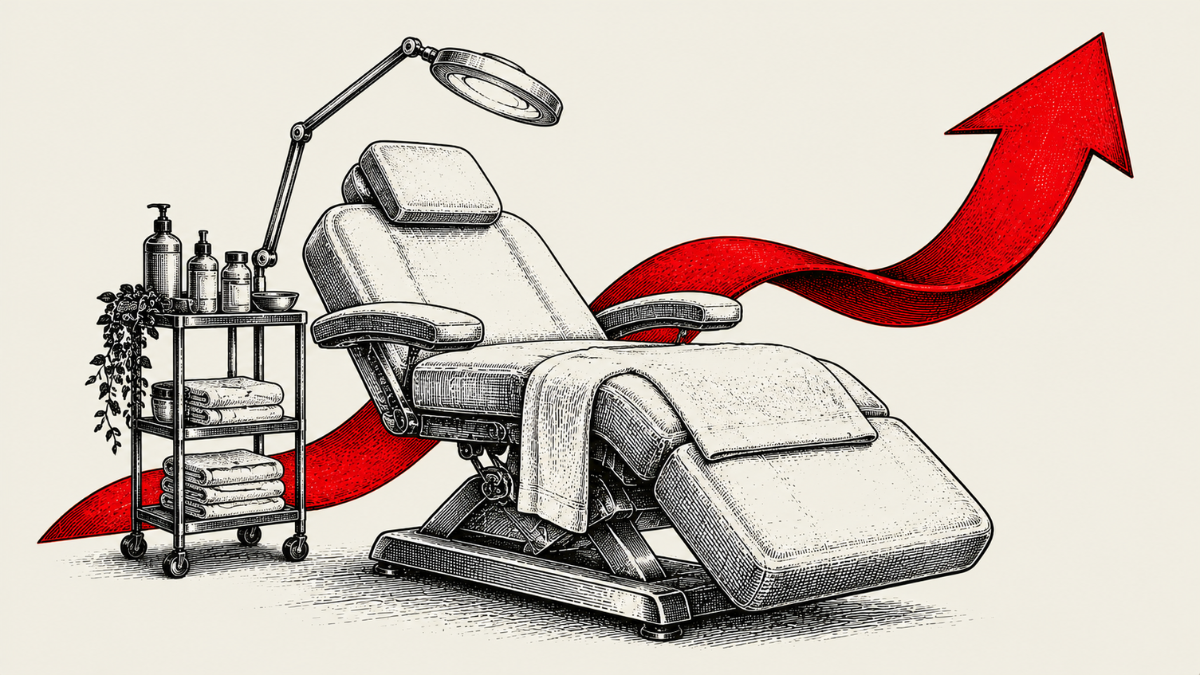
Imagine going from working a 9-to-5 to owning a med spa that’s on track for seven figures. Oh, and the seller financed much of your acquisition. It’s not easy, but it is possible. Today, you’ll see one way it’s been done. START HERE What You Need to Know About This Deal More than anything, know this: Olman and Jen didn’t just “stumble” into the Wild and Beautiful Austin med spa and get it on track to $1M+. After we introduced them to Main Street acquisitions, they reverse-engineered a deal aligned with their strengths, negotiated smart terms, and fought through obstacles while still working full-time. So let’s break it down: What happened What it cost them The hard lessons that almost crushed them How you can steal their homework Here’s how they cracked the experience gap , earned the trust of a retiring seller, and built a business likely worth multiples more than what they spent acquiring it. ACQUISITIONS 101 Is This the Perfect Business to Buy? Here it is. The perfect business to b... C’mon. You know better. There is NO such thing as a “perfect” business to buy. If someone tells you there is, joke’s on you. Still, the question pops up all the time: Wrong question. The right one is: That’s exactly how Olman and Jen started: with a brutally honest look at their Zone of Genius . See, the best deals align with things like: What you can realistically operate and grow into What fits your lifestyle and goals What you’re willing and able to sacrifice What meets your financial needs They used this lens to filter what might be a fit, instead of chasing whatever niche was “trending.” Could a laundromat work? Eh. A property management business? Not really. But then Olman had a thought... His $800 “Lightbulb Moment” One day, Jen, a nurse, went to a med spa. Her treatment took
Imagine going from working a 9-to-5 to owning a med spa that’s on track for seven figures. Oh, and the seller financed much of your acquisition. It’s not easy, but it is possible. Today, you’ll see one way it’s been done.

These are the numbers the smartest people we know are looking at right now... Are you about to get rich from AI... or wrecked by it? And are we in a bubble? Today, we’re breaking down what’s real, what’s hype, and how you can play it smart either way. But to do that, first you need to know the 6 Tiers of AI . This is the exact framework that billionaires we personally know are using to decide where to put their money. The 6 Tiers of AI The founder of Palantir, Joe Lonsdale, shared this at our conference the other week. (And if you missed it... You might want to sign up on our waitlist for next year right here .) This framework shows you exactly where to look as AI reshapes the world. Here’s how it works. Tier 0: Energy Infrastructure AI may live in the cloud, but it eats electricity for breakfast. This is the stuff AI literally runs on. That’s why some of the biggest investors in the world are focused right here. Because without energy, there is no AI. According to the International Energy Agency, our data center energy demand will more than double by 2030, and will use more power than entire countries. Tier 1: Chips This is the hardware and specialized processors that power AI itself. The “brains” or “central nervous system” of AI, if you will. The work here is ruthlessly intense. We’re talking hundreds of billions of dollars, and full-on geopolitical arms races around who controls chip manufacturing. Think of this as the “picks and shovels” layer of the AI gold rush. Tier 2: Data Centers Next stop: where all those chips live. Data centers are the “bodies” that host and scale AI workloads. That’s why you’re seeing an AI construction boom. Last year, global investment in data centers hit $455 billion , up 51%. And the big four (Amazon, Google, Meta, Microsoft) spent
These are the numbers the smartest people we know are looking at right now...

31 observations on business, family, and purpose... We just hosted ~1,000 owners, investors, and operators in Austin for 3 days. It might’ve been one of the most fun yet brutally honest rooms in business. Acquisitions, AI, family, risk, and staying sane while the whole world gets louder... All of it was covered. Thousands of conversations later, here are 31 observations: Most people drastically underestimate the number of paths available to them in life. They think there are five good options when there are five thousand. Meeting someone who’s actually doing the thing you want to do changes everything. It stops being a fantasy and becomes a roadmap. Once you see it, it’s a paradigm shift. The average person can barely imagine how many weird, profitable, legacy businesses exist right under their nose. Not just HVAC and laundromats. Tool shops, seed distributors, niche manufacturers, you name it. And these aren’t side hustles. One immersive weekend in the right room can replace five years of networking online. Bathroom breaks at Main Street Over Wall Street were probably more powerful than any Zoom room could ever be. The 30-year career is dying. Reinvention every 3, 5, 7, or 10 years is becoming a new normal, even among business owners. Most young people will live multiple professional lives and have multiple career arcs. The ones who learn to adapt to AI will own the future. The family business is cool again. Husbands and wives are building together. Fathers and sons. Siblings. People want to spend more time with their families and find ways to make money doing it. “Fit beats hot.” The next generation of builders will care less about sexy industries and more about using their hands. We were meeting 19-year-olds saying they’d rather own a boring trades business
31 observations on business, family, and purpose...

Unlearn everything you thought you knew about learning business. A young apprentice once asked a master carpenter, “How long will it take me to be great?” “Five years,” the master answered. “But what if I study really hard?” the apprentice replied. The master smiled. “Then, it’ll take ten.” By the end of this piece, you’re going to unlearn everything you thought you knew about learning business. But first a warning... 1 Powerful Idea Today, we’ll start with a powerful idea. Something we believe to our core to be true. Education is an investment in the future. We’re sure many of you believe this, too. But if traditional business education were a stock, we worry it could be one of the worst-performing investments of the next 20 years. 20, 15, 10, and in some cases even 5 years ago, if you wanted to study “business,” where would you go? It’s a rhetorical question. Of course you’d go to BUSINESS school, right? Today, though, you’ll see it’s no longer an obvious choice. Here’s a recent article from the New York Times. It describes how businesses are complaining about MBA graduates. What frustrates them? Their “inability to communicate” Their “over-reliance on mathematical management” Their “expectations of becoming chairman in 4 weeks” It also warns that, at a time when business is changing, business schools suffer from ”cookie-cutter syndrome” and offer “insufficient training for entrepreneurship and small business.” Our guess is some of you are reading this thinking... Yup, sounds about right . Except, we lied to you. This actually isn’t a recent article at all... It’s from January 1981, or almost 50 years ago. Now, let us be clear... What this is not going to be is an MBA diss track. Codie herself got an MBA. Certainly opened doors for her. The top schools know their
Unlearn everything you thought you knew about learning business.

Is this what we need to save America's main streets? These days, there’s a whole lot of talk about “slop.” You’ve got written slop : You’ve got video slop: Heck, you’ve even got slop bowls : But there’s also another kind of pervasive slop. A variety that small business folks know all too well... What to Know About “P.E. Slop” You’ve likely seen or experienced this slop, even if you couldn’t put your finger on it. Over the past couple of decades, private equity (and its tactics) have quietly seeped into almost every facet of daily American life: Healthcare Real estate Home services Sports teams Veterinary clinics ...Even local eateries your parents used to love. In 2000, private equity firms managed about 4% of total U.S. corporate equity. By 2021, the number had increased to around 20%. Somewhere along the way, it feels like businesses have all started dressing the same, talking the same, and tasting the same. You could say PE has been the business equivalent of our “adult in the room”, injecting systems, capital, and discipline into “boring” or inefficient industries (all generally good, reasonable things). But the unsurprising result: more scale, less soul. Kinda like this... (WARNING: this clip will hit you hard. Click to watch.): Don’t get us wrong, scale is good, necessary, and healthy. PE offers rewarding exit ramps for retiring owners or those who want out, delivering business continuity, growth, and jobs while unlocking shareholder value. In 2024: “The US private equity sector directly employed 13.3 million workers earning $1.1 trillion in wages and benefits.” “The average full-time US private equity sector worker earned approximately $85,000 in wages and benefits, or about $41 per hour .” “PE-backed small businesses directly employed a total of 1.6 million
Is this what we need to save America's main streets?

It’s the rule every great founder, investor, and owner quietly lives by, but most people never learn... There’s a powerful story about a man stranded on his roof during a flood. A boat passes by and the captain shouts, “Jump in!” The man shakes his head. “God will save me.” So the boat leaves, and the water rises. A few hours later, a helicopter spots the man and lowers a rope. The man waves it off, too. “Go on without me, God will save me.” Hours later, the water rises, and the man drowns. When he gets to heaven, he asks God: “Why didn’t you save me?” “Save you?” God says. “I sent a boat and a helicopter, you idiot.” It’s funny until you realize how often the same thing happens in business. The Number 1 Reason We See Businesses Drown? Not bad products. Not lazy teams. Not competition. When we see a business struggling, it’s almost always for one (often preventable) reason: cash . Sometimes, the businesses we see MOST at risk aren’t even performing poorly. They’re successful businesses struggling to manage growth, which usually eats cash before it feeds it. Step back, and this is dynamic what we like to call a timeless truth . Jeff Bezos once explained that Amazon’s overarching approach to businesses didn’t revolve around guessing trends or predicting the future. Instead, it focused on certainties, or what will never change: “It’s impossible to imagine a future,” Bezos said, “where a customer comes up and says, ‘Jeff, I just wish the prices were a little higher,’ or, ‘I wish you’d deliver a little more slowly.’” It sounds revolutionary... But it’s actually quite obvious. Whether you’re grinding at your 9-to-5 or owning your a local plumbing biz, the same principle applies. It’s often the smartest strategy to simply focus on these obvious, timeless truths. So here’s a
It’s the rule every great founder, investor, and owner quietly lives by, but most people never learn...

If you want to know where future fortunes will be made, look for this 1 thing... If you want to know where future fortunes will be made, don’t look at markets; look at rooms. Why? Wealth follows proximity . The closer you are to capital, information, and ambition, the higher your expected return. If compounding is the eighth wonder of the world, proximity is the ninth. Economists call it agglomeration , the phenomenon where productivity and innovation rise as people and ideas cluster together. You can see it from space: in the skyscrapers of Manhattan, the office parks of Palo Alto, the warehouses outside Shenzhen. Money attracts money; talent attracts talent. Capital, in every form, behaves like gravity. America’s story is really a map of these high-density clusters, a country built by people who showed up in the same rooms to build something. A few dozen men crammed into a room in Philadelphia and designed the operating manual for the most successful startup in history: the United States. In Detroit , engineers, suppliers, and union leaders clustered around a single idea — mobility — and turned it into the foundation of the American middle class. Across the Midwest , steel, rail, and finance connected Chicago, Cleveland, and Pittsburgh into an industrial artery that powered the nation’s growth for a century. Down south, Houston became the beating heart of the energy age, a city where oil, engineering, and global markets converged. On the West Coast, storytellers in Hollywood built the world’s culture engine, while engineers in Silicon Valley built its digital one. And back east, Wall Street — just one street — was proof that proximity alone could become an institution. That’s the Power Law of Proximity : opportunity concentrates, and the people close enough to feel
If you want to know where future fortunes will be made, look for this 1 thing...

5 lessons on business building from a billionaire and a garbage man... Soon you’ll hear about that room , but first, a question. If you had 30 days to launch a trash company — truck, bins, customers, revenue, the whole thing — could you do it? Could you wire $40,000 to a stranger for a garbage truck off Facebook Marketplace, learn hydraulics on YouTube, convince 200 neighbors to prepay for service... And do it all while your wife is 9 months pregnant? (Not recommended, by the way.) But Spencer Scott figured it out. Now, another question: Could you build one of the most valuable tech companies of the century, used by governments and Fortune 500s? Could you stare down lawsuits and fierce critics, all while scaling to a ~$450B public company? Joe Lonsdale did. One guy in tech sales turning neighborhood complaints into a dirty, high-margin local business. The other in boardrooms, turning data into billion-dollar platforms with global reach. At first glance, they sound like polar opposites . But study their stories closely and the same patterns emerge: selling before building, embracing chaos, solving hard problems, and betting on ownership. Different arenas. Different scale. Same DNA. So, what do a billionaire and a garbage man really have in common? A playbook worth stealing. Here are 4 rules they both live by... 1. Proof > Perfection Spencer didn’t start his business Lone Star Trash with trucks, licenses, or capital. He started with a Facebook rant. His neighbors were furious about their existing trash service provider. So Spencer, the curious man he is, ran the numbers: 400 homes × $33/month = $13,200 in monthly recurring revenue ...for ONE pickup day a week. Instead of guessing, he tested. He spun up a pre-made Webflow template for trash businesses, embedded a payment
5 lessons on business building from a billionaire and a garbage man...

2 framework to change you entire understanding of money... We are one of the wealthiest nations in history... and (seemingly) one of the most financially illiterate. Six-figure earners live paycheck to paycheck. Lottery winners go broke. Celebrities file for bankruptcy after careers that generated hundreds of millions. People are financing their damn DoorDash orders. From one vantage point, society is sedated by subscriptions, financed burritos, maxed-out credit cards, and minimum payments. We’re bodybuilders with clogged arteries, flexing our consumption. It’s no wonder millennials fear debt more than death or war. But here’s the paradox: the same tool that holds people back can also build them up. Our relationship with money can be an obvious force for good. Used wisely, it’s jet fuel for everything from Main Street, to mortgages, to microchips. Over the years, we’ve heard from thousands of people about their relationships with money. The patterns are clear: For some, it’s a fling. Cash comes in, cash goes out, no commitment or discipline. For others, it’s a toxic dependency. High earnings with endless debt and constant anxiety. And for a few, it’s a disciplined partnership designed to compound over time. Same tool. Radically different outcomes. But the common denominator? Most of the challenges stem from the fact that people were never taught the first principles of money. Without these, people usually end up on a monetary treadmill (what you probably know as “the rat race”). In the rat race, every raise is matched by a new expense. Every windfall is canceled by new debt. The faster you run, the more exhausted you get, but you never seem to get ahead, and you’re too busy to find a way off. Most people think money is about luck, or hustle alone, or having the
2 framework to change you entire understanding of money...

Hard truths and tactical resources 2,000+ business builders wish they knew on Day 1. They don’t teach this in business school... Spend 10 minutes on LinkedIn and you’d think all you need to unstick a business is “10 AI hacks to 100x your workflow.” Spoiler: it’s not. We work with 2,000+ business builders and buyers every day. Here are the business tools, truths, and forces we’re seeing that are ACTUALLY moving the needle now. TOGETHER WITH SOFI 1. A One-Stop Shop for Business Financing We work with hundreds of business owners to help them scale their businesses. One thing we tell them: this needs to be in their toolkit from day 1. Why? Because accessing capital is hard and takes time (that you probably don’t have). You have to fill out applications, network with bankers, and sometimes even schlep into physical bank branches. SoFi’s Small Business Loan marketplace solves that. In one simple search, SoFi matches you with providers that meet your financing needs in just minutes, so you can see exactly what you qualify for and on what terms. If you want, you can search for options without hurting your credit score†, and stay a step ahead. Click HERE to search for financing options now. Terms apply: 2. Yes, an AI Arsenal This year we hired a guy to wire AI into everything we do. His name’s Chadwick: AI Won’t Replace You... but guys like Chadwick Might. Here’s what we’ve realized: AI isn’t the end of human intelligence. It’s the beginning of leveraged intelligence. Chadwick’s job? Find every unfair advantage AI can give us and build it. Here are 3 (of many) tools Codie is using today: 1. Whispr Flow Hold Fn, speak normally, and type 2–3x faster. 2. Superhuman Email with shortcuts, AI autocomplete, and instant profiles of everyone who writes you. 3. Perplexity Pro Cost? A pie
Hard truths and tactical resources 2,000+ business builders wish they knew on Day 1. They don’t teach this in business school...

It's important you read this. This is the only way forward... It’s been a difficult week in America. Political violence struck again. The temperature of our national discourse rose higher. All of it made heavier by the dark anniversary that falls today. Moments like this test us. They remind us how fragile the things we build really are: families, businesses, buildings, trust. It is easy to lose faith in times like this. Today, many young adults feel they face more obstacles than their parents did. And confidence in our institutions has dropped to historic lows. Creation is the Only Path Forward The unfortunate truth is that it’s always easier to burn down than it is to build up. Which is why we must commit, again, to the harder path: building. A culture without belief in building for the future becomes reckless with the present. Ownership is the antidote to this. When you own something, you’re invested in tomorrow because you literally own a piece of it. When you have skin in the game, you have a stake in the future. The owners of a... Landscaping company in Arizona Diner in Ohio Accounting firm in Florida Wrought iron fencing business in New York ...aren’t plotting chaos. They’re working to make payroll, lend equipment, train employees, build relationships, or fix a roof. They’re too busy building to destroy. Reasonable people know this. Perhaps it’s why small business is the most unifying force in our country. To build is to give more than you take. Every brick laid, every job created, every customer served creates value that didn’t exist before. This is Why We Work When a new builder steps up, the effects run deep. The lessons a child absorbs from watching a parent wrestle with hard work, resilience, problem-solving, and responsibility will positively guide how
It's important you read this. This is the only way forward...

Why the next 118 days could determine your financial future (and how to use them wisely)... Ever watch an NBA game? For 36 minutes, the pace is manageable. Players jog back on defense, coaches test different offences, stars conserve energy, fans get up for beers. Then the 4th quarter starts, and suddenly, every possession is 10x more intense. Fouls get harder. Stars stop resting. Games are won and lost over a few big, late plays. The closer to the buzzer, the more each moment matters. Life has a version of this, too. Early in the year: Each decision matters, but there’s slack. You can course-correct. Mistakes get diluted. As the year closes: Each choice carries more “finality.” Habits lock in, results solidify, there’s less time to recover. The internet has even given this period of the year a name: “The Great Lock-In of September to December.” (Click to play) It’s true. There’s a collective tightening of focus over the next few months. The holidays loom, performance reviews creep closer, and the year’s final scoreboard comes into view. But this time, the timing is especially critical for tens of millions of Americans. Look at the job market. In musical chair terms, a few years ago, there were 2 chairs for every person. Today? The music has stopped, and there are more players than chairs. Even if you’ve still got a chair, you’re learning the hard truth: given today’s economic and technological trends, these aren’t your grandpa’s sturdy oak rockers anymore. They’re $2.99 folding chairs from Alibaba. One algorithm change, one A.I. update, one earnings miss, and they can collapse out from under you. That’s why coasting until January is a mistake. The next 118 days are leverage. They’re your playoff minutes. This is when specific, intentional moves count the most. So here
Why the next 118 days could determine your financial future (and how to use them wisely)...

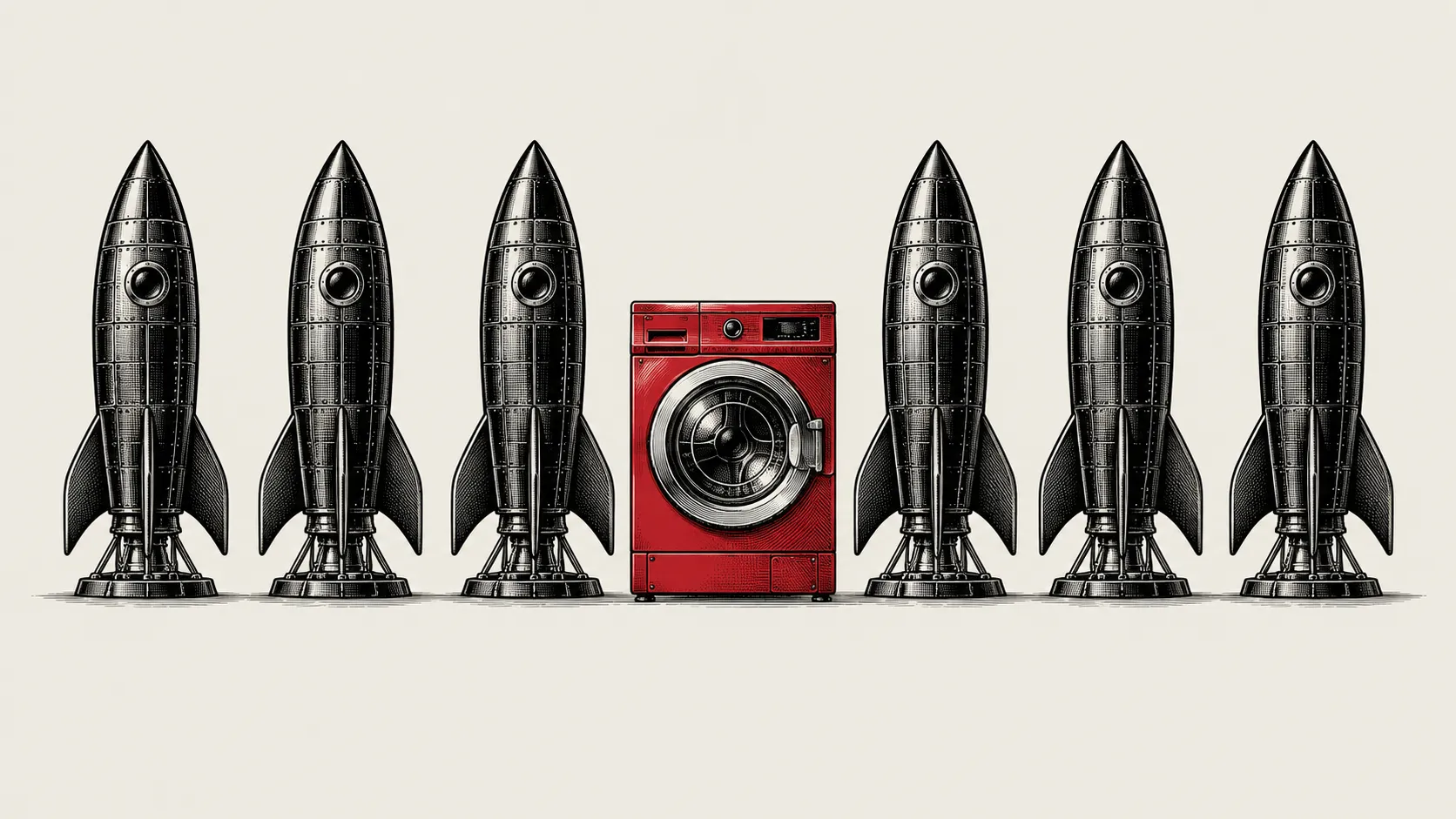
To the untrained eye, the first SpaceX Raptor engine didn’t look like the future. It looked like something Dom Toretto welded together in a Fast & Furious garage at 3 am. A maze of pipes, wires hanging out, duct-tape vibes, scorch marks on the sides. More street-racer than space program. But here’s the thing, it works: Whoops, sorry, that’s the one from Fast and Furious. Let’s try that again... It works: What’s cooler? Today, more than simply working, those same engines have become works of art. Precise and beautiful, they look less like a garage build and more like a Rolex that happens to produce 600,000 pounds of thrust. But they didn’t start that way. They started messy. And messy was enough to fly. The lesson is simple: you don’t need to start perfect. But you do need to start. Get going first, polish up later. At this point, you’re probably wondering: “Why the hell are we talking about rockets in a business newsletter?” Fair question. It’s because dealmaking is no different. People with fewer resources, worse connections, and way less experience than you are likely making more progress than you because they took action to learn. Most people never start, not because they’re lazy, but because they’re scared of looking stupid . Time and again, what we see is that people are terrified of the language of ownership. The moment they hear terms like EBITDA, LOI, DSCR, or SDE, their brain short-circuits. To them, it feels like a secret handshake from business school that they were never taught. Insiders: “Yeah, we sold at 3x EBITDA with 10% seller financing.” Outsiders: But it’s actually not rocket science, and it’s not some secret code. In fact, once you get your foot in the door, you realize this game is way more accessible than you think... Let’s Get Your Foot in the
SpaceX's first Raptor engine looked like junk, but it worked. Why waiting until you feel ready is the real reason you're not an owner yet.

The smartest people we know are preparing for this. If you miss these trends, you may regret it in 10 years... The American economy feels like it’s living in two timelines at once. Prosperity and precarity. Boom and bust. Opportunity and stagnation. Just look at the headlines: 1. Homeownership is going great if you’re 75, but terrible if you’re 35. 2. Sprawling data farms increasingly cover ground, while offices decreasingly break ground 3. In 1970, estimates say, over half of 30-year-olds were married homeowners. Today, barely 13% are. 4. Nvidia employees are seeing their net worths rocket past $25 million... ...But young tech grads who thought they’d be set for life are competing for Chipotle jobs. Contradictions like these are often an early signal of massive change. And beneath the noise, a clear pattern is emerging. The Common Thread The story we’re living isn’t really about tech layoffs, or housing markets, or even AI. The story is about who owns what. That’s the American economy today, and the winners are clear: Boomers who locked in assets decades ago. Tech insiders with outsized equity. The sliver of Americans who own profitable businesses. The traditional “markers of stability” have slipped out of reach for many, but not because prosperity has disappeared. It’s just moved into the hands of those who own. As Sam Altman put it: “You get rich by owning things.” The Great Transfer Here’s the part that isn’t making as many headlines: America is on the cusp of the largest wealth transfer in its history. Doesn’t mean money will rain from the sky, but it does mean lots of unique opportunities will appear. Boomers own roughly half of all small businesses in the U.S. But they’re aging out. Retiring. Dying. Deciding they don’t want to manage payroll or deal with
The smartest people we know are preparing for this. If you miss these trends, you may regret it in 10 years...

Before Amazon, Jeff Bezos was a senior vice president at D. E. Shaw, a top hedge fund in New York. It was the kind of job people spend their career trying to land. Then he quit to start an online bookstore out of his garage. He paid himself $81,840 . But he knew the number that mattered more wasn’t his starting salary; it was the potential value of his ownership. By 1999, his stake in Amazon was worth roughly $9 billion . You’re not going to be Bezos. But you also don’t need to be. Maybe you already know this. Maybe that’s why you can’t help feeling a twinge of envy toward people like Gary and Stan . Gary , your boss, owns the business you work for. With pants like his, you know Gary will get you through a recession, but probably not much more than that. Stan , your longtime neighbor who golfs in flamingo pants, pulls in a good $300k a year through his tree trimming business and has been for years. You might not know their exact numbers, but you know they’ve both tapped into something: the same equation that took Bezos to billions, just on a smaller, but still life-changing, scale. Just one thousandth of that early Bezos outcome — $9 million — is life-altering wealth for 99% of people. It’s also roughly the potential value of a small business earning $3 million in profit. A difficult goal, but an entirely reasonable one to have. But most people don’t think this way. We live in a country where most college students worship industry tech titans or big corporate salaries but stay largely uneducated about ownership. Most people measure success in annual comp alone — $80k, $150k, $250k — and obsess over negotiating an extra 3% in pay, while ignoring the math that often creates outsized wealth. Here’s the rough gist of it: Increase profit by $300k in an industry with a 4x
Bezos paid himself $81K while ownership made him billions. The simple formula of income vs. ownership that can change your entire financial future.