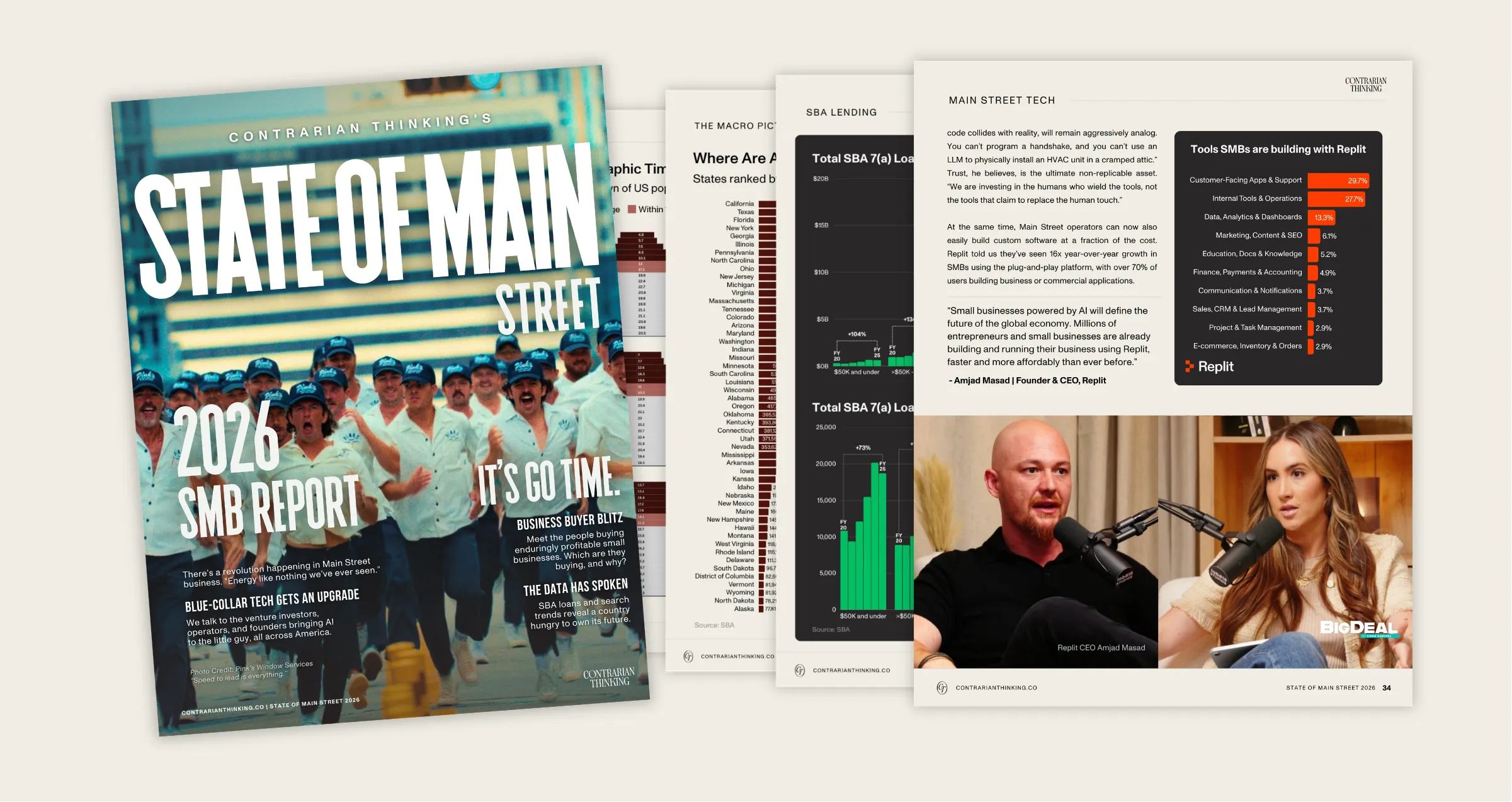
Click here to download the 2026 State of Main Street report
Download the free 2026 State of Main Street Report: 40+ pages of data on small business buying, scaling, and the forces reshaping the Main Street economy.

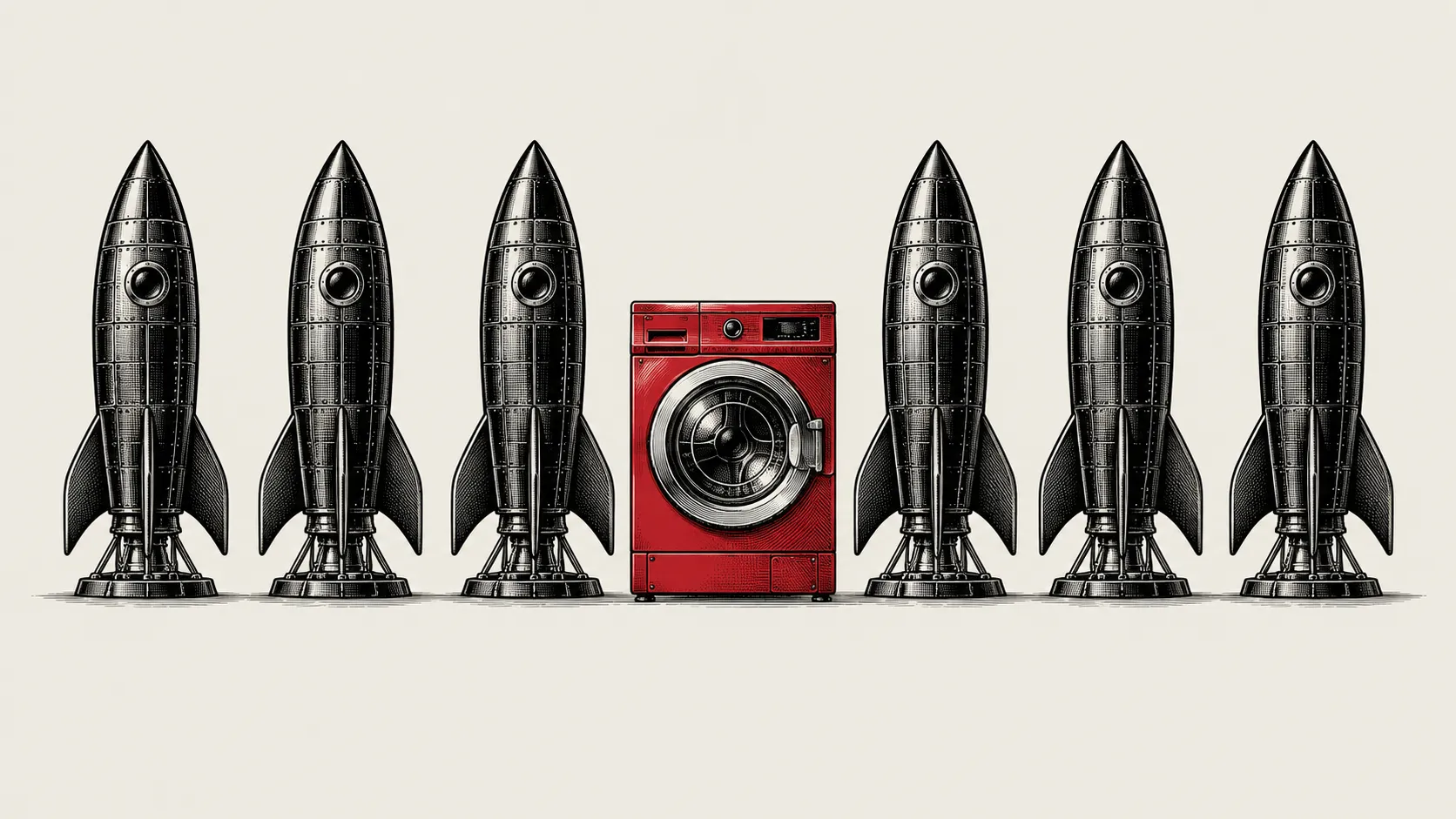
You Have More Options Than You Think, But Less Time Most people drastically underestimate the number of paths available to them in life. They think there are 5 good options when there are more like 5,000. The problem is, it’s hard to grasp that. People usually refer to this visual to explain it: Here’s why this matters to you, right now: We’re facing the end of the “career” as we know it. Yes, the 30-year “career” is slowly dying. The world is simply changing too fast to sustain it. Most young people today will live multiple professional arcs. Reassessing, reskilling, and reinventing every 3, 5, 7, or 10 years will become a new normal as AI creeps into the services we all provide. But what does that actually look like in practice? What are real-world examples of people doing this? How do you find profitable pathways you’ve never even considered ? Let’s dive into it... Real people. Real pivots. The people we work with every day in the Contrarian Academy are living proof of this idea. There’s WAYYYY more where this came from, but here are just a few: 1. 30 years in tech support —> layoff —> owning a moving company Rachel spent 30 years on the technology side of a big bank, eventually leading tech support for her entire Minnesota region. In February 2025, she got her layoff notice. “I’m 56. I’m not going to get hired back at a fintech making what I made. Just a fact of life.” She could have spent her time and runway applying to the same kinds of jobs. Instead, she bought a senior move management company just down the road from her house. Rachel today: “I love what I do. I’m passionate about what I do. I care about what I do. I want to do it.” 2. Military contractor —> owning an appliance store Then there’s Erika, who spent her career in cost management for a military
You think you have 5 paths; you have 5,000. Why the 30-year career is dying, and how to use your optionality before the window closes.

How This Plastic Surgery Practice Drove 21% Growth After Years of Flat Revenue “I didn’t know what I didn’t know, and that’s not a good place to be. But now I do.” Meet Randol: Randol has spent years in corporate America. Supply chain management at a $12 billion company in Austin. An MBA. A stint helping the Air Force manage logistics. A run at Tempur-Pedic, where he helped lead the North American supply chain as the company scaled from $500 million to $1 billion. Along the way, he got married. At the time, his wife happened to be finishing her plastic surgery residency and, like many physicians, lacked a business background. So she and Randol decided to work together and build a practice. He figured he’d help get it off the ground over “about three years or so” and then return to do his own thing. “That was fourteen years ago,” he told us, with a smile. For much of that time, the practice grew. Slowly, steadily. But then, starting around 2022, revenue went flat. Randol knew something had to change, and he was willing to do the work to figure out what. So he went looking for the missing pieces. He’d end up finding them in our Growth Boardroom. Over the next year or so, the practice: Grew revenue by 21% and profit by 120% Freed up $100k in working capital Launched high-margin, recurring service lines Made its first acquisition of key talent and customers Here’s what changed. 1 Big Way Operators Get Stuck (And What To Do About It) Randol illustrated his business plateau with a framework he picked up along the way: the Rumsfeld Matrix . The especially dangerous quadrant: you don’t know what you don’t know. “I didn’t have any more tricks in my bag,” Randol told us. “I didn't know what I didn’t know. And that’s not a good place to be.” That honest self-assessment is what
After years of flat revenue, this plastic surgery practice drove 21% growth. The operational fixes Randol used to finally break the plateau.

Big Minds Make Money, Small Minds Get Fired I got irrationally mad at one of my good employees... over a spreadsheet. We were reviewing the performance of a sponsorship deal we did. I’m scrolling through the numbers, half‐distracted, when something smacks me in the face. We’d driven a reported 8 figures in revenue to a partner... and we’d charged them low 6 figures. I stared at the screen as if it had personally insulted my mother. “Wait, wait, wait. Walk me through this,” I said. He spun his laptop toward me, proud. “So, they paid us $120k for the package. Based on tracked links and their reported close rate, we drove, well, it looks like about $14 million in revenue. So this is the ROI sectio—” I cut him off. “Stop. Say that again, slowly.” “We, uh, drove... about $14 million. They paid us $120k.” “And you feel good about this?” I asked. He blinked. “Well, yeah. It’s an insane ROI for them. This is why they’ll renew. I positioned it as a steal, so it’s a no‐brainer.” “That’s the problem,” I said. “You positioned us as a steal.” He frowned. “Isn’t that good? We’re supposed to provide overwhelming value , right?” “Sure,” I said. “But overwhelming value doesn’t mean offering Ferrari results for Honda Civic prices.” He looked genuinely confused. And this is a good operator. Sharp, loyal, hardworking. He was doing what good employees often do: protecting the deal, reducing risk, trying to make the customer happy. But his ceiling for what we were allowed to be was painfully low. “Let me ask you something,” I said. “If some other media company walked up to that same sponsor and said, ‘We’ll bring you $14 million in revenue,’ how much do you think they’d charge?” He shrugged. “Probably... more?” “Try 10x more. And they’d say it with a straight face.” He laughed, a little
We drove 8 figures in revenue for a partner and charged 6. The pricing lesson that separates big thinkers from small ones, and how to charge your worth.

How a Military Family Bought an Appliance Store Doing SIM+ in Annual Sales With Little Advertising START HERE “Never in a million years did I think I’d be buying an appliance store...” Meet Erika. Erika spent her early career in cost management for a military contractor. Her husband Kevin was active duty Navy for years, before shifting to aviation maintenance. Their life followed the military rhythm: deployments, cross-country moves, a young family to raise, and a steady but constrictive paycheck. Their business buying spark came from Erika’s dad. As Erika put it, “He loves to browse listings and dream.” One time, he showed her a local bar listed for $68,000 . “Relatively speaking, I didn’t know businesses sold for that little,” Erika said. “We could buy that.” That specific listing didn’t go anywhere, but the idea took hold. In May 2025, with Kevin’s active duty contract ending in December, they sold a rental property in Washington to free up acquisition capital and joined the Contrarian Academy . On March 17, 2026, they closed on a profitable scratch-and-dent appliance store that’s been operated out of the same Central Valley, California, building since 1968. Here’s how they did it. In June, learn the same strategy we taught them. Main Street Millionaire Live is our rapid, virtual bootcamp entirely focused on giving you the practical steps and tools to buy the businesses AI isn’t replacing anytime soon. 👉 Learn more and save your spot here. 1. At first, the right deal might not look like the right deal... For most of their search, the LaCortes weren’t thinking about appliance stores. Their original focus was wedding rentals, something that played to Kevin’s woodworking skills and Erika’s project management background. They looked at virtually every wedding rental
How a Military Family Bought an Appliance Store Doing SIM+ in Annual Sales With Little Advertising

I lead 100+ people. Here’s who survives what’s coming with AI. You can tell a lot about a company by how its leaders talk about their team. When they talk about them... do they look like this: Do they sound like a breath of fresh air? Or like they’re about to be replaced by AI? Do they talk about them like adults? Or, like they’re running a daycare ? After running a business with 100+ people , I’ve started to notice that almost every single person falls into one of two categories. Let’s unpack the two, figure out which one YOU are, which ones you’ve hired, and why the future is going to be incredibly kind to one and quietly brutal to the other. I shared this with my team this week. You might not see the people around you, or yourself, the same way after reading this... STOP RIGHT THERE If you already own a business... Come to Austin next month. Our Growth Accelerator Workshop is 3 days with us looking inside your business to help unlock its next level of growth. Hiring. Cash flow. Marketing. AI. We’ll show you what levers to pull and what to ignore. Not ready for that just yet? ❇️ Start with our upcoming FREE virtual masterclass where we’ll show you how businesses in our network are spotting hidden profit leaks and pulling simple growth levers right now. Now back to the meat... The Hard Truth If you spend enough time around owners, you start to realize many sound like teachers stuck in a bad preschool: “I have to check on my team constantly.” “If I don’t remind them, nothing gets done.” “I’m chasing status updates like I’m collecting permission slips.” But some are different. Some sound more like they’re leading a well-functioning university: “I know things are moving even if I’m not in the room.” “They flag issues early.” “They bring me options, not just problems.”
I lead 100+ people. Here’s who survives what’s coming with AI.

How She Went From 30 Years in Corporate to Owning a Senior Move Management Business START HERE “After buying a business, my husband keeps telling me, ‘You’re saying weird words like, I want to go to work.’” Meet Rachel. Rachel spent roughly 30 years in banking on the technology side, eventually leading tech support for her Minnesota region. Most of those years were great. Then, in February 2025, came the “good ol’ chopping block notice,” as she puts it. Surprisingly, Rachel’s reaction wasn’t panic. It was a celebratory cocktail. After three decades of service, her severance package included 16 months of full pay and benefits. Suddenly she had runway, and a decision to make. “I’m 56. I’m not going to get hired back at a fintech making what I made here. Just a fact of life.” Around that time, a mutual friend nudged her husband, Tony, toward Contrarian Thinking’s Main Street Millionaire Live event, where we show you exactly how to become a business owner by finding, negotiating, financing, and completing an acquisition. He signed up and dragged Rachel along. At first, she was skeptical. But she sat down with her laptop, and by the end of the weekend, something had clicked. “I realized there’s a whole hell of a lot of people out there that are just like me,” she said. “And also a whole hell of a lot of businesses out there looking for owners.” About 1 year later, she’d end up closing on a senior move management company roughly 7 miles from her house. “Today, I’m happy. I love what I do. I’m passionate about what I do. I care about what I do. I want to do it.” Here’s how she got there... In June, we’ll teach you the same things we taught her. Main Street Millionaire Live is our virtual bootcamp entirely focused on giving you the practical steps and tools to buy the
Laid off after 30 years in corporate banking, Rachel bought a senior move management business, and now she actually wants to go to work.

The Privatization of Investing In 2021, Allbirds, the shoe brand, went public at a $4 billion valuation. It did not work out as planned. This week, after closing their stores and selling off the shoe brand for a sum total of $39 million , they decided to throw in the towel and move on. Just kidding! They’re pivoting from wool shoes to “AI compute infrastructure, with a long-term vision to become a fully integrated GPU-as-a-Service (GPUaaS) and AI-native cloud solutions provider.” Seriously. Result: the stock jumped 582% in a day. We’re not here to pile on Allbirds (though the memes were hilarious and induced a whole lot of silent nostril laughs ). But cases like this, where a hot company goes public only to be crushed from the get-go, have made many founders think twice about ringing that Wall Street bell in the first place. Stepping back, what happened this week reminded us of a much larger shift that’s been quietly reshaping how wealth gets built for decades to come. You may not have noticed it yet. You’re about to. Where Did All The Stocks Go? For most of the time we’ve been alive, the average wealth path was simple. Not easy. Simple. Get a good job, invest early and over a long time horizon in public stock indices, and let compounding do the work. Not glamorous, not quick, but generally considered a tried and true formula for building wealth. It’s probably still true. But there are two sides to every coin, and it’s important you understand what’s been changing under the hood in recent years. So here’s what’s been changing: That “diversified” bet we’re all taught to make? It’s actually a fairly concentrated bet on Nvidia, Apple, Microsoft, Amazon, Alphabet, Broadcom, Meta, and Tesla. Together, their market caps represent nearly 40% of the entire index of 500
Allbirds' collapse tells a bigger story: the best returns are going private. What the privatization of investing means for everyday wealth builders.

How They Bought an Off-Market, 20-Year-Old Water Sports Brand Using Creative Financing START HERE "Sometimes the deal you're searching for finds you in the most unexpected way." Meet Katie and John. Katie has spent her career as a non-owner operator, managing teams and running operations across multiple businesses. John spent nearly a decade as a firefighter, and before that, worked in sales. Before they ever met, they had something more fundamental in common: parents who built something from scratch. John is a first-generation Mexican-American. His mother cleaned houses. His father ran a landscaping business. Katie's father built and ran his own medical practice. "We both came from hard-working parents," John said. "When Katie and I met, we connected on that. We both knew we wanted to be business owners." They started by chasing the startup dream, jotting down ideas, trying to find the right one. Then a friend introduced them to business acquisition. They joined another acquisition program, got close on a few deals, but nothing clicked. In January 2025, after attending one of our virtual masterclasses, they joined the Contrarian Academy. What followed was a rollercoaster year that tested them in ways they hadn't anticipated, but led them to a $2 million acquisition of Rubber Dockie , a water mat and inflatable manufacturing and e-commerce brand based in South Dakota. Here's how they got there. 1 Early Shift That Changed Everything... When Katie and John first started searching for businesses, they were thinking small. Over the course of their search, they signed around 100 NDAs, submitted multiple LOIs, and entered due diligence multiple times. "But every time we got to talking to the seller, things just didn't seem intuitively right," Katie said. So, in May 2025
Katie and John bought an off-market, 20-year-old water sports brand using creative financing. How unexpected deals find prepared buyers.

We're living in a K-shaped world The most important letter in the alphabet right now isn't a, b, c, x, y, or z. It's k. For many, life is feeling K-shaped, in more ways than one. Everywhere you look, it’s: prosperity and precarity. Boom and bust. Opportunity and stagnation. Up or down. Accelerate... or die. Just look at the data. Here’s one example: The stock market is ↑, while consumer sentiment is ↓. That may sound strange until you think about what it actually represents. Stocks —> people who own Consumer sentiment —> people who owe The stock market’s performance largely measures how the top 10% feel. Consumer sentiment measures everyone else. Also, lots of stuff can contribute to K-shaped dichotomies like this in the market. But what’s becoming increasingly clear is that this K shape is appearing... everywhere. The nature of your work. AI skills. Asset exposure (stocks, real estate, business ownership). Once you start to see it, you can’t unsee it. Here’s what we mean... K-shaped trends you need to see... Let’s start here. The top 10% now account for nearly half of all consumer spending. “This is why the economy can look strong in the data while millions of people feel like they're falling behind,” as Peter Mallouk put it . Another one: Homeownership is going “great”... if you're 70: But not great if you’re 30... As Scott Galloway said: “We’ve broken the social contract that binds America: Work hard, play by the rules, and you’ll be better off than your parents were. For the first time in our nation’s history, this is no longer true... Neither the minimum nor median wage has kept pace with inflation or productivity gains, while housing costs have outpaced them... A decent proxy for the success of a society is how it treats children... Can we answer a simple
Stocks up, sentiment down: we're living in a K-shaped world. What the great divergence means for your money, and how to land on the right side of the K.

How This Couple Bought a Mobile Swim School Business Without Quitting Their Jobs START HERE “I hated the idea of starting a business. What I'm good at is running it, organizing it, making everything efficient.” Meet Tihana. Together, Tihana and her husband work remotely for a fitness company. Tihana manages a team of contracted coaches and coaching managers. Her husband leads a sales team. For years, Tihana knew she wanted to own a business. Not build one from scratch, but buy one, step in, and run it. Last year, they joined the Contrarian Academy and started searching almost immediately. Their original deal box was focused on pet businesses: grooming, boarding, anything in that world. But those deals are hard to find and often sell quickly to PE for unreasonable multiples when they do appear. So they kept looking. Then a mobile swim school in Los Angeles came across Tihana’s screen. Her first reaction was to pass. The revenue was low. It wasn't an industry she had in mind. Not the right fit. A few weeks later, she reconsidered and took another look. That second look changed everything, and Tihana and her husband ended up acquiring the business in March 2026. In the process, they negotiated the asking price down significantly, and they are now the owners of a 20-year-old, fully remote, asset-light business with a problem many new owners would love to have: more client demand than they can currently fulfill. Here's how they got there. Why the "wrong" business turned out to be the right one The mobile swim school was founded in 2006 and had been under the same owner ever since. The model is straightforward: independent contractor swim instructors travel to private homes and teach children to swim at their own pools. The business also offers lifeguard services for
Tihana hated the idea of starting a business, so she bought one. How this couple acquired a mobile swim school without quitting their jobs.

The Invisible, Profitable, Unsexy Businesses Behind The Trillion-Dollar AI Boom In 1958, an economist named Leonard Read wrote an essay narrated by a pencil. A pencil? Why? Because he wanted to make a point about how the economy works, and he figured the most ordinary object he could find would make it best. The essay traces the pencil, quite literally, back to its roots in the ground. The cedar in the wood grows in Oregon. To cut it down, you need loggers. To equip the loggers, you need saws. To make the saws, you need steel mills. To transport the logs, you need trucks and truckers, tires, and oil. To run the logging camp, you need a cook. A cook needs food, which comes from farms and so on... As Read points out, even the cup of coffee the loggers drank at breakfast was touched by an "untold thousands of persons." And that's just the wood. He then runs through the graphite, the lacquer, the brass, the eraser. By the end, a six-cent pencil had quietly involved millions of people and businesses across dozens of countries who never met and had no idea they were building something together. His conclusion: no 1 person or business actually knows how to make and deliver a pencil in its totality, from start to finish. Great essay. Required reading in economics classes everywhere. And also, it turns out, a perfect way to understand why today’s AI boom is one of the best small business opportunities of our lifetime. Below, we’ll show you why. The World's Most Sophisticated Technology Requires a Guy with a Porta-Potty Very few people are running that same pencil exercise on a data center. And more should be. Amazon, Google, Microsoft, and Meta have announced ~$700 billion in AI infrastructure spending for 2026. Not over the decade. This year. The White House has launched AI
Behind the trillion-dollar AI boom sits an invisible supply chain of profitable, unsexy businesses. Where Main Street fits in the AI gold rush.

Step-by-Step Guide to What You Need to Know Before Selling a Business START HERE How To Build a Business So Good, You Never Need to Sell It (Step-By-Step) We work with hundreds of scaling business owners (and buyers) every day. So many people run their business until they're miserable... And then they try to sell it and look like this: Don't be like most people. Build a business so it's sellable... and you'll never “have to” sell. Still, the harsh truth is that selling a business is far easier said than done. Owners reach out to us all the time asking for guidance. Often, they aren’t focused on selling until it's too late, and then they're forced to sell for less than they want. Here’s the reason that’s so tough. The second half of the Owner Wealth formula — and boy is it an important half — only works when a business is sold. Understanding this simple formula can change your entire financial future: That’s why the 1st thing we usually tell someone to do if they’re looking to sell their business is head over to BizScout . BizScout guides you to the partners, data, and resources to do it right. Here’s what’s also cool: BizScout has... 140,000+ active buyers 50,000 buyer-seller connections under its belt A large population of well-educated buyers The BizScout team also vets buyers before making a connection. And yet another cool thing? Tons of listings on BizScout have been in business for 5, 10, or even 20+ years. Some of the best companies our Contrarian Academy members acquire have been in business for years on end. It’s why they’re so valuable. They carry years of financials, customer relationships, and vendor connections... things that prove ridiculously useful once a deal gets done. So much of selling a business is understanding what makes it valuable in a
Step-by-Step Guide to What You Need to Know Before Selling a Business

1 Old Principle That Made Us Millions The Egyptians figured it out 4,500 years ago. Archimedes wrote it down 2,300 years ago. And, as Sam Altman and Naval Ravikant would probably tell you if you asked them today, all these years later, leverage is as powerful a force as ever. By the time we made our first real money, we'd never been in the same room as Naval Ravikant. But somewhere between Wall Street and Main Street, a few lines he wrote rewired the entire way we thought about work, money, and time. Here's the idea that cracked things open for us: Most people try to get rich by “working harder,” but not the wealthy. Sure, they work hard. Very hard. You have to. But that’s probably not how they got rich. They might not even know it, but they got rich by using leverage. Naval defines it simply: leverage is a force multiplier. It decouples linear inputs and outputs. Instead of 1x input equaling 1x output, it enables an output greater than 1x (and often, 10x , 100x , or even greater than 1000x larger). But most people don’t realize that leverage comes in many shapes and sizes. Naval identified these: We've spent years trying to apply these in the real world, in our business, and helping others see how they can, too. Force 1: Labor Labor leverage is simple: other people's time and effort, directed by your judgment, producing output you couldn't generate alone. Nearly every civilization, every empire, and every company in history has been built on this principle. The railroads. Oil giants. Your local hardware store. McDonald's. McDonald's is worth studying. Ray Kroc didn't invent the burger. He built a system so airtight that hundreds of thousands of employees across 40,000 locations could execute it identically, every single day, in 100 different countries. ResiBrands
Leverage built fortunes from Archimedes to Naval Ravikant. Here's the 4,500-year-old principle we used to make millions, and how to apply it today.

Behind the Scenes: How 3 People Built or Bought Their Way to Ownership UNIVERSAL LESSON 1. The 10x ROI of Being in the Right Room If you want to know where future fortunes will be made, don’t look at markets; look at rooms. Why? Wealth follows proximity . The closer you are to capital, information, and ambition, the higher your expected return. Economists call it agglomeration , the phenomenon where productivity and innovation rise as people and ideas cluster together. By the time Kelly joined our programs, she already had a relatively established firm and a clear operational base, with acquisitions ranging from just $35k to about $750k. Each deal taught her something different: How to retain legacy clients How to absorb staff How to clean up old systems How to handle seller transitions How to merge books of business without losing quality How to spot red flags faster But over time, she also learned that she felt something else: isolation . That proximity to other business builders and expert advisors changed how she thought about acquisitions mechanically. “I didn’t quite understand that I’d be able to bolt a larger acquisition into what I already have... That confidence came from learning that what I had in place was actually pretty good.” Larger acquisitions... Building an empire... These didn’t feel like a stretch anymore. They felt within reach. Read her full story BUYER LESSON 2. Turn Your Biggest Expense Into a Cash-Flowing Asset For over 25 years, Alex has built a career as a magician. He wanted to buy a business to supplement his income, but he wasn’t sure what type of business would be right for him. He had no obvious experience in the service industries that often dominate acquisitions. But there’s a strategy we love called the Satellite Acquisition Model
How 3 people built or bought their way to business ownership, plus the 10x ROI of being in the right room and lessons to steal from their playbooks.

How We Built an AI-First Business (And How You Can, Too) So we posted this on X the other day, and safe to say it got some eyeballs... So we wanted to dive in a little deeper and explain our thinking. Okay, a lot deeper. In a sentence: almost no one is making the most critical hire they should be making right now, because they don’t know what to... call it? Every company knows they need to “implement AI.” But very few have intentionally hired the people responsible for actually doing it. We’re talking about people who live inside your business and use AI to eliminate processes, compress timelines, and increase output across every department. These roles don’t really have widespread names yet. “AI Specialists?” “AI Generalists?” “AI Engineers?” “Claude Whisperers?” “Someone to please, for the love of God, handle this because we’re not experts, we don’t have the time to become experts, and this video feels extremely relatable:” Here’s the correct answer... It honestly doesn’t matter. The right person for this job probably won’t care what you call them or what their title is. They’ll be too busy using AI as a high-tech drain snake to unclog your business’s spigots. But you do need to call them something, something that can, at the very least, attract them to your business. Example: here’s what we’re calling a role we’re hiring for right now : Yup, real role. When we sat down to write the job description, we didn’t try to write some sophisticated corporate lingo bingo. Instead, we just described exactly what we’d want to see if we were on the other end of the screen: brutal honesty. Here’s the very first bullet under “what your days will look like...” BUILD AND CREATE COOL THINGS! Some other things we called out plainly... The person should be: Obsessed with vibe coding
Almost no one is making the most critical AI hire. How we built an AI-first business at Contrarian Thinking, and the playbook to do it yourself.