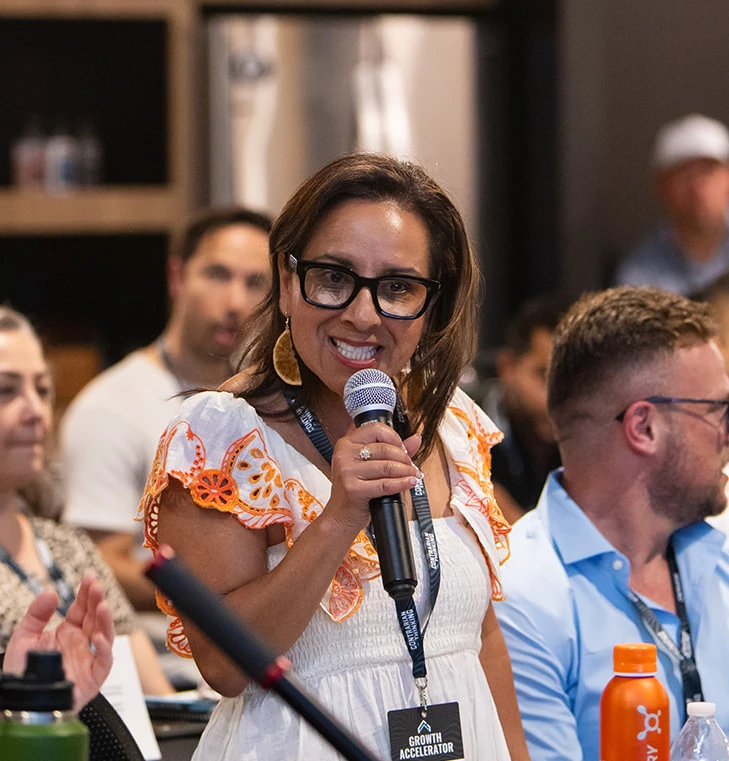
How They Bought a Profitable, 45-Year-Old Window Distribution Business START HERE “It really is so important to put yourself in the right rooms.” Meet Anthony and Alex. Anthony is a software engineer. Alex is a CPA-turned-MBA who spent years in management consulting and corporate strategy. They met a few years ago in a mastermind group focused on buying hotels, and together with a couple of partners, they did exactly that. The hotel, as they told us, was a great learning experience and gave them both a ton of confidence. But it also taught them a hard lesson about cash flow. A hotel is what they call the "asset-heavy, cash-flow-light" side of the business barbell. "We realized that the hotel was not providing a lot of cash flow for us," Anthony said. They needed the other side of the barbell: an asset-light, cash-flow-heavy business that could replace their W-2 income and fund future deals. So, they quit their jobs, joined the Contrarian Academy, and went all in on that thesis. That said, they were calculated about it. Anthony kept doing software consulting on the side, and his wife was working full-time along the way. Alex and his wife built a 24-month reserve, cut discretionary spending, and supplemented with income from her small business, hotel consulting gigs, and a long-term rental. After reviewing hundreds of businesses, and using an SBA loan, they recently acquired a 45-year-old window and door distribution company in San Diego. The business does “high-single-digit millions” in revenue with “15-20% margins”, has a lean team of just four employees, and virtually no inventory on hand. Here's how they found it, why they bought it, and what they're doing now. THE SEARCH How 1 cold call beat out months of browsing One of the first lessons this duo learned was
A software engineer and a CPA bought a profitable, 45-year-old window distribution business. Why the right rooms led them to the right deal.

The business tactics of the future will look a lot like the past. We just sat down with Bill Gurley, a billionaire and one of the leading venture investors on earth. Bill is an early backer of Uber and many other things people use every day. Bill spent the last decade studying one question : why do some people end up loving their work while most spend their careers staring at the ceiling at 2am wondering where it all went wrong? The answers, he learned, are a set of timeless truths . The best strategies often are timeless. Jeff Bezos figured out the same thing from a different angle. He’s said that most people incorrectly obsess over what's going to change in 10 years, while almost nobody ever asks about what's NOT going to change. Instead of focusing his energy on changes, he focused it on constants. The result? Pure magic. So today, we wanted to highlight another constant we all share, but largely underutilize: Being a homo sapien. Damn, that sounds cringe... But it’s not a joke. Do you sneeze? Congrats, you’re halfway there. The alpha move in an AI world is almost offensively simple: be a human who uses AI but goes the extra mile to do the human thing . Because here's what's coming. AI is about to hose down every scalable channel simultaneously. Soon, everyone will be automating 700 LinkedIn messages a day, and none of them will land because everyone will be doing it and everyone will know. As everything digital turns hollow, the value of the unscalable human touch is about to go through the roof. There are a lot of ways you can add a touch of humanity in your business. We call them Magic Moments. Magic Moments are the unnecessary, unscalable things you choose to do. As JFK put it, “not because they are easy but because they are hard.” Sure, he was talking about
The business tactics of the future will look a lot like the past.
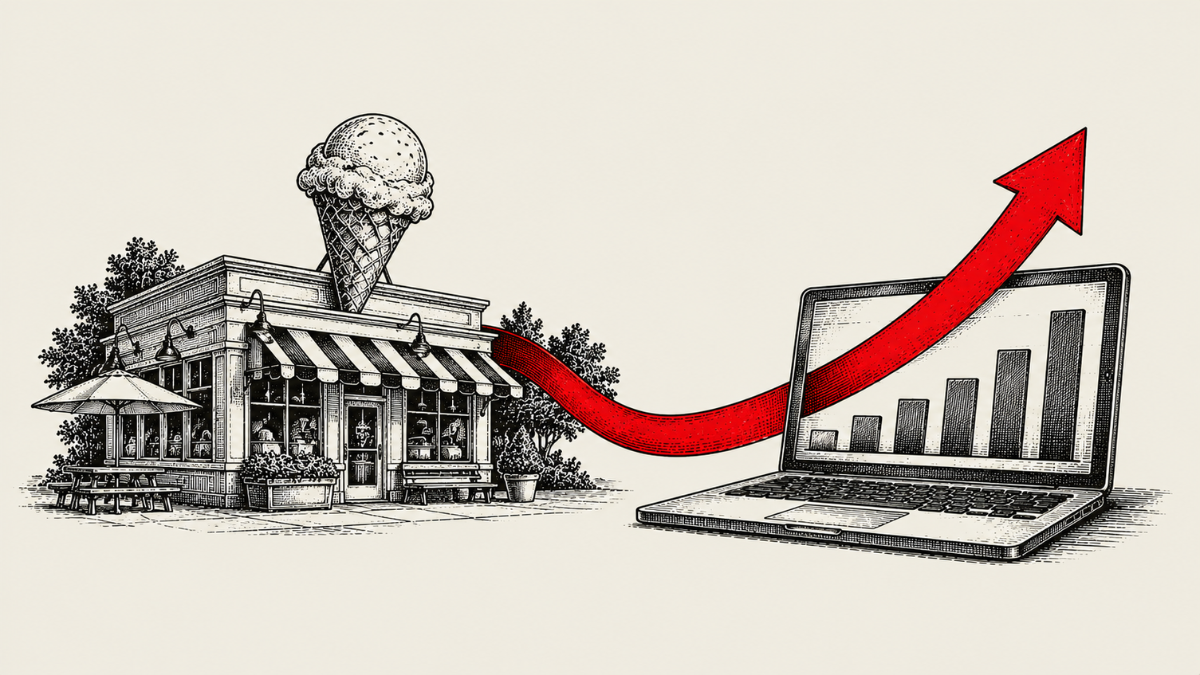
How He Built a Franchise and a 6-Figure/Month Online Business Before Age 25 START HERE "Revenue is vanity. Profit is sanity. Cash flow is reality." Meet Jared. Jared is 24 years old. Never had a W-2. Never finished college. He grew up working in his dad's funeral homes in New Jersey, where the lesson was simple: "Number one, if you don't work, you don't eat. Number two, don't work for anyone." It stuck. At 16, he started his first marketing agency. It took nine months to make $5k, but eventually it took off. Then COVID hit. He rebuilt in a new niche, scaled a second agency to $300k a month in revenue, tried to exit, but walked away with little more than what was already in the bank. A few more swings followed. Some worked, some didn't. By 2024, eight years into entrepreneurship, Jared had experience and scar tissue. Here's what he’s done with it: Opened an ice cream franchise and did nearly $1M in revenue Acquired a capital-stacking business via seller financing Grew it to $200k+ in monthly revenue and $100k+ in net profit Built an 11-person global team with no outside investors This is the story of how he got there. LESSON 1 The Constraint Framework That Runs His Entire Life Jared spent the first nine months of his first marketing agency making less than $5k total. He'll be the first to tell you that's not unusual. "People think they're going to get into business and see massive success. They don't realize there's going to be periods where you’re just going to feel stuck. A lot of people give up at those points." He didn't. Instead, he developed a habit he still uses today: at any given moment, he's asking himself what the single biggest problem actually is. Not a list. One thing. And he puts his energy there until it's solved. "At a certain point, I looked around
Jared is 24 and has never had a W-2. How he built a franchise and a 6-figure-a-month online business by following one rule: don't work for anyone.

How We Turned 1 Email Into a Portfolio of Profitable Businesses Here's what we've built at Contrarian Thinking: An advisory business with ~3000 members. A venture capital firm. A New York Times bestselling book. A top-10 business podcast. A 1,000-person annual conference. A software platform for buying and selling businesses. Ownership stakes in a portfolio of Main Street companies. A media operation reaching 12 million people. A team that outgrew two offices in 12 months. People often ask how we built all of this. They're usually expecting some sophisticated answer about capital allocation or brand strategy or a lucky break. The real answer is comical in its simplicity: We sent some emails. Yup, one of the most important business moves we ever made cost nothing and took 20 minutes to get off the ground. No investors. No permission. Just a decision to start a newsletter and actually send it to people. Here's how it happened and how you can steal the model. We Started With Something Mega-Cringe 5 years ago, we grabbed every contact we could. And we wrote them a newsletter out of nowhere. Just an honest, unpolished note about our goal, plus some thoughts on money and business ownership. The stuff we heard people in finance talk about behind closed doors but never really say publicly. We almost didn't send it. Spent a solid chunk of time convincing ourselves it was a terrible idea. Then we got the hell over cringe mountain and hit send. Even Harley Finkelstein, President of the $200B company Shopify, agrees. “Cool waits for results; cringe creates them.” Hey, it worked for us. 102 people opted in. That was our launch list. What followed was 4 genuinely chaotic weeks focused on growth. LinkedIn posts, Facebook groups, podcast appearances, lead magnets, tagging bigger
One newsletter became an advisory firm, a VC fund, a bestselling book, and a portfolio of businesses. The distribution-first playbook behind it all.

How This Security Company Hit $1.2M with 40% Margins and Great Employee Benefits in 2 Years START HERE "We wanted to get in the room with those who have done it and are doing it." Carmelo's career never moved in a straight line. Engineering. Nightclub bouncer. Forklift operator. But no matter where life took him, it kept pulling him back to one field: security. "This is what I was good at," he said. His business partner, Alex, is a military veteran. Calm and measured, where Carmelo is energetic. "He is a legit, bona fide war hero," Carmelo says. "He doesn't brag about it much. I do." The duo was running separate security operations when they looked to take a leap of faith and join forces. That leap became a private investigations and armed security firm based in Pennsylvania. They launched officially in 2024. After roughly 18 months in business, Carmelo and Alex: Closed their first six months at $241,000 in revenue with a ~ 40% profit margin Scaled to $1.2 million in 2025, their first full year, again at ~ 40%+ margins Built a team working across a dozen active sites , including 24/7 accounts Launched medical, dental, vision, and 401K benefits before their second anniversary Are now in due diligence on 1-2 acquisitions of other security companies Here are 4 key lessons they’ve picked up along the way. LESSON What happens when your 1st payroll coincides with a global banking outage Carmelo and Alex’s business nearly didn't make it past its first payroll. That first payday, in 2024, a global cloud outage took down banking systems across the country. Airlines couldn't operate. Hospitals were scrambling. And their business, despite having a full account balance, could not move a dollar of it. "The money's in the bank account. It's there. We have the money to pay our
Carmelo and Alex built a security company to $1.2M with 40% margins and great employee benefits in 2 years. Their step-by-step growth playbook.
America’s Hidden Civil War America is fighting a civil war. No one "declared" it. Few are working to end it. And the side that's winning might not even realize it's in it. There are no clear deaths in this war. But there are casualties. Economic ones. Millions of them. The story is right there in the numbers, if you're willing to look. In 1989, Americans over 70 held 19% of total household wealth in this country. By 2025, that number had grown to 32%. Younger Americans have watched their portion slip. But here's what makes this a war and not just an economic trend: the conditions that produced this gap didn't appear from nowhere. They’ve been voted into existence over many decades. When you show up for elections, you show up in policy. Federal spending on elderly programs ran at roughly 6% of GDP in 1990. By 2025, it had reached over 9%. The Congressional Budget Office projects it crossing 11% within a decade. Those programs, plus the interest on the debt they generate, are now one of the single biggest drivers of the federal deficit. This trend is now being referred to as “Total Boomer Luxury Communism.” “The elderly are mostly out of the job market and thus need not worry about being replaced by artificial intelligence. The majority own their homes, often debt-free. Everyone worries about health costs, but the elderly have publicly funded Medicare. None of this is true for young generations,” says the Wall Street Journal. The Social Security trust fund peaked at $2.7 trillion in 2017. It has been declining ever since and is projected to run dry around 2033. The likely fixes — higher taxes, reduced future benefits, a later retirement age — will fall on the younger generation of workers. Causes, symptoms, and side effects In 1960, it is estimated that over half of
Americans over 70 hold a record share of household wealth. Inside the generational wealth war no one declared, and how to end up on the winning side.

How She Left 25 Years of W-2 Life to Buy and Build a Tour Business in Hawaii START HERE "Business ownership is hard, but it’s the most amazing tool for personal growth." Meet Tania. Tania spent 25 years as an employee. Different industries, different titles, different companies. None of it really stuck. "Any role I had, nothing was ever that satisfying. I always had side hustles because I felt this need for more autonomy and a sense of ownership." Three years ago, she acquired a tour and transportation company operating across the Hawaiian Islands. "Over the past three years, I've grown in my self-confidence. My decision-making. And interestingly, I am so much happier." She's quick to add that it hasn't been easy . There are challenges regularly, every day. "But because I'm in alignment with what I'm doing, it just feels right. The work doesn't feel hard. I'm just engrossed in what I'm doing." After three years of ownership, here's where Tania stands: Pivoted from direct-to-consumer to a B2B model with cruise ship contracts Doubled revenue year over year from 2024 to 2025 Is now in the final stages of hiring an operations manager This is the story of how she figured it out, one hard month at a time. LESSON The Biggest Mistake She Made... Happened Before Day 1 The previous owner was retiring and had wound the business down significantly during COVID. "In a way, it almost feels like a bit of a startup because he had pared it down so much. I really had a chance to kind of start fresh." The business boasted some signature tours. A small fleet. A handful of CDL drivers. A lot of room to build. What it didn't have was much runway, and Tania's first and most expensive lesson was the importance of cash. "Most of my available cash went into acquiring the business. If I had
After 25 years as a W-2 employee, Tania bought a tour business in Hawaii. How business ownership became her greatest tool for personal growth.

You'd better get good at selling Sales skills are going to be more valuable than ever, and most people are getting worse at them. Not "yeah, I could use some brushing up" worse. Like, measurably, statistically, foundationally worse: We're all becoming phone-obsessed weirdos who can't maintain eye contact for more than six seconds. So the question you should be asking yourself right now is: Okay, what if I just got really good at the thing everyone else is getting bad at? Whether you like it or not, everything is sales, and everyone is in sales. Getting hired is sales. Getting a budget approved is sales. Getting promoted is sales. Getting someone to join your team is sales. Raising money is sales. Getting a team behind your idea is sales. Buying a business is sales. Growing a business is sales. Building an audience is sales. Marketing is sales. Convincing your kid to eat vegetables is sales. Strip away the semantics, and it’s all the same thing: building trust, communicating value, closing. The economy is (increasingly) rewarding people getting better at this and punishing people who aren't, and that reality is only going to snowball. As AI makes building anything easier, selling anything will be harder. “GET GOOD AT SELLING OR FACE THE WRATH OF AI. MWAHAHAHA” -the market, if it could talk The economy has been shifting for decades toward rewarding sales skills. It’s about to go into hyperdrive, and many people still haven't caught on. Here's what makes sales different from almost every other skillset: it creates the potential for non-linear outcomes. And we’re about to dive headfirst into the age of non-linear work. Look at the macro picture. Labor's share of economic output is at the lowest point since the late 1940s. The old deal (trade time for money, save it
Sales skills are getting rarer and more valuable at the same time. Why you'd better get good at selling, and exactly how to start today.

Behind the Scenes: How 6 People Built or Bought Their Way to Ownership Welcome to The Main Street Minute , your shortcut to small business buying and scaling. Today, we’re diving into 6 real-world frameworks used by business buyers and builders in our programs. Inside today’s story: 1 tactic for beating out higher bidders on a deal The 50% Rule for taking action despite uncertainty How to spot the risk of the Owner’s Bottleneck Turning an expense into an asset with Satellite Acquisitions The 10x ROI of being in the right room The right and wrong questions to ask in business buying Let’s dive in below. BUYER LESSON 1. How He Jumped the Line in a Competitive 30-Buyer Process In 2025, Jesus closed a fascinating, 7-figure deal. But the deal he closed was not found through a listing. It came through a relationship with a broker built on a different deal that did not close. “The broker liked me. Not because I had the highest offer, but because he trusted I could actually close quickly.” In a competitive process with 30 buyers, some of them institutional, Jesus jumped the line. Not on price, but on credibility. “My offer was lower than others. But they believed in me as a buyer.” He didn’t win that deal. But the relationship paid off. Later on, that same broker brought him something off-market before sharing it with the world. “He said, ‘Before I send this out, do you want to look at it?’ I looked at it and thought, this is it. At that point, I knew what a good deal looked like.” Because of the reps he had put in, Jesus could move fast. “I didn’t need it to go to market. I put in an offer immediately.” Read the full story BUILDER LESSON 2. The 50% Rule: Why to Act Even if You’re Not Totally Ready The market usually rewards execution velocity more than theoretical readiness
6 real-world frameworks from business buyers: beating higher bidders, the 50% Rule for acting under uncertainty, and spotting the Owner's Bottleneck.
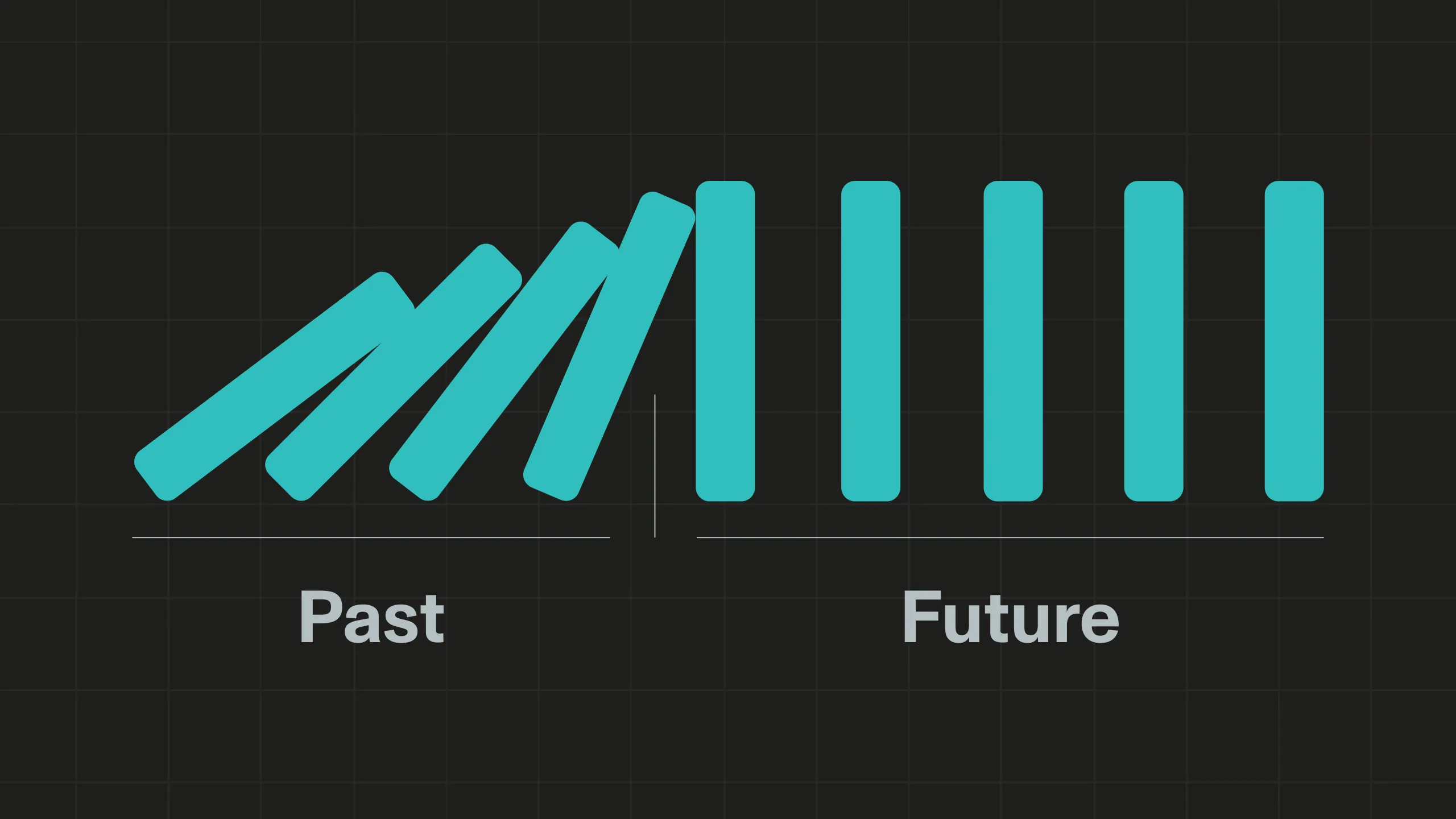
How Waymo, OnlyFans, and a 27-Year-Old HVAC Business Explain the Future “There is only one difference between a bad economist and a good one: the bad economist confines himself to the visible effect; the good economist takes into account both the effect that can be seen and those effects that must be foreseen.” -Frédéric Bastiat (1850) Nothing has just one consequence. That’s the idea behind 1st, 2nd, and 3rd-order thinking... Thinking about consequences . French economist Frédéric Bastiat was writing about this almost 200 years ago. “The first [effect]... is immediate,” he says. “It appears simultaneously with its cause; it is seen . The other effects emerge only subsequently; they are not seen ; we are fortunate if we foresee them.” Nearly 2 centuries later, billionaire investor Ray Dalio calls this one of the most important principles of success in life: “People who overweigh the first-order consequences of their decisions and ignore the effects of second- and subsequent-order consequences rarely reach their goals.” 1st and 2nd-order consequences often have “ opposite desirabilities ,” he says, “resulting in big mistakes in decision making.” Or as Bastiat puts it: “It almost always happens that when the immediate consequence is favorable, the later consequences are disastrous, and vice versa.” Like going to the gym. Pain first , abs second . Or the 11 pm drive-thru run. First-order: transcendent . Second-order: why the hell did I do that? Dalio and Bastiat would tell you that nature usually penalizes the people who stop at that first order. Especially if you're building anything right now, first-order thinking won't cut it. And honestly, the second and third-order stuff is way more fun to think about anyway. Here's what we mean. AI CapEx In 2026, Microsoft, Meta
What do Waymo, OnlyFans, and a 27-year-old HVAC business have in common? Second-order thinking that explains where the economy goes next.

START HERE "I grew up watching my dad own a small business. About 10 years ago, I started thinking, ‘Man, how can I do that too?’" Meet Dave. Dave is a mechanical engineer by training. Spent 15 years inside Big Pharma, running capital-intensive projects, overseeing construction and risk mitigation, and managing large teams. On paper, it was a rock-solid career. Stable. Well paid. Room to grow. But something never quite lined up. Dave grew up in a small business household. His dad rebuilt and refinished pianos in a shop at the house. Dave worked alongside him, saw the work ethic, saw what it meant to own something. "I was the generation that got pushed toward college," he told us. "I was good at math and science, so engineering made sense,” he said. “But I always had this feeling of, how do I build something of my own?” For years, he didn’t really have an answer. He didn’t think he’d ever “invent” anything. He didn’t have a specific trade skill he could go out and sell. The idea of starting from scratch felt unrealistic. But then he learned about the possibility of buying an existing business. "I thought, okay, this makes a lot of sense. I know a lot of businesses. I hire a lot of businesses for services in my day job." So Dave joined the Contrarian Academy in July 2023. What followed was a 14-month search that ended with the acquisition of a long-running $10M+ industrial services company. This biz spans multiple divisions, dozens of employees, and a customer list that includes refineries, chocolate producers, power generation plants, and life science manufacturers. He didn't do it alone. He ended up partnering with a capital-backed investor, whom the broker introduced him to in the process. And after about a year of ownership, Dave and his team: Grew revenue in
Dave left 15 years in Big Pharma to buy and grow a $10M+ machine shop. How his engineering background became an edge in Main Street acquisitions.
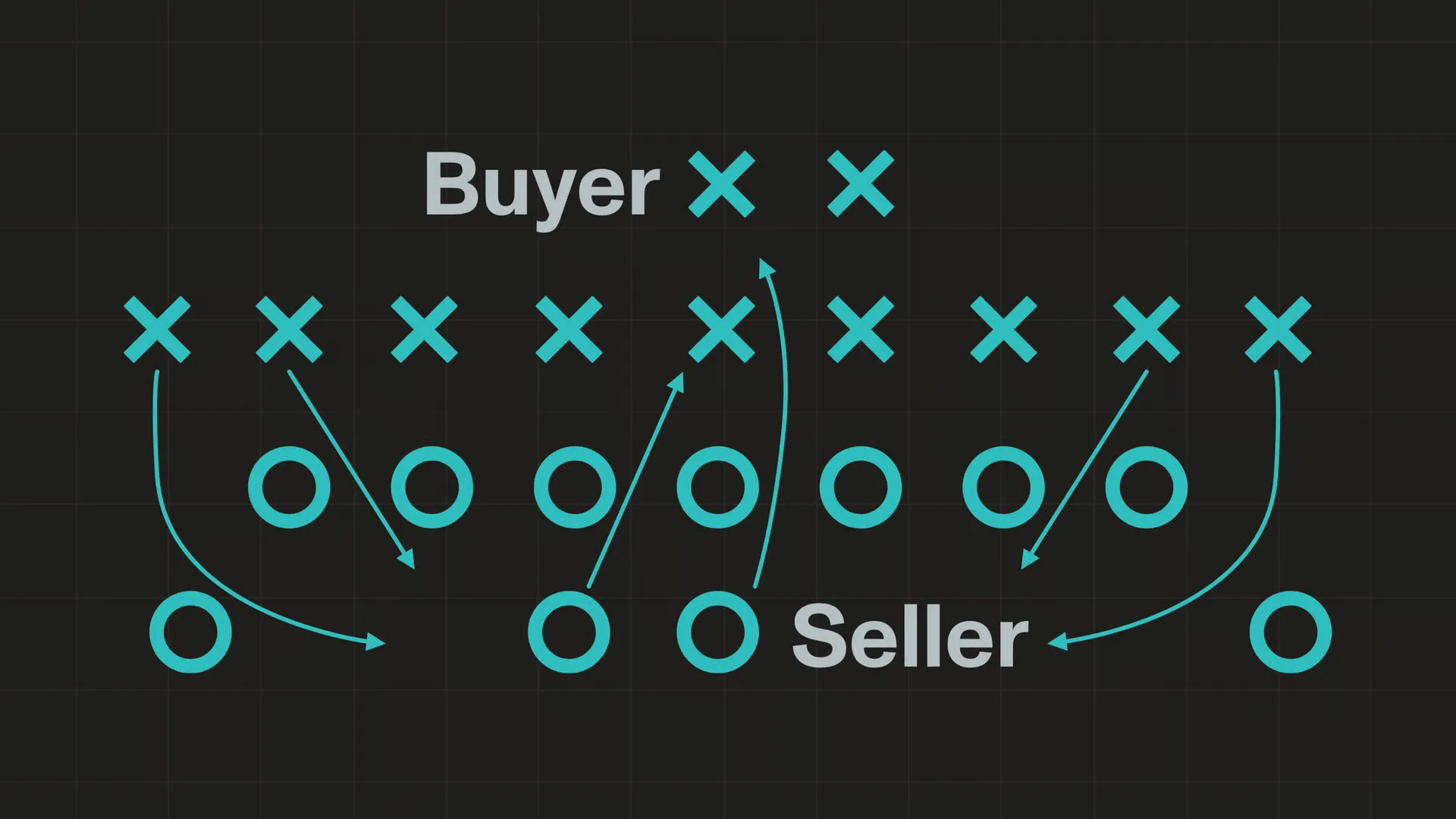
The ULTIMATE Guide to Building a Sellable Business We work with hundreds of scaling business owners every day. Most people run their business until they're miserable... And then they try to sell it. Don't be most people. Build a business so it's sellable... and you'll never have to sell. The Backwards Approach: Start with the End in Mind Here's the secret to building a sellable business: You need to work backwards from what makes a business valuable in a buyer's eyes. When you understand what buyers are looking for, you can design your business to be valuable whether you sell it or keep it . Because the qualities that make a business attractive to buyers are often the same ones that make it attractive to you as an owner. Think about it: A business that runs without you, generates predictable cash flow, and has systems in place is a business you'd want to own AND a business someone else would pay a premium for. A job: Stops producing when you stop working. Requires your specific skills or relationships. Often too small to hire an operator, and likely can’t be transferred to someone else without them taking over the job. An asset: Remains valuable even when you're not actively producing. Runs on systems and a team, not just you. Will continue running even if transferred to a new owner. The difference between these two determines how valuable your business is. Everything in this guide is about moving from the first category to the second. How Buyers Think About Value To build something valuable, you need to understand how buyers calculate what they'll pay. Let's break it down. The 4 things everyone will want to audit... Simplicity check: If you can't explain what you do in one clear sentence, you probably can't systematize it. Complexity might impress people, but it
Build a business so sellable you never have to sell it. The ultimate guide to working backwards from what buyers want: systems, profits, and less you.
How This Marine Veteran Bought an HVAC Business and Nearly Doubled Her Revenue in Two Years START HERE "I was tired of building something that wasn't mine" Meet Anna: Anna has spent over a decade in service. First, as a Marine Corps intelligence analyst. Then, as a civilian contractor, learning to assess risk, stay composed under pressure, and deliver results. After that came an MBA, during which she joined a tech startup as Chief Strategy Officer and simultaneously opened a CrossFit gym. The gym lasted about a year before a bad partnership forced her to shut it down. The startup lasted longer, about five years, but the pandemic hit it hard. It shrank from 20 employees down to five, and Anna was one of the last ones holding on. "I was burned out, tired of working so hard on something that wasn't technically mine. I had a little bit of equity, but it wasn't really mine." After leaving, she spent two years as a program manager on Pittsburgh Airport construction projects, working closely with the trades. That experience stuck. She started thinking differently about what kind of business she wanted. Not another startup. Not something she'd have to convince people they needed. Something essential. What followed was a $1.5M acquisition of a plumbing and HVAC company, its sister wholesale business, and the real estate underneath both. After about two years, Anna: Grew combined revenue from $2.5M to $4.7M , now growing roughly 40% YoY Weathered an $80K fraud event and kept the business on track Expects to hit a target of $6-7M this year and $10M within two to three years This is the story of how she got there. And what it can teach anyone looking to buy and build in the trades. KEY INSIGHT 1 conversation that changed her entire strategy Here's what frustrated Anna. She was
How This Marine Veteran Bought an HVAC Business and Nearly Doubled Her Revenue in Two Years

Why the smartest people stay stuck (and what to do about it) In life, most people obsess over the cost of taking the wrong action. Not enough people focus on the cost of taking no action at all . Inaction is quietly destroying some of the smartest minds we know. Below, we’re going to show you why it’s so damn lethal. FRAMEWORK Actors vs. Observers: the great divergence of 2026 What’s worth more: 2 years of imperfect action or 2 years of perfect preparation? Picture this analogy... > Mike spends 2 years “getting ready” to buy a business (a longtime goal of his). > He listens to a podcast or 2 about acquisitions. > Scrolls through listings a few times during breaks. > Tells himself he’ll start “actually getting serious about this” next quarter. > Comes back to the idea every few months, feeling excited, then gets distracted. “It’s just not the right time,” he tells himself... every time. “I wanna play it safe and learn more first.” His friend Nguyet, on the other hand, does things differently. > She signs up for an event like Main Street Millionaire Live in month 1. > Quickly gets up to speed on acquisition fundamentals and builds a plan of action for the weeks and months that follow. > Learns about due diligence and SBA financing, and applies those learnings to real deals in real time. > Builds models, works with brokers, takes guidance from experts, and drives out to meet sellers. > 2 years in, she owns a small portfolio and is already thinking about her next acquisition. The lesson: action runs circles around thinking about action . By not taking any action... Mike lost out on: Years of learning how deals actually work (and progressing on one) Years of building relationships with brokers Years of pattern recognition The learning that comes from making offers
Why the smartest people stay stuck (and what to do about it)

7 lessons from a serial business buyer who’s built up an impressive portfolio without leaving her career in Big Tech “I made good money. But the thing is, it just all came from one source, and that was scary.” Most people assume building ownership in a business requires a clean break from your job. That’s not what happened here. Nguyet Luong built her career in stable, Big Tech W-2 roles. But over time, one thing started to make her nervous: All of her income came from one place. Nguyet had never owned a business. She’d taken exactly one accounting class in college. But her search for additional income sources led her to the world of small business, and eventually to pack-and-ship stores. What appealed to her was how tangible they were. Physical locations. Clear demand. Simple unit economics. You could quickly see what worked and what didn’t. But she knew she didn’t want to run the day-to-day operations herself. So she partnered up with a close friend, and together they brought in their significant others. Nguyet and her friend stayed focused on the backbone of the business : Finance, and accounting Systems and technology Marketing and pricing Higher-level decisions around growth and structure Their partners handled the on-the-ground execution : Store operations Staffing and scheduling Customer-facing work That structure solved how the businesses would be run. Then came figuring out how to, well, actually own a business . Over the next couple of years, while maintaining her full-time role, she and her partners would go on to own 6 pack-and-ship stores across Texas, building a portfolio worth 7 figures. Here’s some of what you’ll get out of today’s newsletter: Here are 7 things she wants you to know... 1. If needed, buy literacy before assets When Nguyet first started
7 lessons from a serial business buyer who’s built up an impressive portfolio without leaving her career in Big Tech

What does the rest of 2026 realistically look like? These predictions come from working with thousands of business buyers and builders, and from ongoing conversations across our network. Most focus on how demographics, capital, and technology are reshaping small business ownership on the ground. Here they are... PREDICTION 1. In 2026, the “Boomer Business” economy outperforms The most resilient businesses in 2026 (and beyond) might not be those focused on A.G.I. but those focused on A.G.E. Older Americans hold a disproportionately large share of U.S. household wealth, and wealthier households account for a significant (and growing) share of consumer spending. As a result, a wide array of “boomer niches” will attract disproportionate acquisition interest: longevity and preventative clinics, in-home diagnostics, mobility and medical transport, hearing and vision services, home modification, senior moving and estate services, and operational adjacencies to senior living. These businesses will command premium valuations because their demand curve is anchored to biology. By the mid 2030s, business buyers who focused on “inevitable” demand rather than speculative growth will be seen as having made some of the smartest bets in small business. PREDICTION 2. AI matures as a double-edged valuation driver In 2026, business buyers will need to underwrite two things simultaneously: How much AI can remove drag from a business. How immune a core business is to AI substitution . Labor often represents 15-50% of total business costs in many service SMBs. Even modest automation in scheduling, bookkeeping, marketing, and quoting can materially expand margins. At the same time, many Main Street small businesses remain stubbornly physical. No large language model is transporting an elderly
6 data-backed business predictions for the rest of 2026: why Boomer businesses outperform, how capital and AI reshape small business ownership, and where to focus.